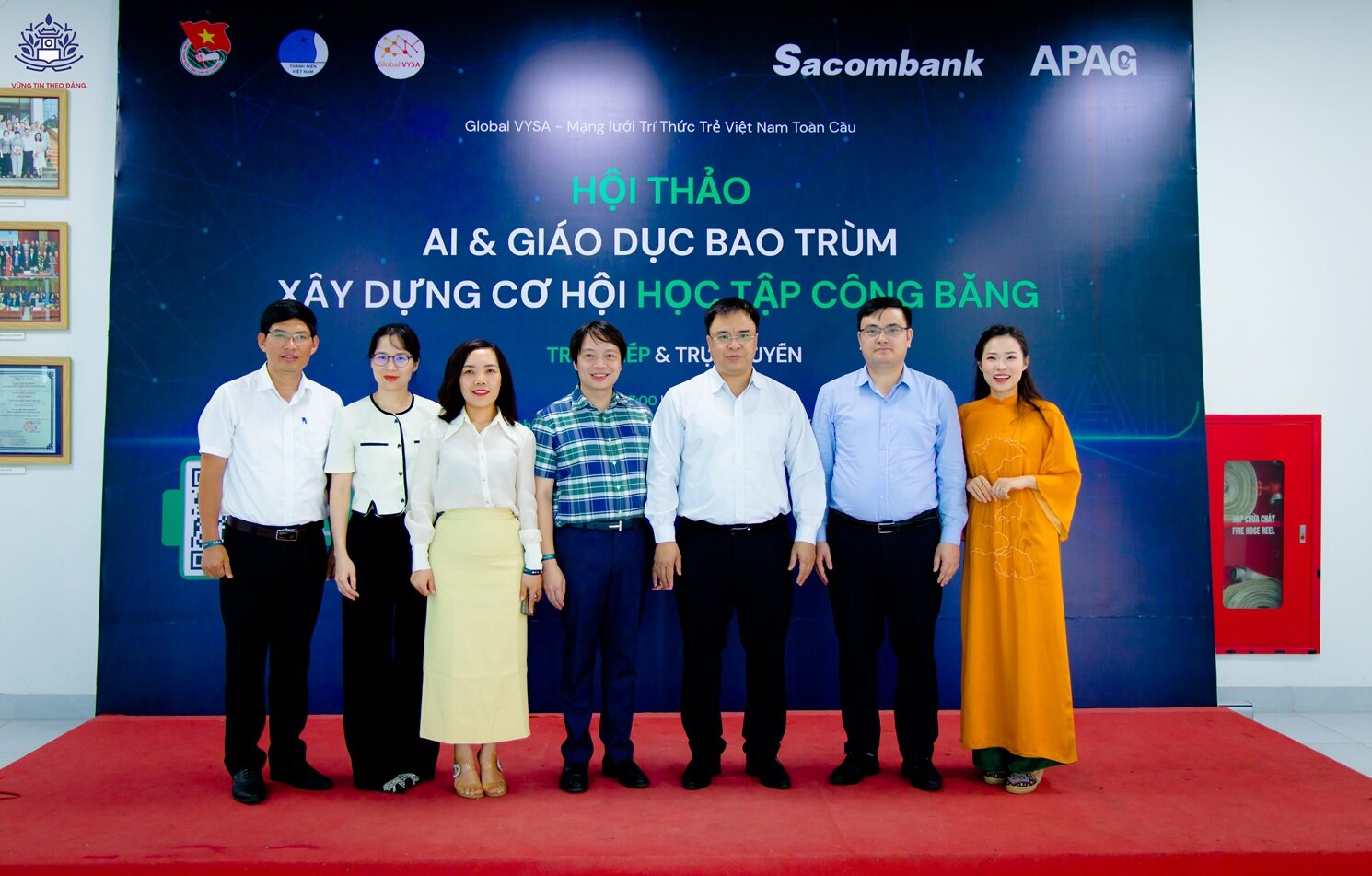
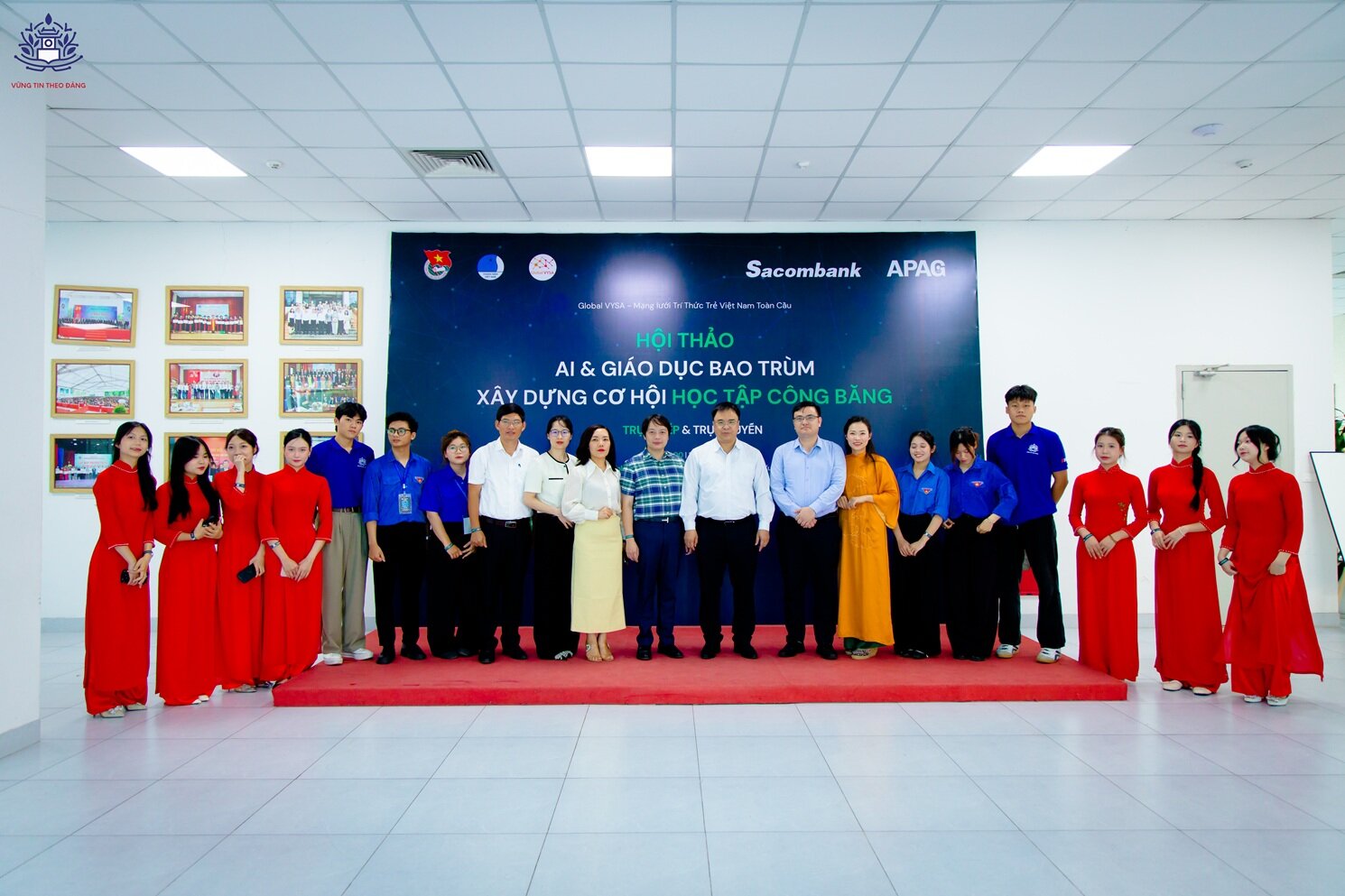
Within the framework of activities leading up to the 6th Global Vietnamese Young Intellectuals Forum, and as a practical contribution to the implementation of Resolution No. 57-NQ/TW on the development of science, technology, innovation, and national digital transformation, on 26 June 2025, the Central Committee of the Ho Chi Minh Communist Youth Union, the Viet Nam Youth Federation, and the Global Vietnamese Young Scholars Network (GlobalVYSA), in coordination with the Academy of Public Administration and Governance (APAG) and Saigon Thuong Tin Commercial Joint Stock Bank (Sacombank), organized the workshop entitled “AI and inclusive education: Building equitable learning opportunities”.
The workshop served as a forum for experts, policymakers, representatives of international organizations, and the intellectual community to discuss the role of artificial intelligence (AI) in building a comprehensive and equitable education system where no one is left behind.
The workshop was attended by Prof. Dr. Nguyen Quoc Suu, Member of the Central Council on Theoretical Studies and Vice President of APAG; and Mr. Nguyen Huu Tu, Member of the Central Committee of the Ho Chi Minh Communist Youth Union, Standing Vice President and Secretary General of the Viet Nam Young Physicians Association, and Vice President of the Viet Nam Association for Health Improvement Consulting.
The workshop was held in a hybrid format, combining in-person participation at APAG (371 Nguyen Hoang Ton Street, Bac Tu Liem District, Ha Noi) and online participation via Zoom, with more than 300 in-person delegates and 80 online participants, all young Vietnamese intellectuals and scientists from around the world.
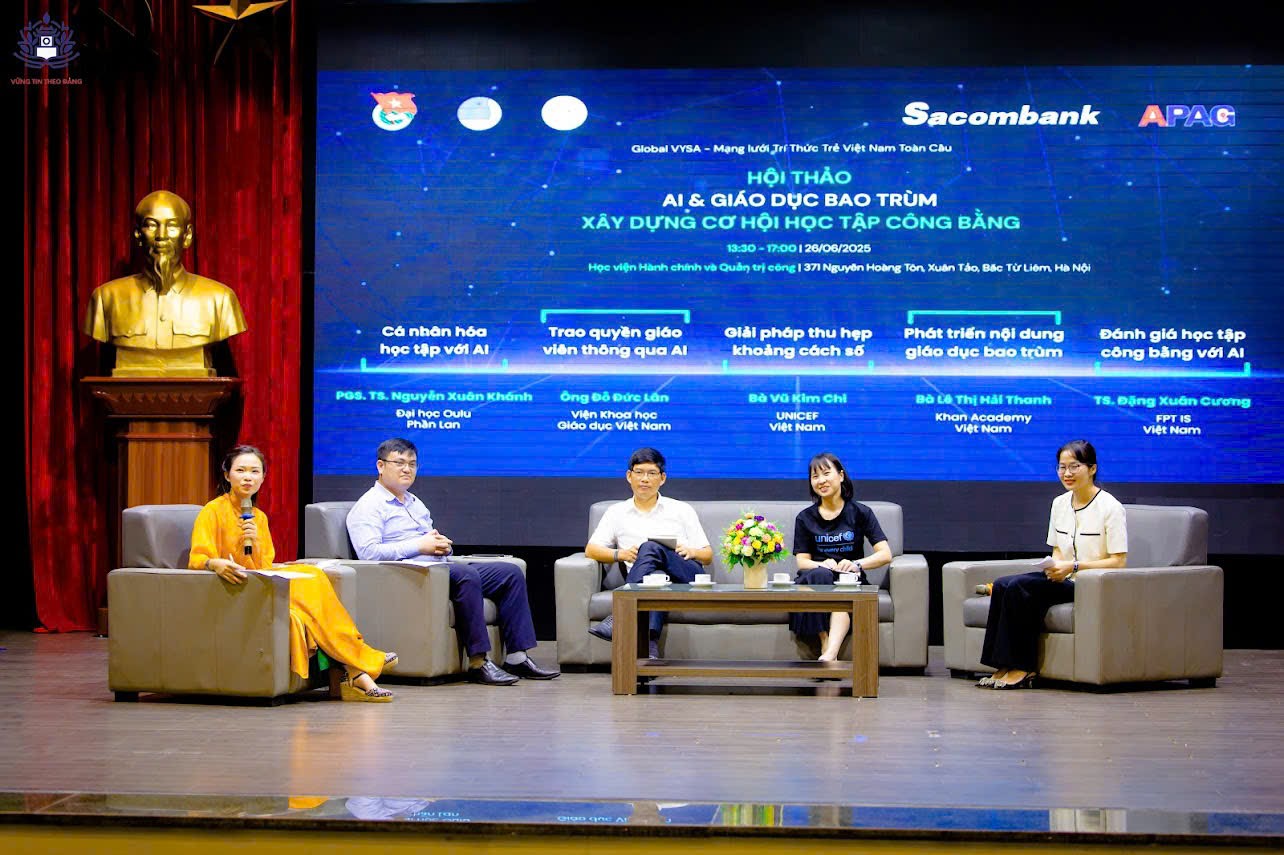
The workshop featured the following presentations:
- Personalized learning with AI, presented by Assoc. Prof. Dr. Nguyen Xuan Khanh, University of Oulu, Finland.
- Empowering teachers through AI, presented by Mr. Do Duc Lan, Deputy Head of the Department of Science Management, Training, and International Cooperation, Viet Nam National Institute of Educational Sciences.
- Solutions to bridge the digital divide, presented by Ms. Vu Kim Chi, Education Officer (Learning and Digital Skills), UNICEF Viet Nam.
- Developing inclusive educational content, presented by Ms. Le Thi Hai Thanh, School and Partnerships Manager, Khan Academy Viet Nam.
- Fair learning assessment with AI, presented by Dr. Dang Xuan Cuong, Chief Science Officer, Online Assessment Platform, FPT IS.
The workshop reaffirmed the important role of AI in promoting comprehensive and equitable education in Viet Nam in the context of national digital transformation. The event served as a meaningful bridge, connecting experts, researchers, policymakers, and representatives of international organizations to jointly propose solutions for applying AI in education to narrow the digital divide, personalize learning, and develop inclusive educational content.
Through in-depth presentations and open discussion sessions, the workshop documented many practical initiatives, including AI-based personalized learning models, technology-driven solutions to empower teachers, and more equitable approaches to learning assessment. The ideas and solutions shared at the workshop contributed to shaping orientations for building a smart education ecosystem and opening up quality learning opportunities for all learners, especially disadvantaged children and youth.
The outcomes of the workshop went beyond the creation of an academic exchange forum, contributing concretely to the realization of the goals set out in Resolution No. 57-NQ/TW on science, technology, innovation, and digital transformation, while preparing substantive inputs for the 6th Global Vietnamese Young Intellectuals Forum and promoting cooperation among stakeholders in the education sector in the digital era.
The workshop was part of the 6th Global Vietnamese Young Intellectuals Forum, the main forum of which will be held over three days, from 19–21 July 2025, at VinUni University, with more than 200 official delegates and over 300 observers. This is the largest gathering to date of young intellectuals (under 40 years old), with a record number of professors, associate professors, and doctors from around the world; all observer delegates hold at least a master’s degree or are doctoral candidates. The Forum is also the first international conference series to apply a “parallel worlds” model, enabling delegates to interact both in person and online via the Forum’s digital conference platform.
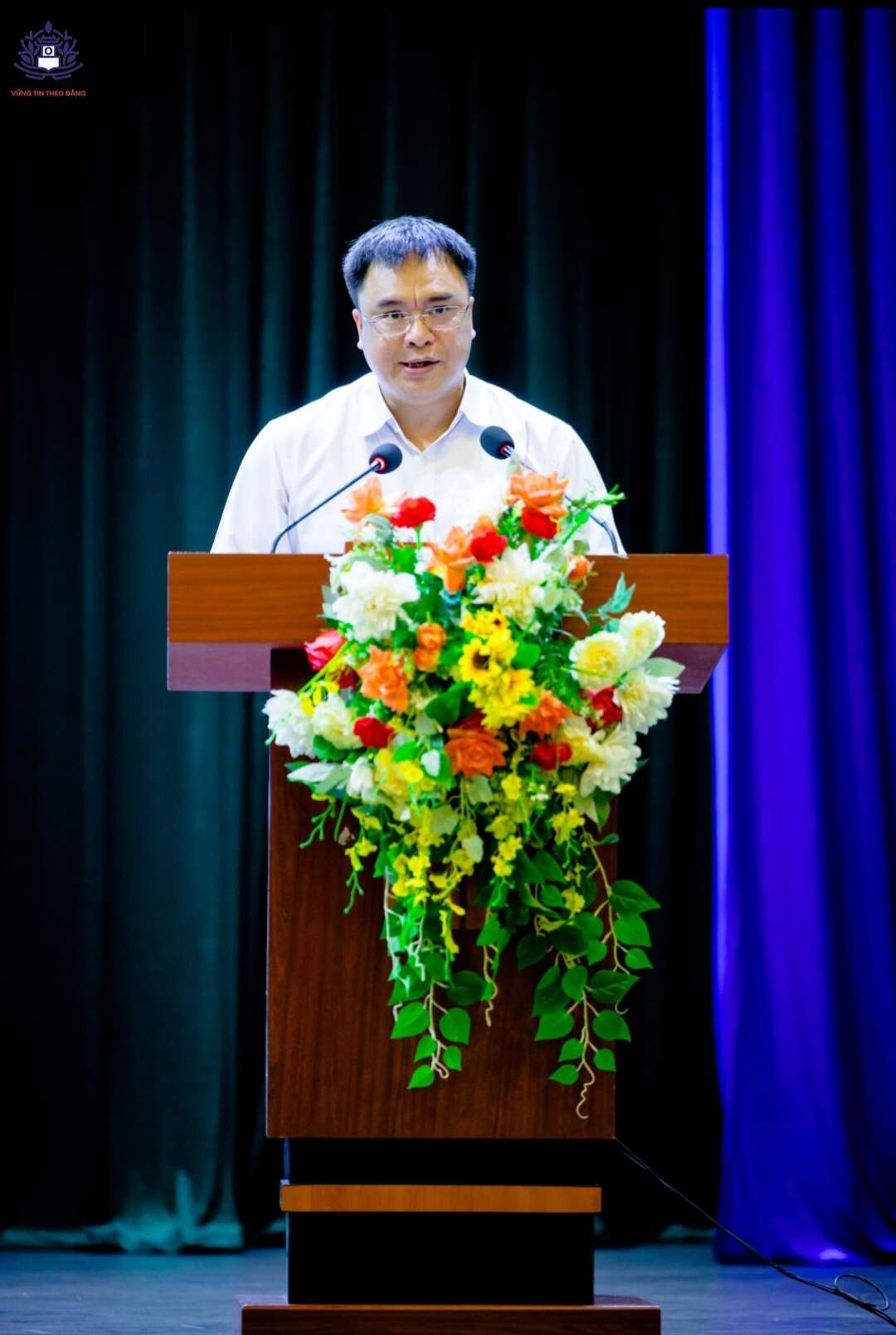
At the workshop, Prof. Dr. Nguyen Quoc Suu, Vice President of APAG, shared insights emphasizing that AI is one of the key tools in contemporary education, contributing to more effective, humane, and inclusive learning. The organization of the workshop at APAG was a great honor, reflecting APAG’s prestige, training quality, and strong adaptability to the digital era. It also provided students with a valuable opportunity to gain global perspectives and engage with leading experts and scientists in AI and education. APAG reaffirmed its commitment to creating the best possible conditions for academic activities, knowledge exchange, and the dissemination of innovation, ensuring that these activities are successfully organized at APAG.
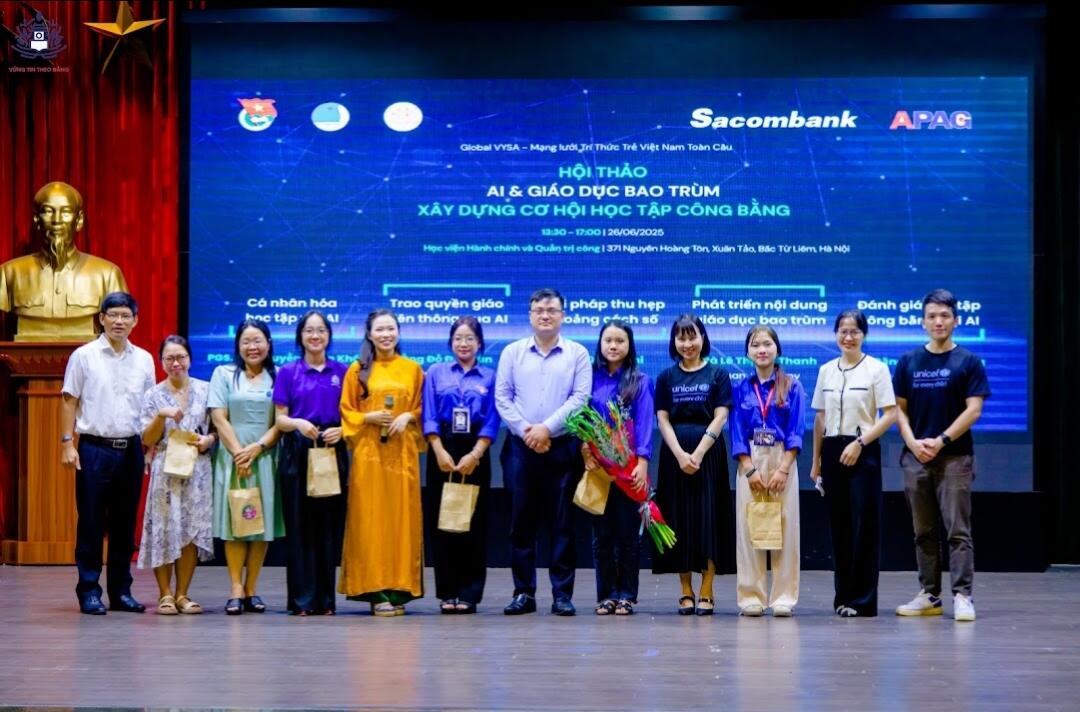
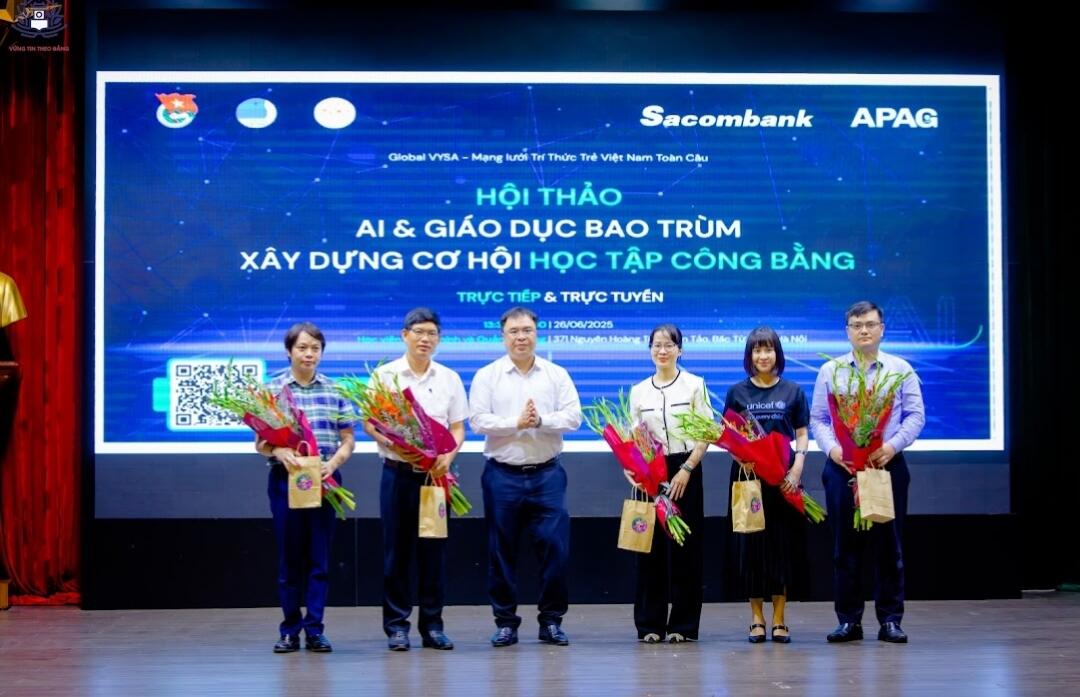
Some photos at the workshop: