Implementing Decision No. 1423-QD/HVCTQG dated April 2, 2026, of the President of the Ho Chi Minh National Academy of Politics, from May 5 to 14, 2026, a working delegation of the Academy of Public Administration and Governance (APAG), led by Assoc. Prof. Dr. Nguyen Ba Chien, APAG President , conducted a working program in Canada. This aimed to promote cooperation in implementing the "Inclusive Local Governance in Viet Nam" (ILG) Project and expand cooperative relations in training, fostering, and developing local governance capacity for Vietnam's leadership and management contingent
The working program was carried out in Ottawa, Québec, Victoria, and Vancouver with the participation of many leading Canadian partners such as Global Affairs Canada (GAC), the Canadian Bureau for International Education (CBIE), the Canada School of Public Service (CSPS), the Institute on Governance (IOG), the École nationale d'administration publique (ENAP), Carleton University (CU), the University of Victoria (UVic), Capilano University (CapU), and the University of British Columbia (UBC). The discussions focused on trends and core competencies of modern governance such as inclusive local governance, adaptive governance, collaborative governance, digital transformation in the public sector, leadership development, gender equality, and competency-based public service training innovation. Through the working sessions, APAG and Canadian partners discussed cooperative orientations to enhance the capacity for training, research, program development, and institutional capacity building to serve the effective implementation of the ILG Project in the 2026-2030 period.
The working trip took place in the context of Vietnam strongly promoting comprehensive reform of the public service, streamlining the organizational apparatus, and building a two-tier local government model. These changes not only set requirements for restructuring the administrative system but, more profoundly, require transformation and a shift to e a leaner, more flexible, effective, and citizen-centered public governance model . The removal of intermediary levels, the expansion of the governance space at the provincial and grassroots levels, along with the growing demand for inter-sectoral and inter-level coordination, are fundamentally changing the competency requirements for the contingent of local leaders, managers, and civil servants.
During the working sessions with Canadian partners, Assoc. Prof. Dr. Nguyen Ba Chien emphasized that Vietnam's current reform is not merely a process of rearranging the organizational apparatus, but is essentially a process of transforming the national governance model and the operational mode of local governments in the new development context. Accordingly, the requirements for local civil servants and leaders no longer stop at correctly executing administrative procedures but focus on capabilities to facilitate development, system thinking, adaptability, capabilities of collaboration with multi-actors handling complex issues, and leading change in a volatile environment.
In that context, the Academy of Public Administration and Governance is promoting a strong transformation of the training and fostering model toward developing leadership capacity and action capacity in the public sector. The transformation focuses on competency-based training, enhancing experiential learning, case-based training, policy simulation-based training, and developing policy thinking, decision-making capacity, and the ability to solve practical problems in local governance. This is also the overarching practice- orientation of the ILG Project for the 2026 to 2030 period.
The ILG Project was developed with the goal of supporting the Academy in comprehensively enhancing its capacity in training, fostering, and developing public sector human resources, meeting the requirements of transformation of local governance in a modern, effective, and inclusive direction. The project focuses on three strategic pillars, including: (i) innovating public service training programs, methods, and ecosystems; (ii) developing local leadership and governance capacity in the context of governance transformation; and (iii) promoting gender equality, female leadership, and gender-sensitive governance in the public sector.
During the first working week in Ottawa, the delegation had in-depth discussions and working sessions with Canadian partners on advanced governance models and trends in modern public service training innovation.
On May 5, the delegation worked with the Canadian Bureau for International Education (CBIE), the Canadian coordinating agency for the ILG Project. Participating in the meeting were Ms. Karen Dalkie, Vice President of CBIE, and Ms. Tatiana Wojtan, ILG Project Manager. The two sides comprehensively reviewed the goals, components, and implementation orientations of the Project; exchanged ideas on the collaborative approach in the direction of "co-design," ensuring that the Project's activities are built based on practical needs, the context of governance reform, and Vietnam's capacity development requirements. The two sides agreed that the ILG should be seen as an initiative supporting the transformation of local governance capacity and public service training system innovation, rather than just a single technical assistance project.
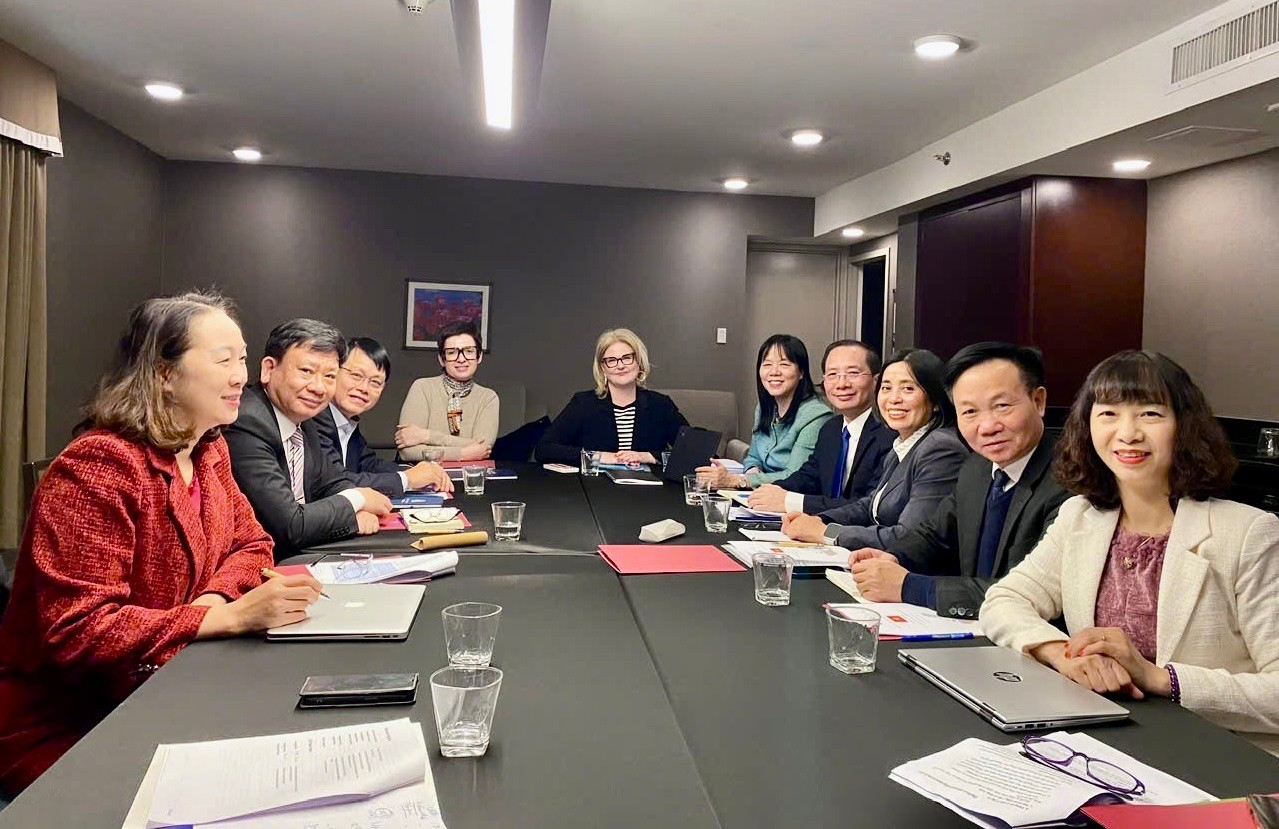 The delegation working with the Canadian Bureau for International Education
On May 6, the delegation worked with the Institute on Governance of Canada (IOG). Mr. Allen Sutherland, President and CEO of IOG, received and worked with the delegation. The discussion focused on modern governance trends such as adaptive governance, collaborative governance, inclusive governance, and the development of public sector leadership capacity in a highly volatile and complex environment. The IOG emphasized that the core competency of a modern public leader is the ability to "diagnose the problem correctly before acting," make evidence-based decisions, and lead change in an uncertain environment. Canadian experts also shared experiences in building a neutral, professional, and highly accountable public service, while promoting the participation of women, indigenous communities, and diverse social groups in the process of formulating and implementing public policy. These experiences are particularly significant for Vietnam in the context where requirements for inter-sector collaborationcapabilities, data-driven governance, and inclusive governance are becoming core requirements of a modern public service.
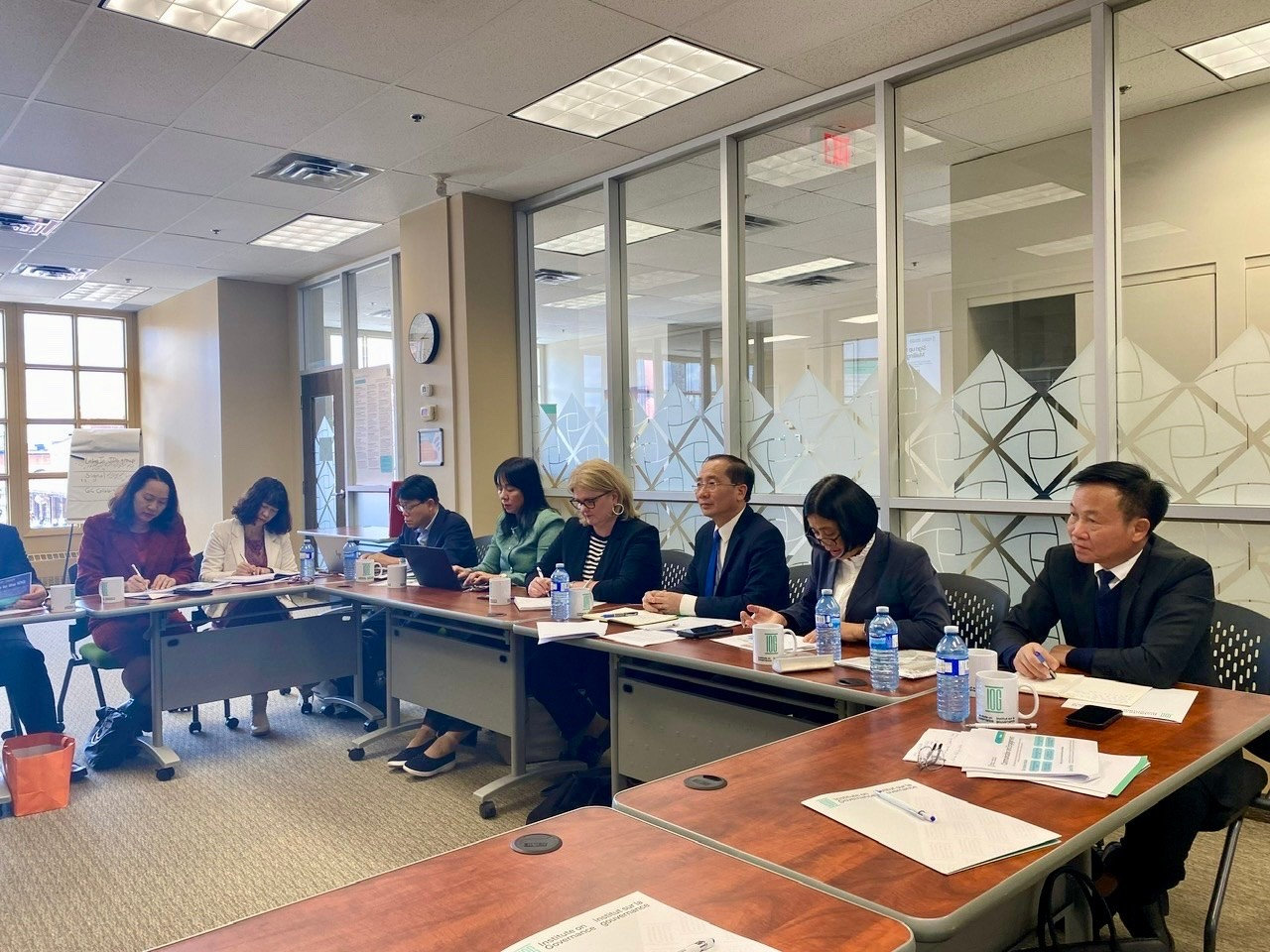 The delegation working with the Institute on Governance
On May 7, the delegation worked with the Canada School of Public Service (CSPS), the training and fostering institution for civil servants of the Canadian Federal Government. Ms. Laviades Jodouin, Permanent Vice President in charge of execution and inclusivity in the public sector, along with officials of the School of Public Service, received and worked with the delegation. The CSPS shared experiences in building a lifelong learning ecosystem for civil servants and a career path-based competency development model in the public sector. Modern training methods such as blended learning, micro-learning, personalized learning, cases, simulation, competency-based training, and the application of digital platforms were introduced as important tools to enhance the adaptive capacity of civil servants in the context of digital transformation and rapidly changing governance. According to CSPS, a modern public service needs to shift from "function-based training" to "adaptive capacity development," in which civil servants must have the ability to work in an inter-sectoralapproach, handle complex issues, and provide people-oriented public services.
 The delegation working at the Canada School of Public Service
 Assoc. Prof. Dr. Nguyen Ba Chien, President of the APAG, presenting a souvenir to the Canada School of Public Service
Another key content of the first working week was the working session with Carleton University on May 8. This is one of Canada's leading training and research institutions on public policy and public administration. Prof. Wisdom Tettey, President of Carleton University, chaired the reception and working session with the delegation. The two sides exchanged deeply on the possibility of cooperation in developing training programs on local governance, digital governance, and public policy; building experiential learning models, project-based learning, policy simulation, and strengthening the connection between training and public governance practice. In particular, public service leadership development models aimed at forming "learning communities" and "leadership communities" are considered valuable experiences for the process of designing the Academy's local leadership development programs in the coming time.
 The delegation working at Carleton University
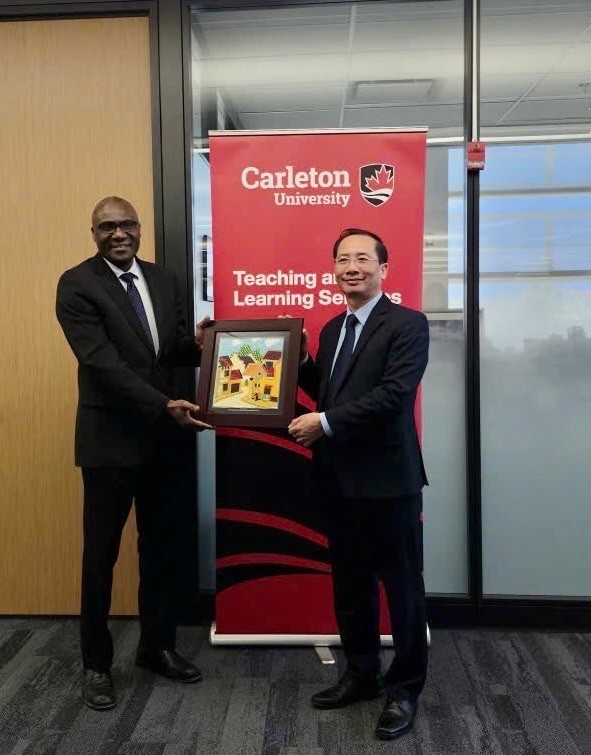 Assoc. Prof. Dr. Nguyen Ba Chien, President of the APAG, presenting a souvenir to Prof. Wisdom Tettey, President of Carleton University
On the afternoon of the same day, the delegation worked with Global Affairs Canada (GAC). Ms. Julanar Green, Director of the Southeast Asia II Division, chaired the reception and working session with the delegation. The Canadian side highly appreciated Vietnam's efforts to innovate and modernize governance and build a professional, adaptable public service; affirming interest in initiatives promoting good governance, gender equality, inclusive development, and improving the quality of people-centered public service delivery. The exchanges also showed many similarities between Vietnam's governance reform orientation and Canada's current international development approach, especially in the areas of institutional capacity building, inclusive governance, and sustainable development.
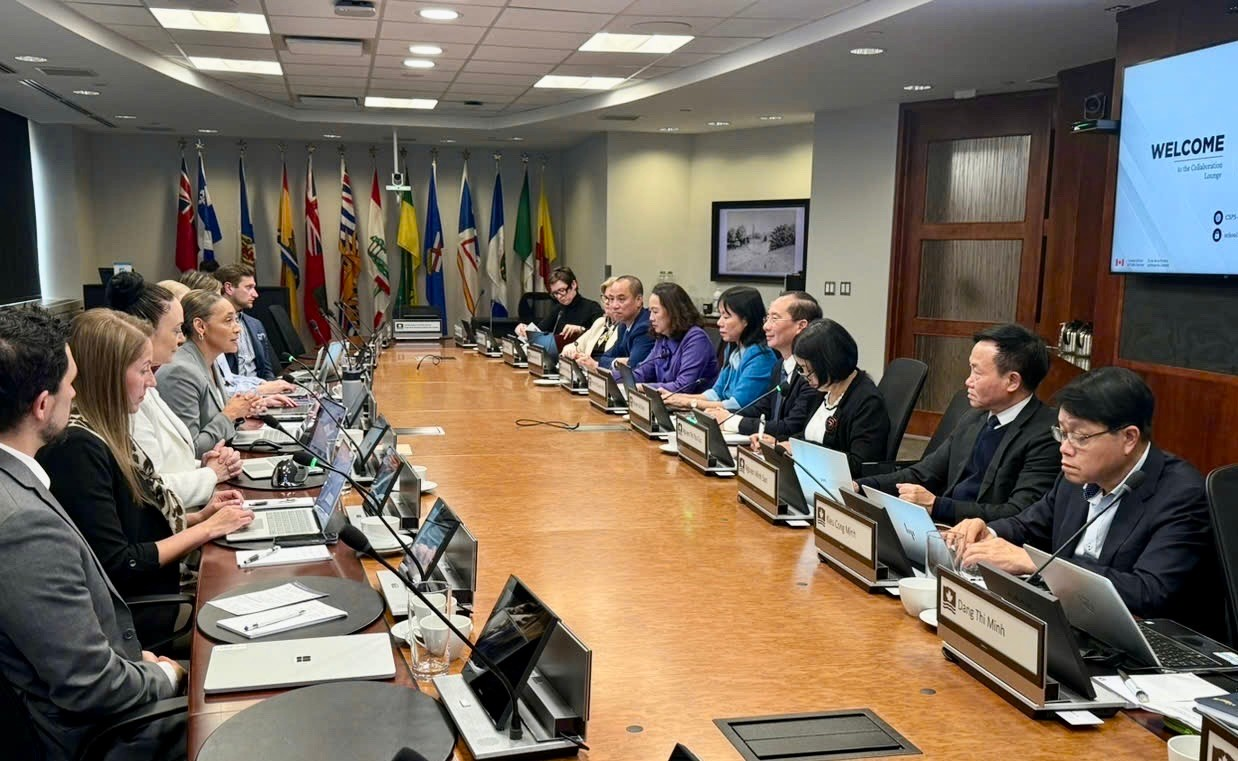 The delegation working at Global Affairs Canada
 The delegation taking a commemorative photo at Global Affairs Canada
At the working session, President Nguyen Ba Chien committed that the Academy of Public Administration and Governance will strive to effectively implement the ILG Project, ensuring the Project creates substantive values in enhancing leadership and local governance capacity, and innovating the training and fostering of cadres and civil servants in Vietnam. At the same time, the Academy wishes to build long-term cooperative relationships with Canadian partners not only within the framework of the ILG Project but also in sustainable cooperation programs in training, research, capacity development, and academic exchange between the two countries.
A highlight of the first working week was that Canadian partners all highly appreciated the Academy's approach in placing the ILG Project within the overall process of public service reform and public governance transformation in Vietnam. According to Assoc. Prof. Dr. Nguyen Ba Chien, the goal of the Project is not only to organize short-term training courses but, more profoundly, to contribute to forming new governance capacity for the contingent of local leaders and managers in the context where the governance model and operational modeof local governments are changing strongly.
Accordingly, the core competencies that need to be developed for the contingent of cadres and civil servants in the new phase include: public value creation capacity; inclusive development thinking; policy analysis and forecasting capacity; digital capacity; collaborative governance capacity; citizen-oriented public service delivery capacity; and the capacity to lead innovation in the public sector.
The initial results of the first working week show many prospects for substantive cooperation between the Academy of Public Administration and Governance and Canadian partners within the framework of the ILG Project. The cooperation focuses on developing a Master's program in Local Governance; training and fostering local leaders and managers in a practical and competency-based direction; training core trainers; developing experiential learning models; enhancing capacity for research and program development; and s building long-term cooperation models to support the process of innovating the public service and improving the quality of Vietnam's public sector leadership contingent in the new development phase.
In the context where the global public governance model is strongly shifting from administrative management to adaptive and development-enabling governance, building a contingent of local leaders with the capacity to lead change, collaborate in governance, and effectively serve the people is becoming a strategic requirement for Vietnam. Accordingly, the ILG Project not only aims to enhance the capacity for training and fostering cadres and civil servants but also contributes to promoting the process of transforming thinking and local governance capacity in the new development phase.
According to the working program, in the following week, the delegation will continue working with the École nationale d'administration publique (ENAP), the University of Victoria, Capilano University, and the University of British Columbia (UBC). The exchange contents will focus deeper on developing the Master's program in Local Governance, innovating public sector leadership training, building an experiential learning ecosystem, and establishing long-term strategic cooperation models to serve the effective implementation of the ILG Project in the 2026-2030 period.
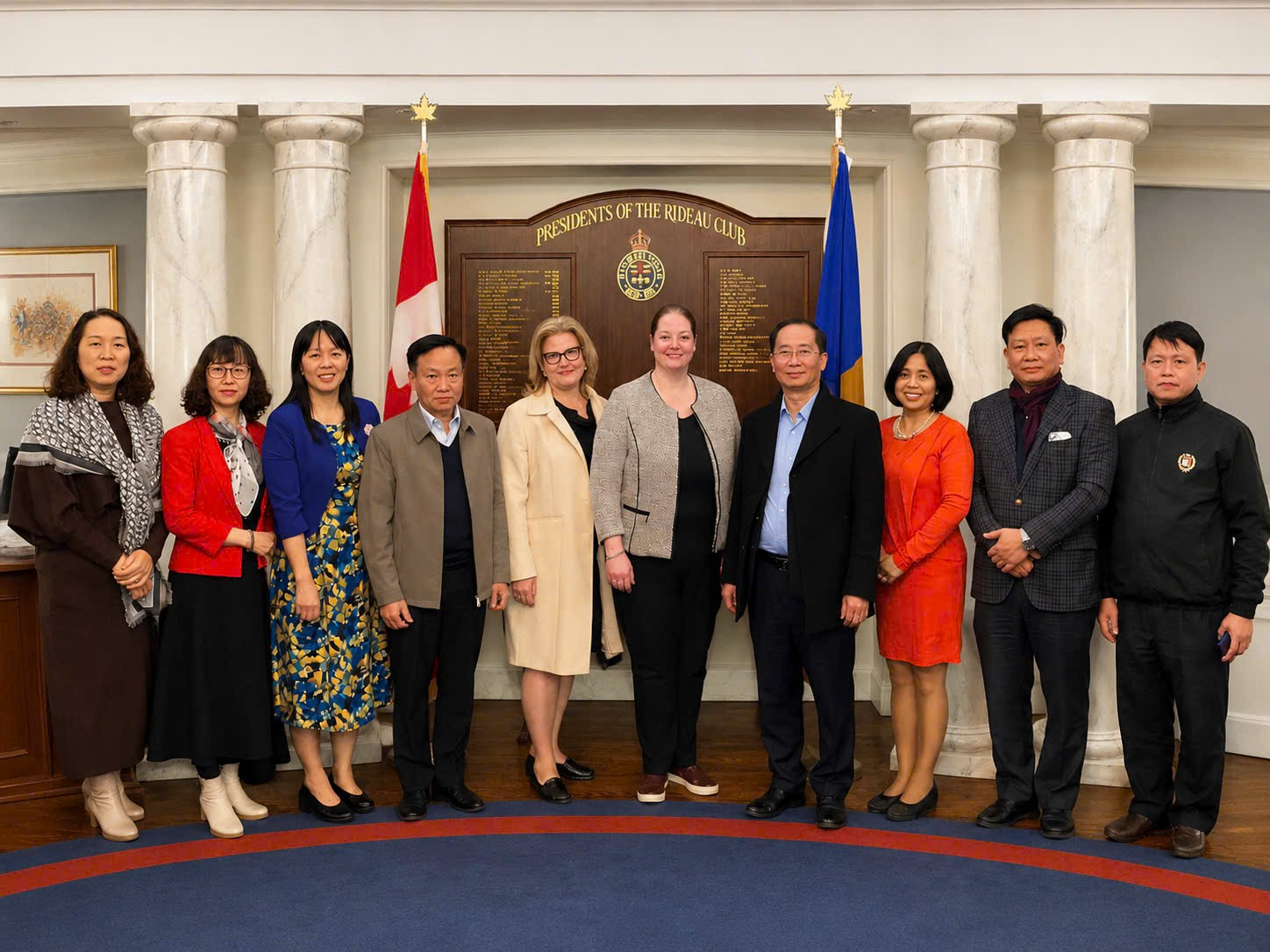 The delegation meeting with Ms. Larissa Bezo, President and CEO of CBIE, before the delegation leaves Ottawa to continue the working program in Québec City