On February 3, 2026, in Hanoi, the Academy of Public Administration and Governance (APAG) held a working session with a delegation from the Gansu Academy of Governance (China). Dr. Bui Phuong Dinh, Vice President of APAG, chaired the meeting
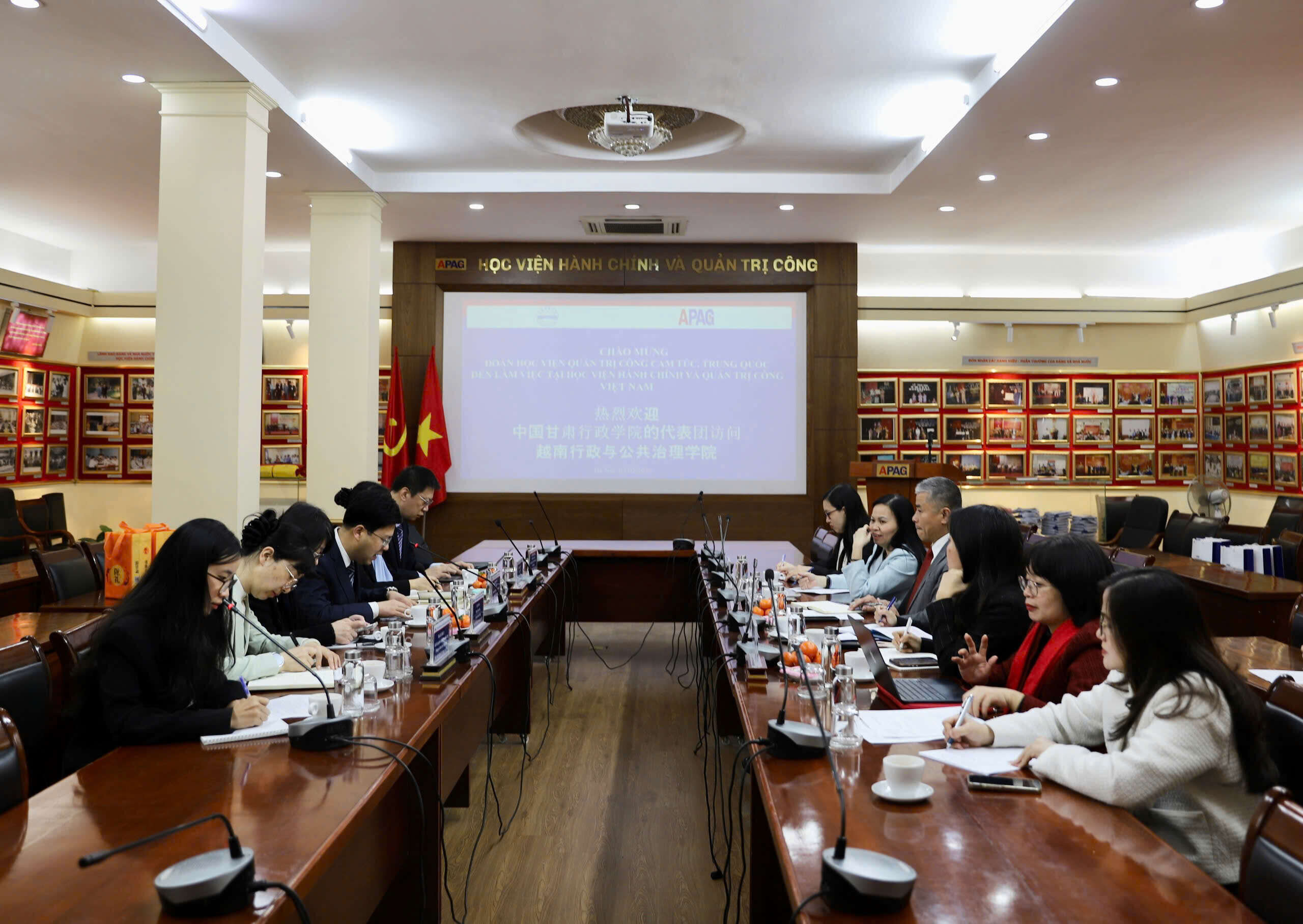
Overview of the working session
Attending the session from the Gansu Academy of Governance (China) were: Prof. Wang Rui, Head of the Department of Teaching and Research on the History of the Communist Party of China (Head of Delegation); Prof. Wei Xia, Vice Dean of the Institute of Party Building (Deputy Head of Delegation); Prof. Ding Yuefeng, Vice Head of the Department of Scientific Socialism and Teaching; Assoc. Prof. Peng Zhaohua, Vice Head of the Department of Teaching and Research on Scientific Socialism; and Ms. Liu Xiao-Li, Research Officer at the Department of Party Building and Leadership Science.
Representing APAG were: Assoc. Prof. Dr. Nguyen Thi Thu Ha, Head of the Faculty of Interdisciplinary Sciences - Foreign Languages - Informatics; Ms. Le Thi Tuyet (M.A.), Deputy Director of the Department of Science Management and International Cooperation; Dr. Bui Thi Thanh Thuy, Deputy Director of the Department of Science Management and International Cooperation; along with lecturers and officials from the respective units.
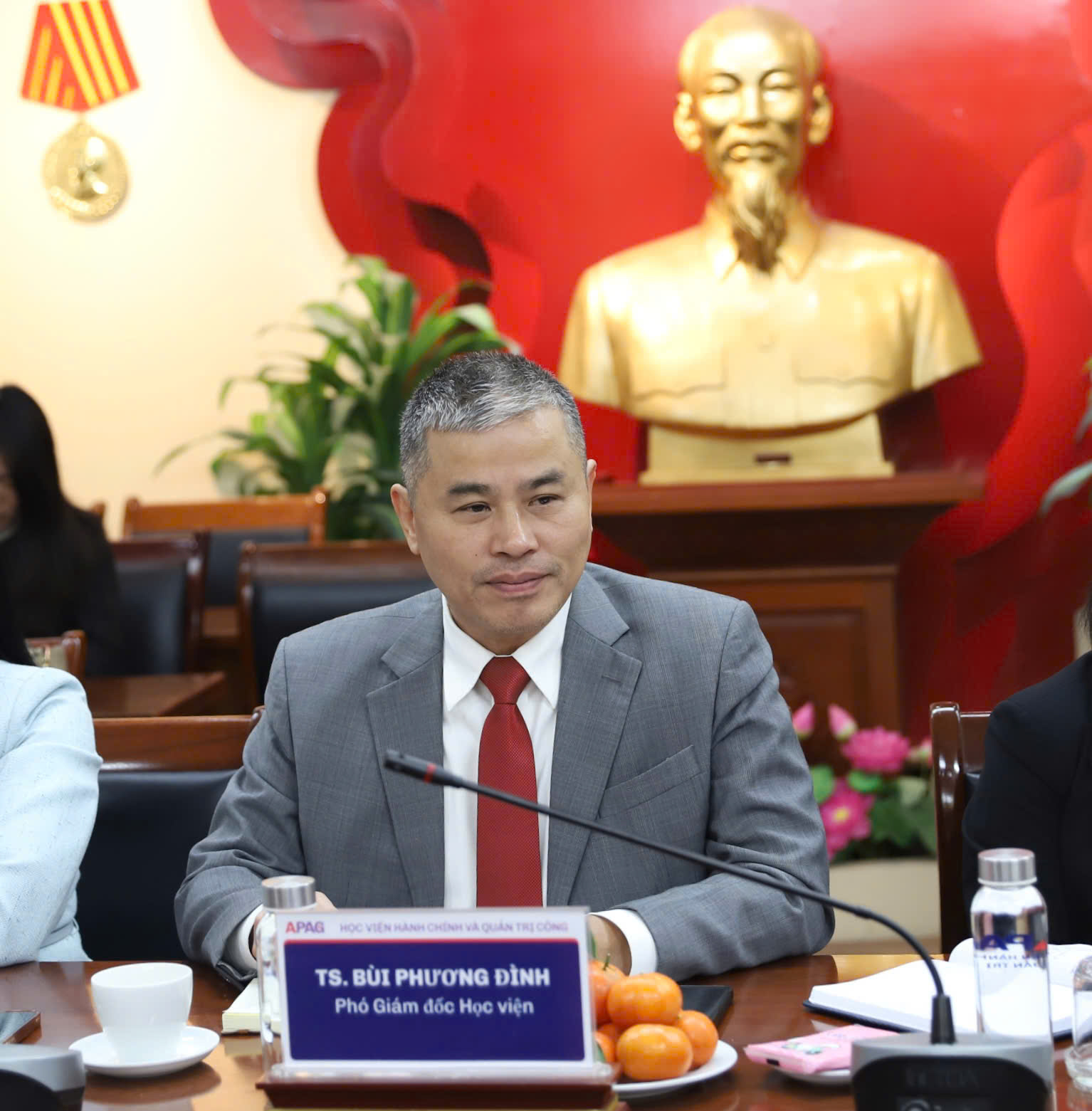 Dr. Bui Phuong Dinh, Vice President of APAG, delivered a welcoming speech
Speaking at the session, Dr. Bui Phuong Dinh welcomed the delegation to APAG and emphasized the special significance of this visit, which coincides with the successful conclusion of Vietnam’s 14th National Party Congress and the 96th anniversary of the founding of the Communist Party of Vietnam (February 3, 1930 – February 3, 2026). Dr. Bui Phuong Dinh affirmed that this working session is a vital opportunity for both sides to enhance academic exchange and share experiences in Party building, public governance, and socio-economic development, thereby deepening the cooperative relationship between the two countries' training and research institutions.
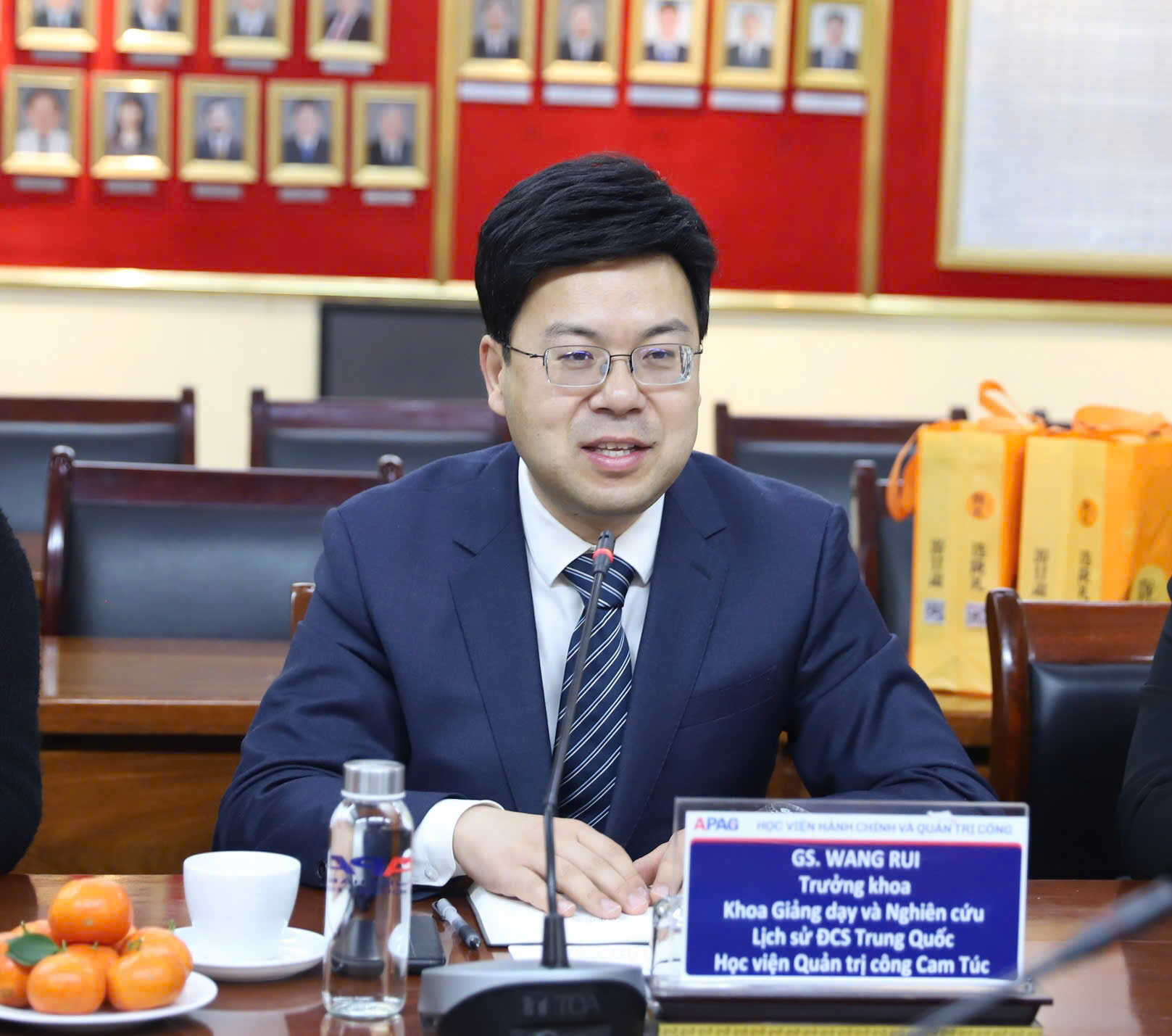 Prof. Wang Rui speaks at the working session
Prof. Wang Rui expressed his sincere gratitude for the thoughtful and warm reception provided by APAG. He noted that the Gansu Academy of Governance specializes in Party building and the protection of the Party's ideological foundations. He stressed that in the current global context, strengthening academic exchange and sharing experiences on grassroots Party organization linked with socio-economic development is of particular importance.
During the session, both sides provided overviews of their respective functions, tasks, organizational structures, and key research areas. The discussions centered on theoretical and practical issues in Party building and public governance, including: the organizational structure and operational mechanisms of grassroots Party organizations; their role in promoting socio-economic development; the integration of Party building with professional activities; and promoting the role of the Party within agencies and organizations.
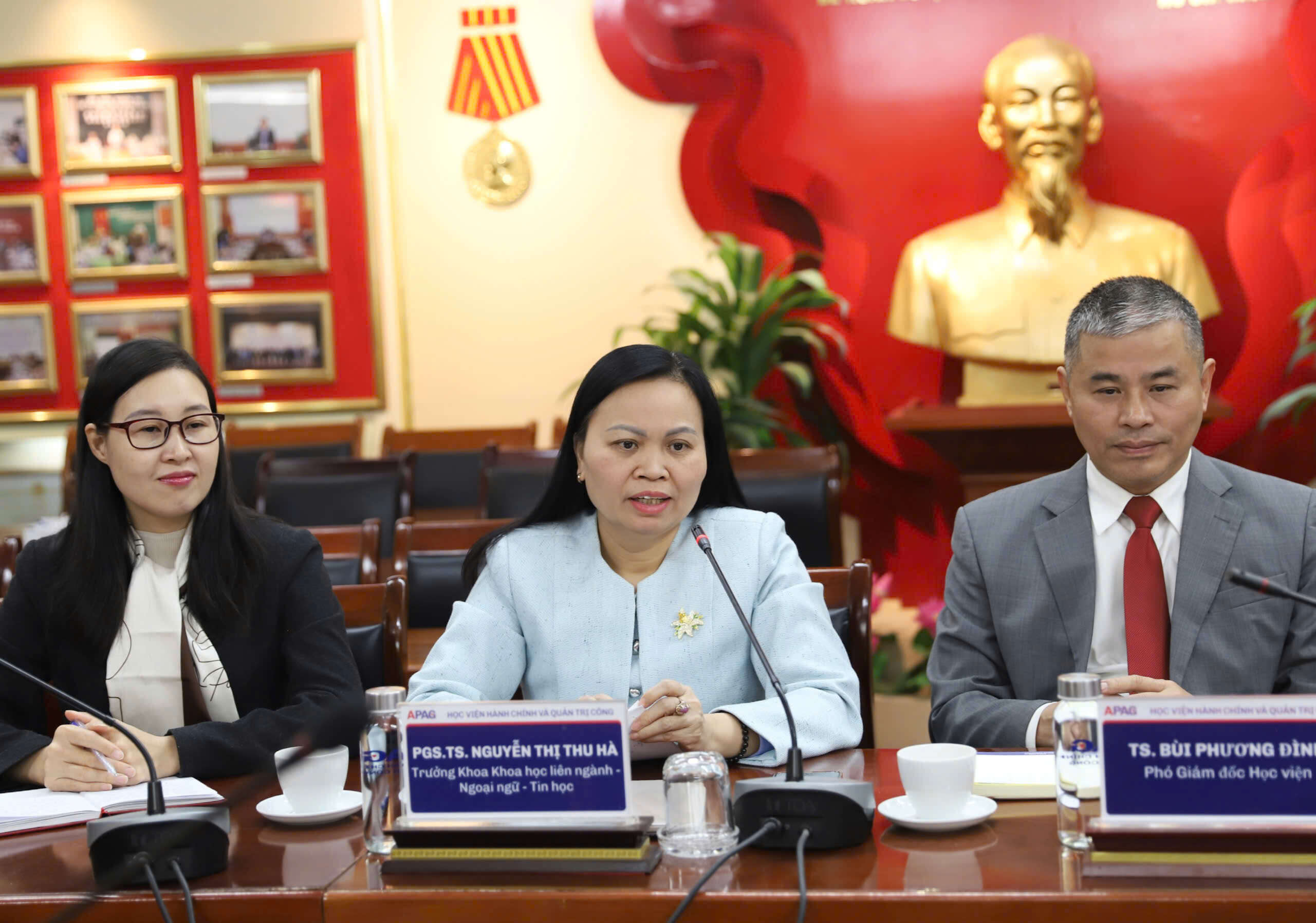 Assoc. Prof. Dr. Nguyen Thi Thu Ha speaks at the working session
Assoc. Prof. Dr. Nguyen Thi Thu Ha shared insights on "The Role of Grassroots Party Organizations and Party Building in Vietnam's Socio-economic Development." She emphasized that these organizations are crucial in translating Party lines into concrete socio-economic results. Vietnam's 40 years of Doi Moi (Renovation) have shown that where grassroots Party organizations are strong and closely linked to political and professional tasks, discipline is maintained, governance capacity is enhanced, and development momentum is unleashed. Party building is not just an internal task but a decisive factor in ruling capacity, leadership efficiency, political stability, and public trust. She further noted that leadership quality depends on the pioneering spirit and prestige of Party members, especially leaders, and called for innovative, action-oriented Party cell meetings that balance strict discipline with incentives for creativity.
In response, Prof. Wang Rui shared China’s experiences, highlighting the integration of Party building with grassroots governance and socio-economic requirements. China emphasizes the "political core" role of Party branches in personnel management, power supervision, and addressing citizens' practical concerns to consolidate social trust. He also noted the use of digital technology in member management and performance evaluation. Furthermore, combining strict discipline with mechanisms to encourage officials to be bold and take responsibility is considered key to enhancing the leadership and fighting capacity of grassroots organizations in the context of a market economy and international integration.
Prof. Wang Rui specifically emphasized raising the quality and ethics of Party members, taking "serving the people" as the highest goal with the motto "the people's interests above all." He also stressed the need to proactively resolve conflicts to protect the Party's ideological foundation and build organizations in the spirit of "building together, developing together," combining theory with practice to improve leadership effectiveness.
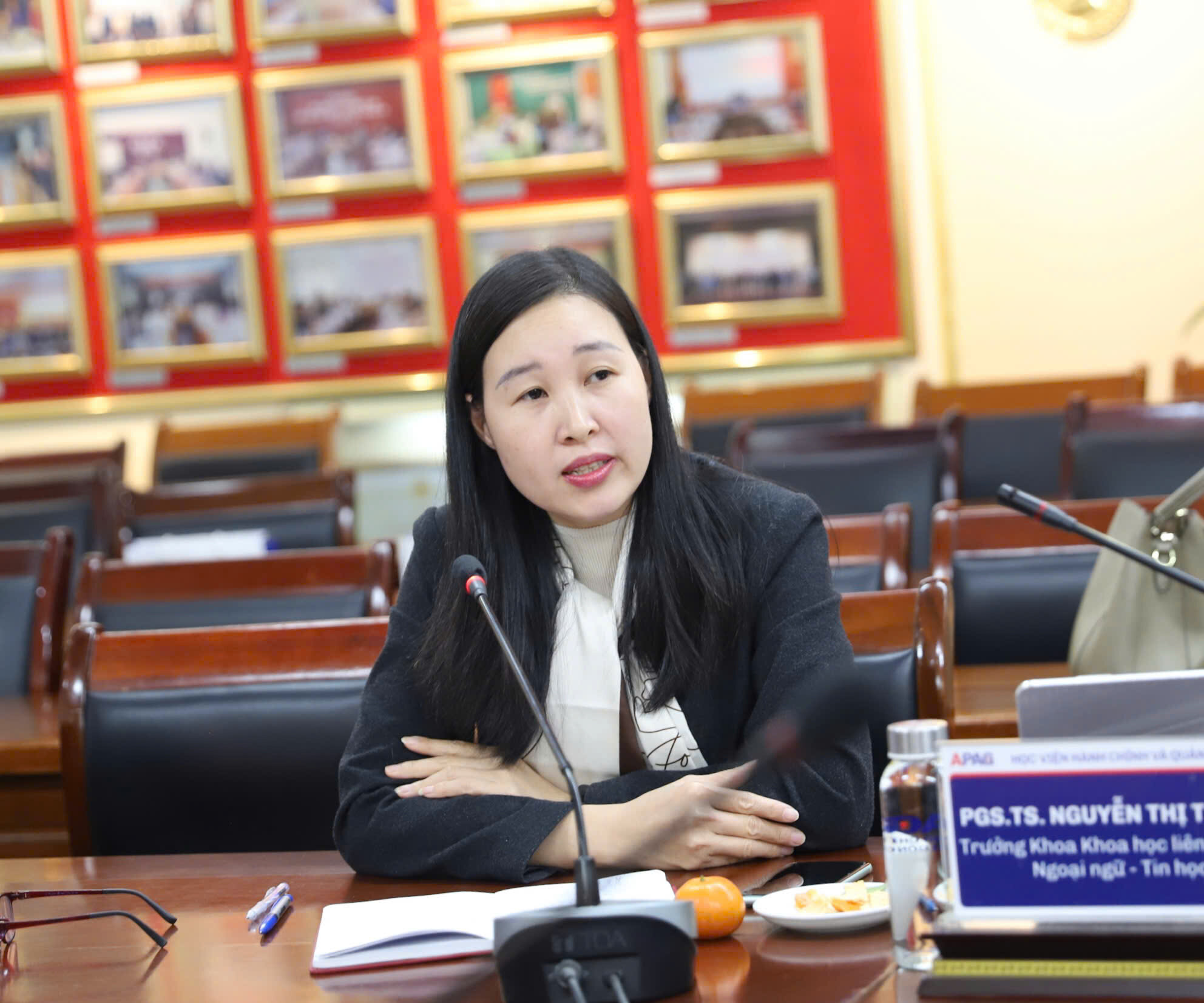 Dr. Nguyen Thi Yen speaks at the working session
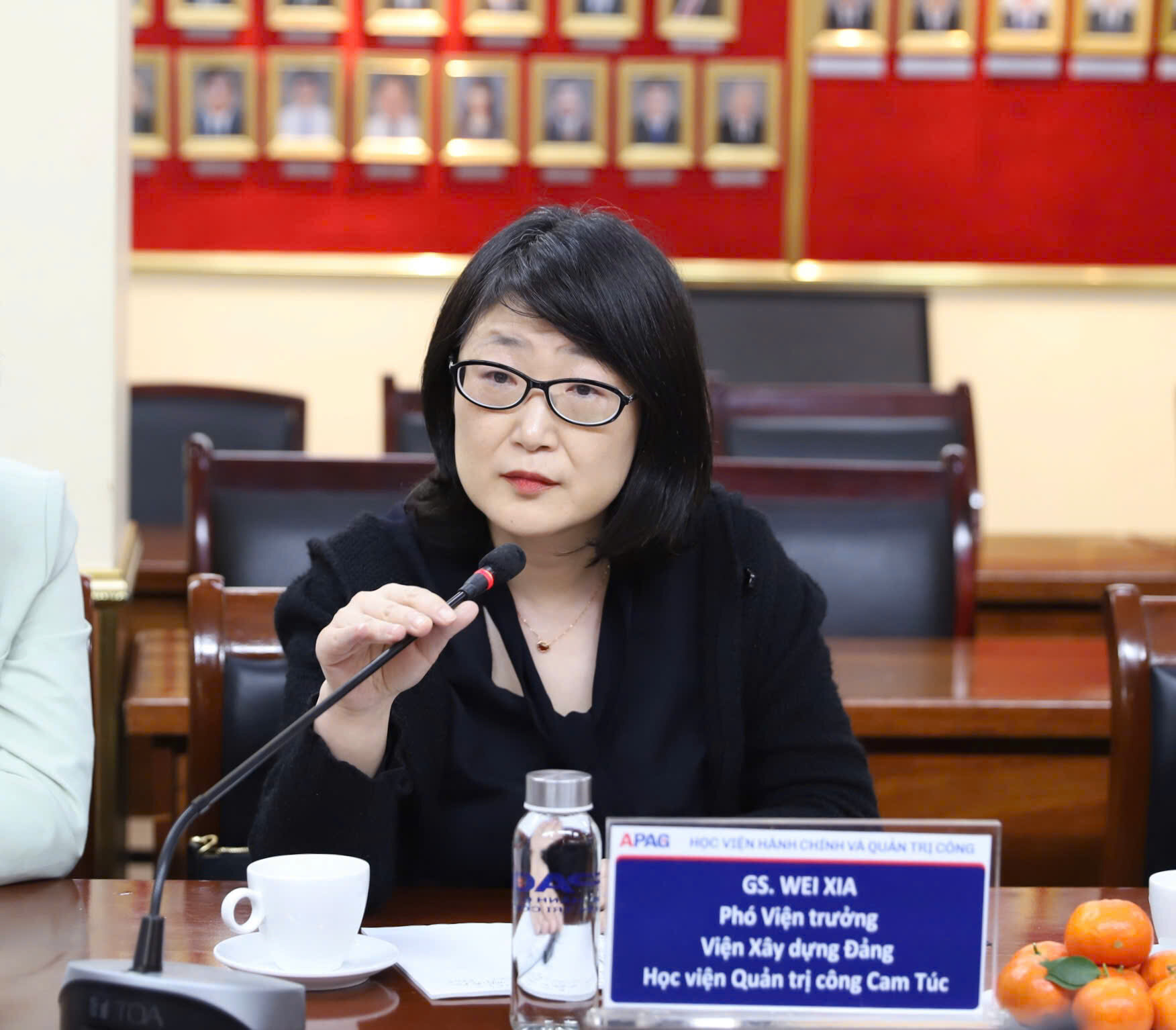 Prof. Wei Xia speaks at the working session
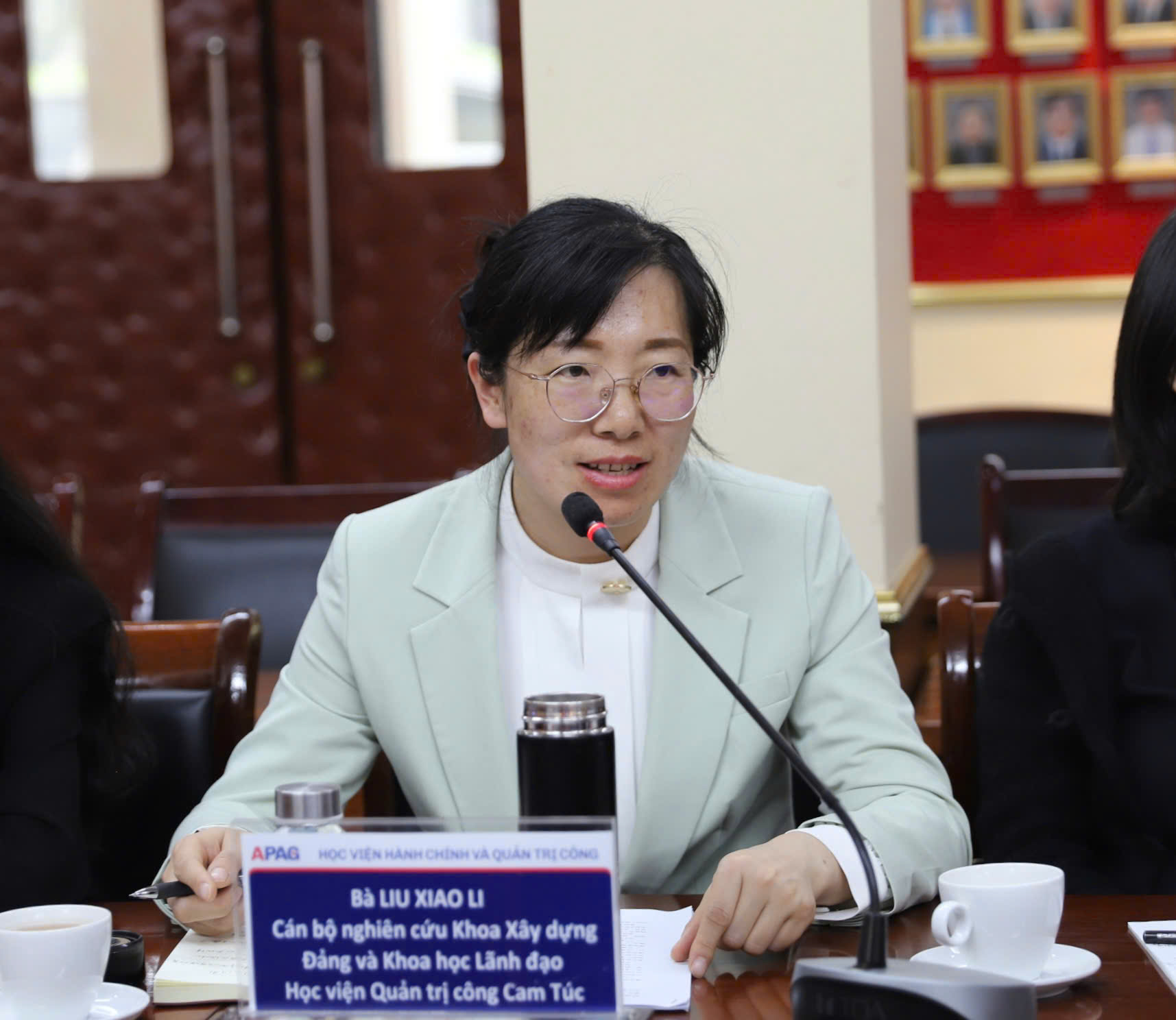 Ms. Liu Xiao-Li speaks at the working session
In addition to professional discussions, the Gansu delegation shared experiences in developing Master's programs in Party Building for APAG. APAG representatives also discussed curriculum design for students majoring in Party Building and State Management, teacher development, and promoting the Party's role within organizations.
The working session took place in an atmosphere of friendship, openness, and construction. The discussions not only clarified theoretical and practical issues but also opened new directions for cooperation in training, scientific research, and experience exchange. The success of this meeting reaffirms APAG's role as an important bridge in promoting academic cooperation and strengthening the bond between Vietnamese and Chinese research and training institutions.
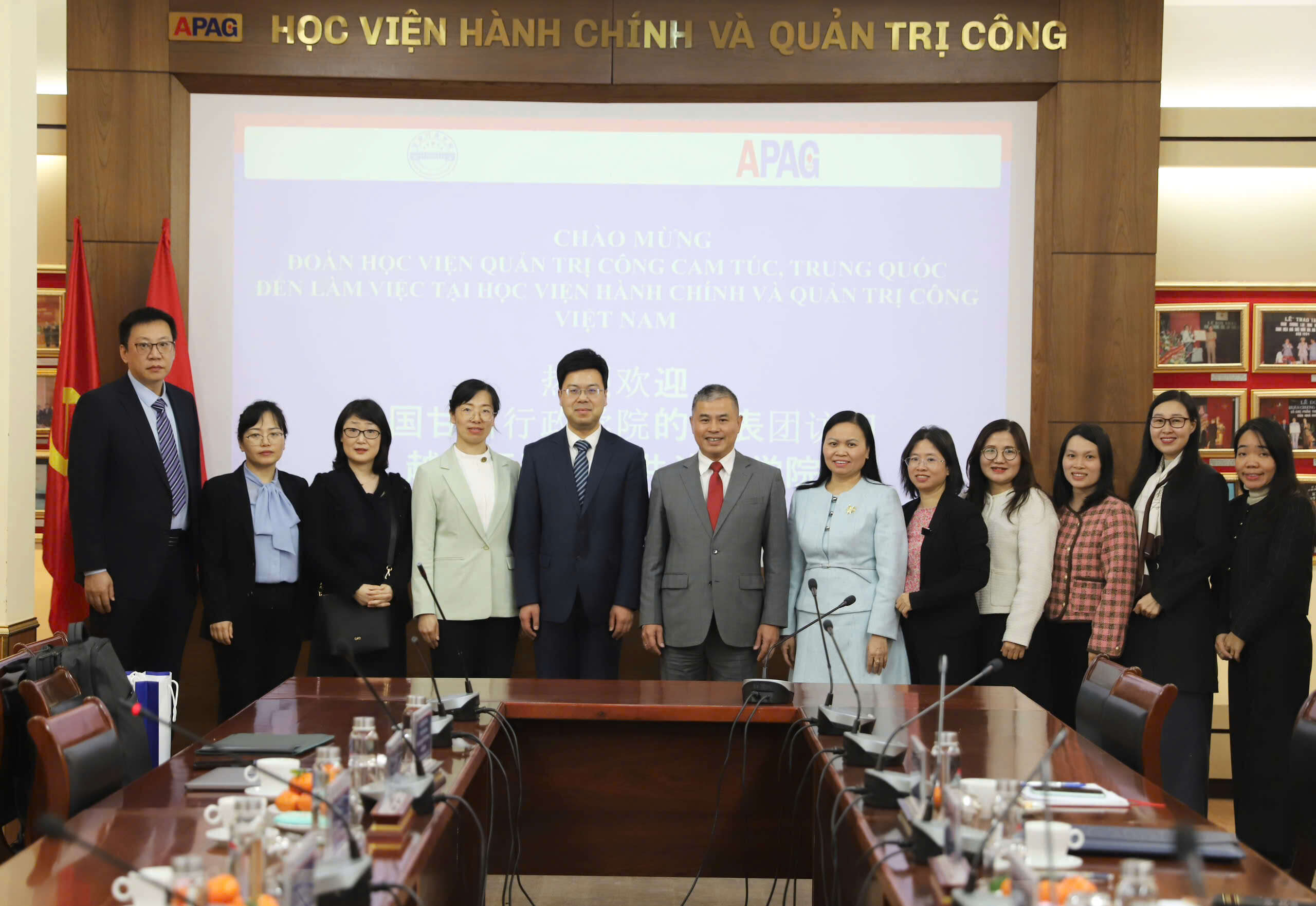 The delegates concluded the session with a commemorative group photo