The World Governments Summit 2026 (WGS 2026) took place in Dubai amidst a powerful restructuring of the global order, as nations simultaneously face growth pressures, geopolitical uncertainties, technological revolutions, and the imperative for sustainable development. Under the theme “Shaping Future Governments,” the Summit served not only as a high-level policy exchange forum but also as a space to shape strategic thinking on state models, governance methods, and the role of government in the 21st century. In this context, the contribution of the Academy of Public Administration and Governance (APAG) of Vietnam— represented by Assoc. Prof. Dr. Nguyen Ba Chien, the Academy’s President—demonstrated a shift from a position of reception to one of proactive sharing of institutional reform experiences. This contribution adds to the global dialogue on building effective, agile, and human-centric governments
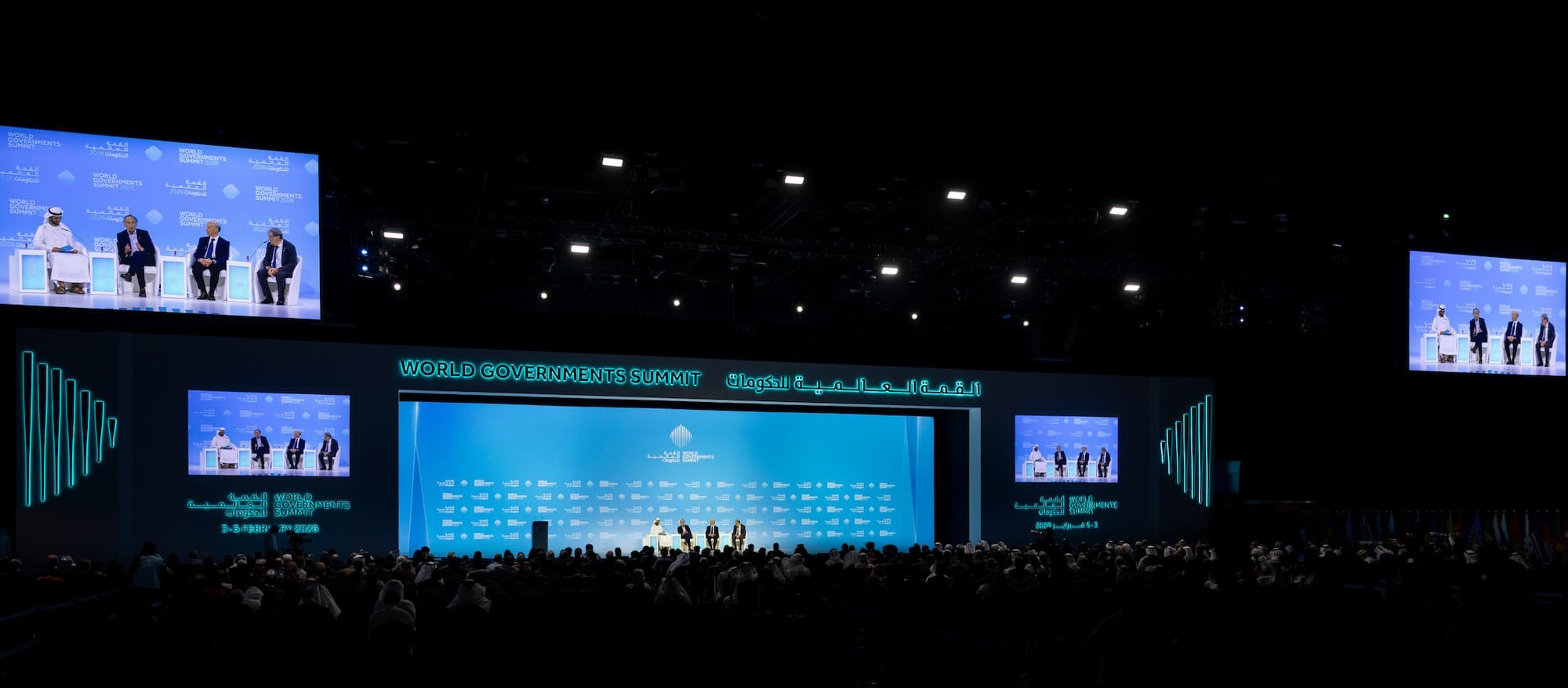 Overview of the World Government Summit 2026
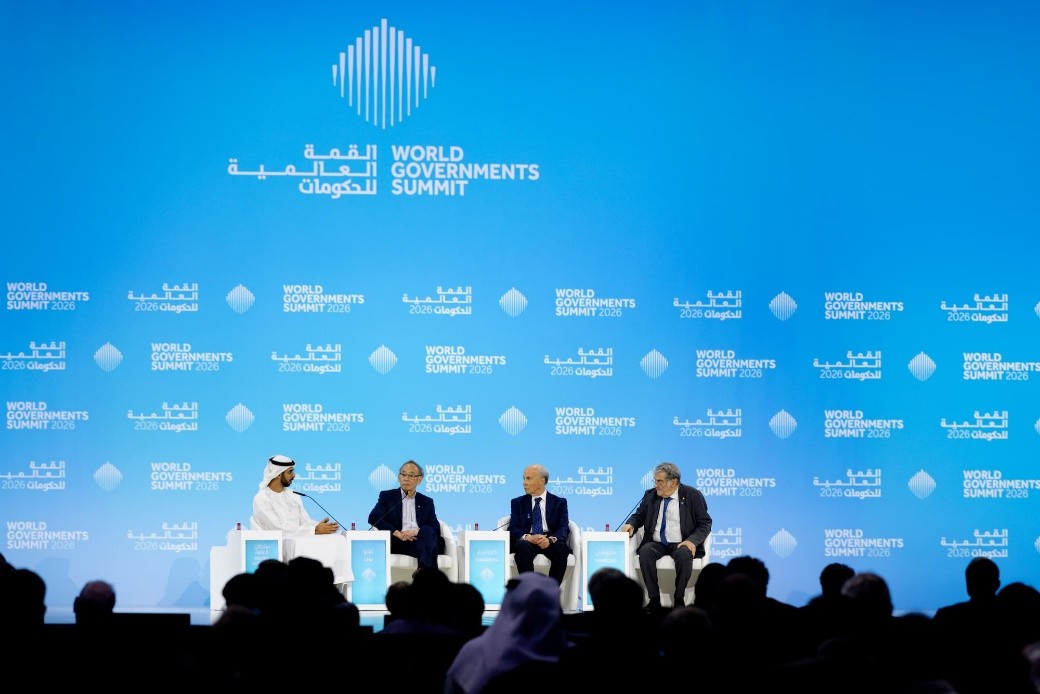 Overview of the World Government Summit 2026
The World Governments Summit 2026 took place from February 3–5, 2026, in Dubai, United Arab Emirates. As one of the world’s largest political and governance forums, it gathered heads of state, ministers, leaders of international organizations, scholars, and the innovative business community to share strategic visions, policies, and implementation solutions in a rapidly transforming world. With over 6,000 delegates, more than 35 heads of state, representatives from over 150 governments, approximately 500 ministers, and numerous CEOs of major corporations participating in over 445 multi-sectoral sessions, WGS 2026 was not only a high-level space for knowledge exchange but also an action-oriented platform to promote governance innovation, international cooperation, and global strategic planning.
Key themes ranged from global governance and effective leadership, social welfare and human capacity development, to economic prosperity, future urban landscapes, and demographic shifts. It also explored new development frontiers such as artificial intelligence (AI), digital transformation, and climate change. A defining feature of WGS 2026 was its interdisciplinary approach, combining public policy, technology, economics, and society with a consistent vision: building smart, agile, data-driven, and innovative governments while designing human-centric development models oriented toward long-term sustainability.
High-Level Roundtable: Vietnam shares institutional reform experiences
A key highlight of WGS 2026 was the Ministerial roundtable discussion "Shaping Future Governments I: Achievements and Challenges in the Global South," held on February 4, 2026. This was a multi-dimensional dialogue space on institutional reform and public governance models from national, regional, and global perspectives. It served as a strategic dialogue seeking solutions for "dual pressure": driving breakthrough growth while ensuring social stability amidst variables such as digital transformation, climate change, and population aging.
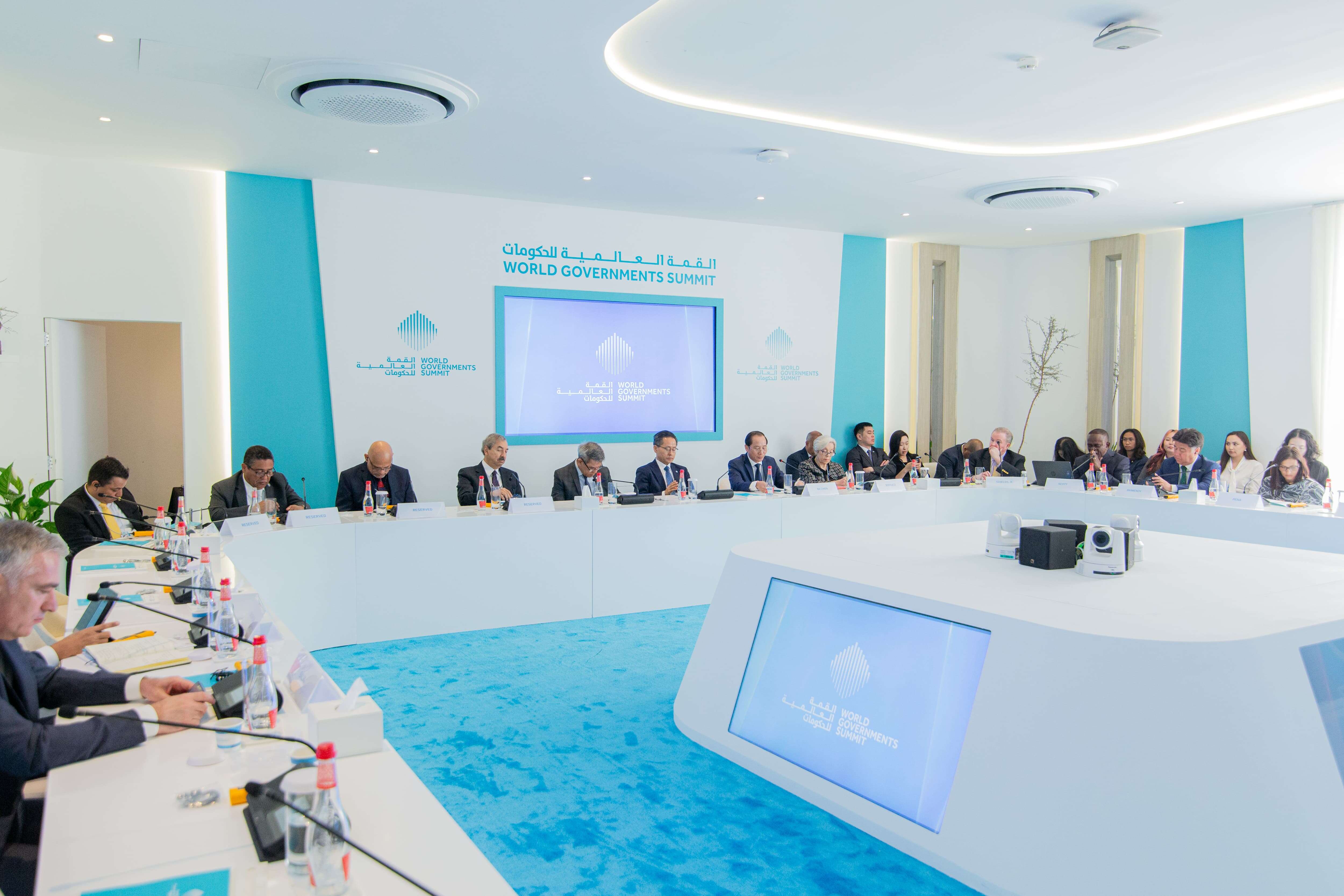 Assoc. Prof. Dr. Nguyen Ba Chien, President of the APAG, attended and spoke at the High-Level Roundtable Seminar: Shaping Global Government
The roundtable brought together ministers, government agency leaders, representatives of international organizations, and academic experts from the Asia-Pacific, Africa, Latin America, and Eastern Europe, including:
The roundtable gathered ministers, government leaders, international organization representatives, and scholars from the Asia-Pacific, Africa, Latin America, and Eastern Europe, including:
· Central Asia & Eastern Europe: H.E. Zhashan Madiyev (Deputy Prime Minister, Minister of AI & Digital Development, Kazakhstan); H.E. Paata Salia (Minister of Justice, Georgia).
· Asia: H.E. Balisacan (Secretary of NEDA, Philippines); H.E. Mujutaz (Chairman of the Civil Service Commission, Maldives); and Assoc. Prof. Dr. Nguyen Ba Chien (President of the Academy of Public Administration and Governance, Vietnam).
· Africa: H.E. Ms. Amara Kallon (Minister of Public Service, Sierra Leone); H.E. Ms. Emma Theofelus (Minister of ICT, Namibia); H.E. Rodrigues Dias (Minister of Public Administration, Angola).
· Latin America: H.E. Ms. Cynthia Gellibert (Minister of Public Administration, Ecuador); H.E. Jorge Herrera (President of the National Assembly, Panama); along with Deputy Ministers from the Dominican Republic, Paraguay, Peru, and Cuba.
· International Organizations & Scholars: Leaders of global governance networks such as Dr. Alikhan Baimenov (Chairman of ACSH), Dr. Alex Brillantes (Secretary-General of EROPA), Dr. Conrado Ramos (Secretary-General of CLAD), Dr. George Scott (Secretary-General of AAPAM), and Dr. William Shields Jr. (Executive Director of ASPA, USA).
Beyond theoretical frameworks, the discussion focused on practical solutions for institutional reform: building agile governance models adapted to the era of AI and big data; optimizing public services by enhancing administrative capacity to better serve citizens, and narrowing gaps by reducing inequality and moving toward Sustainable Development Goals (SDGs) in a volatile world.
Speaking at the forum, Assoc. Prof. Dr. Nguyen Ba Chien stated that in a rapidly changing and unpredictable world, the central question of national governance is not merely how to grow faster, but more importantly, how to govern for sustainable and inclusive development where no one is left behind.
Sharing experiences from Vietnam, he emphasized that institutional reform is not simply a technical management improvement, but a strategic choice of development path, crucial for opening a new era for the nation. Entering 2026, Vietnam possesses significant economic achievements but stands at a structural crossroads: either breaking through to become a developed nation or facing the middle-income trap as traditional growth drivers reach their limits.
A unique advantage of Vietnam, according to Dr. Nguyen Ba Chien, is its valuable “social capital”—political stability, social consensus, and public trust in the reform process. This foundation enables Vietnam to implement major, difficult, and sensitive reforms, including those directly impacting the organizational apparatus and traditional governance methods.
On this basis, Vietnam has established a comprehensive and long-term institutional reform vision, institutionalized in the strategic resolutions of the 14th Party Congress, with a consistent philosophy: Proactive State - Market-led - Social Partnership - People-centric.
Reform efforts focus on promoting innovation and digital transformation, institutionalizing a new growth model based on the digital economy and green transition, and shifting legal thinking from "management" to "enabling," all while linking reform with deep international integration and strategic autonomy.
Specifically, Assoc. Prof. Dr. Nguyen Ba Chien highlighted the alignment of institutional reform with the revolution of streamlining the organizational apparatus and enhancing the State's action capacity. In the 2024-2025 period, Vietnam carried out a deep restructuring of the administrative apparatus at both central and local levels, coupled with decentralization, delegation of power, and strengthening accountability. The goal is not just streamlining to save costs, but more importantly, shortening decision-making processes, bringing the government closer to the people, improving public service quality, and releasing resources for development and social welfare.
From this perspective, Assoc. Prof. Dr. Nguyen Ba Chien affirmed that institutional reform in Vietnam is directly transforming into substantive executive capacity, social trust, and new development space, demonstrated through the removal of long-standing bottlenecks and the maintenance of high economic growth amidst global instability.
Concluding his speech, he outlined three key messages for thinking about future governments:
1. First, the government of the future is not one with more power, but one with higher action capacity.
2. Second, streamlining the apparatus does not diminish the State's role but enhances the quality of State governance, focusing on what the State does best and what society needs most.
3. Third, sustainable development cannot be separated from social justice and human happiness.
According to Assoc. Prof. Dr. Nguyen Ba Chien, future governments cannot be designed based on technology alone but must be built on three fundamental pillars: the rule of law, public ethics, and social trust. In this spirit, Vietnam is ready to share its institutional reform experiences as a practical contribution to the global dialogue on "Shaping Future Governments," while affirming its desire to be a reliable and responsible partner of the international community in the effort toward sustainable development, peace, and common prosperity.
The presence and contribution of the President of the Academy of Public Administration and Governance at the Ministerial roundtable not only amplified Vietnam's voice in global policy dialogues but also affirmed the Academy's increasingly clear role as a knowledge center, academic partner, and policy bridge between Vietnam and the world. This was also an important opportunity for the Academy to establish its position as a prestigious academic partner and a vital policy bridge between Vietnam and the international community. Through this forum, the Academy not only expanded its international cooperation network but also created new values in research and training, promoting the process of comprehensive and sustainable integration.
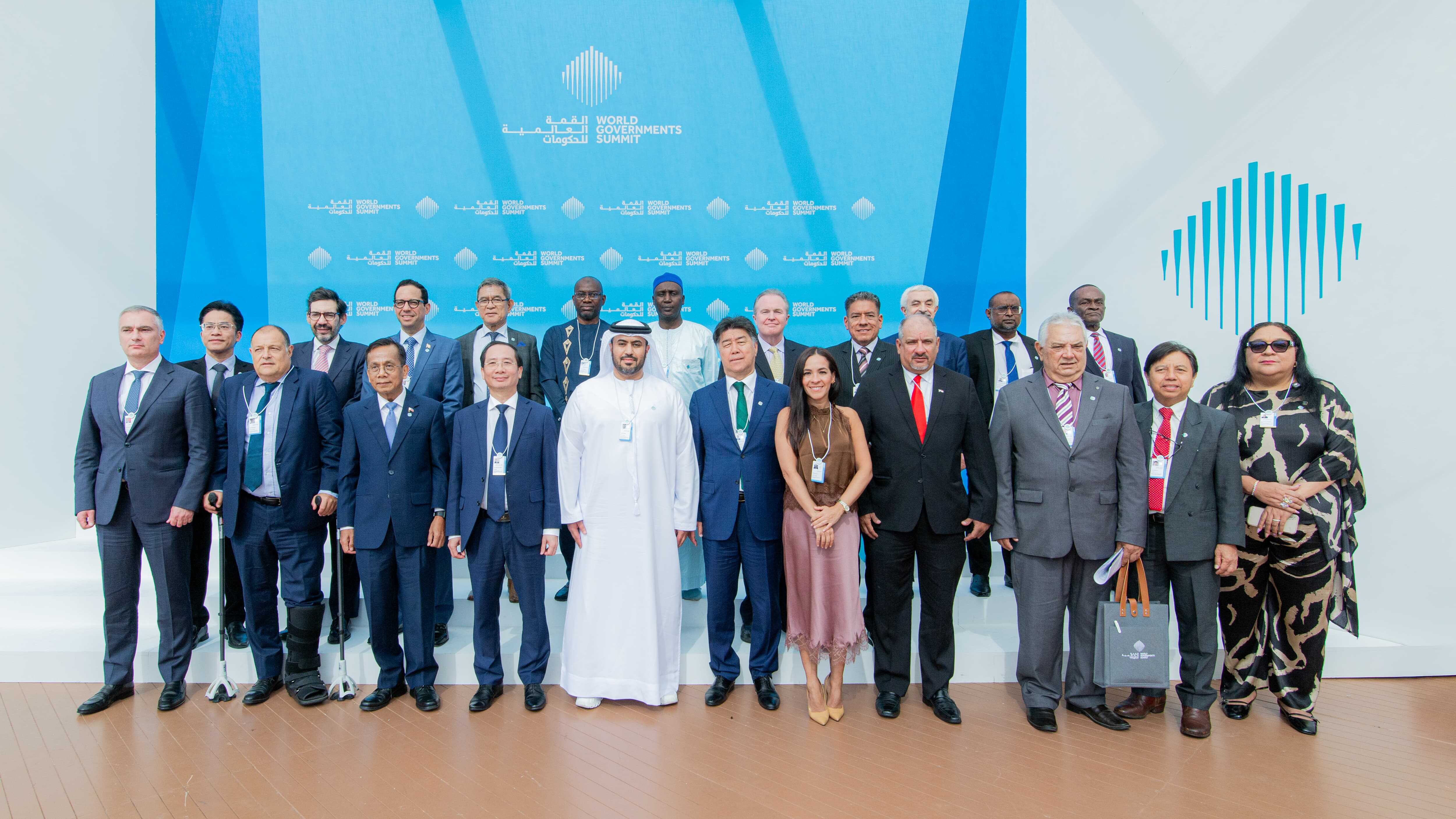 Delegates attending the Roundtable “Shaping Future Governments I: Achievements and Challenges in the Global South” taking a commemorative photo
The World Governments Summit 2026 once again affirmed the role of governance as the foundation for sustainable development in the 21st century. In this general picture, Vietnam is not just a learner but is step-by-step becoming an experience sharer and a knowledge partner, contributing to shaping thoughts and solutions for future governments—more effective, more humane, and more sustainable.
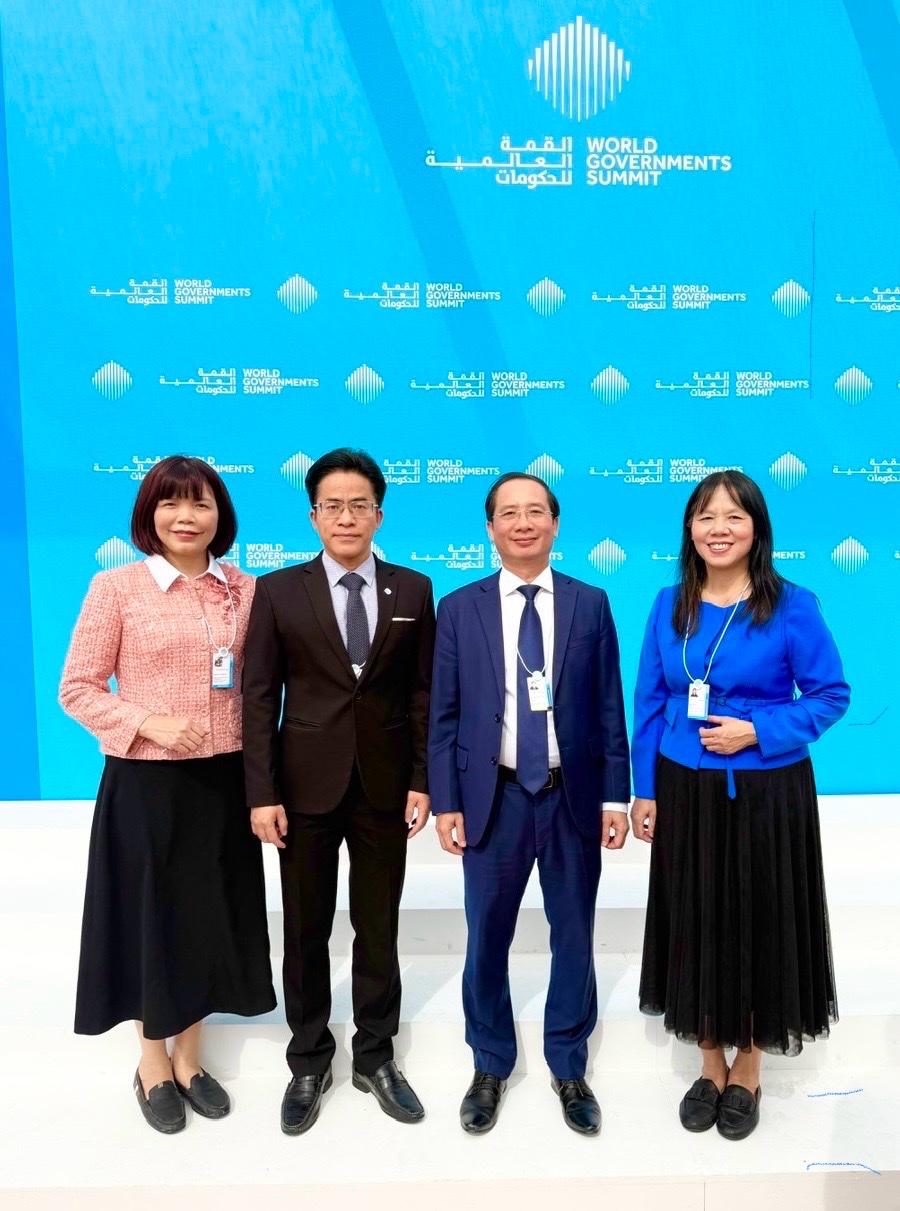 The delegation of the Academy of Public Administration and Governance poses for a commemorative photo with the Ambassador of Vietnam to the United Arab Emirates
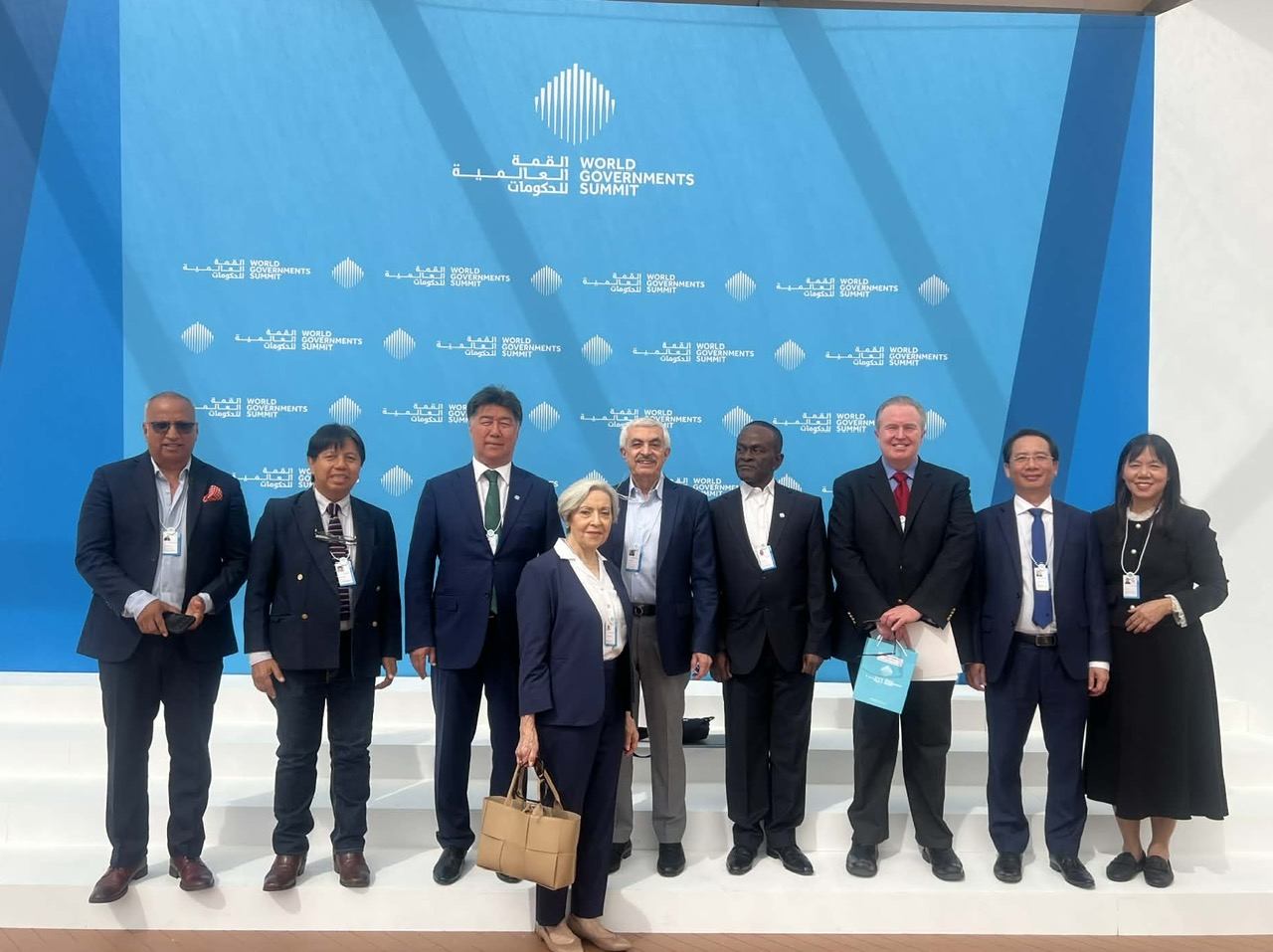 The delegation of the Academy of Public Administration and Governance taking commemorative photos with international delegates
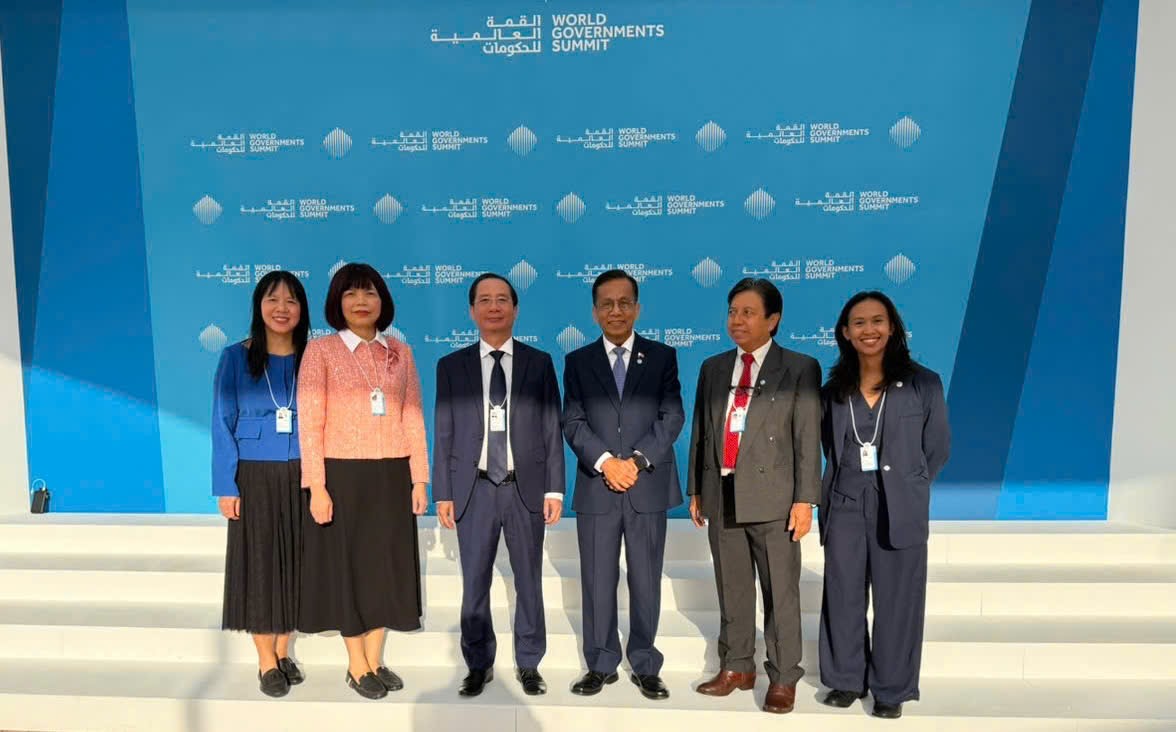 The delegation of the Academy of Public Administration and Governance taking commemorative photos with international delegates
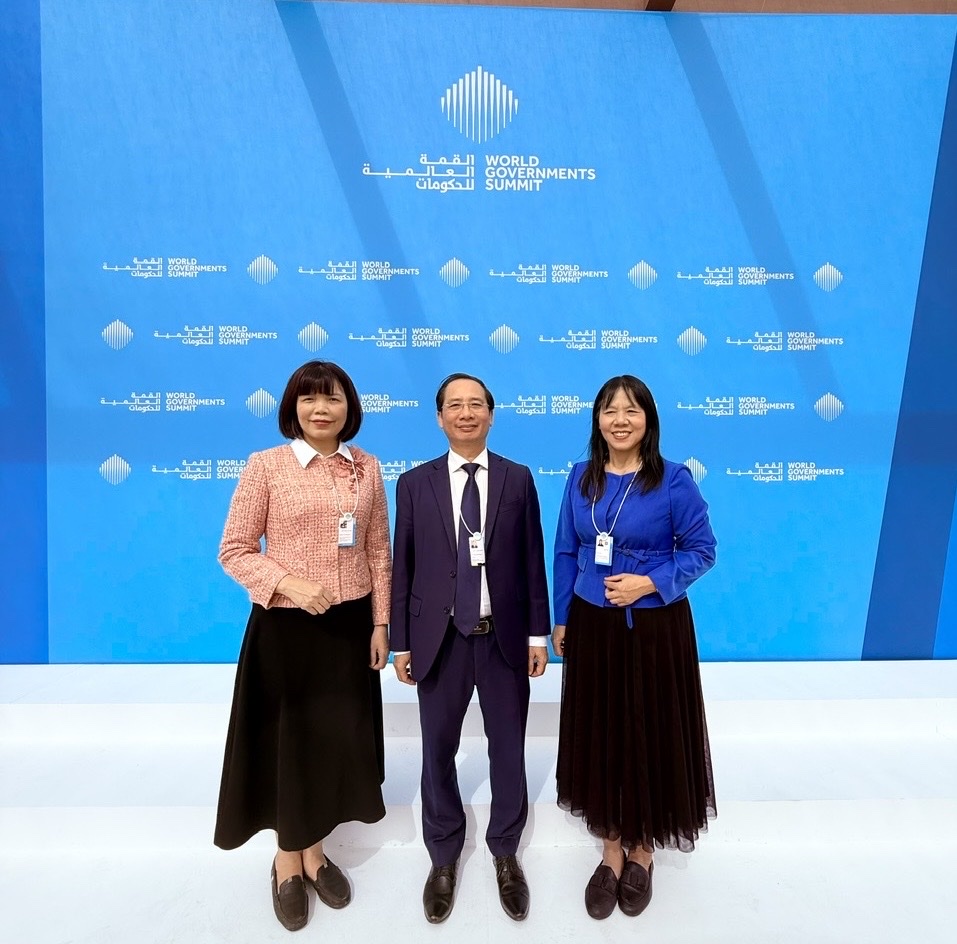 The delegation of the Academy of Public Administration and Governance at the World Governments Summit in the UAE, 2026