On the afternoon of 8 October 2026, a delegation from the European Union (EU), led by Mr Stefaan Hermans, Director for Competitiveness, Talent Mobility and International Cooperation at the European Commission’s Directorate-General for Education, Youth, Sport and Culture (DG EAC), visited Hanoi University for a working meeting to discuss the outcomes of cooperation and the implementation of Erasmus+ programmes, including mobility programmes for students, academic staff and administrative staff between Vietnamese and European higher education institutions
In the meeting, Ms Ngo Phuong Dung, representing Hanoi University, presented the HANU’s achievements over more than 10 years of implementation of Erasmus+ programmes, since the European Union launched the programme.[1]
In particular, the project “Strengthening Internationalization of Vietnamese Emerging Universities – STRIVE” is one of eight Erasmus+ projects[2] approved for funding by the European Union. Hanoi University serves as a connecting institution, facilitating cooperation and implementation between European organisations and universities and Vietnamese universities.
These projects focus on three key pillars: employability, internationalization, and digitalization.
The STRIVE project is currently carrying out its final activities and is expected to conclude in January 2027, as scheduled.
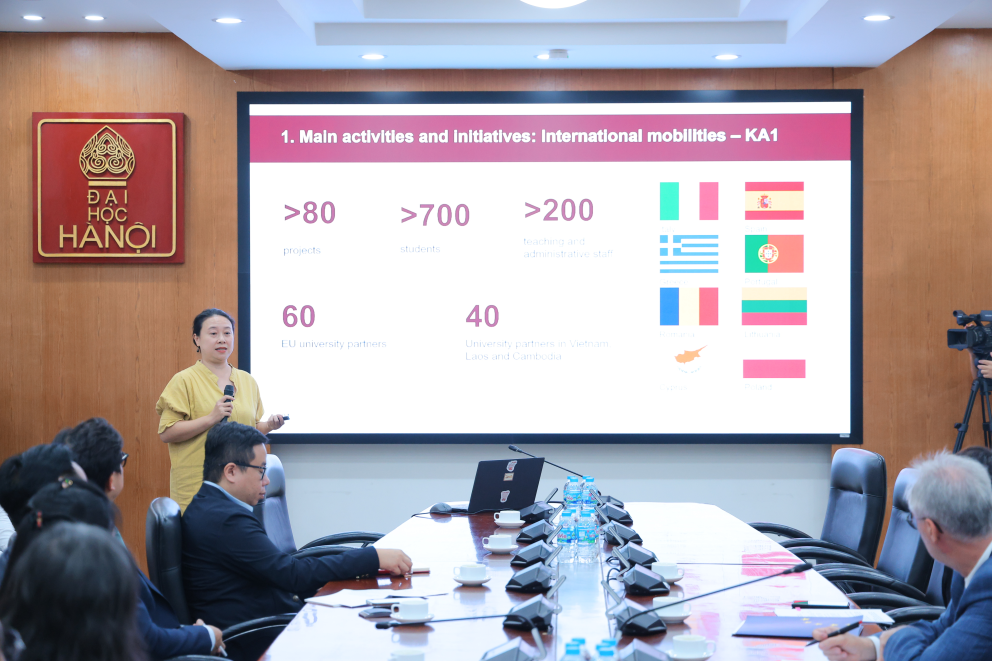 Presentation summarising and evaluating Hanoi University’s achievements from 2015 to the present
Three presentations delivered by students, alumni, and academic staff who had participated in mobility programs provided an overall picture of the programs' achievements and the benefits gained by their participants.
Dr Tran Thi Lan Anh, Vice Dean of the Faculty of Law of APAG, represented the more than 200 staff members (lecturers and staff) in Vietnam and shared her experiences and the benefits she had gained from participating in a lecturer mobility program at the University of Tuscia, Italy, in November 2025.
Through such mobility opportunities, participants not only receive training and enhance their confidence and professional competencies, but also gain exposure to innovative thinking, teaching and research methodologies, and the application of technology and artificial intelligence (AI) in education, training and management. More importantly, they can translate their individual learning experiences into institutional value, thereby expanding international cooperation and strengthening their institutions’ development strategies.
In her presentation, Dr Tran Thi Lan Anh has proposed to the European Union Delegation, emphasising the need to transform the cooperation model between Vietnam and the European Union through Erasmus+ projects: from “academic mobility to sustainable partnerships”, from “individual experience-sharing to institutional cooperation”, and from “knowledge transfer to knowledge co-creation”. She also underscored the responsibility of programme beneficiaries to “learn, share, connect and contribute”.
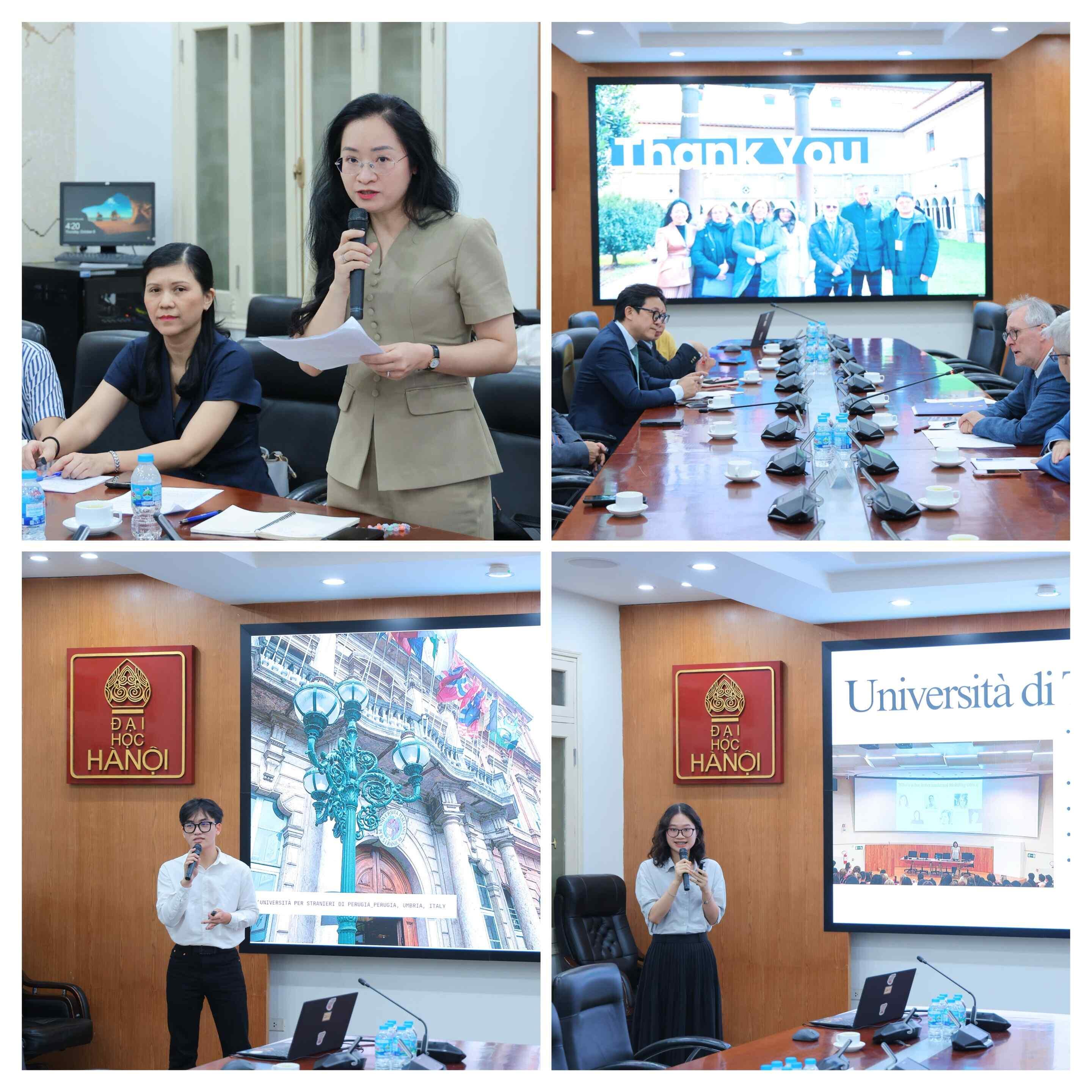 Presentations delivered at the meeting
Following the presentations, Mr Stefaan Hermans affirmed that Erasmus+ is one of the EU’s flagship programmes, embodying its commitment to openness and its readiness to connect with the wider world. He emphasised that the core value of Erasmus+ lies in supporting participants’ personal development, enabling them to learn from experience, and enhancing their professional competencies and skills.
During the meeting, Mr Stefaan Hermans highly appreciated Hanoi University’s role and contributions to the implementation of EU educational cooperation programmes. He expressed his hope that Hanoi University would continue to build on its experience and expertise, as well as its role as a connecting institution, by sharing effective implementation models with other partner universities in Vietnam. He noted that educational cooperation not only aims to enhance professional competencies but also contributes to strengthening people-to-people exchanges, fostering mutual understanding between cultures, and building sustainable partnerships.
Furthermore, Mr Stefaan Hermans emphasised that the value of international mobility programmes lies not only in the knowledge acquired but also in the ability of participants to share and disseminate their experiences, perspectives and new working methods upon returning to their home institutions. He affirmed that academic mobility should be promoted as a two-way process, creating opportunities for both Vietnamese and European higher education institutions to learn from one another, share experiences and grow together.