On April 8, 2026, in Hanoi, the Academy of Public Administration and Governance organized the Seminar titled "Local Governance in the Asia-Pacific Region: Trends, Challenges, and Capacity Building Requirements." The seminar was held in an in-person format and broadcast online to the Academy's branch campuses. Assoc. Prof. Dr. Nguyen Ba Chien, President of the Academy, chaired the Seminar.
Attending the Seminar, representing the Eastern Regional Organization for Public Administration (EROPA), were: Prof. Dr. Alex Brillantes Jr., Secretary-General of EROPA; Ms. Kartherine Edem, Senior Administrative Officer of EROPA; and Ms. Ainna Shariz Comia, Senior Researcher and EROPA Office Manager. Representing the Academy were leaders of units under and affiliated with the Academy, along with a large number of teachers, officials, and scientists of the Academy.
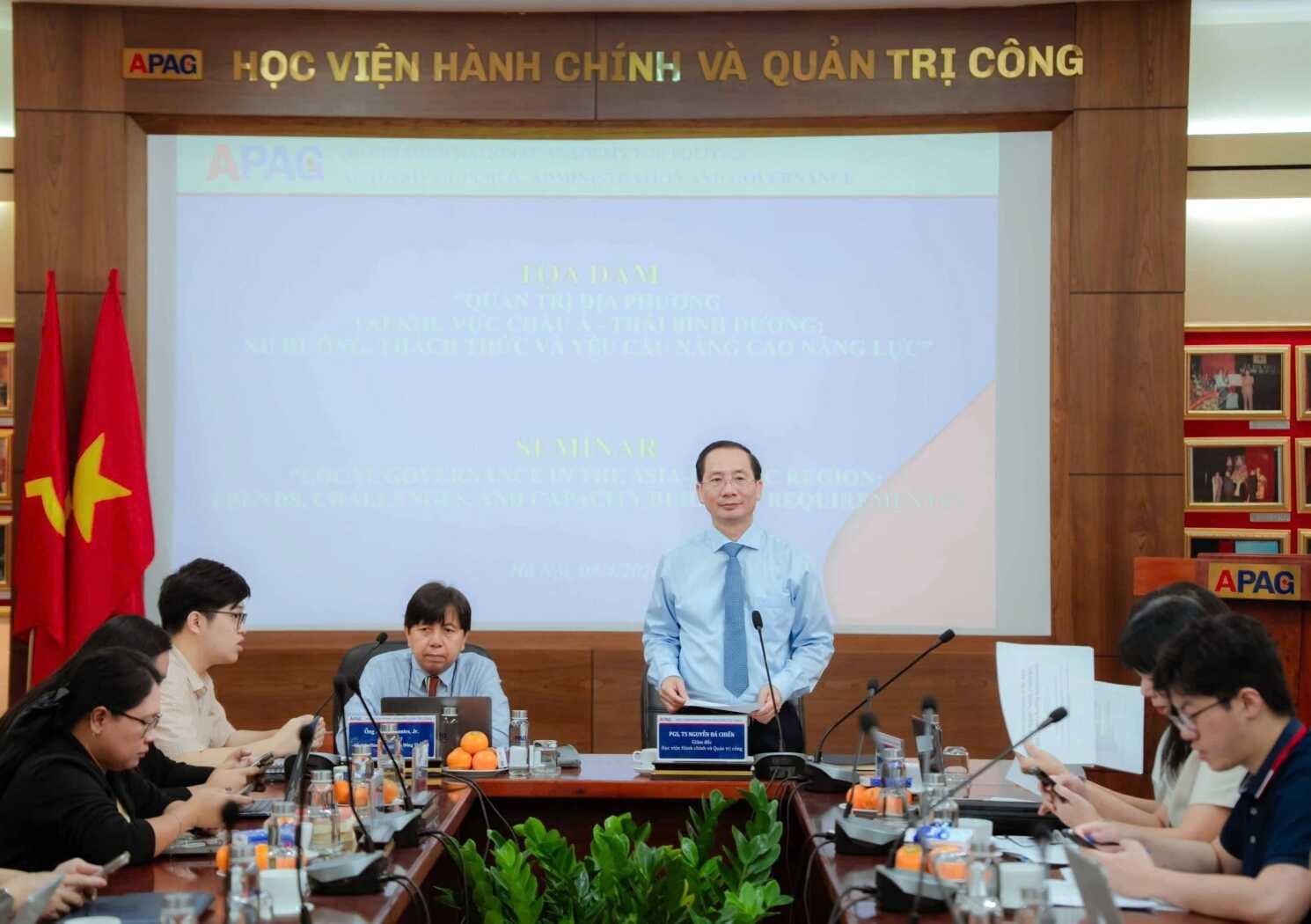 Assoc. Prof. Dr. Nguyen Ba Chien, President of the Academy, delivering the opening speech at the Seminar
Delivering the opening speech at the Seminar, Assoc. Prof. Dr. Nguyen Ba Chien, President of the Academy of Public Administration and Governance, emphasized the strategic vision of modern national governance through the lens of decentralization and delegation of power. The President of the Academy affirmed that this is not merely the arrangement of the administrative apparatus, but its core is the reallocation of power, resources, and responsibilities to meet the requirements of effectiveness, efficiency, and high adaptability of the state apparatus. According to Assoc. Prof. Dr. Nguyen Ba Chien, local governments are experiencing a strong shift from a passive "executing" role to a "development constructive" role, requiring a more open, flexible, and multi-nodal governance mindset.
Within this context, the President of the Academy clearly outlined three key pillars: first, localities need to proactively create development space instead of just waiting for orders; second, decentralization must go hand in hand with autonomous capacity, especially modern public financial governance to mobilize social resources; and third, establishing a transparent accountability mechanism—considering this the most substantial measure of capacity and public service ethics. He expressed his expectation that the international experiences from Prof. Dr. Alex Brillantes Jr. will be deeply researched by the Academy's teaching staff and directly translated into training programs, helping learners effectively apply them to practical leadership and governance at the local level.
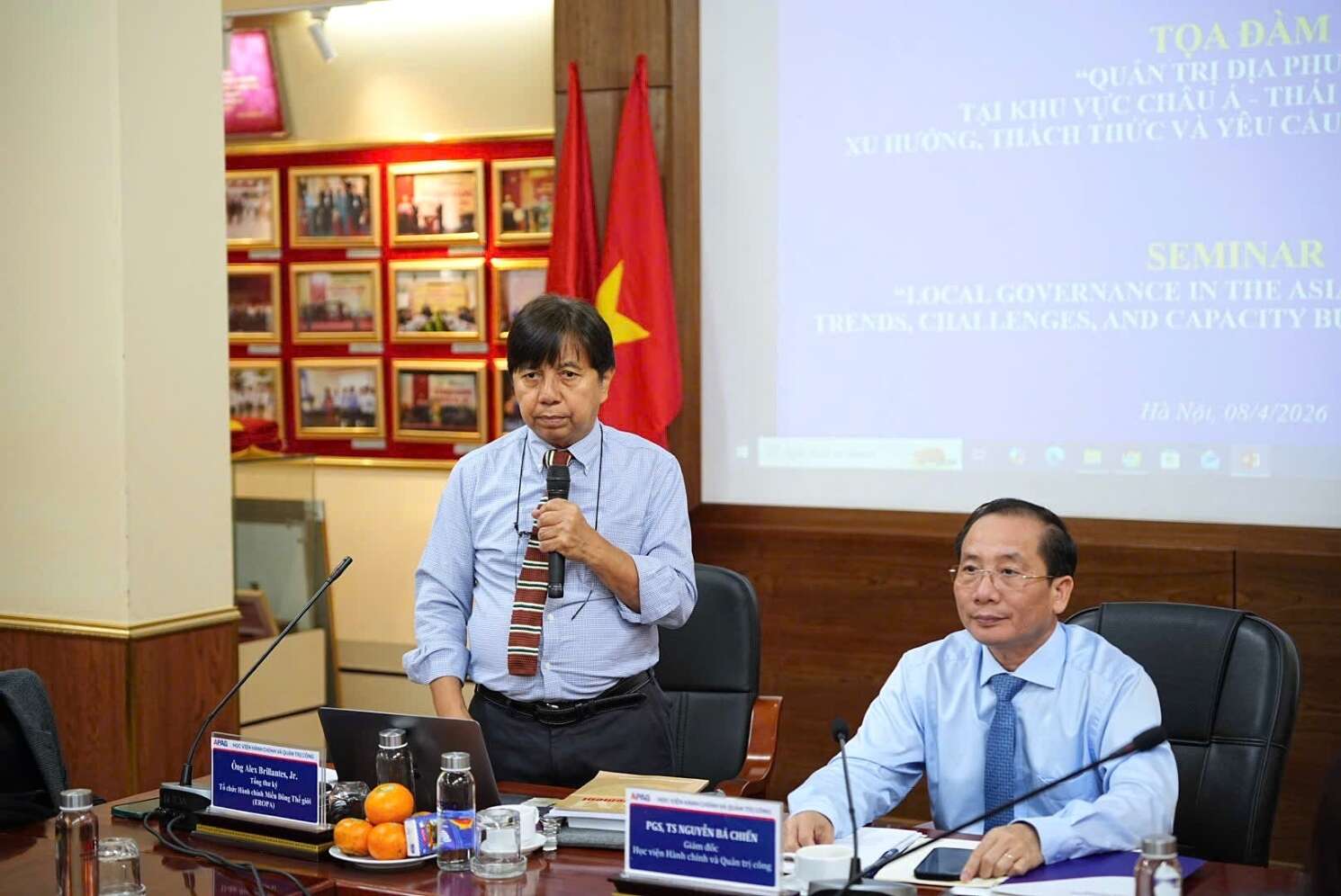 Prof. Dr. Alex Brillantes Jr., Secretary-General of EROPA, presenting his paper at the Seminar
During the Seminar, Prof. Dr. Alex Brillantes Jr., Secretary-General of the Eastern Regional Organization for Public Administration (EROPA), delivered an important presentation on the theme: "Local Governance and Decentralization in Asia: Trends, Challenges, and Capacity Building Requirements" The presentation provided a comprehensive view of the public governance context in the region and practical suggestions for Vietnam.
According to Prof. Dr. Alex Brillantes Jr., as the world advances toward "Society 5.0" and faces challenges in the context of "polycrisis"—from climate change to geopolitical instabilities—the governance model needs to transition from traditional centralization to "multi-nodal" governance to ensure flexibility and high adaptability. The Professor analyzed the diversity of decentralization models across different groups of countries: Countries like Indonesia and the Philippines have made breakthrough steps, strongly transferring power following institutional upheavals; Vietnam and China are evaluated as successful examples of implementing administrative and financial decentralization in a methodical, progressive manner suitable to a centralized political system; Japan and South Korea stand out with close coordination between the central and local levels, particularly with very high institutional execution capacity.
Despite achieving many accomplishments, the decentralization process in Asia still faces risks such as: disparities and limitations in financial resources; weak local management capacity; central-local coordination issues; institutional and political risks; and weak accountability. Prof. Dr. Alex Brillantes Jr. emphasized: "Decentralization does not automatically lead to democratization or governance efficiency; the outcome depends entirely on the institutional strength and the execution capacity of the civil servant contingent." Based on practical research, the EROPA Secretary-General proposed several orientations for Vietnam in the coming period:
1. Perfecting financial decentralization: Ensure stable revenue sources and transparent budget allocation mechanisms, helping localities be proactive in socio-economic development.
2. Investing in human resources: Focus on training and building a professional civil servant contingent, especially at the provincial and commune levels, to meet management requirements in the new context.
3. Balancing control and flexibility: Learn from the experiences of Northeast Asian countries to both maintain national unity and encourage provinces to innovate and compete for regional development.
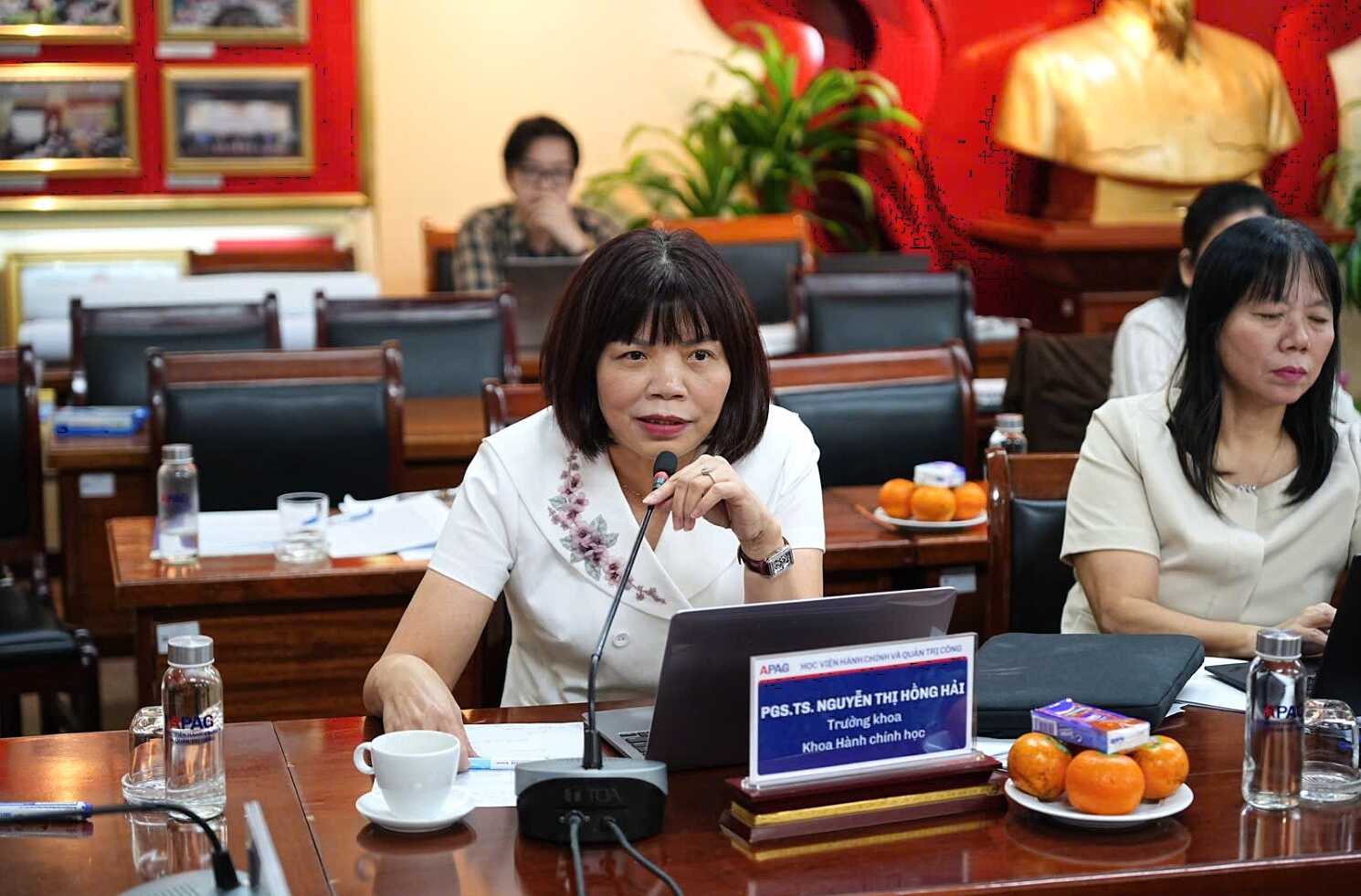 Assoc. Prof. Dr. Nguyen Thi Hong Hai, Dean of the Faculty of Public Administration, exchanging views at the Seminar
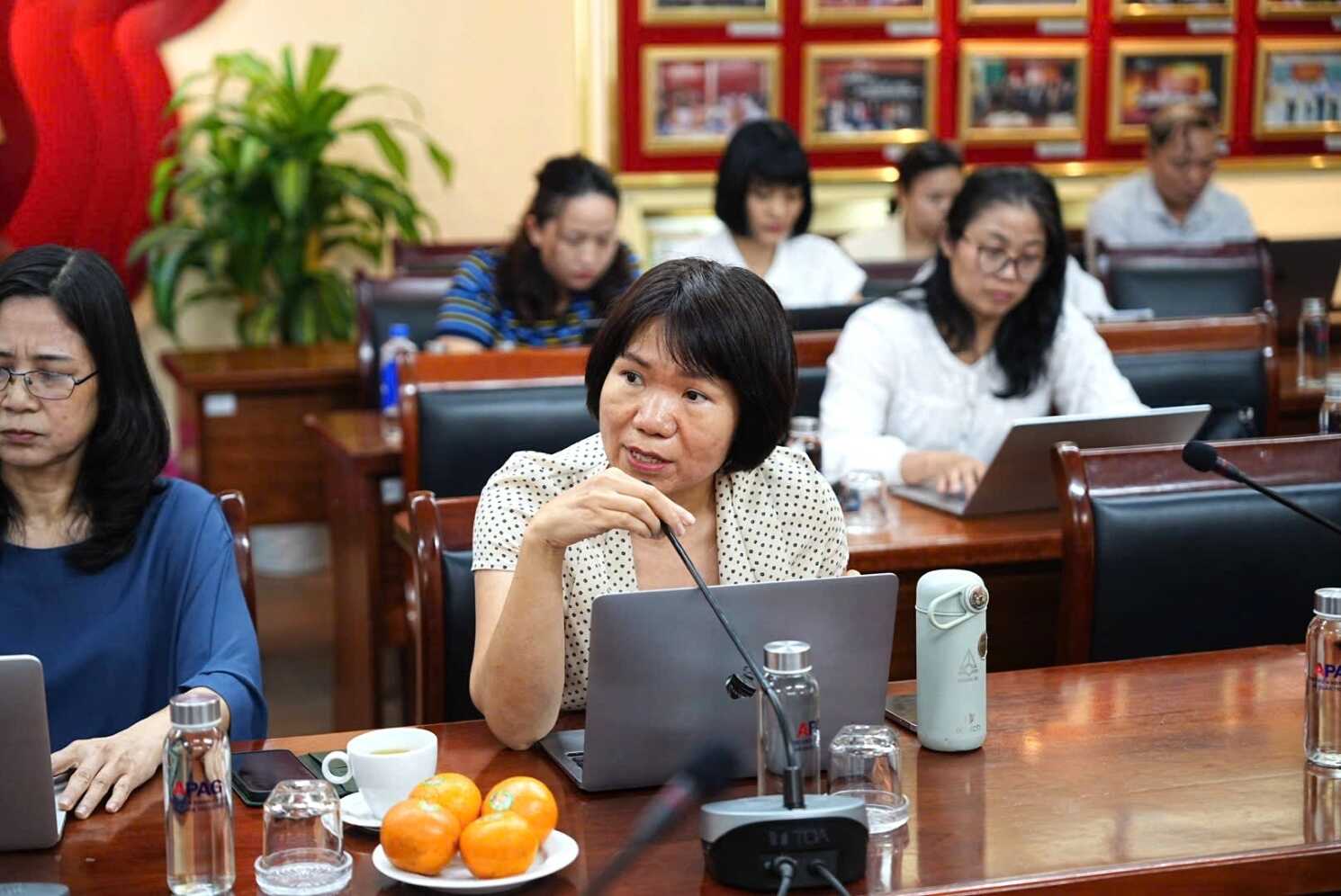 Dr. Bui Thi Ngoc Hien, Deputy Dean of the Faculty of Public Administration, exchanging views at the Seminar
The Seminar took place in an enthusiastic atmosphere with many "hot" practical issues raised by the delegates. The questions focused on finding mechanisms for inter-local cooperation in the context of decentralization; developing a set of capacity measurement indices as a basis for financial allocation; and especially solutions for transitioning from traditional budget management to governing a "local financial ecosystem" that includes public assets, private capital, and green finance. In addition, the problem of eliminating the mentality of relying on higher levels to awaken the proactiveness of grassroots authorities was also a topic that received much attention.
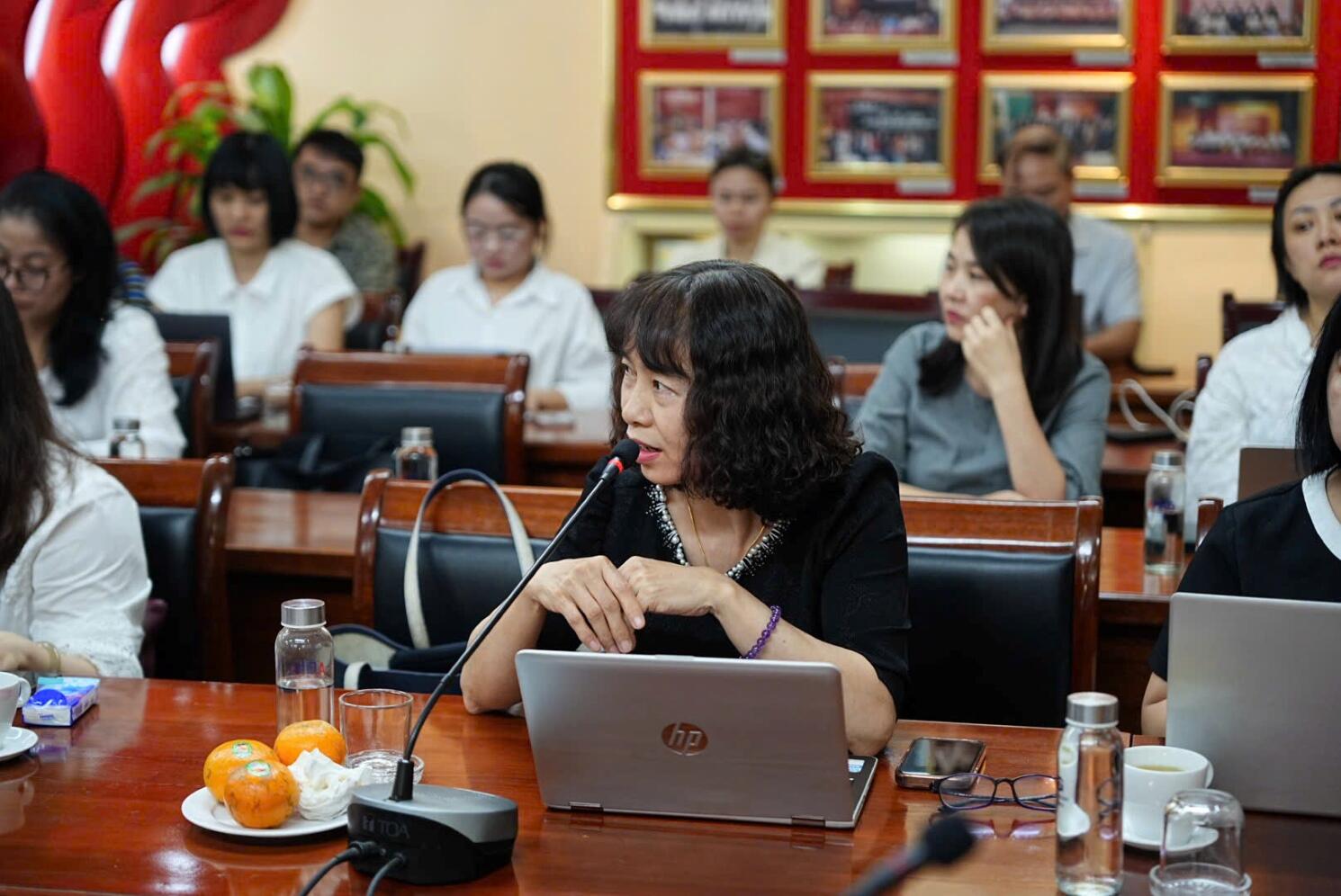 Dr. Dang Thi Minh, Deputy Dean of the Faculty of Social Development Management, exchanging views at the Seminar
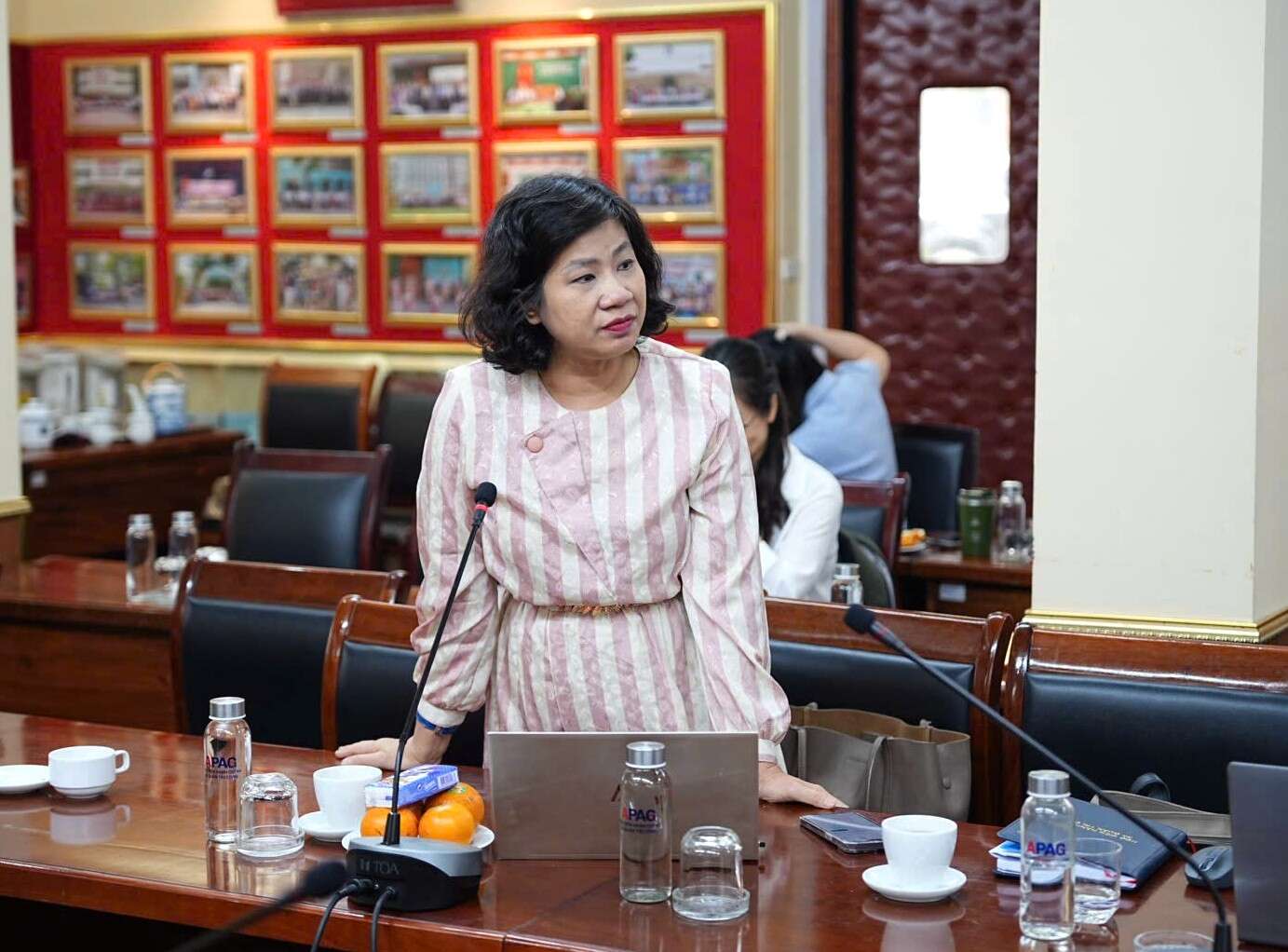 Assoc. Prof. Dr. Nguyen Thi Thu Van, Dean of the Faculty of Archival Science and Office Administration, exchanging views at the Seminar
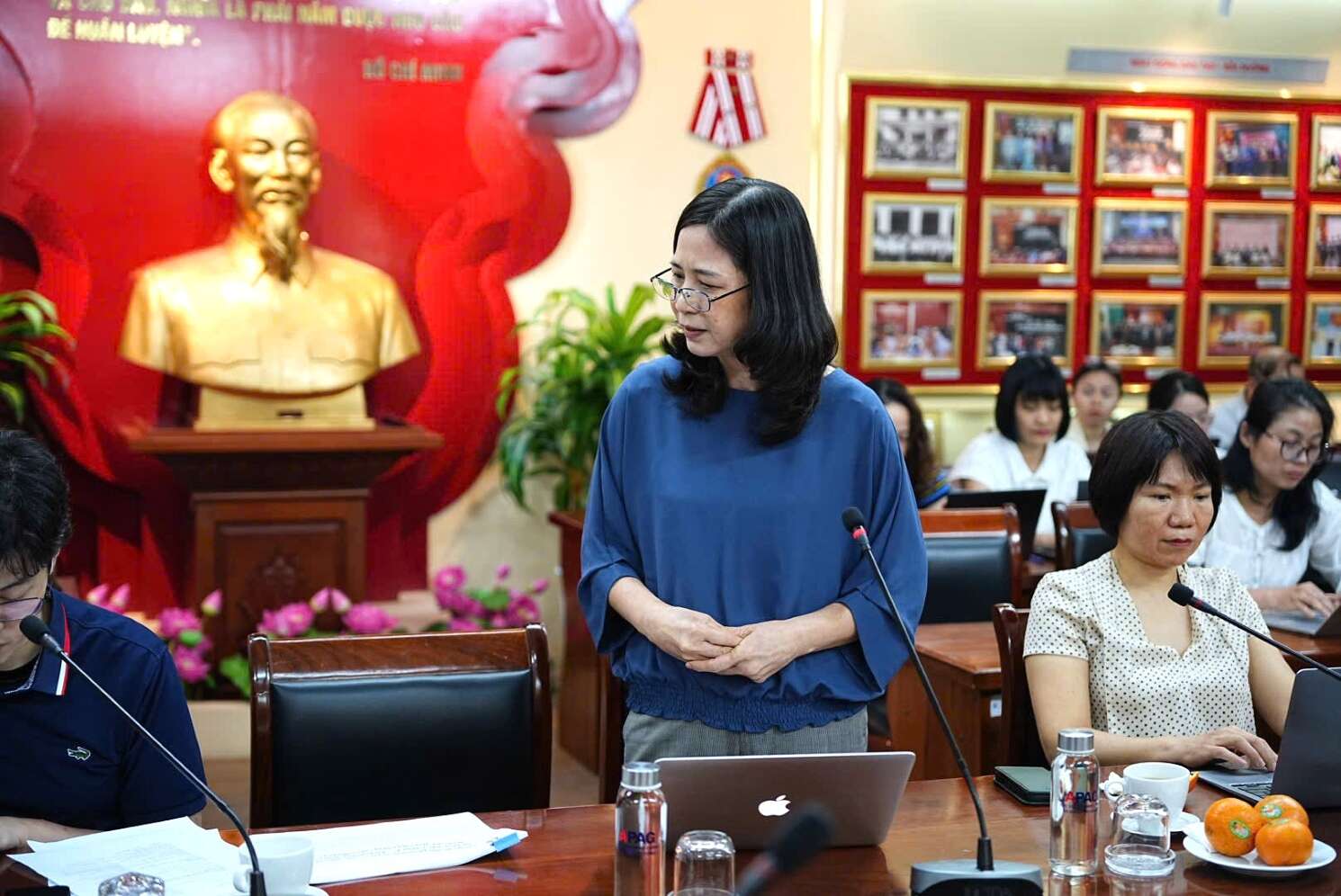 Assoc. Prof. Dr. Do Thi Kim Tien, Dean of the Faculty of Economics, exchanging views at the Seminar
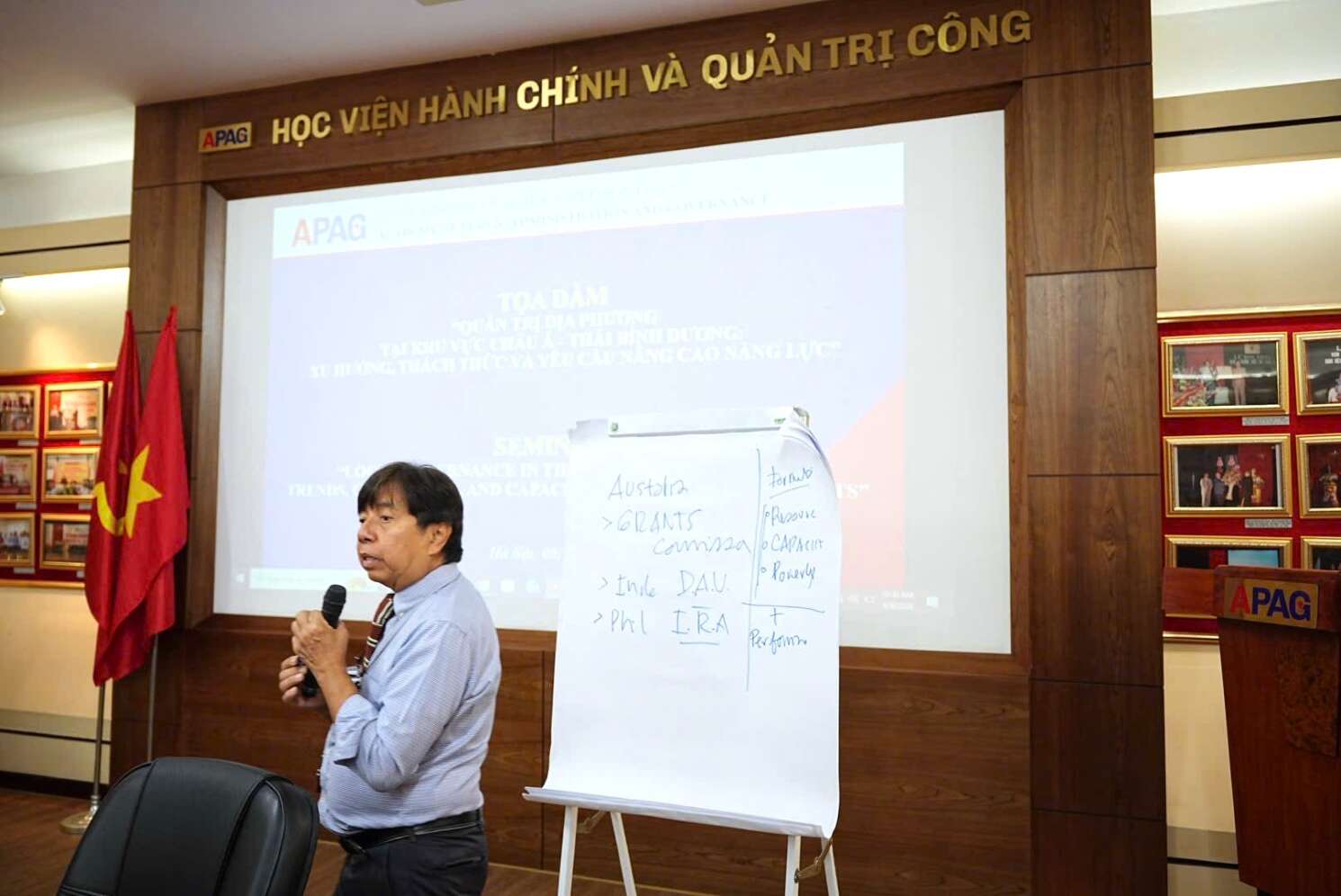 Prof. Dr. Alex Brillantes Jr. answering questions from delegates attending the Seminar
Addressing these issues, Prof. Dr. Alex Brillantes Jr. affirmed: "Decentralization does not mean separation." He emphasized the Central government's coordinating role in setting the rules of the game so that localities can join hands to solve inter-regional problems. Resources must be allocated based on the principle that tasks go hand in hand with capacity, and there must be mechanisms to honor grassroots initiatives to spread the value of innovation. He also suggested that to nurture innovation, it is necessary to establish channels to receive and honor grassroots initiatives. Viewing decentralization as a process of comprehensively mobilizing social resources, including public-private partnerships, will help localities escape dependence on the state budget. In particular, to completely cure the "reliance" disease, the Professor recommended linking benefits to execution efficiency: Localities that perform well will be granted more power and resources, creating healthy competition in public governance.
Delivering the concluding remarks, Assoc. Prof. Dr. Nguyen Ba Chien respectfully thanked Prof. Alex Brillantes Jr. for his sharing, which was both academic and deeply practical. The President noted that although each country has a different decentralization roadmap, the essential common point is still finding the balance between empowerment and control, and between local autonomy and central unity. Assoc. Prof. Dr. Nguyen Ba Chien affirmed that the contents discussed at the seminar are not only valuable resources for policymaking but also precious materials for the Academy of Public Administration and Governance to innovate its curricula and improve the quality of cadre training and fostering. These are important scientific arguments to perfect local governance institutions, contributing to the sustainable development of Vietnam in the coming period.
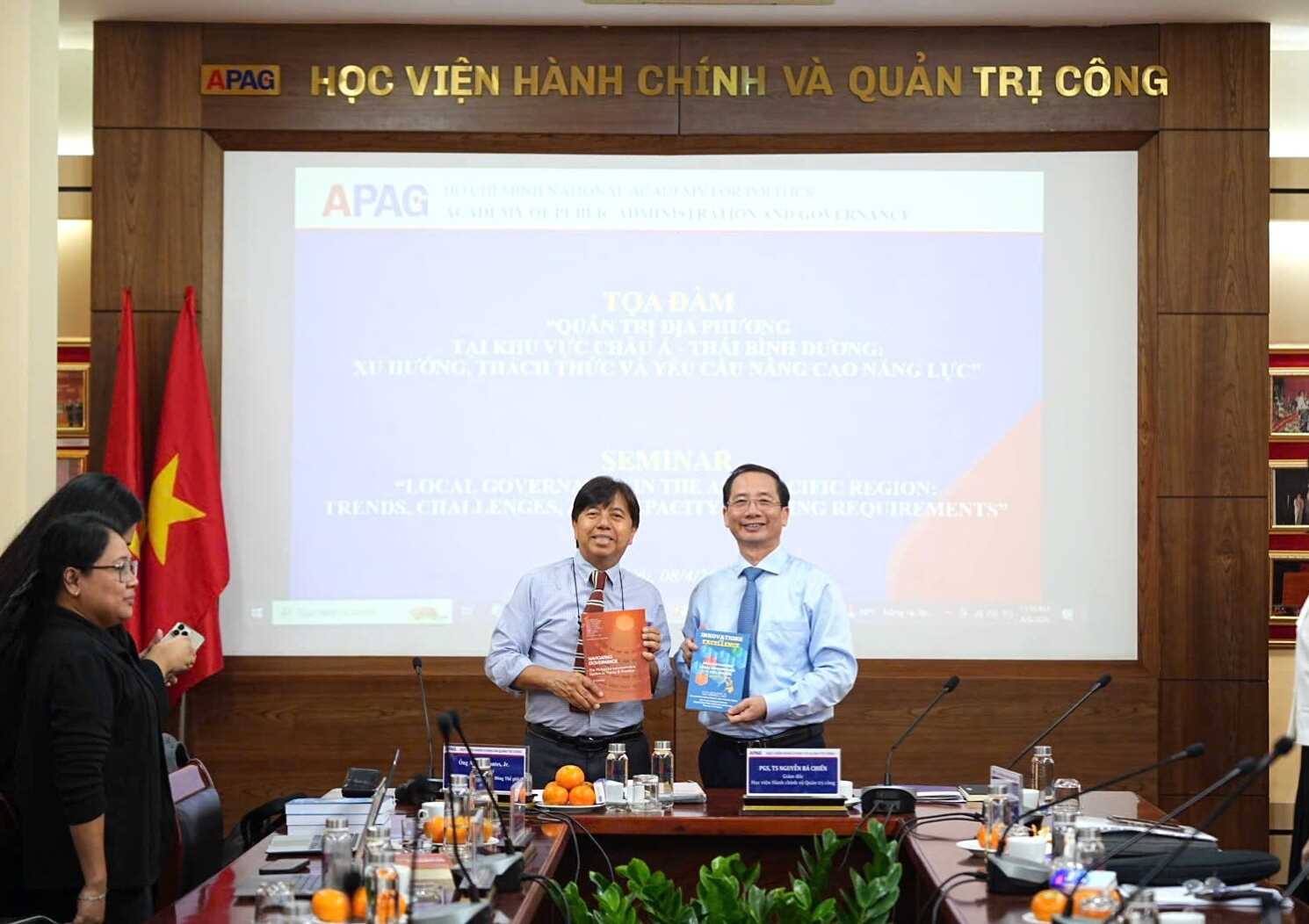 Delegates taking commemorative photos
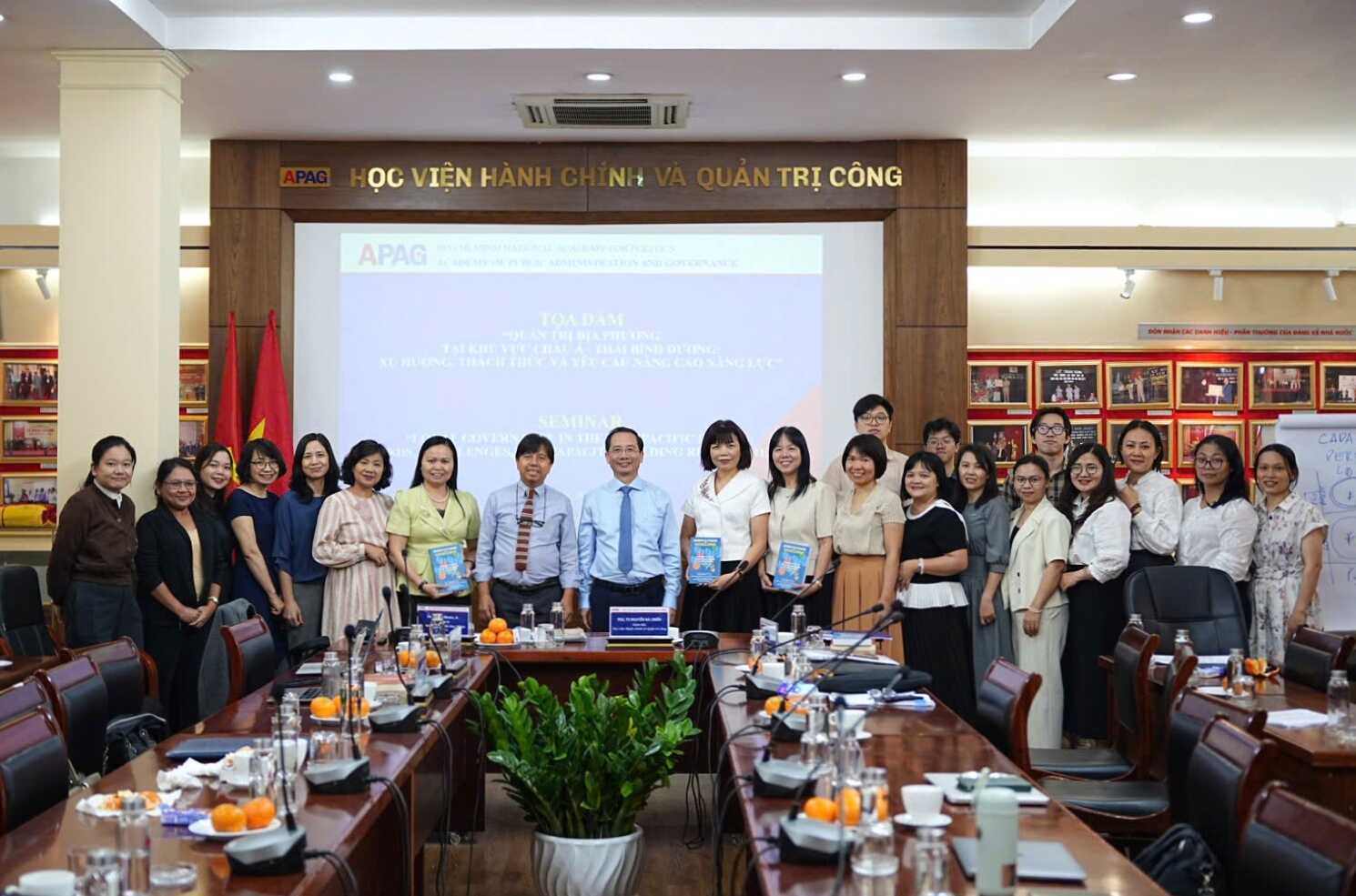 Delegates taking commemorative photos
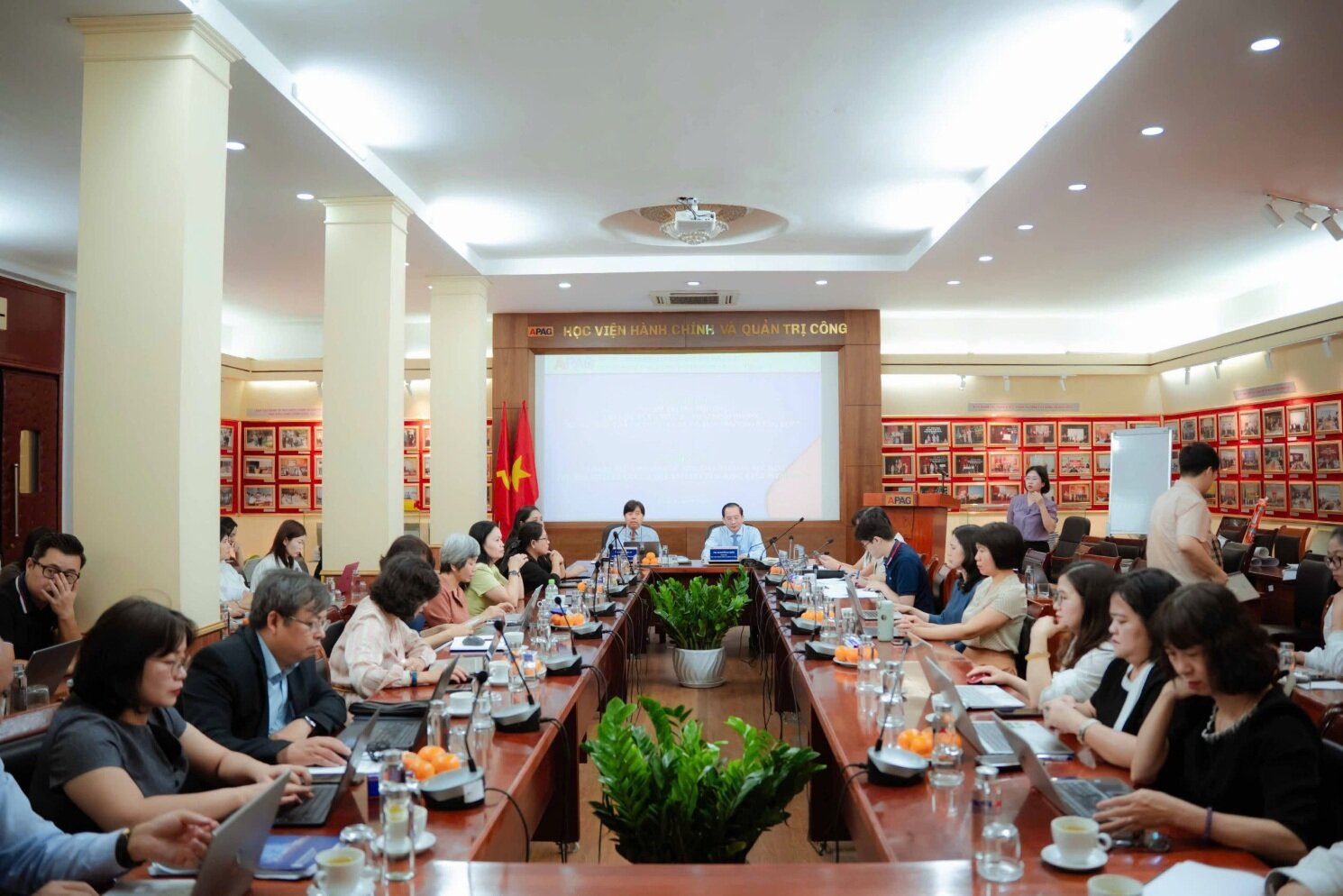 Overview of the Seminar