On the morning of September 15, 2026, in Hanoi, the Academy of Public Administration and Governance, in collaboration with the United Nations Department of Economic and Social Affairs (UN DESA), held the opening ceremony of the training course "Enhancing governance capacity for effective implementation of sustainable development goals in Vietnam." The program was organized in a hybrid format, connecting the Academy's headquarters in Hanoi with various provincial points and international partner agencies
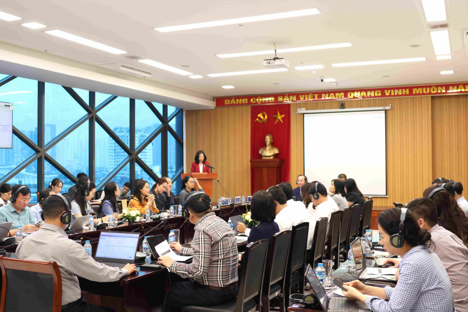 Overview of the Opening Ceremony.
Attending the opening ceremony were Mr. Changseob Han, Head of the United Nations Project Office on Governance (UNPOG/DPIDG/UN DESA); Ms. Pauline Tamesis, United Nations Resident Coordinator in Vietnam; Mr. Prabin Maharjan, Program Management Specialist at UNPOG/DPIDG/UN DESA; Prof. Kim Young Son, Director of the Center for Multicultural Harmony Studies at INHA University, South Korea; Mr. Jin Seong Choi, Policy Research and Analysis Specialist at UNPOG/DPIDG/UN DESA; Ms. Tran Thi Minh Tien, Partnerships and Development Finance Officer at the UN Resident Coordinator’s Office in Vietnam; and Ms. Nguyen Thi Thanh Nga, Senior Official at the Department of Sectoral Economics and Finance, Ministry of Finance of Vietnam.
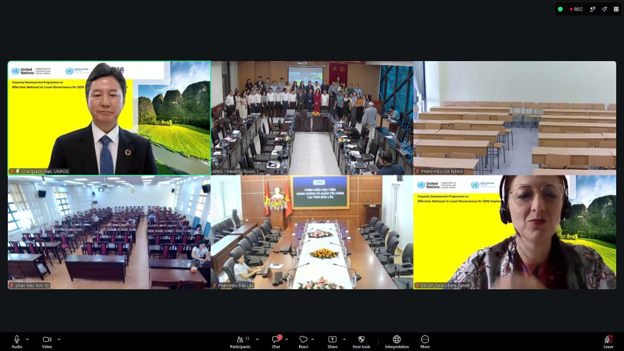 Delegates participating online.
From the Academy of Public Administration and Governance, participants included Assoc. Prof. Dr. Nguyen Ba Chien, President of the Academy; Ms. Pham Thi Quynh Hoa, Acting Head of the Department of Science Management and International Cooperation; alongside a large number of trainees who are leadership and management officials from Hue City, Hai Phong City, and Phu Tho, Bac Ninh, Hưng Yen, Thai Nguyen, and Lao Cai provinces, as well as staff and lecturers of the Academy.
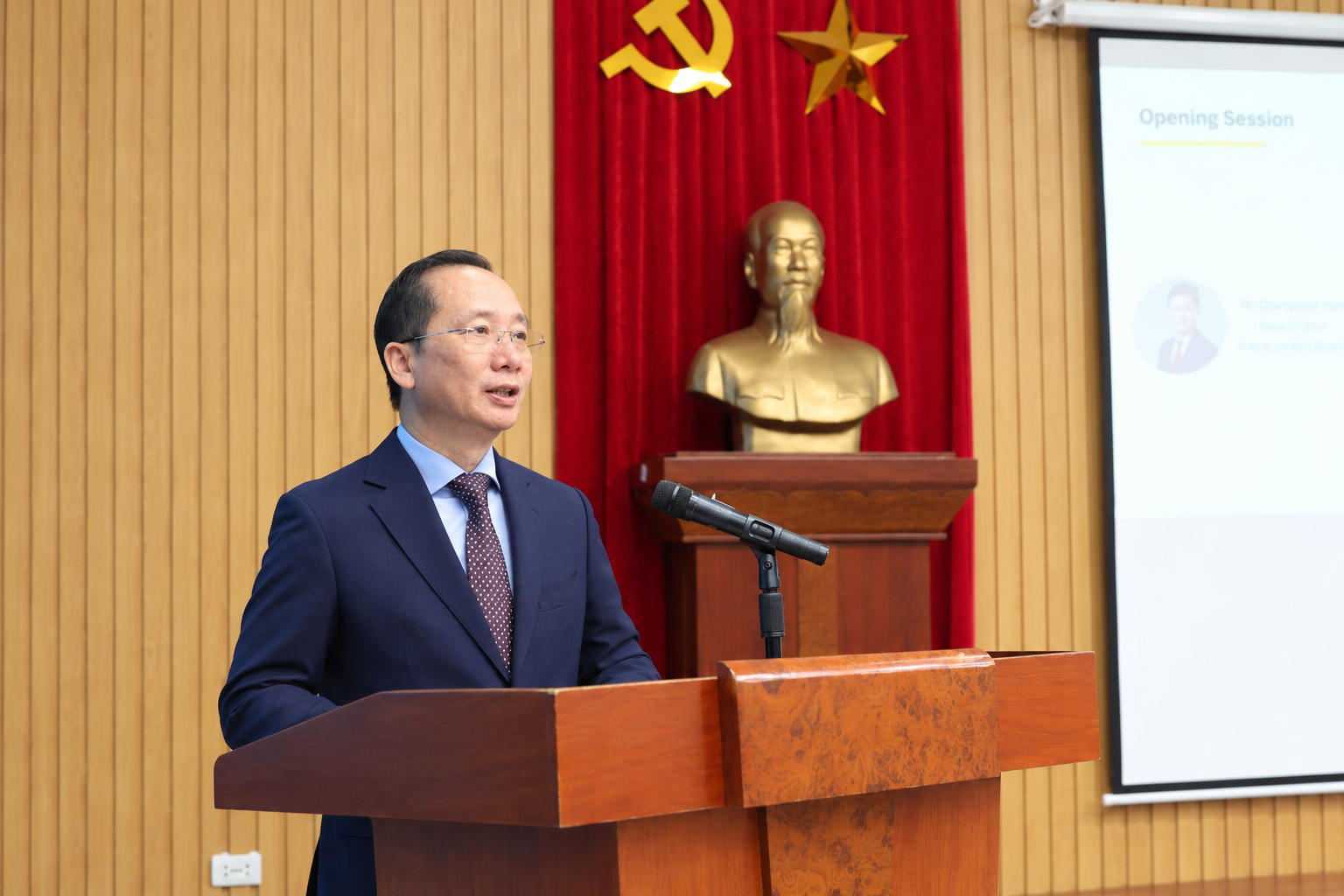
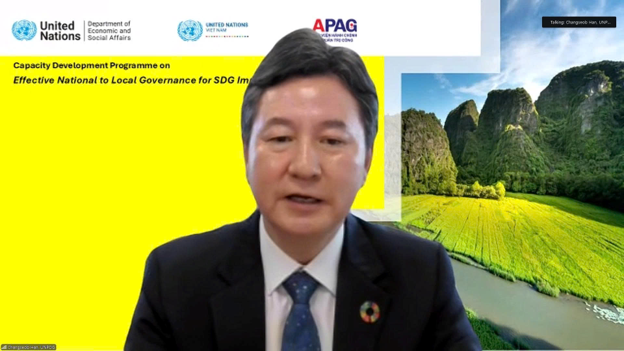 Mr. Changseob Han, Head of UNPOG/UN DESA, delivering welcome remarks.
Speaking at the opening ceremony, Mr. Changseob Han, Head of UNPOG/UN DESA, emphasized that the training course takes place at a crucial juncture in Vietnam's public governance reform process, which aims to build an effective, modern, and citizen-centered public administration. In this context, localizing the Sustainable Development Goals (SDGs) is of decisive importance, especially as the two-tier local government model and newly merged administrative units directly carry out tasks serving the public.
To meet these new demands, local leadership teams need enhanced practical skills, digital capacity, and agile thinking, while effectively aligning authority, resources, capabilities, and data. Modern governance relies not only on organizational structures but also requires multi-sectoral coordination, stakeholder engagement, financial innovation, and the effective leverage of data, artificial intelligence, and digital tools.
Mr. Changseob Han affirmed that the United Nations is committed to accompanying Vietnam in its transformation process. He expressed hope that the training course would spur actionable solutions, concrete action plans, and clear roadmaps, thereby improving public service quality, strengthening community resilience, advancing equity, and reinforcing public trust in government institutions.
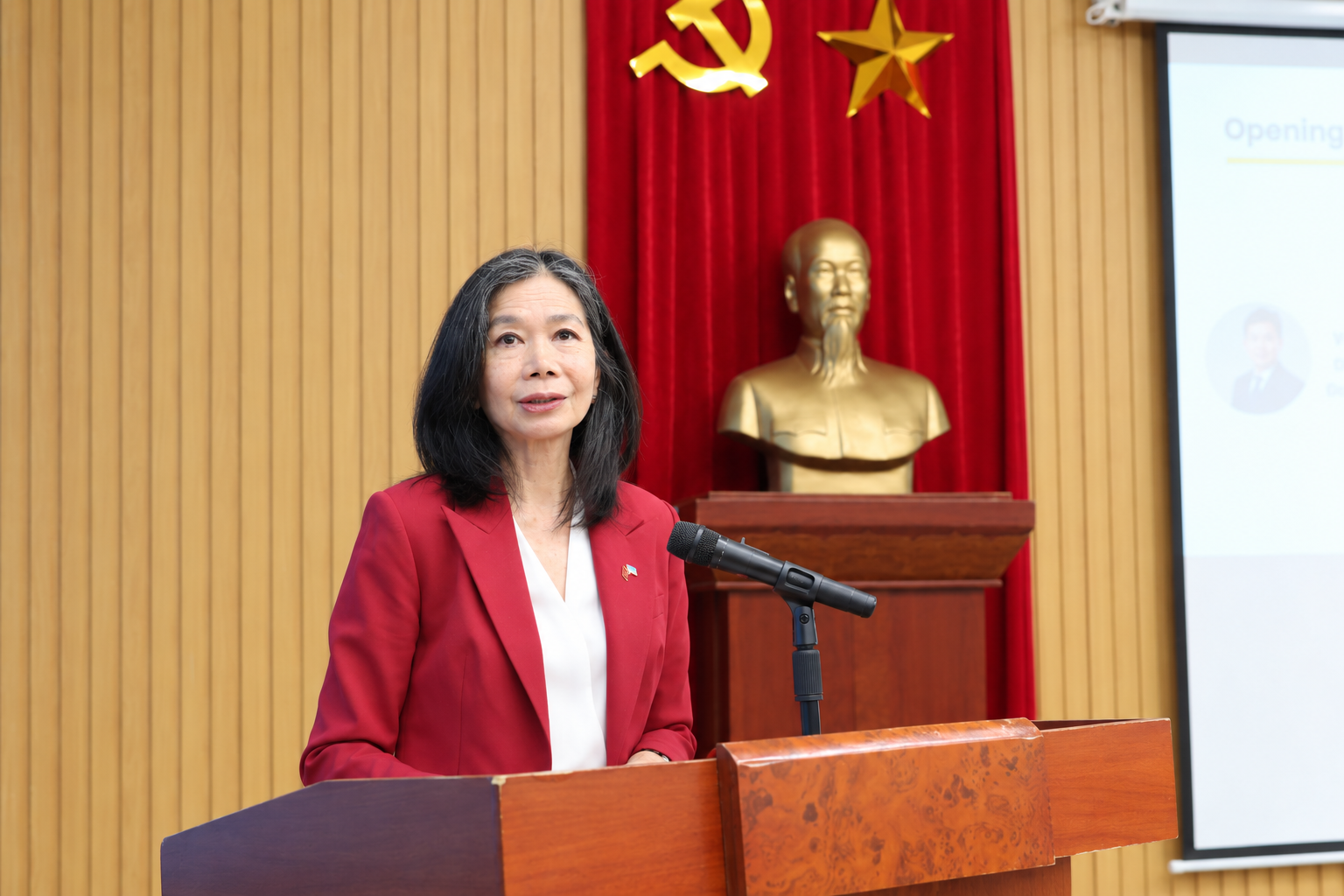 Ms. Pauline Tamesis, United Nations Resident Coordinator in Vietnam, delivering remarks.
Speaking at the ceremony, Ms. Pauline Tamesis, UN Resident Coordinator in Vietnam, highlighted the significance of building effective governance capacity from national to local levels in realizing the Sustainable Development Goals (SDGs) amid Vietnam's accelerated public administration reforms. She noted that transitioning to a two-tier local government model is a vital shift aimed not only at streamlining the administrative apparatus but also at fostering agile, accountable, and citizen-proximate governance.
Accordingly, she emphasized that decentralization and delegation of power must be synchronized with enhancing capacity, resources, and data for local authorities. The program focuses on key elements of modern governance, such as multi-level coordination, stakeholder engagement, local financial innovation, and leveraging data, AI, and digital tools. She expected trainees to move beyond exchanging knowledge to co-creating concrete action plans and roadmaps that help address governance bottlenecks, improve public service quality, enhance civic participation, and bolster trust in public institutions—thereby translating institutional reform into tangible results in citizens' daily lives.
 Assoc. Prof. Dr. Nguyen Ba Chien, President of the Academy of Public Administration and Governance, delivering the opening address.
Delivering the opening address, Assoc. Prof. Dr. Nguyen Ba Chien, President of the Academy of Public Administration and Governance, welcomed international experts, delegates, and trainees, expressing gratitude to international and domestic organizations for coordinating the program.
According to the Academy President, following major achievements in embedding the SDGs into national strategies, policies, and development plans, the next phase demands higher quality execution and operational capacity across the governance system. This requirement is especially meaningful as Vietnam operates a two-tier local government model, promotes decentralization and delegation of authority, and advances innovation and digital transformation. Effective delegation must be paired with adequate resources, clear responsibilities, and smooth coordination mechanisms, while inclusive governance must guarantee participation and development opportunities for all.
Assoc. Prof. Dr. Nguyen Ba Chien commended the course's comprehensive approach to governance issues, ranging from central-local relations, citizen participation, multi-level coordination, and partnerships to local finance, data, AI, and monitoring and evaluation—aimed fundamentally at boosting execution capacity and creating sustainable practical outcomes.
The Academy President affirmed that through international experience exchanges and Vietnamese reform practices, the Academy will continue researching and applying relevant tools to training, capacity-building, and research activities, while strengthening collaboration with UN DESA, UNDP, and international partners. The knowledge and insights shared during the course are expected to serve as a practical reference for local governance, contributing to the effective implementation of SDGs in Vietnam.
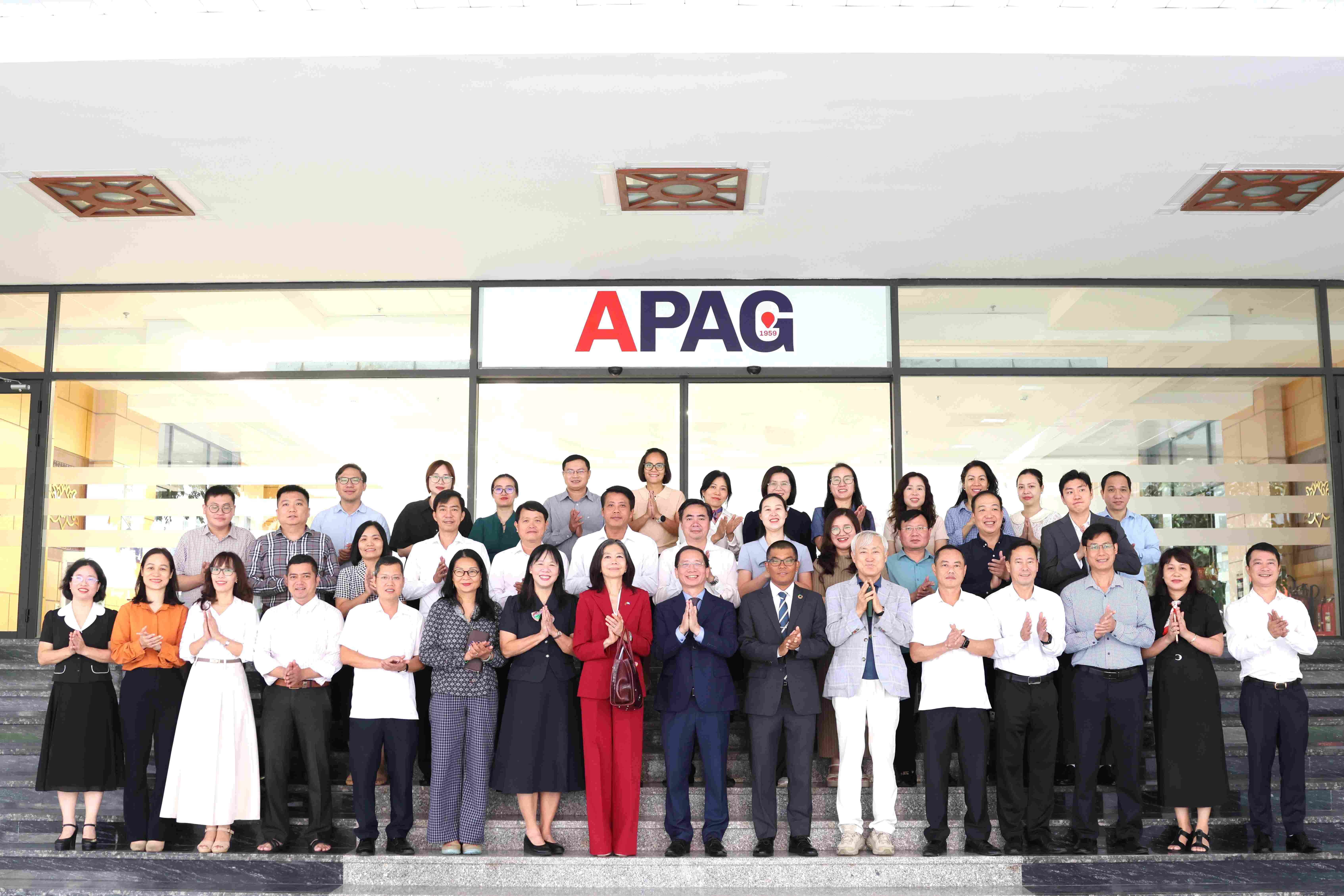
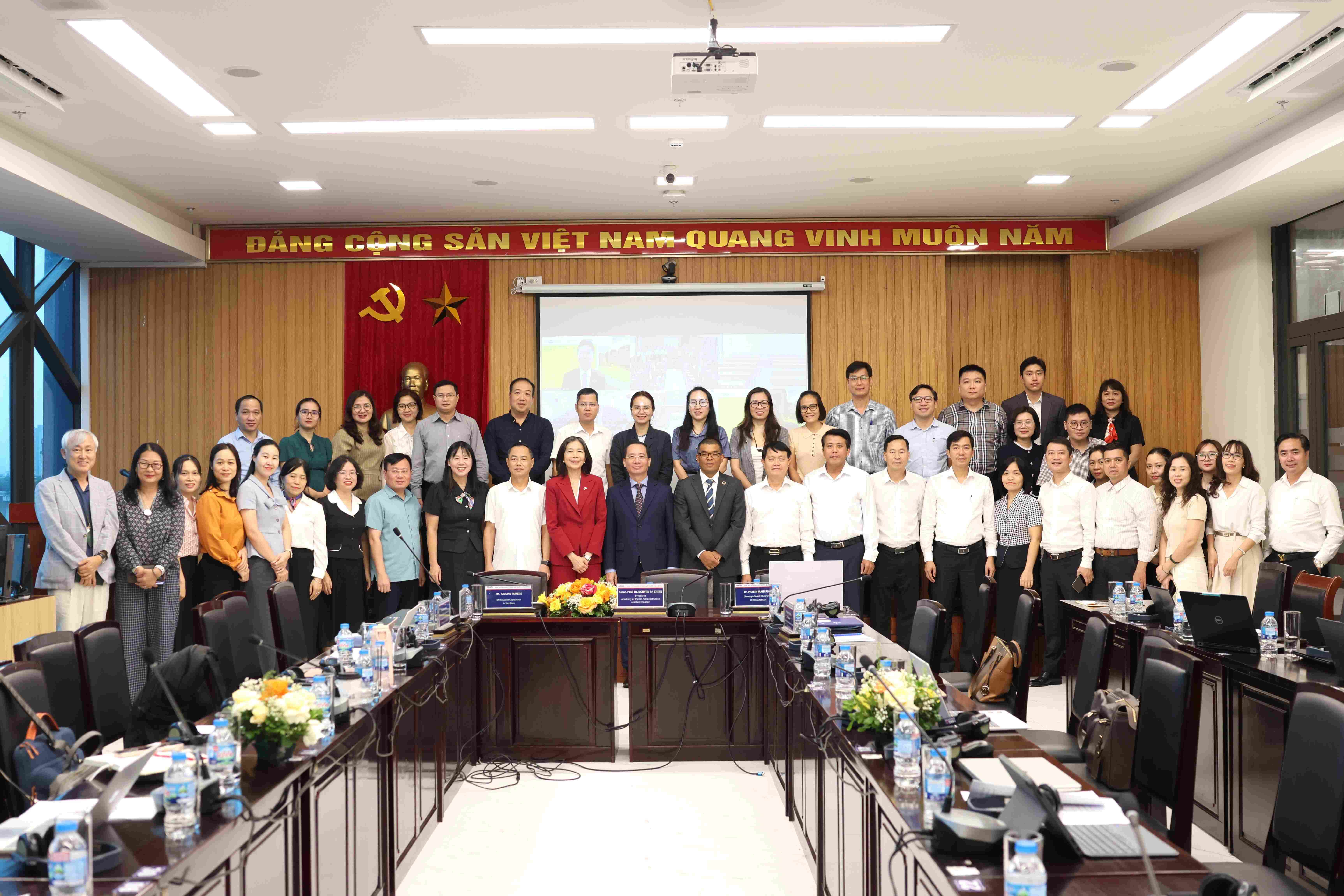 Delegates taking a commemorative photo.
Immediately following the opening session, the training program introduced its core contents, learning activities, exchanges, and practical workshops scheduled across three days from September 15 to 17, 2026.
On the first day, the program focused on the progress of Agenda 2030 implementation in Vietnam; effective governance from national to local levels; multi-level governance in localizing the SDGs; alongside panel discussions, Q&A sessions, and practical exercises.
On September 16, experts and delegates will discuss multi-stakeholder partnerships, SDG financing, and the application of artificial intelligence, data, and digital tools in monitoring and evaluating SDG implementation. The content will be delivered through a mix of thematic presentations, discussions, and hands-on exercises to enhance practical applicability in local administration.
On September 17, the program will center on monitoring, evaluating, and reporting SDG implementation at the local level, conducting exercises on drafting Voluntary Local Reviews (VLRs), formulating action plans to drive change, and discussing future implementation roadmaps. The training course is scheduled to conclude with a closing session at noon on the same day.
Through this program, experts, managers, and delegates have the opportunity to exchange experiences and share approaches and solutions to enhance governance capacity, accelerate localization, and effectively implement the sustainable development goals in Vietnam.