As part of the Global Young Business Managers (GYBM) Programme, on 5 August 2026 the delegation of Korean trainees undertook a study and field visit to Vietjet Air
Receiving and working with the delegation were Mr Nguyen Thanh Tuan, Vice Chairman of the Board of Directors of Vietjet Air; Ms Nguyen Thi Hong Quyen, Deputy Director of the Northern Regional Office; together with leaders and staff of Vietjet Air. Through insights drawn from corporate management practice, the trainees gained a clearer understanding of Vietjet's development journey — from entrepreneurial aspiration and strategic choice through to execution, innovation and the building of a corporate culture — and identified more clearly the capabilities required to study, work and build a career in a multicultural environment in Viet Nam.
The Global Young Business Managers (GYBM) Programme is a cooperation programme between the Academy of Public Administration and Governance and the Daewoo Global Management Institute (Republic of Korea), designed for Korean students who intend to study, work and develop their careers in Viet Nam. The 2026 intake comprises 28 trainees. The programme combines classroom learning with learning from practice through study and field visits to enterprises, exchanges with experts and direct exposure to real working environments. It helps trainees better understand the working environment, corporate culture and the expectations that enterprises in Viet Nam hold of their human resources, while developing the capabilities needed to study, work and build a career in a multicultural setting.
Opening the session, Mr Nguyen Thanh Tuan, Vice Chairman of the Board of Directors of Vietjet Air, expressed his pleasure at welcoming the Korean trainees and spoke about the airline's development journey, its culture, its aspirations and the values it consistently pursues. In his view, Vietjet's development is not merely the story of building a company; it also demonstrates that with great aspiration, innovative thinking, perseverance and a worthy purpose serving the community, it is possible to turn step by step what once seemed impossible into reality. In that spirit, he devoted much of his time to analysing the turning-point decisions taken in building the enterprise — from defining a vision and selecting a development model through to organising execution in order to realise its goals. These accounts from management practice enabled the trainees to approach Vietjet's development not only through the results achieved, but also through the choices, challenges and decisions made at each stage of its growth.
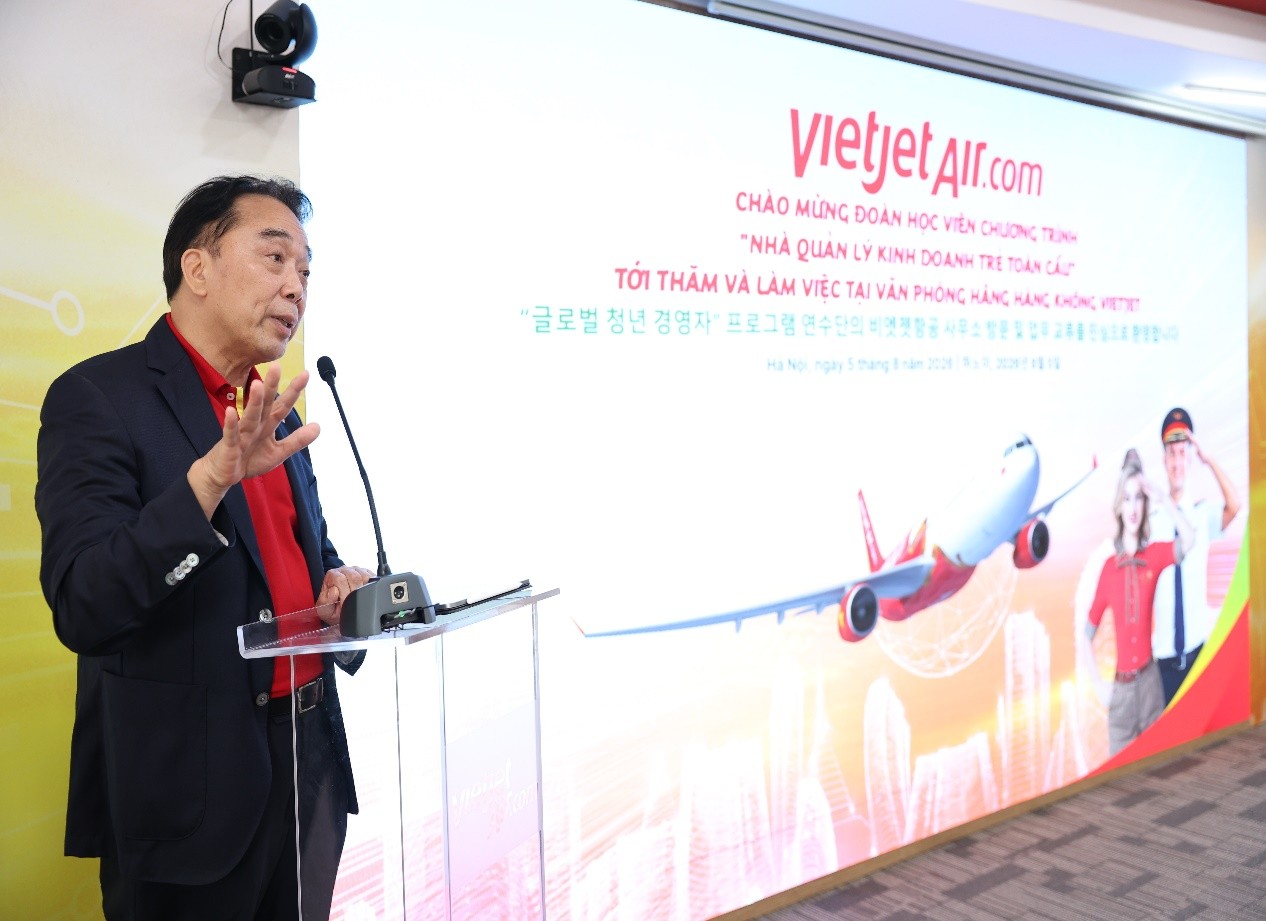 Mr Nguyen Thanh Tuan, Vice Chairman of the Board of Directors of Vietjet Air, shares with the trainees the story of Vietjet's establishment and growth.
One of the accounts that left the strongest impression on the delegation was Mr Nguyen Thanh Tuan's recollection of Vietjet's earliest days. He spoke of the simple yet beautiful aspiration held by Vietjet Chairwoman Nguyen Thi Phuong Thao when she founded the airline: that even the poor should have the chance to fly. It was this aspiration that became the starting point for the choice of a low-cost carrier model, that shaped the development strategy, and that gave Vietjet the impetus to persevere in innovation throughout its growth. For many trainees, what was memorable was not simply the story of how an airline came into being, but the way an aspiration for the community went on to guide the enterprise's vision, its strategy and its every effort at execution.
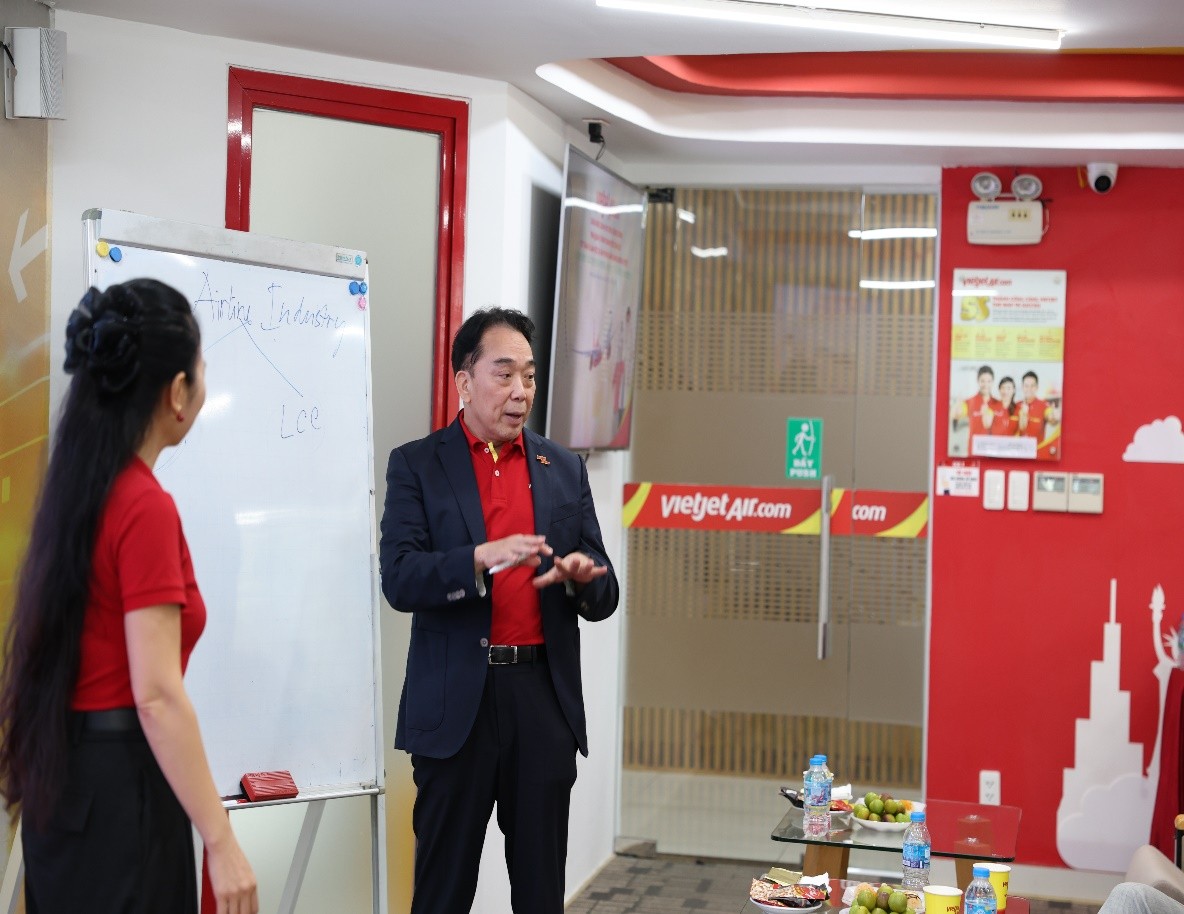 Vietjet Air leaders share their experience with the delegation of Korean trainees
In the exchange with trainees, Mr Nguyen Thanh Tuan repeatedly emphasised a single message: “Execution is everything.” In his view, an idea acquires real meaning only when it is translated into action and results. Competitive advantage therefore derives not only from new ideas, but equally from the capacity to execute them. This proved to be one of the points the trainees continued to debate and discuss at length after the visit.
The programme continued with Ms Nguyen Thi Hong Quyen, who introduced Vietjet's corporate culture, operating model and core values. Through concrete examples of process optimisation, technology application, digital transformation, human resource development and the enhancement of customer experience, the trainees gained a clearer understanding of how Vietjet has built its competitive capability and sustained its growth in an international environment. The presentation also helped trainees to see that a low-cost aviation model does not mean cutting service quality; rather, it is built on a mindset of optimising resources, processes and technology in order to create a wider range of choices and greater value for customers.
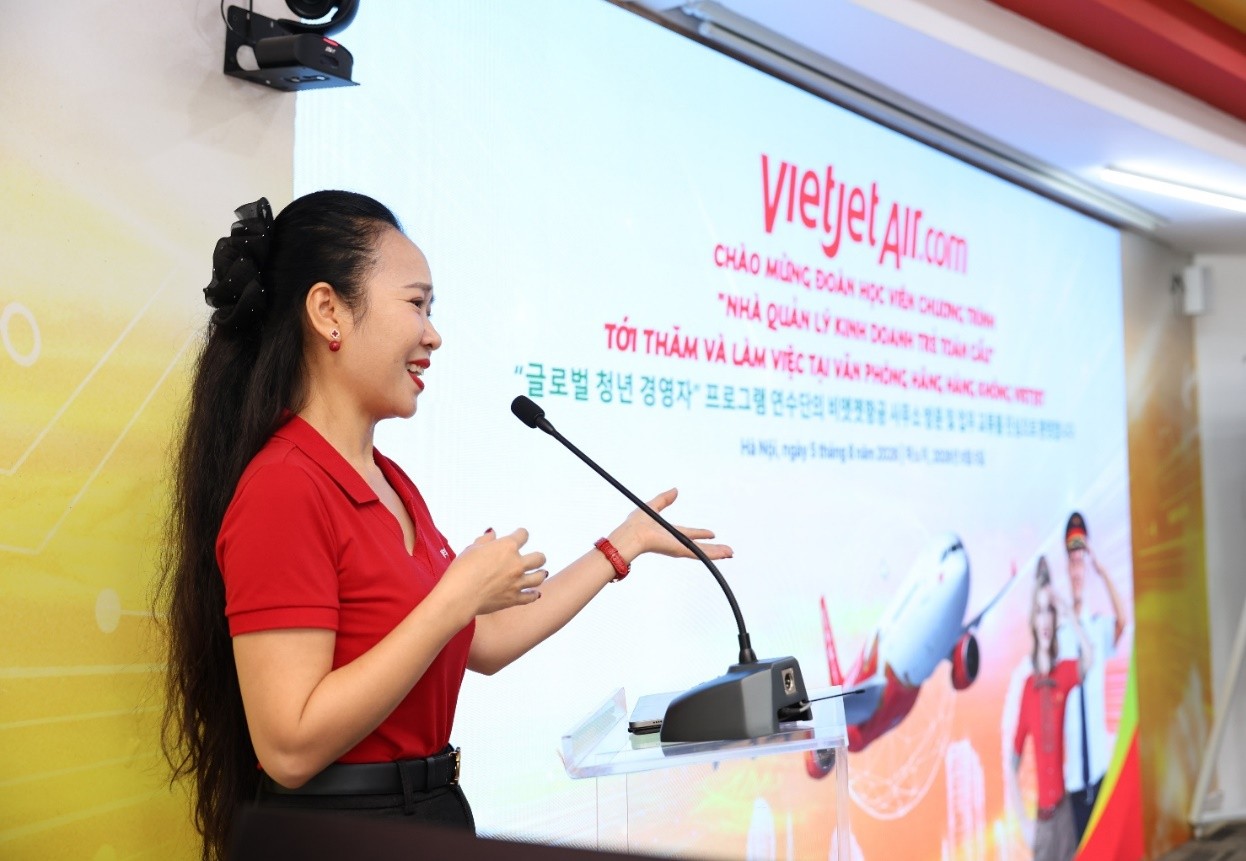 Ms Nguyen Thi Hong Quyen, Deputy Director of the Northern Regional Office, introduces Vietjet's corporate culture, operating model and core values
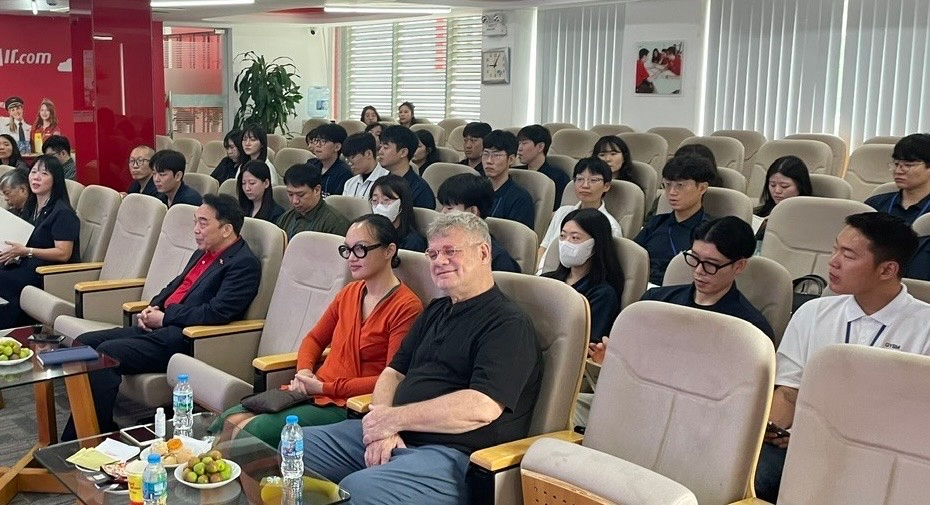 A general view of the exchange and working session
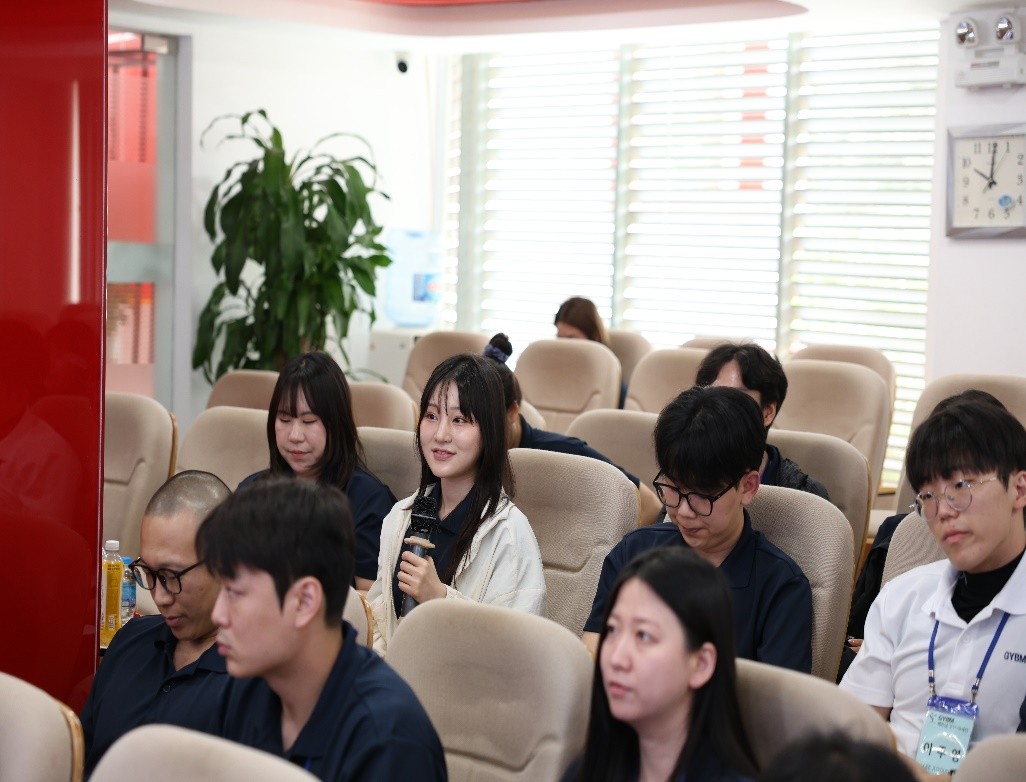 Korean trainees put questions to representatives of Vietjet Air
For the Korean trainees, the insights offered into the working environment in Viet Nam and the expectations placed on human resources in the context of international integration were of particular practical value. The company stressed that, alongside professional expertise, young people need a willingness to learn, adaptability, the ability to work across cultures, an understanding of local culture and the capacity to build trust in cooperation. These are precisely the capabilities that the GYBM Programme sets out to develop in its trainees.
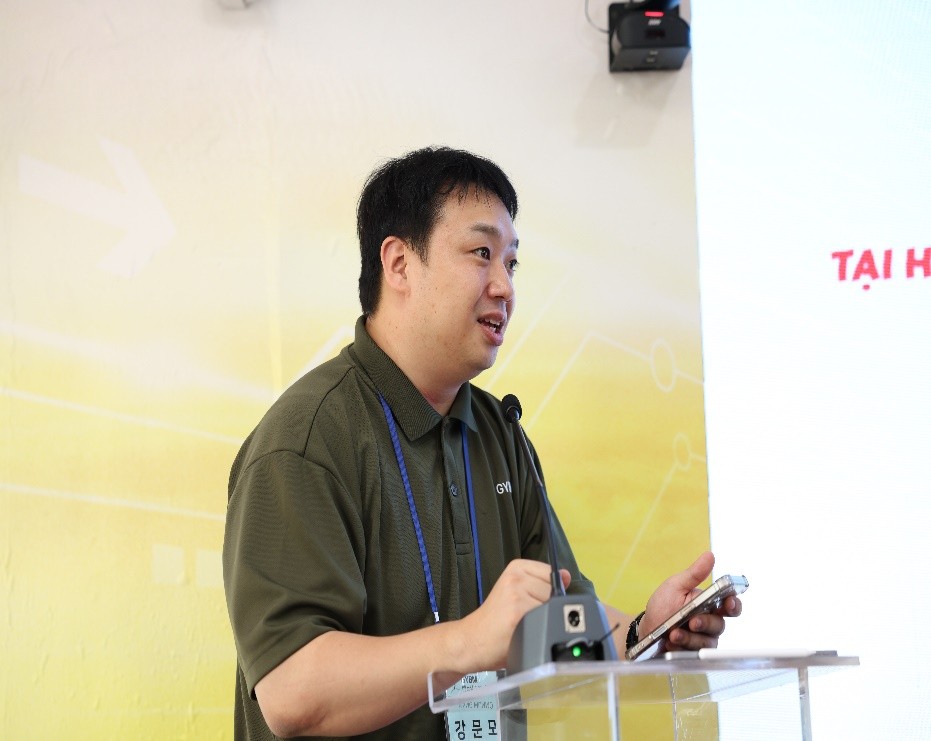 A representative of the Korean trainees speaks at the session
What Vietjet shared left a deep impression on the trainees. They said that what was most memorable was not the scale or the speed of the company's growth, but the story of aspiration — of how Vietjet has persevered in pursuit of its goals and turned, step by step, what had seemed very difficult into reality. At the close of the session, one trainee remarked to a programme lecturer: “Amazing… unbelievable!” That sentiment was shared by many members of the delegation after a session so rich in practical value.
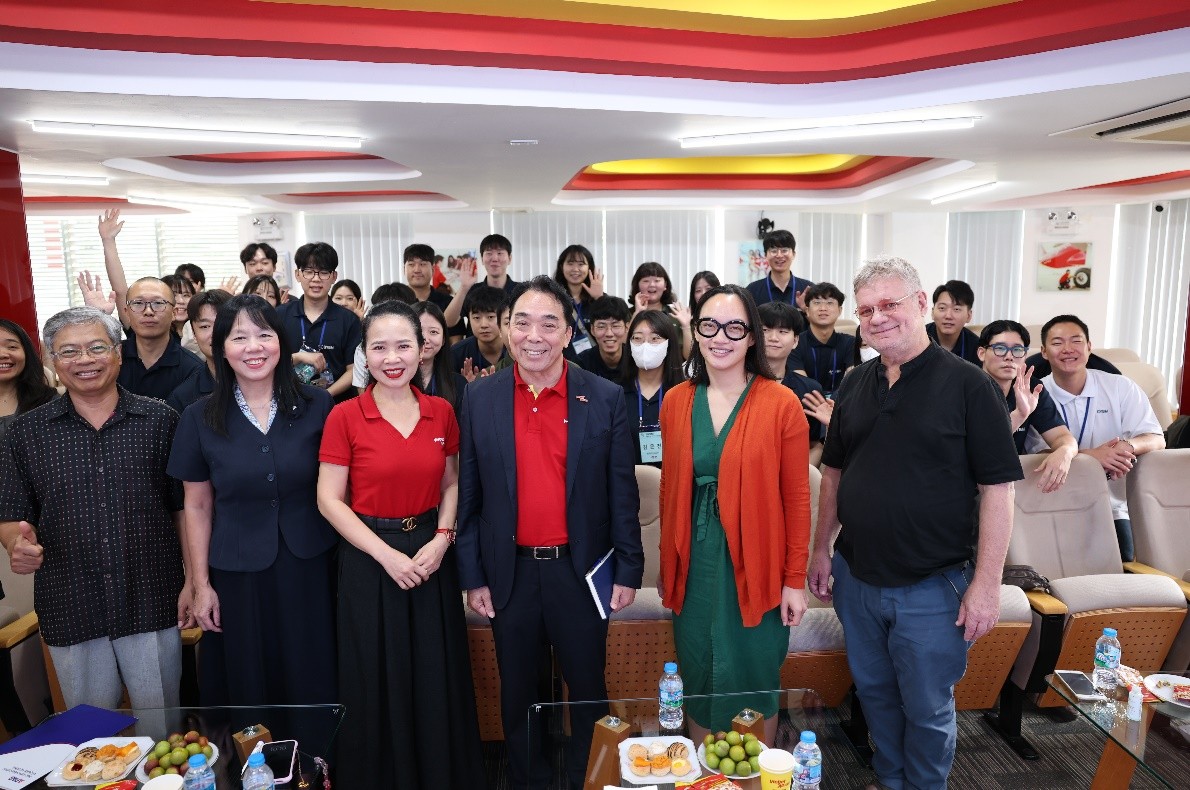 Vietjet Air leaders pose for a commemorative photograph with the delegation of Korean trainees
After the working session, the trainees went on to analyse, discuss and share the lessons they had drawn from practice. All of these findings will be compiled into the Handbook on Studying and Working in Viet Nam, co-created by the trainees themselves, so that each cohort not only receives knowledge but also contributes to building and enriching the shared body of knowledge of the programme.
The learning activity at Vietjet further illustrates the approach taken by the GYBM Programme in strengthening the linkage between training institution and enterprise. Enterprises are not only settings in which trainees observe practice; they are also partners taking an active part in developing learners' capabilities. At the same time, the experience and feedback offered by enterprises provide an important basis on which the Academy can continue to refine its training content and methods, ensuring that the programme remains aligned with the requirements of practice and with the changing international working environment.
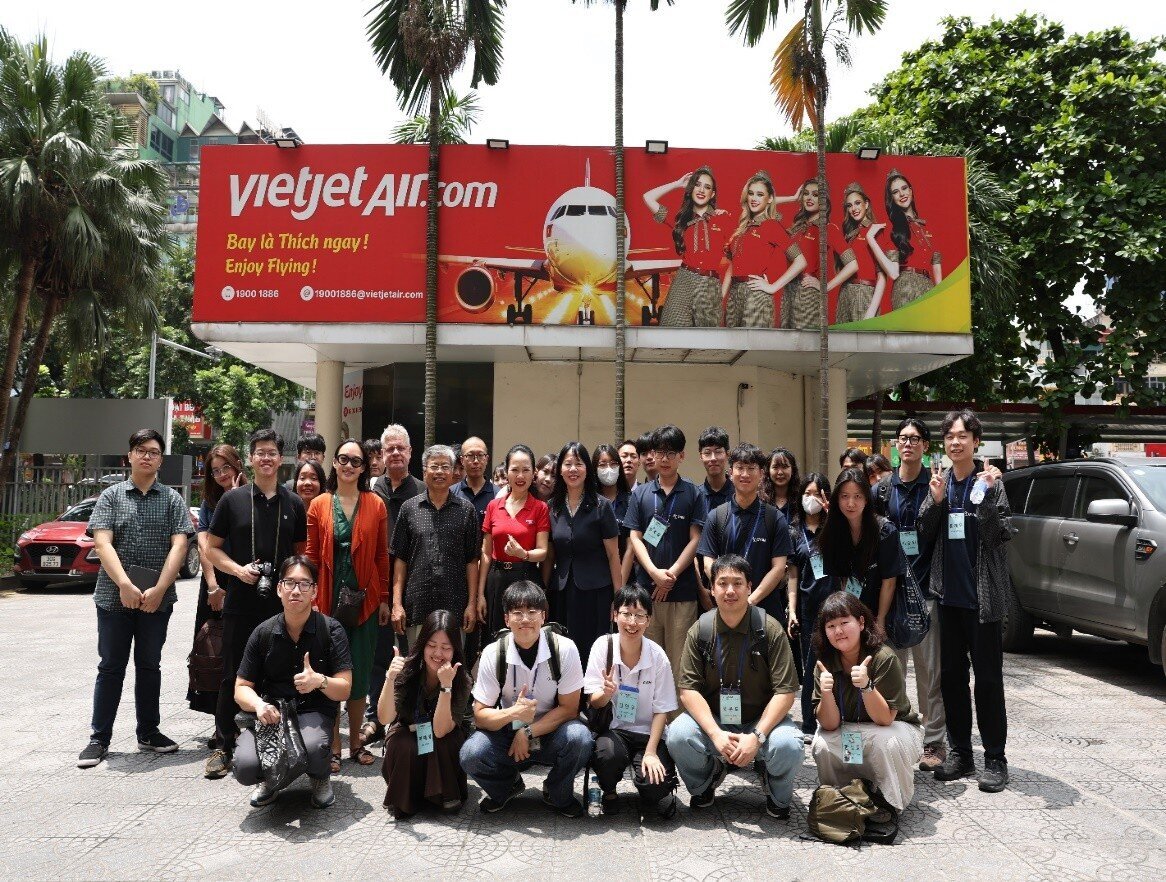 The trainee delegation is photographed with Vietjet Air leaders at the Vietjet Air Northern Regional Office