On April 23, 2026, in Hanoi, the Academy of Public Administration and Governance organized an International Scientific Seminar titled “Academic Leadership and Capacity Building in the 21st Century: Building Organizational Culture in Public Higher Education Institutions.” The event was attended by international experts from Australia and a large number of the Academy's officials and lecturers. The program was also broadcast online to the Academy’s branch campuses. The seminar was chaired by Assoc. Prof. Dr. Nguyen Ba Chien, President of the Academy
The seminar aimed to create an academic forum for exchanging international knowledge and experience regarding academic leadership, capacity building, and organizational culture. This initiative contributes to improving the quality of training and research while promoting the Academy’s internationalization strategy in the context of digital transformation and global integration.
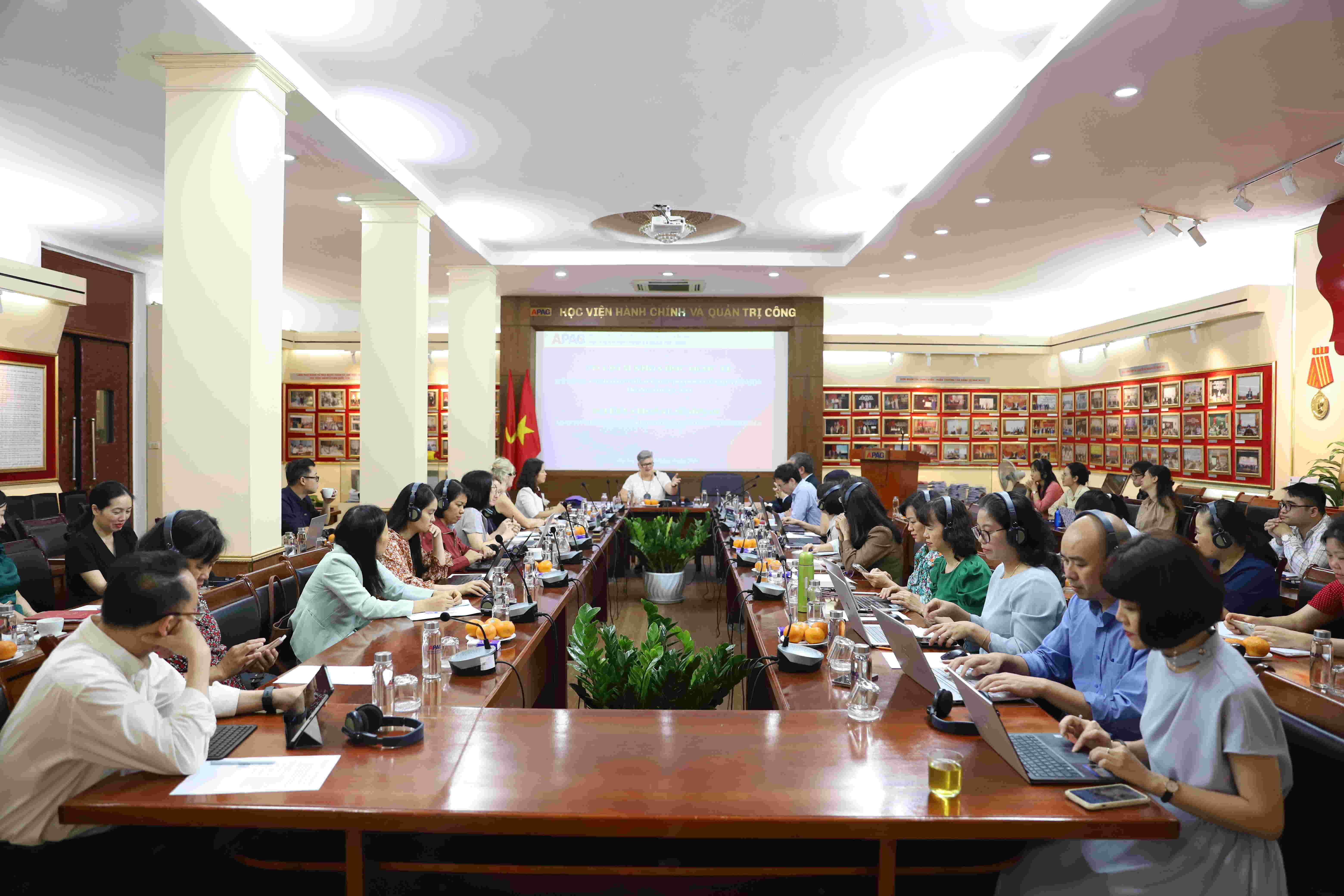 Overview of the Seminar
Attending the seminar were representatives from the Australian Embassy in Vietnam and international experts, including Professor Heather Zwicker - Vice President (Culture and Leadership) at the University of Queensland; Ms. Kim Cleary - Director of the Vietnam-Australia Centre; along with various experts and international cooperation coordinators. Representing the Academy of Public Administration and Governance were Assoc. Prof. Dr. Nguyen Ba Chien, Secretary of the Party Committee and President of the Academy; Assoc. Prof. Dr. Luong Thanh Cuong, Vice President; Dr. Bui Phuong Dinh, Vice President; and leaders of various units, lecturers, and staff.
Opening the seminar, Assoc. Prof. Dr. Nguyen Ba Chien emphasized that as Vietnam’s public service undergoes a strong transformation, the challenges are no longer just technical but increasingly complex. This requires a shift in mindset, behavior, and the operational methods of the system. Therefore, developing adaptive leadership capacity for the contingent of cadres, civil servants, and public employees has become an urgent requirement.
The Academy President affirmed that adaptive leadership is not merely a theoretical approach but a practical method to correctly identify the nature of problems, diagnose systems, and lead the change process. He also stressed the need to continue innovating training methods toward capacity building and enhancing experiential learning linked to Vietnam’s public governance practices.
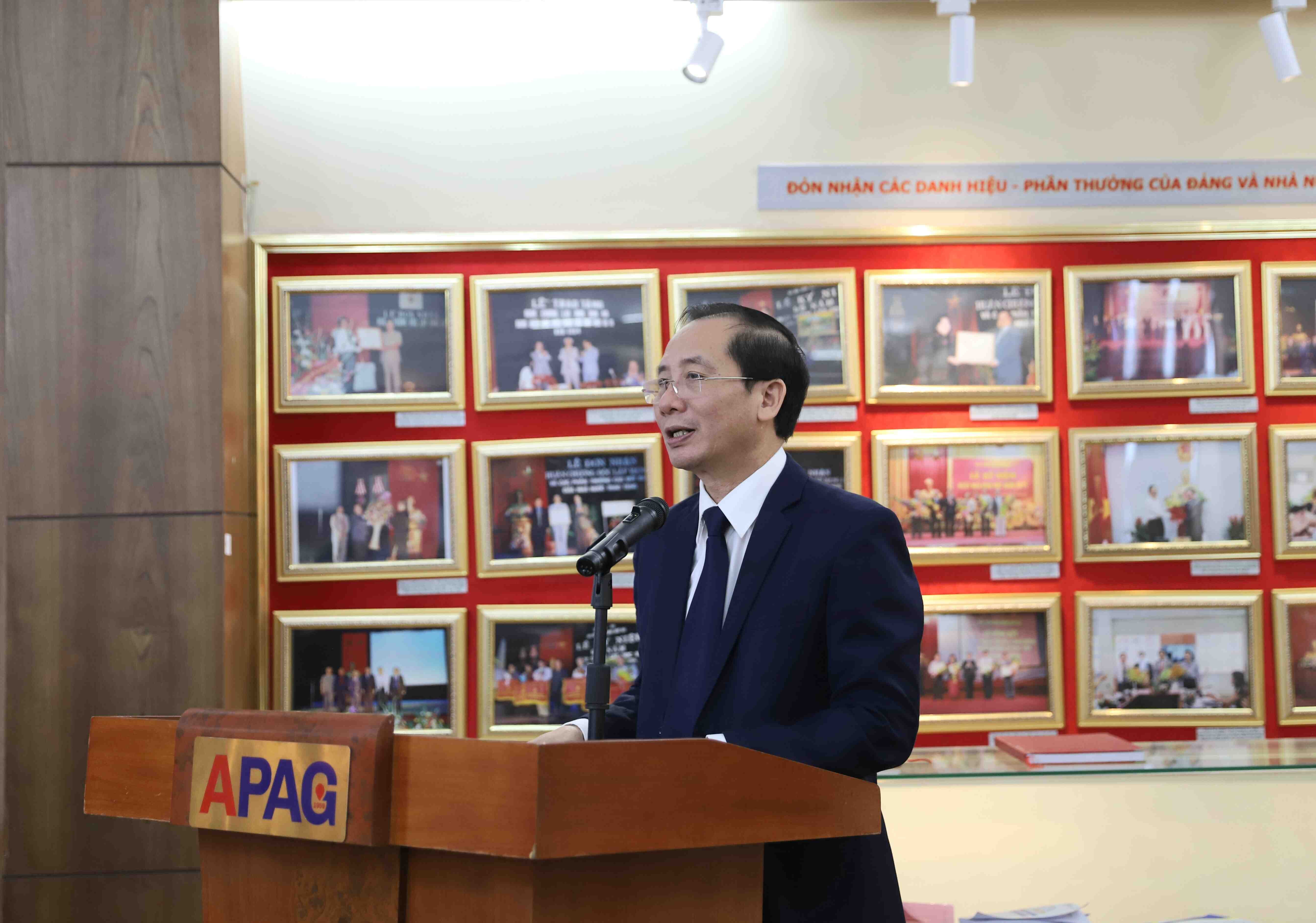 Assoc. Prof. Dr. Nguyen Ba Chien delivering the opening speech
The representative from the Australian Embassy in Vietnam highly valued the effective cooperation between the parties in training and scientific research, affirming the role of academic exchange activities in improving governance capacity and promoting international cooperation.
At the seminar, Professor Heather Zwicker presented a keynote on the concept of "Adaptive Leadership," an approach pioneered by Professor Ronald A. Heifetz (Harvard University). She emphasized the role of leadership in mobilizing people to solve complex challenges and promote sustainable development.
According to the Professor, the core of adaptive leadership lies in clearly distinguishing between technical problems and adaptive challenges. While technical problems can be resolved through expertise and existing procedures, adaptive challenges require deep changes in the mindsets, values, and behaviors of individuals and organizations alike. Therefore, leadership is not simply a title or a position of power, but a continuous process of practice involving action, reflection, and adjustment to specific contexts.
A key requirement of adaptive leadership is the capacity to diagnose. A leader must understand the system, identify relationships, interests, and hidden factors to determine the true nature of the issue and mobilize stakeholders to participate in the solution. In this process, the "getting on the balcony" mindset is considered an effective tool, helping leaders step back to observe the big picture, recognize operational patterns, identify conflicts of interest, and understand the roles of parties within the system.
Furthermore, adaptive leadership requires the ability to regulate the organizational environment. The Professor highlighted the importance of maintaining a "holding environment" - a space where individuals can face change without destabilizing the system. This involves controlling the "level of pressure" at an appropriate state: enough to drive change, but not so much that it causes overload or forces the organization to retreat to its old ways.
In practice, adaptive leadership does not focus on providing ready-made answers but encourages asking questions and deep listening - even to what remains unsaid. It also views resistance as a vital source of information for understanding the system better. Self-management, building trust, and distinguishing between one's "role" and one's "self" are also essential capacities.
From these analyses, Professor Heather Zwicker argued that adaptive leadership is a flexible approach emphasizing continuous learning and change. This helps organizations not only solve immediate problems but also enhance their adaptability toward sustainable development in today’s volatile landscape.
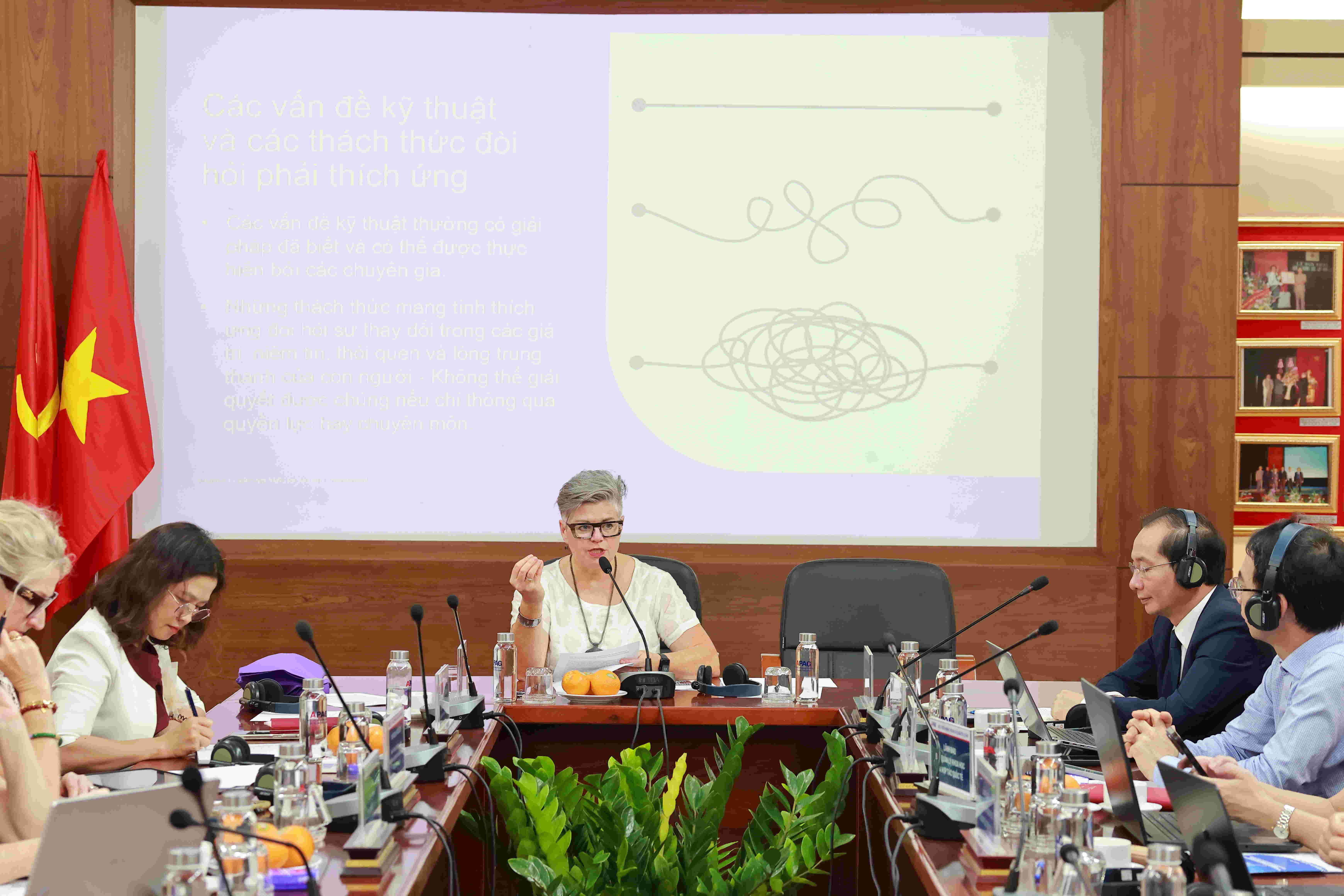 Professor Heather Zwicker presenting her paper at the Seminar
The discussion session was lively, with many delegates raising questions about applying the adaptive leadership model in higher education governance and public governance in Vietnam, particularly regarding digital transformation and modern management models.
Delegates discussing at the Seminar:
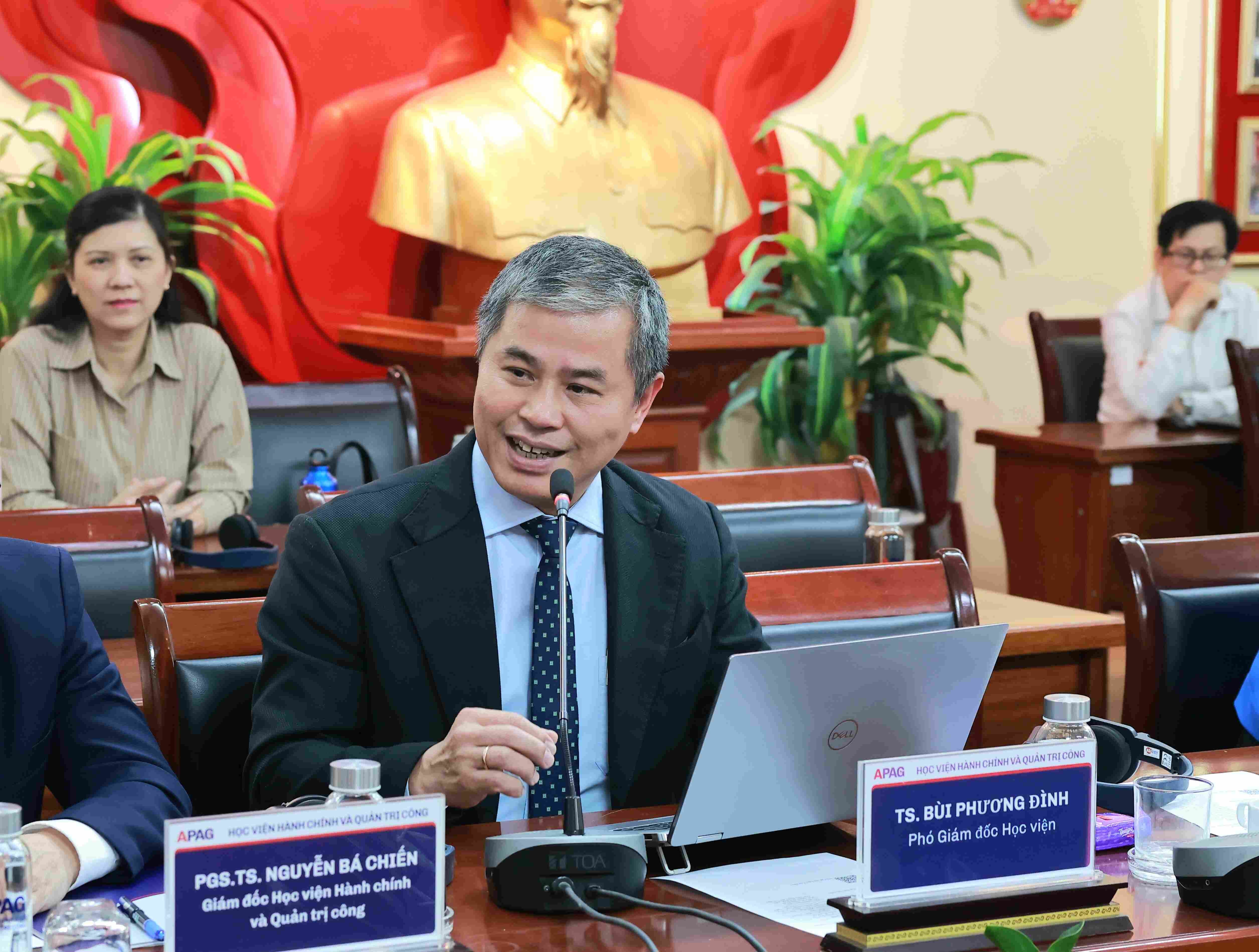 Dr. Bui Phuong Dinh, Vice President of the Academy, exchanging views
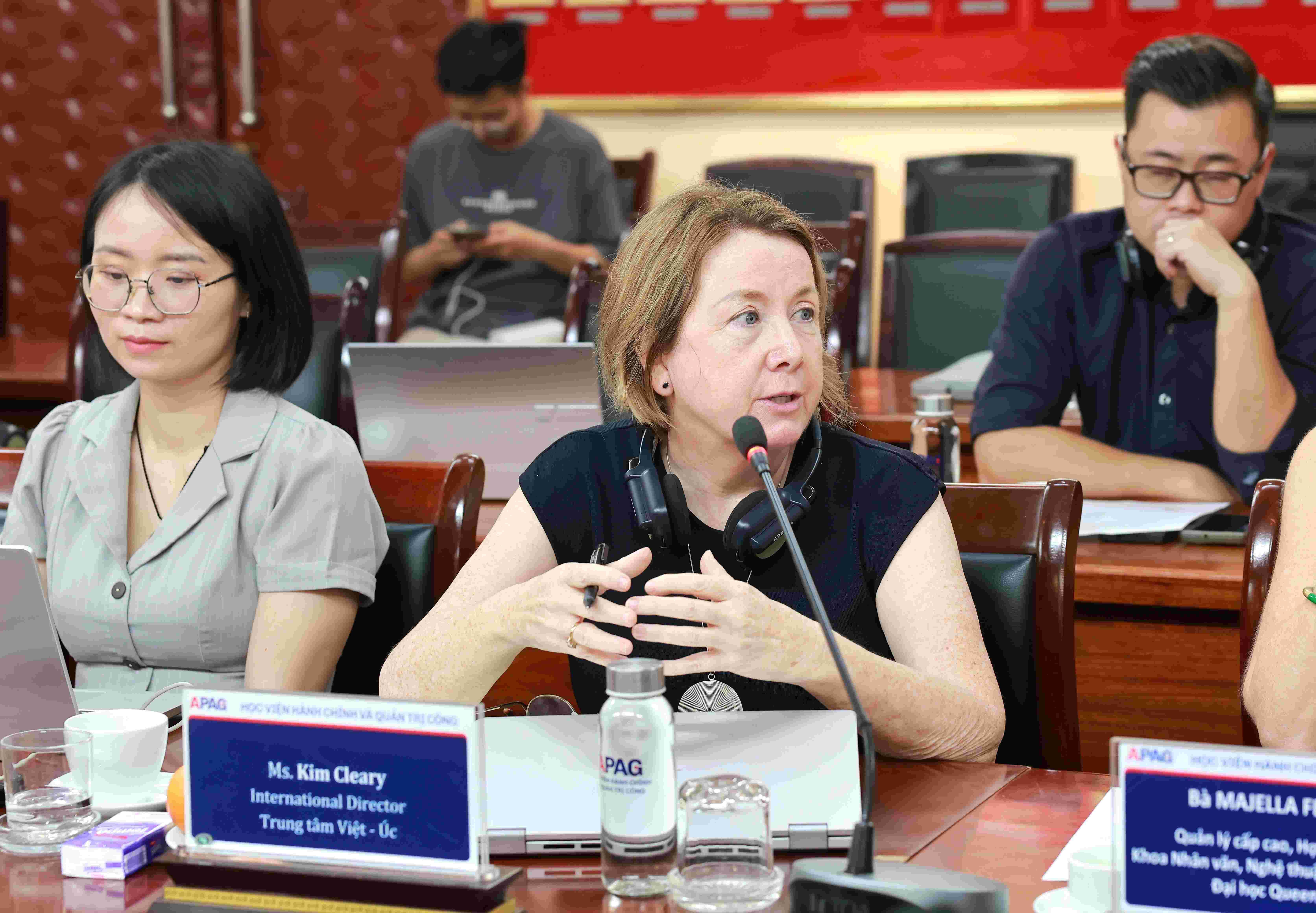 Ms. Kim Cleary, International Director of the Vietnam-Australia Centre, sharing opinions
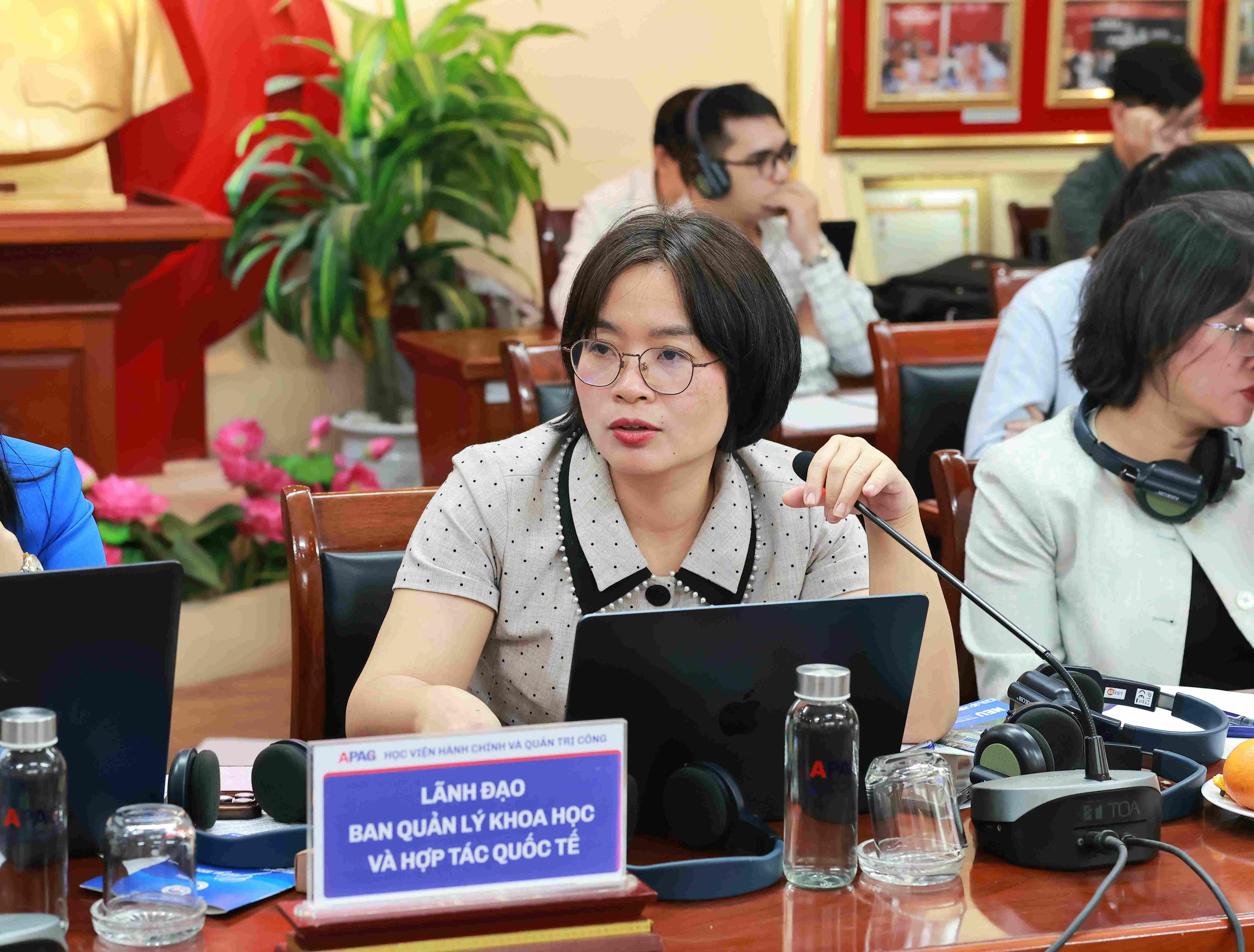 Dr. Bui Thi Thanh Thuy, Deputy Head of the Department of Scientific Management and International Cooperation, exchanging ideas
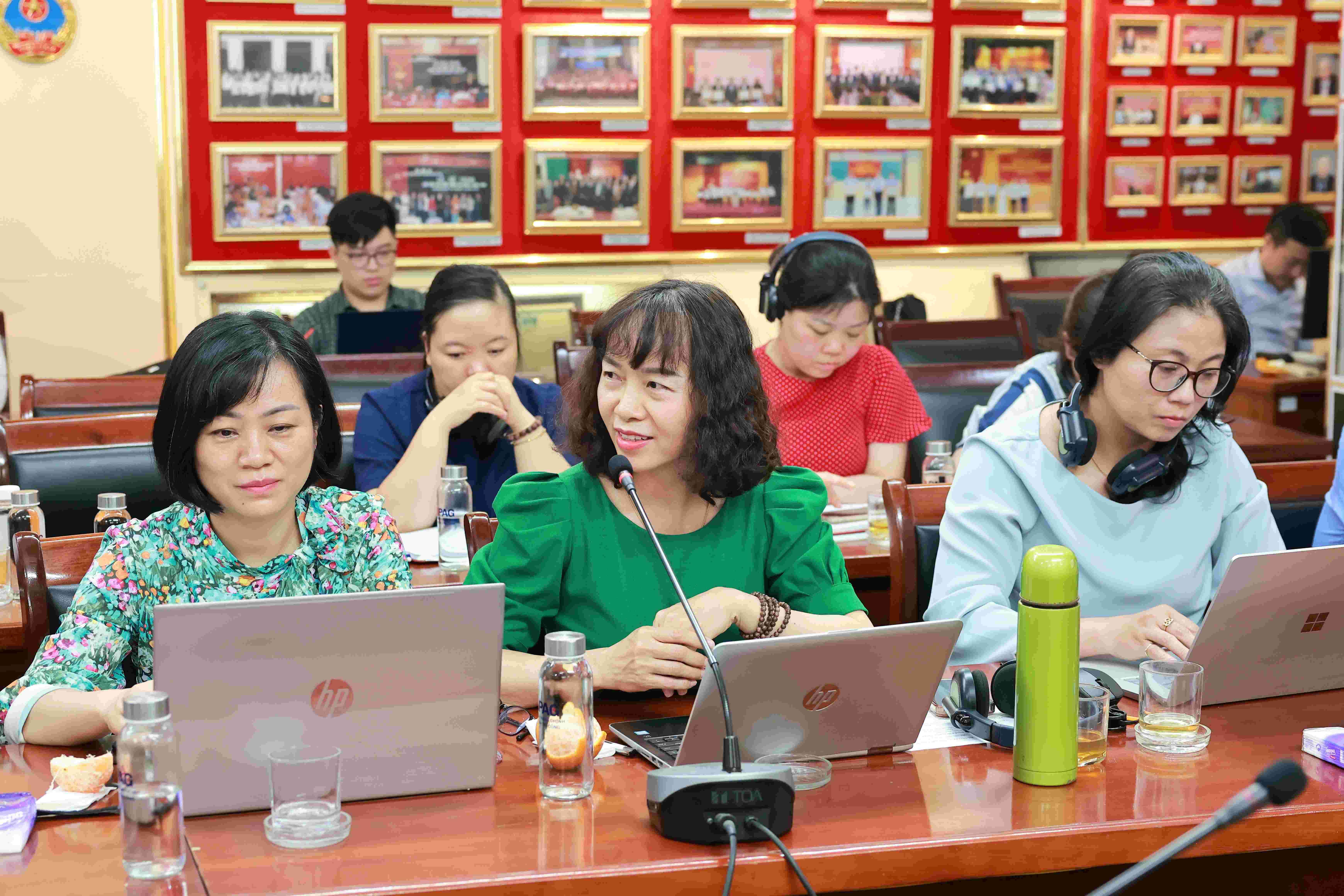 Dr. Dang Thi Minh, Deputy Dean of the Faculty of Social Development Management, exchanging ideas
In his concluding remarks, Dr. Bui Phuong Dinh, Vice President of the Academy, affirmed that the discussions provided many important insights for integrating adaptive leadership capacity into leadership, management, and teaching activities. He emphasized that training and fostering adaptive leadership for cadres, especially at the grassroots level, is an urgent practical requirement and a central focus that the Academy will continue to research and implement. Dr. Bui Phuong Dinh also evaluated the seminar as highly practical, helping to spread knowledge to lecturers and students, thereby improving training quality to meet the requirements of public governance innovation in the new context.
The seminar concluded successfully, reaffirming the role of the Academy of Public Administration and Governance in promoting international cooperation, updating modern knowledge, and step-by-step improving staff capacity. This contributes to building a professional, adaptive, and sustainably developing public service in the era of integration.
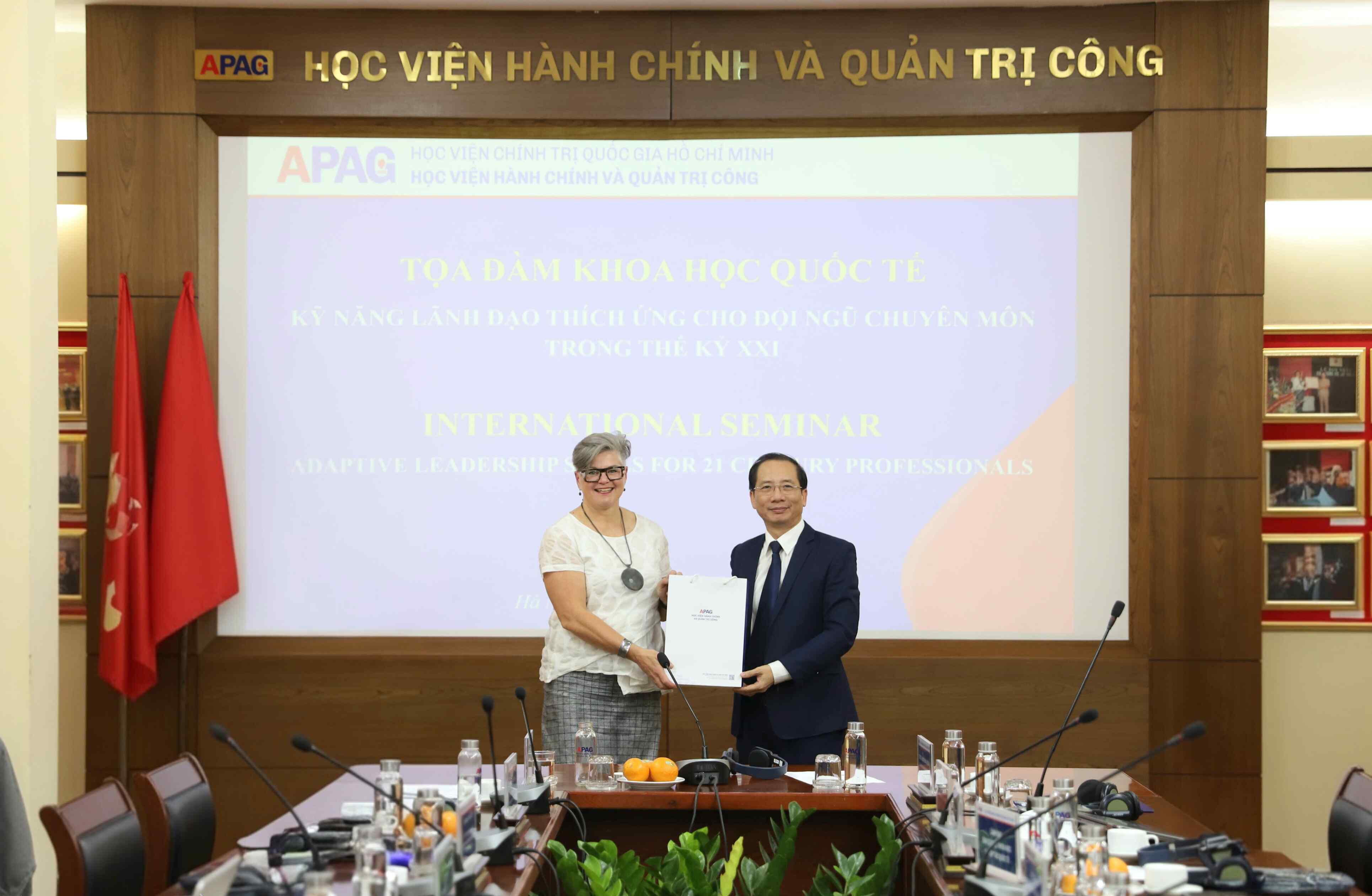 Assoc. Prof. Dr. Nguyen Ba Chien presenting a souvenir to Prof. Heather Zwicker
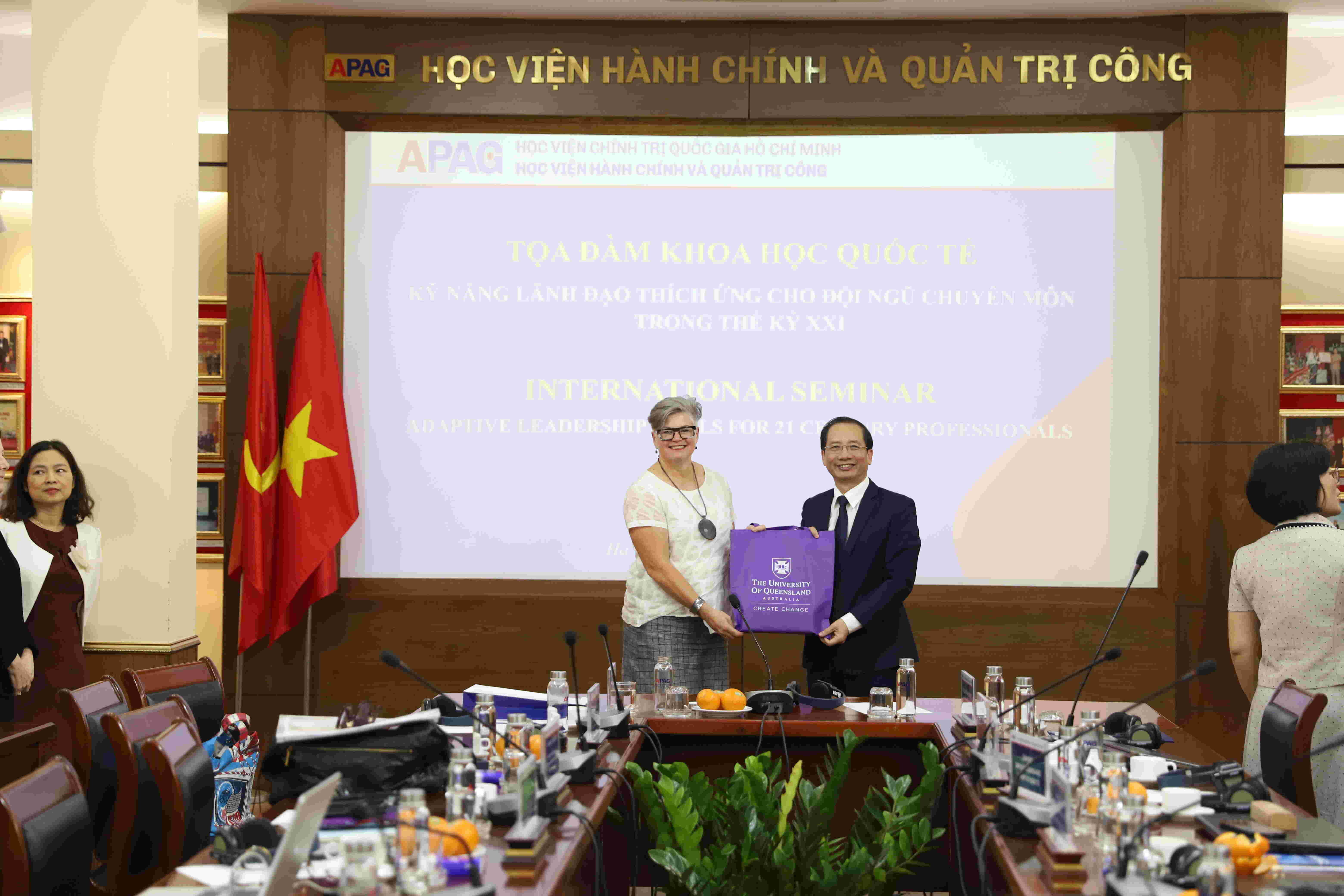 Prof. Heather Zwicker presenting a souvenir to Assoc. Prof. Dr. Nguyen Ba Chien
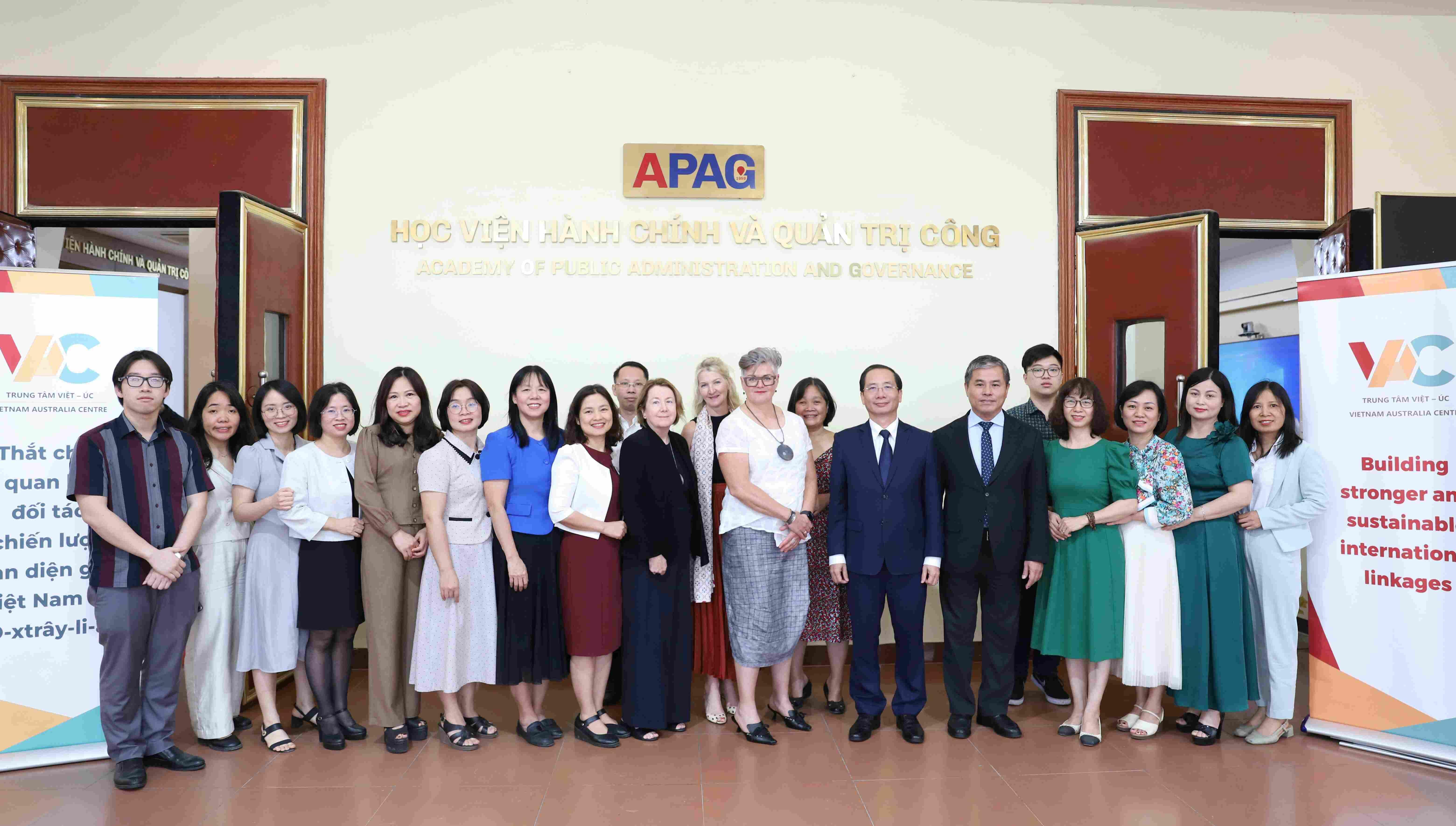 Delegates taking commemorative photos