On March 26-27, 2026, the 7th International Scientific and Practical Conference themed “Personality in the Management System” took place successfully. This is a prestigious academic forum organized annually by the Russian Presidential Academy of National Economy and Public Administration (RANEPA) in a hybrid format combining in-person and online participation.
The conference attracted over 450 experts, scientists, and managers from 13 countries, including Azerbaijan, Belarus, the United Arab Emirates, Indonesia, Kazakhstan, Cuba, Kyrgyzstan, Russia, Transnistria, Tajikistan, Turkmenistan, Uzbekistan, and Vietnam. The presentations focused on clarifying the theoretical basis, sharing practical experiences, and discussing the prospects of integration processes in modern society, with the overarching orientation of promoting human potential in the governance system.
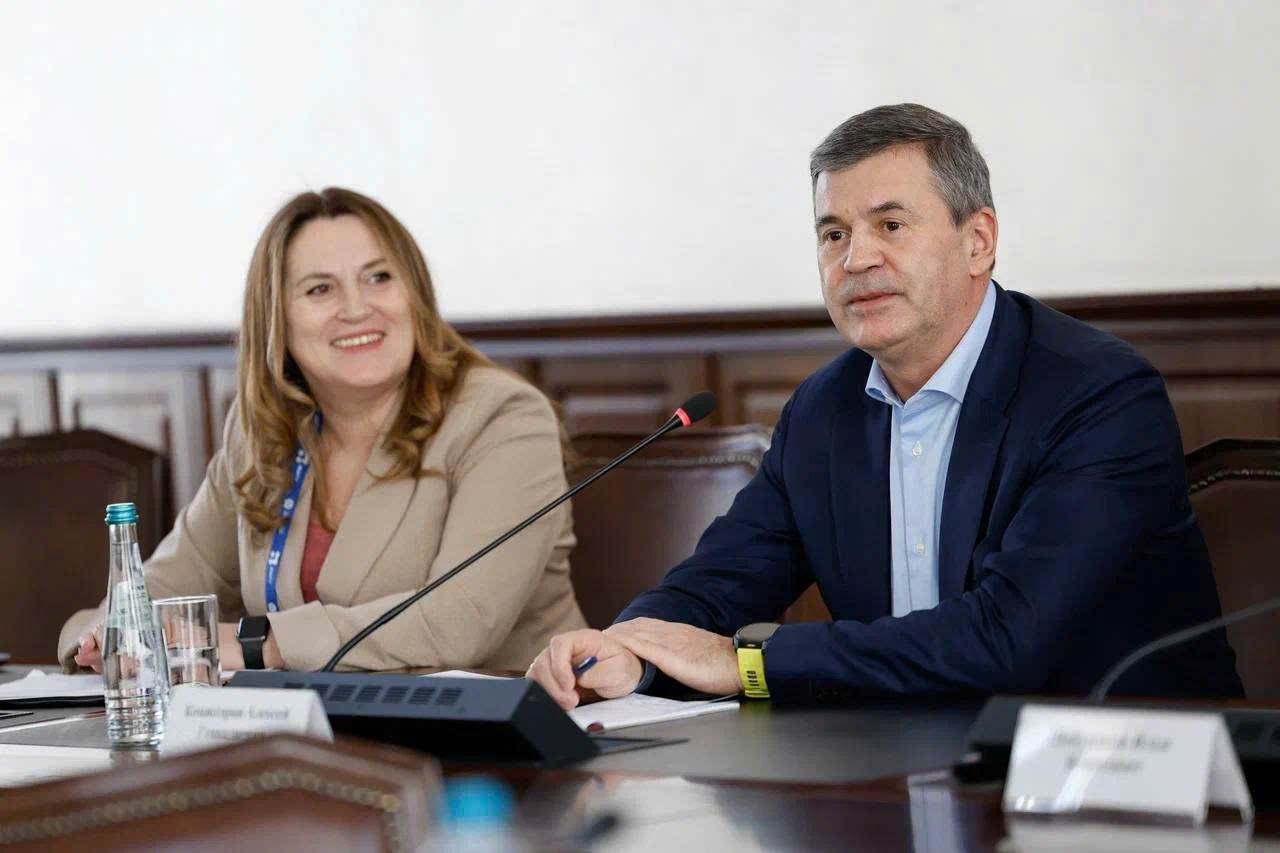 RANEPA leaders chairing the Conference
Innovating thinking: Clearing the "bottleneck of all bottlenecks"
At the plenary session themed "Integration as a mechanism for social, organizational, and individual development," leaders of public administration academies jointly analyzed the central role of humans in the face of the complex fluctuations of the era.
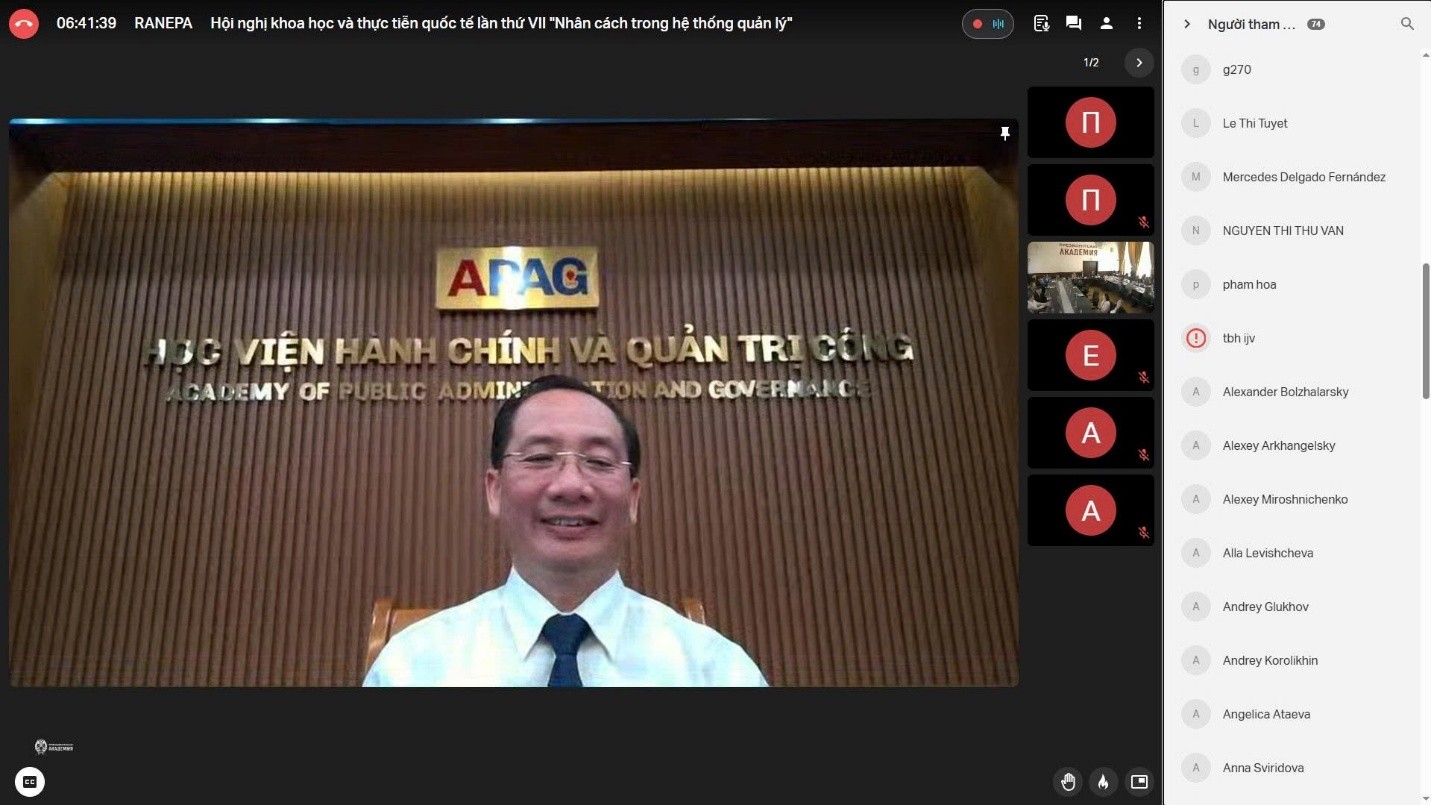 Assoc. Prof. Dr. Nguyen Ba Chien, President of the Academy of Public Administration and Governance, presenting at the Conference
Delivering his presentation at the Conference, Assoc. Prof. Dr. Nguyen Ba Chien, President of the Academy of Public Administration and Governance (affiliated with the Ho Chi Minh National Academy of Politics), offered a foundational approach: in an era of volatility, management is primarily about thinking capacity—the ability to accurately perceive reality and choose appropriate approaches. Assoc. Prof. Dr. Nguyen Ba Chien emphasized a point with profound methodological significance: "In any reform, the biggest obstacle is not technology or resources, but how we think about the problem and choose solutions. If thinking does not change, thinking itself will become the bottleneck of all bottlenecks."
From there, Assoc. Prof. Dr. Nguyen Ba Chien pointed out that many "bottlenecks" in development do not lie in a lack of policies, but in how they are understood and implemented. If thinking is not innovated, thinking itself will become the biggest barrier to reform.
Three pillars of modern governance thinking
Based on an analysis of the profound transformation context of society and organizations, the presentation shaped three pillars of modern management thinking:
First, systems thinking: Viewing issues as a multi-dimensional, interconnected whole, linking short-term goals with long-term ones, and national perspectives with global ones.
Second, adaptive thinking: Emphasizing the capacity for flexible adjustment and continuous learning in an uncertain environment.
Third, value-creating thinking: Shifting from administrative management to development governance, placing outcomes and public value at the center.
These three pillars reflect a fundamental shift from traditional management models to modern governance models, aiming for substantive effectiveness and sustainable development.
Technology and humans: Reshaping the foundation of governance
A notable highlight in the presentation was the approach to artificial intelligence (AI) as a new "cognitive infrastructure" of governance. AI opens up the possibility of real-time, data-driven decision-making, but it cannot replace humans in core aspects: choosing values, understanding contexts, and taking responsibility.
Accordingly, mastering technology is essentially mastering thinking. At the same time, management thinking is not just an individual issue but is also governed by the institutional environment. An institution that encourages innovation and upholds accountability will facilitate the formation of modern governance thinking; conversely, a control-oriented mechanism will stifle creativity.
From thinking to action: Orientations for governance reform
To bridge the gap between policy and implementation, the presentation proposed four breakthrough orientations:
1. Building learning institutions through policy piloting mechanisms.
2. Innovating public sector training towards developing thinking capacity.
3. Establishing a culture of results-based responsibility and accountability.
4. Developing data-driven governance.
These orientations all aim toward a fundamental transformation: from process-based management to results-based governance, from experience to evidence, and from stability to adaptability.
The intersection of knowledge and connection of international experiences
Besides theoretical presentations, the Conference also recorded profound practical insights shared by international partners, thereby contributing to sketching a multi-dimensional picture of public governance in the modern context.
From Kyrgyzstan, Ms. Aigul Kalchakeeva, President of the Academy of Public Administration under the President of the Kyrgyz Republic named after J. Abdrakhmanov, shared management experiences linked to the role of national founders, while emphasizing the significance of inheriting traditional values to improve the efficiency of public service delivery.
 Ms. Mercedes Delgado Fernández, Rector of the Higher School of State and Government Cadres of the Republic of Cuba, delivering her presentation at the Conference
Meanwhile, Ms. Mercedes Delgado Fernández, Rector of the Higher School of State and Government Cadres of the Republic of Cuba, brought a systemic approach by introducing the public servant competency model, ethical standards, and assessment methods for the management contingent in the public sector.
 Mr. Ilya Sheburakov - Deputy Director of the Institute of Advanced Administration at the Russian Presidential Academy of National Economy and Public Administration, presents his paper at the seminar
From another perspective, Mr. Ilya Sheburakov, Deputy Director of the Institute of Advanced Administration at the Russian Presidential Academy of National Economy and Public Administration, focused on analyzing the administrative reform process and pointing out the role of these reforms in shaping the personality and capacity of modern leaders.
These diverse insights not only supplemented rich practical perspectives but also contributed to deepening the common understanding of the development trends of public governance across the world.
Closing the Conference, it became clear that the academic exchanges and practical experiences from various countries have contributed to clarifying a common trend in modern governance: shifting from control-oriented thinking to constructive thinking, from process-driven operations to value- and results-oriented approaches, and placing humans at the center of all reforms.
In that flow, the proactive, responsible participation and in-depth academic contributions of the Academy of Public Administration and Governance left a distinct mark. Not stopping at merely sharing perspectives, the Academy also demonstrated its role as an active subject in creating knowledge, connecting academia, and spreading new approaches to public governance.
Through this prestigious international forum, the Academy continues to affirm its position as a leading training and research institution in the field of public administration and governance, and at the same time, as an important bridge between theory and practice, and between Vietnam and the international academic community.
The values shared and the orientations suggested from the Conference not only contribute to enriching governance thinking but also serve as a basis for the Academy to continue innovating training content, improving research quality, and making practical contributions to the national administrative reform process in the new period.