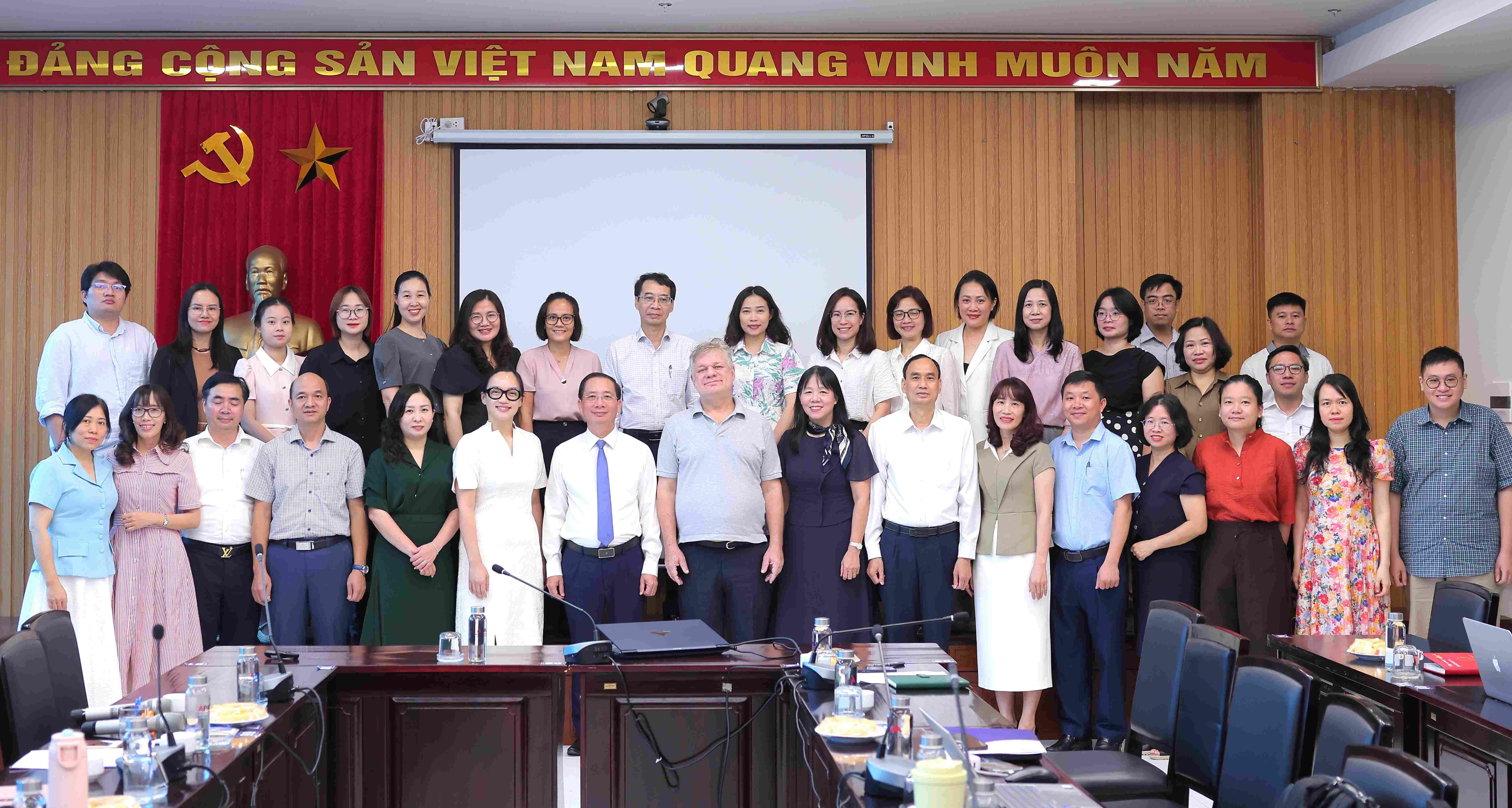
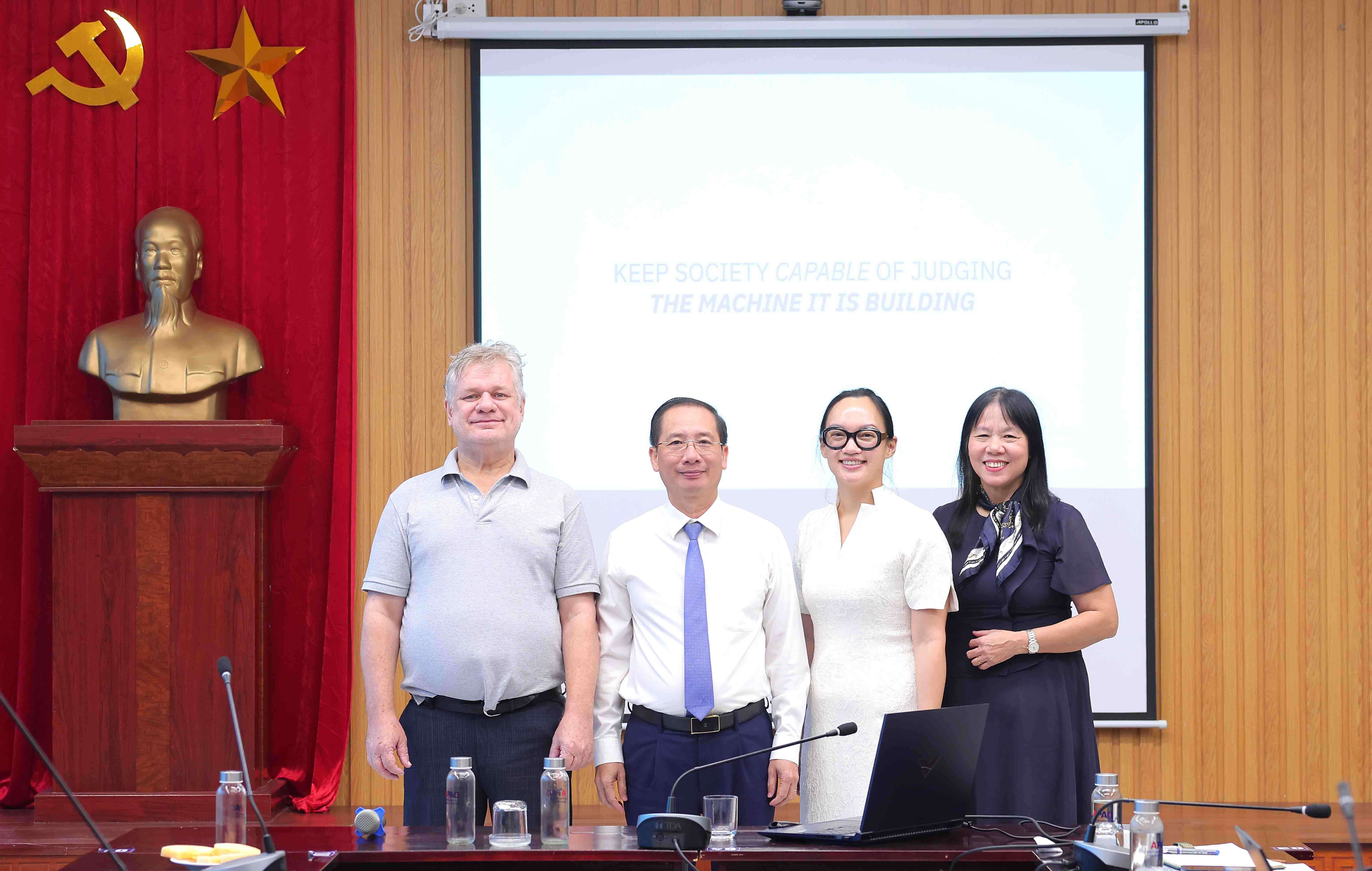
On the morning of September 9, 2026, the Academy of Public Administration and Governance held a scientific seminar titled "Higher Education in the AI Era: Issues, Impacts, and Insights," presented by experts from France and Belgium.
Attending the seminar, on the side of distinguished guests, were Dr. Pham Thanh Thao, lecturer and senior consultant from the French Republic; and Mr. Olivier Lefevre, lecturer and senior consultant from the Kingdom of Belgium. On the side of the Academy of Public Administration and Governance, participants included Assoc. Prof. Dr. Nguyen Ba Chien, President of the Academy; Assoc. Prof. Dr. Luong Thanh Cuong, Vice President of the Academy; alongside representatives of leadership from various units and a large number of Academy faculty members participating in the project "Enhancing Capacities for Teaching, Research, and Working in an International Environment for Officials and Lecturers of the Academy of Public Administration and Governance for the 2026–2027 Period, with Orientations to 2030."
In his opening remarks, Assoc. Prof. Dr. Nguyen Ba Chien affirmed that artificial intelligence (AI) has now transcended the role of a mere support tool, directly reshaping how human beings access knowledge and develop capabilities. In this context, elevating the quality of the faculty team at the Academy of Public Administration and Governance is an urgent requirement. This not only helps adapt to changes in higher education but also establishes a proactive stance in applying AI to teaching, scientific research, and international integration.
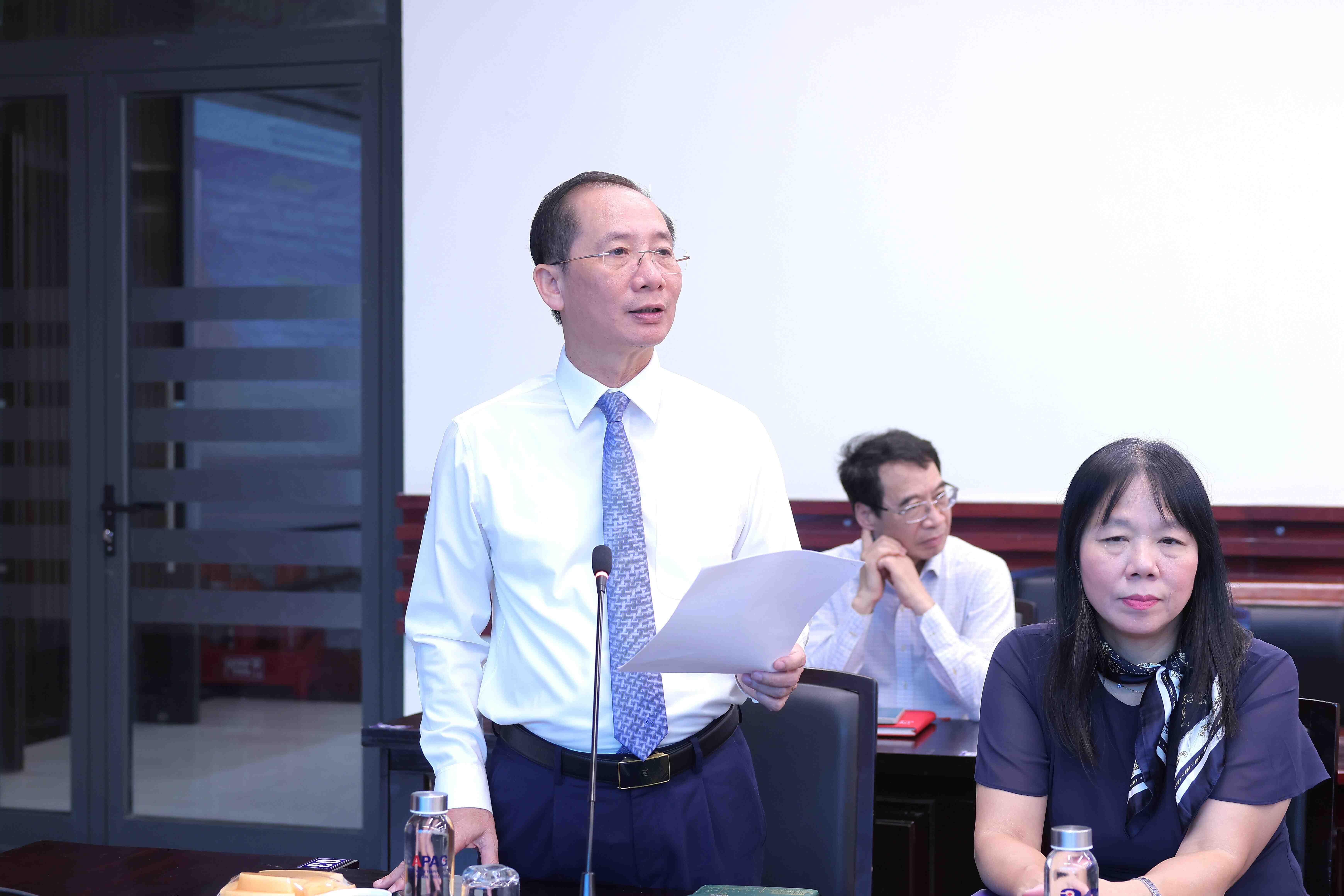 Assoc. Prof. Dr. Nguyen Ba Chien, President of the Academy, delivers opening remarks at the Seminar
Assoc. Prof. Dr. Nguyen Ba Chien emphasized that the crux of the matter lies not in how much AI can accomplish, but in clearly identifying which tasks should be delegated to machines and which capabilities humans must accumulate themselves through reading, writing, debating, experimenting, error-correcting, and defending perspectives. If relying on AI too early, we might generate products faster, but it will not necessarily educate learners, faculty, or researchers with sharp thinking and judgment. Therefore, integrating AI into teaching and research must be grounded in a spirit of technological mastery, using AI to augment human capabilities and raise the quality of research, training, and governance rather than merely chasing trends. This is also a central task for the Academy in innovating higher education to meet the demands of organizational apparatus reform and administrative operation in the new era.
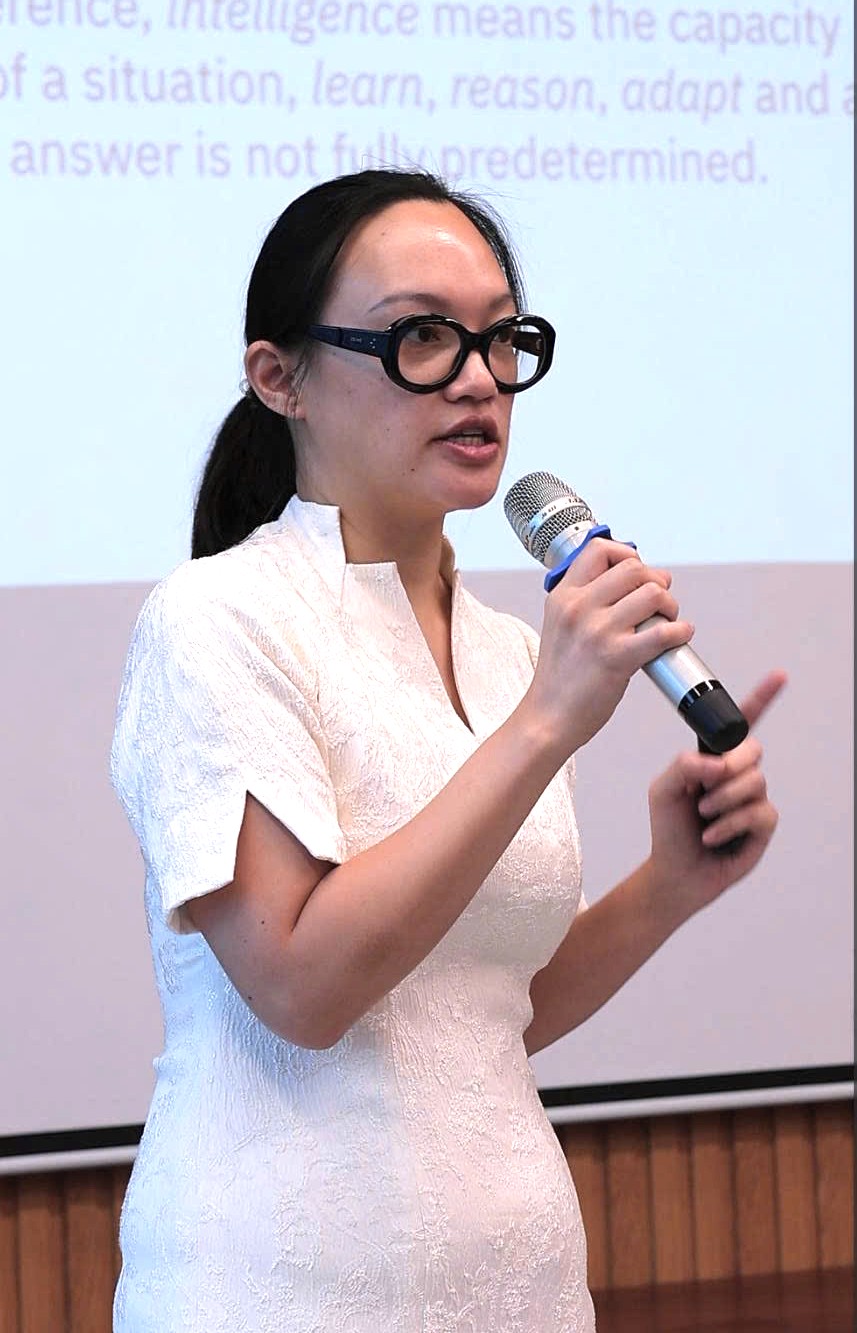 Dr. Pham Thanh Thao, lecturer and senior consultant from the French Republic, presents her paper
Presenting their papers at the Seminar, Dr. Pham Thi Thanh Thao and Mr. Olivier Lefevre provided in-depth analysis of AI's fundamental impacts on higher education, spanning from information access and knowledge creation to pedagogical delivery and learner evaluation methods. The speakers recognized that the explosion of generative AI has rendered data searches, drafting answers, writing reports, and preparing presentations extraordinarily rapid. Nevertheless, securing a reasonable answer does not mean the learner truly understands the underlying essence, possesses cross-verification skills, or has sufficient capacity to deliver accurate judgments. The core message "having information/an answer is not intelligence" underscores that possessing information or an answer has never been equivalent to intellectual capacity. When answers become overly available, the core value of knowledge shifts from producing answers to verifying, critiquing, contextualizing data, and taking responsibility for one's decisions. The experts also warned of the emerging risk of a "knowledge stage" (facade of knowledge) where AI-generated essays and reports present a deeply sophisticated exterior that fails to reflect the creator's actual understanding. When external output detaches from internal knowledge, human capacity for authentic judgment becomes all the more valuable.
A notable highlight raised by the speakers was the emergence of "System 3", a state where humans share part of their thought process with machines (delegating part of thinking). If System 1 represents fast instincts and System 2 requires independent, deliberate thinking, System 3 allows delegating a portion of cognitive activity to AI. This could become the new normal in academic and intellectual work. Simultaneously, this reality mandates the development of "intelligent delegation competence": strictly knowing what needs independent thought, what can be assigned to AI, what content requires verification, and who holds ultimate accountability. The greatest challenge lies not in utilizing AI, but in the risk of humans abusing AI as a default reaction prior to thinking for themselves, leading to polished surface outputs that are hollow in cognitive depth and argument defense.
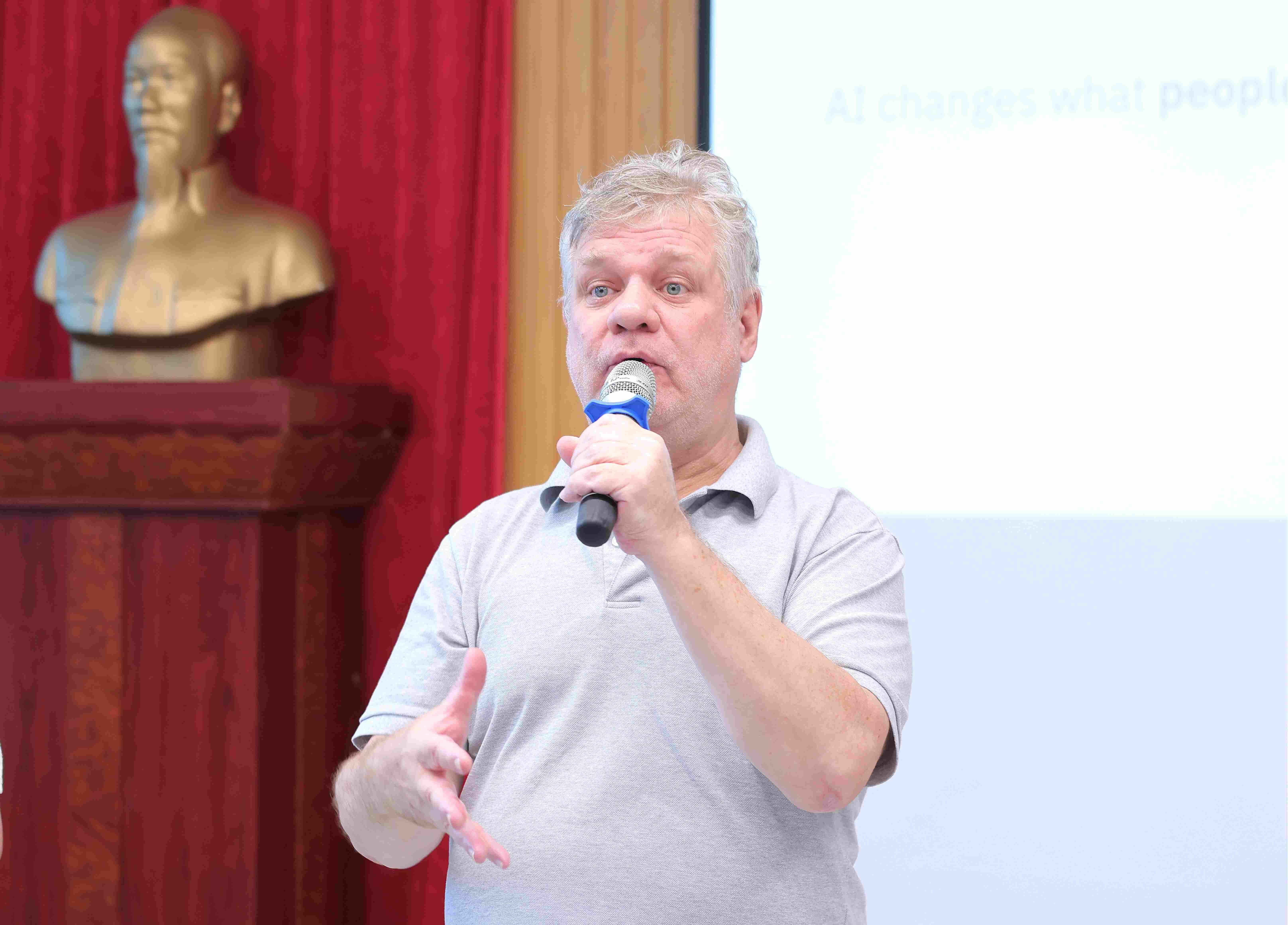 Mr. Olivier Lefevre, lecturer and senior consultant from the Kingdom of Belgium, presents his paper
From this reality, the speakers recommended that higher education transform its perspective on the nature of learning and assessment methods. Student dependency on AI does not stem purely from laziness, but arises from how learning objectives are positioned. If the goal is merely finalizing a product to earn grades, using AI becomes the optimal path. Conversely, if the goal is cultivating capacity through reading, thinking, trial-and-error, and self-adjustment, learners must engage more deeply in the cognitive process. Thus, lecturers must proactively design new learning experiences that help students develop practical competencies rather than relying solely on traditional assignment formats.
In a context where AI easily generates visually compliant outputs, traditional assessments such as essays or oral presentations are no longer sufficient to prove authentic learning. Teaching and learning must therefore shift from evaluating final products to assessing cognitive processes through accountability, argumentation, critique, source verification, and responsibility for decisions rendered. This requires repositioning the lecturer's role beyond merely transmitting knowledge or providing answers; more importantly, educators must serve as designers of the learning journey, posing thought-provoking questions, challenging weak arguments, and guiding students' judgment capacity.
Furthermore, the experts affirmed that the development of AI by no means diminishes the importance of foundational knowledge; on the contrary, it makes domain expertise even more valuable. Learners can detect errors and leverage AI effectively only when possessing a sufficiently deep knowledge base. Professional competence does not spontaneously arise from a pre-packaged correct answer, but must be forged through exploration, practice, comparison, making mistakes, and correcting them. Hence, higher education must preserve necessary challenges so students truly hone their fortitude, avoiding letting AI substitute this entire process.
The speakers emphasized that the goal of higher education is to train individuals who are not only adept at leveraging AI, but also know how to divide tasks reasonably between humans and machines, knowing when to utilize, verify, or reject AI outputs, while always holding responsibility for the final decision. In a constantly changing professional landscape, learning must become a lifelong process. Universities need not race against AI in generating answers; instead, they should focus on their core mission: developing foundational knowledge, cognitive thinking, judgment capacity, and personal responsibility. This forms the enduring foundation for faculty, researchers, and learners to master, evaluate, and control AI effectively and responsibly.
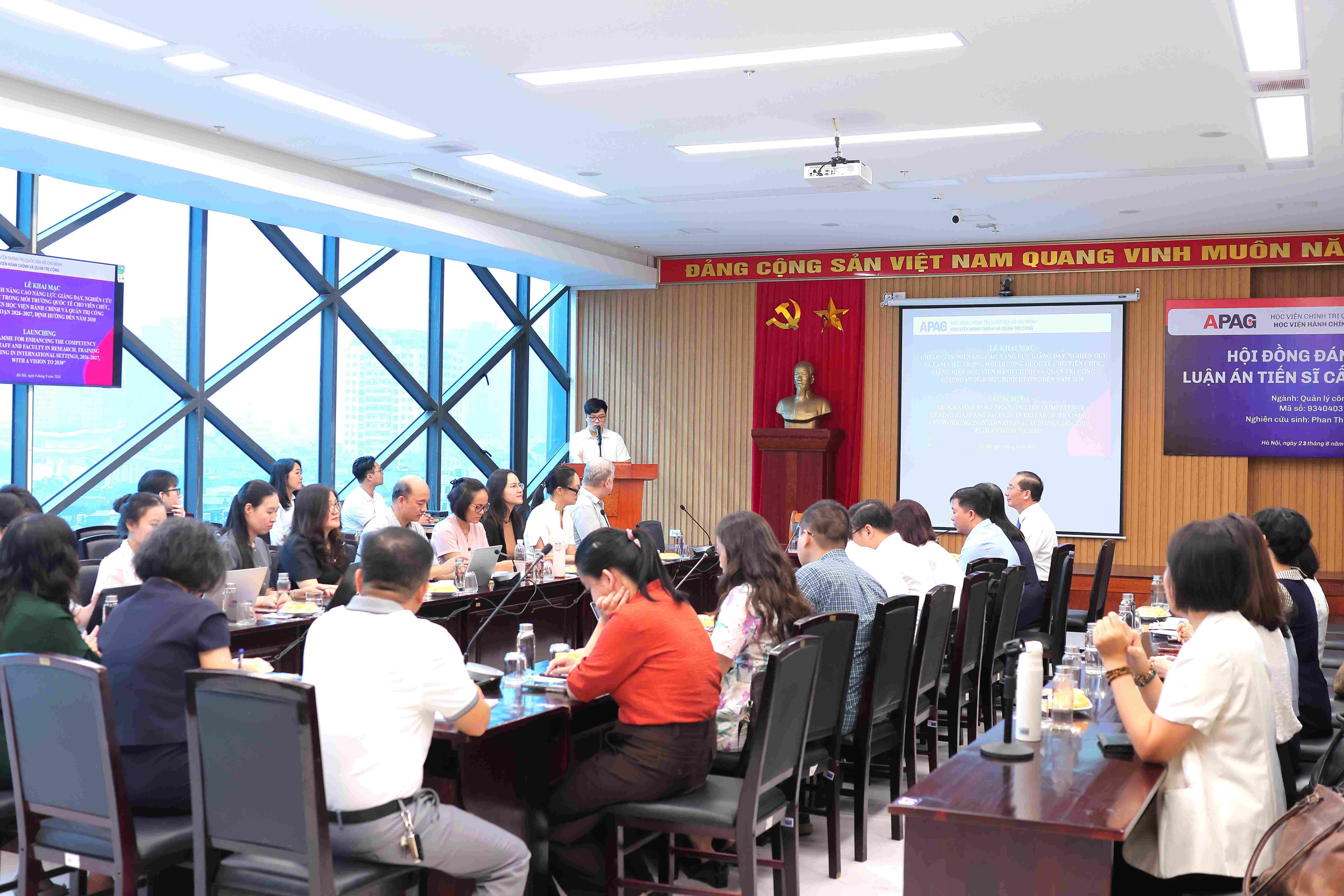 Overview of the Seminar
At the Seminar, Academy officials and lecturers actively engaged in exchanges, discussions, and shared practical issues regarding teaching, research, AI application, and working in an international environment. The discussions helped clarify new requirements for staff and faculty in the context of digital transformation and deepening integration. Through this, the seminar not only created a platform for connection and experience-sharing, but also offered practical orientations to enhance professional competence, adaptability, and task execution effectiveness for the Academy's staff and faculty in the coming time.
Delegates take commemorative photos at the Seminar: