Following the first week of working activities in Ottawa, Canada, from 9 to 14 May 2026, the delegation of the Academy of Public Administration and Governance (APAG), led by Associate Professor Dr. Nguyen Ba Chien, President of APAG, continued its mission in Québec City, Victoria, and Vancouver to further explore, assess, and strengthen cooperation with Canadian training and public sector development institutions within the framework of the Inclusive Local Governance (ILG) Project in Viet Nam. The second working week carried particular significance. It not only enabled the Academy to gain a clearer understanding of the capacities, strengths, and potential contributions of each Canadian partner institution, but more importantly, contributed to shaping a strategic approach to the ILG Project focused on developing a local leadership capacity system closely linked to public governance reform and the transformation of local government models in Viet Nam.
On 11 May 2026, the delegation held working sessions with École nationale d'administration publique (ENAP), one of Canada’s leading institutions for public sector training and leadership development. The delegation was received by Professor Dr. Hugo Cyr, President and Chief Executive Officer of ENAP; Dr. Chantal Beauvais, Provost and Vice-President for Academic Affairs; Mr. Olivier Roy, Director of Organizational Effectiveness Services; together with leaders and experts from units responsible for international cooperation, public sector innovation, youth leadership development, living labs, and institutional advisory services.
Discussions focused on models for developing public sector leadership capacity in the context of contemporary governance reform, particularly the relationship between civil service training, institutional capacity, and the developmental leadership capacity of governments.
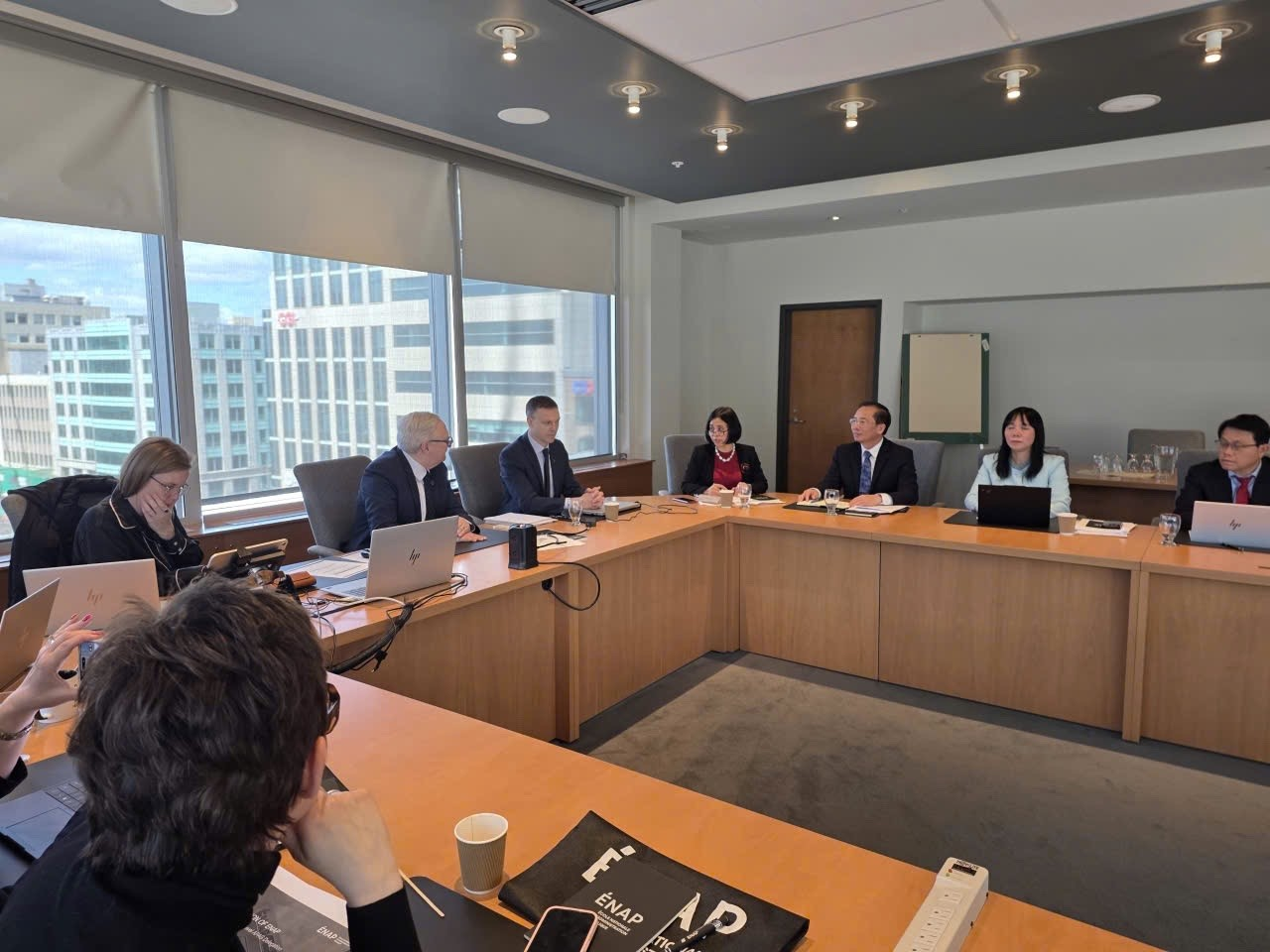 The delegation working at École nationale d'administration publique (ENAP)
The discussions highlighted that ENAP’s approach does not view training merely as a process of knowledge transmission, but rather as a tool for strengthening the capacity of the entire public governance system. Under this approach, the starting point is not the design of individual courses or training programmes, but the analysis of governance contexts, identification of development challenges, and assessment of organizational and human resource competency gaps. These analyses then serve as the basis for developing competency frameworks that underpin the entire process of training, professional development, and public sector reform.
This approach is particularly relevant for Viet Nam in the context of ongoing comprehensive public sector reform, the implementation of the two-tier local government model, and the transformation of governance approaches toward greater modernity, flexibility, and citizen-centeredness.
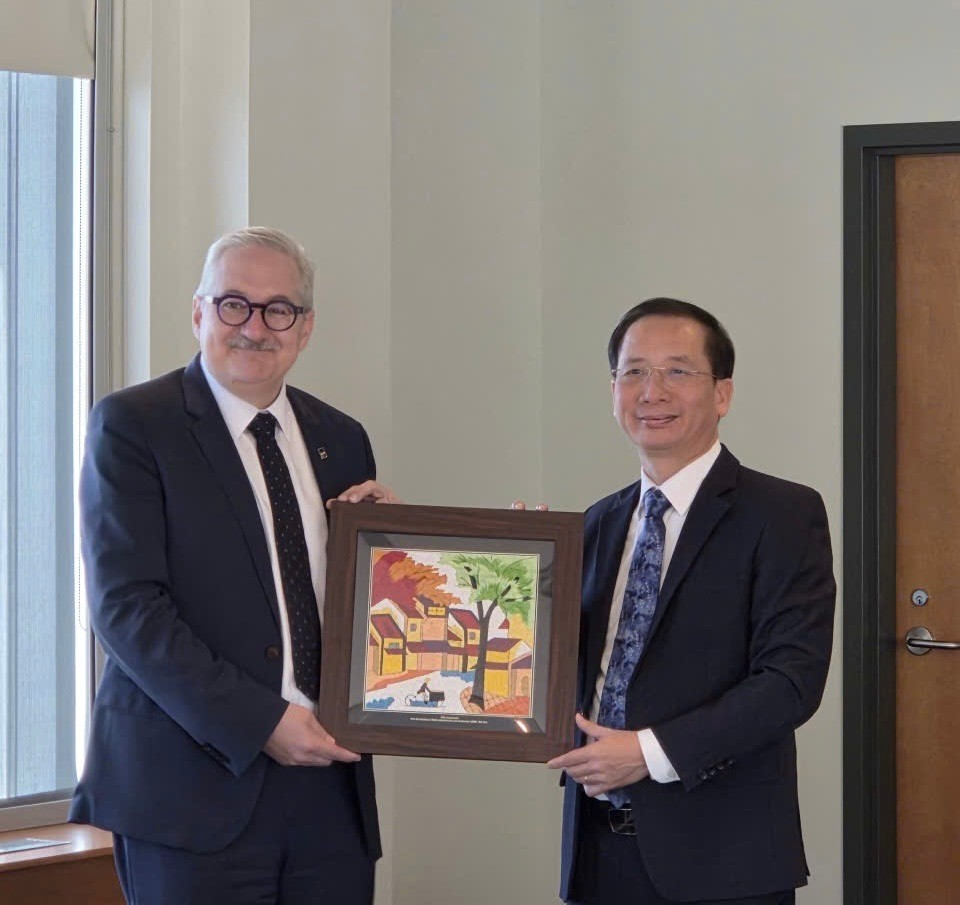 Associate Professor Dr. Nguyen Ba Chien, President of the Academy of Public Administration and Governance, presents a commemorative gift to Professor Dr. Hugo Cyr, President and Chief Executive Officer of École nationale d'administration publique
One of the key themes discussed extensively during the working session at ENAP was the need to shift from a subject-based training approach toward the development of leadership capacity and the capacity to create public value. In this regard, the competencies required of local leaders today extend far beyond technical expertise or administrative skills, and increasingly include capacities for multi-stakeholder coordination, governance in uncertain environments, data governance, evidence-based decision-making, addressing cross-sectoral issues, and leading change in increasingly complex social contexts.
The two sides also discussed the possibility of ENAP serving as a core partner to support the Academy in conducting system-wide capacity diagnostics, developing local leadership competency frameworks, designing the Master’s Programme in Local Governance, and supporting the reform of the Academy’s civil service training and professional development system.
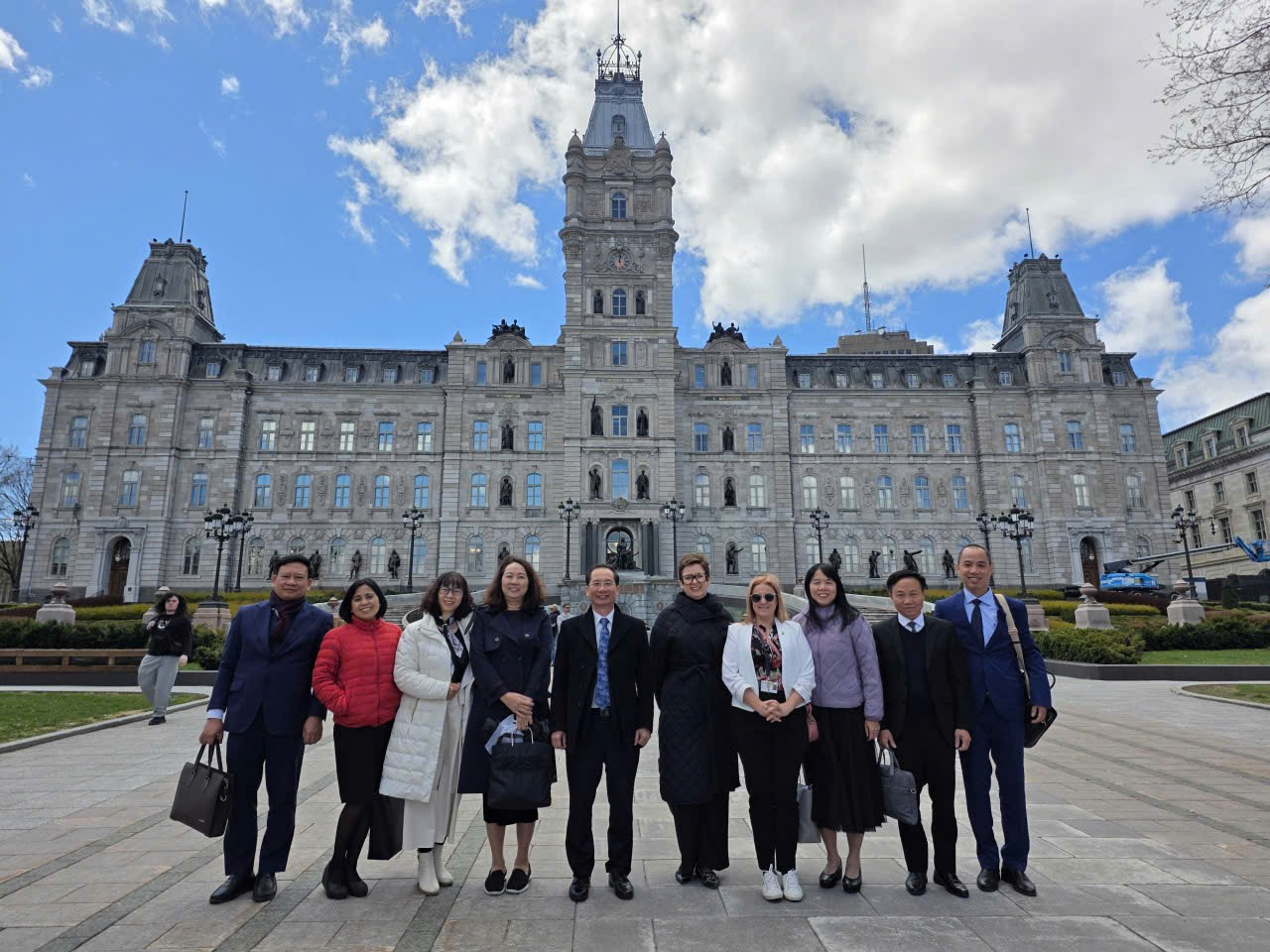 The delegation visits the Parliament Building of Quebec
On 13 May 2026, the delegation continued its working programme with the University of Victoria and the Centre for Asia-Pacific Initiatives (CAPI). Participants in the programme included Dr. Robina Thomas, Acting President and Vice-Chancellor of the University of Victoria; Professor Evert Lindquist, one of Canada’s leading scholars in public administration and public sector reform; leaders of the School of Public Administration; Professor Kathryn Chan from the Faculty of Law; Professor Robin Hicks, Dean of Graduate Studies; Professor Jill-Anne Chouinard, Director of the School of Public Administration; together with leaders, faculty members, and experts from the School of Public Administration, the Faculty of Law, CAPI, and units responsible for research, international cooperation, and programme development.
Discussions focused on innovation in public leadership education and training, experiential learning, interdisciplinary learning, simulation-based training, and the development of adaptive leadership capacities in complex governance environments.
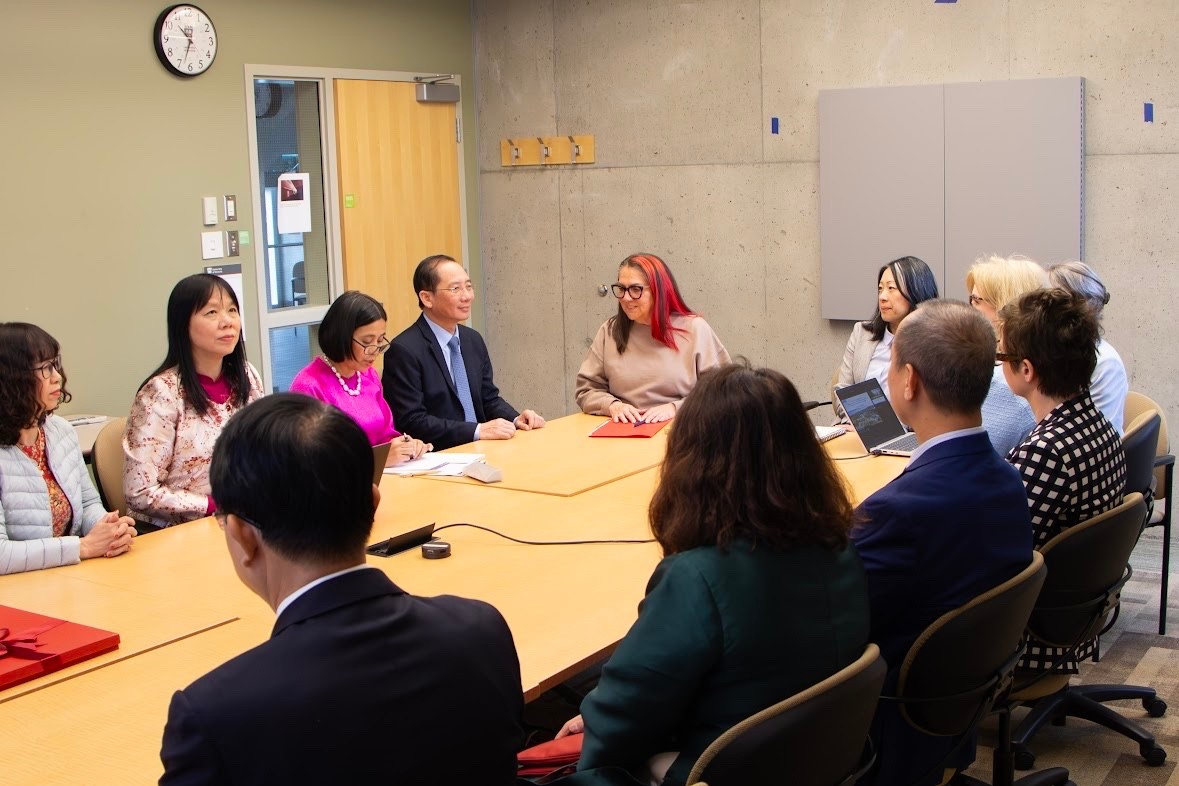 Dr. Robina Thomas, Acting President and Vice-Chancellor of the University of Victoria, receives and meets with the delegation
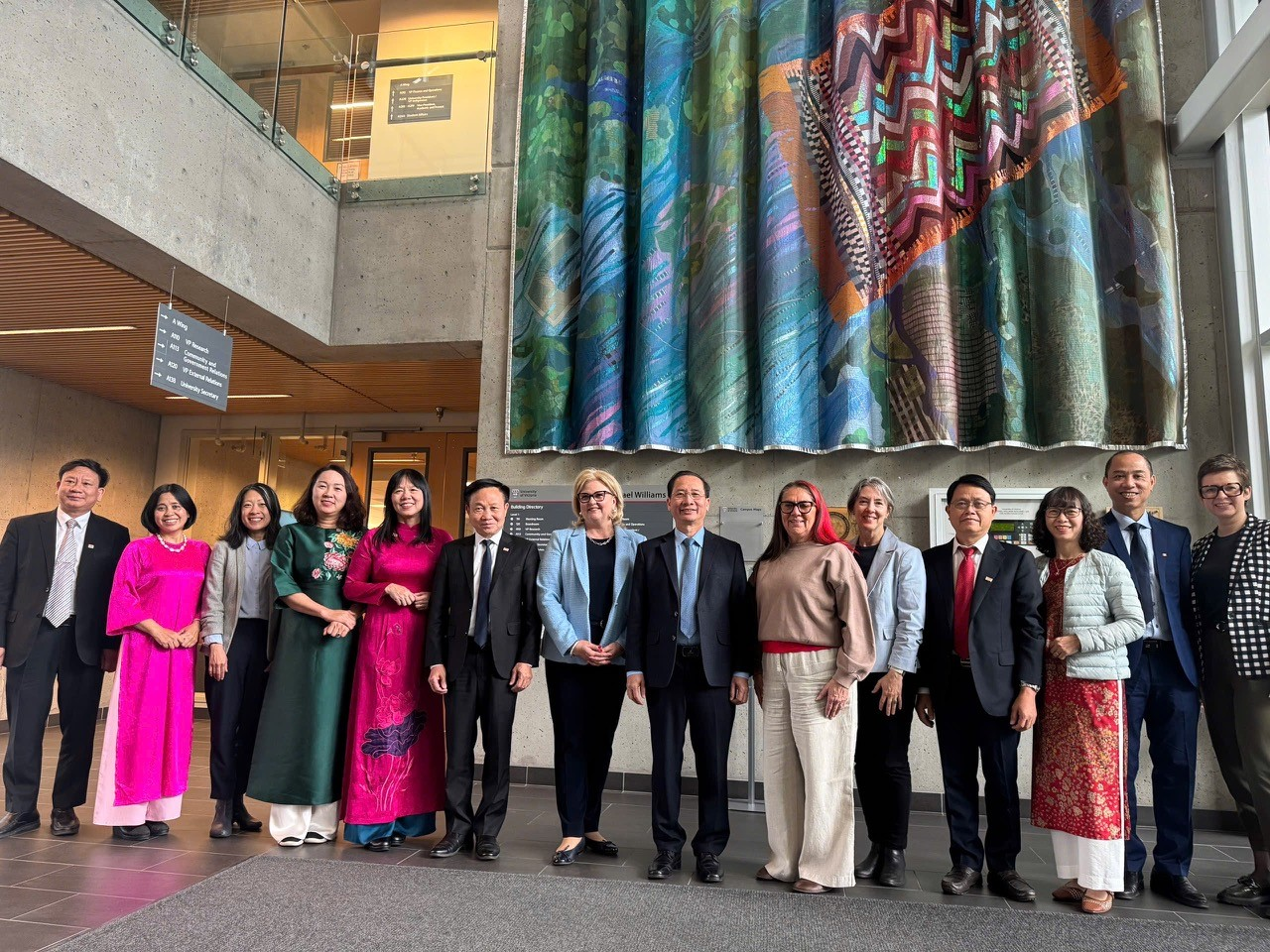 The delegation takes a photograph at the University of Victoria
Experts from the University of Victoria emphasized that the greatest challenge of modern governance does not lie in a lack of information or regulations, but rather in the capacity to address public problems that are cross-sectoral, involve multiple stakeholders and competing interests, and are constantly evolving. In this context, public leadership education and training can no longer rely primarily on the transmission of theoretical knowledge, but must instead help learners develop systems thinking, adaptability, negotiation and coordination capacities, and the ability to make decisions under conditions of uncertainty.
In particular, the University of Victoria’s RISE model — consisting of the components of Research & Analysis, Instructional Development, Standards & Quality, and Evaluation — was regarded as a valuable approach for reforming training methodologies, strengthening experiential learning, and building a continuous learning ecosystem for the public sector in Viet Nam.
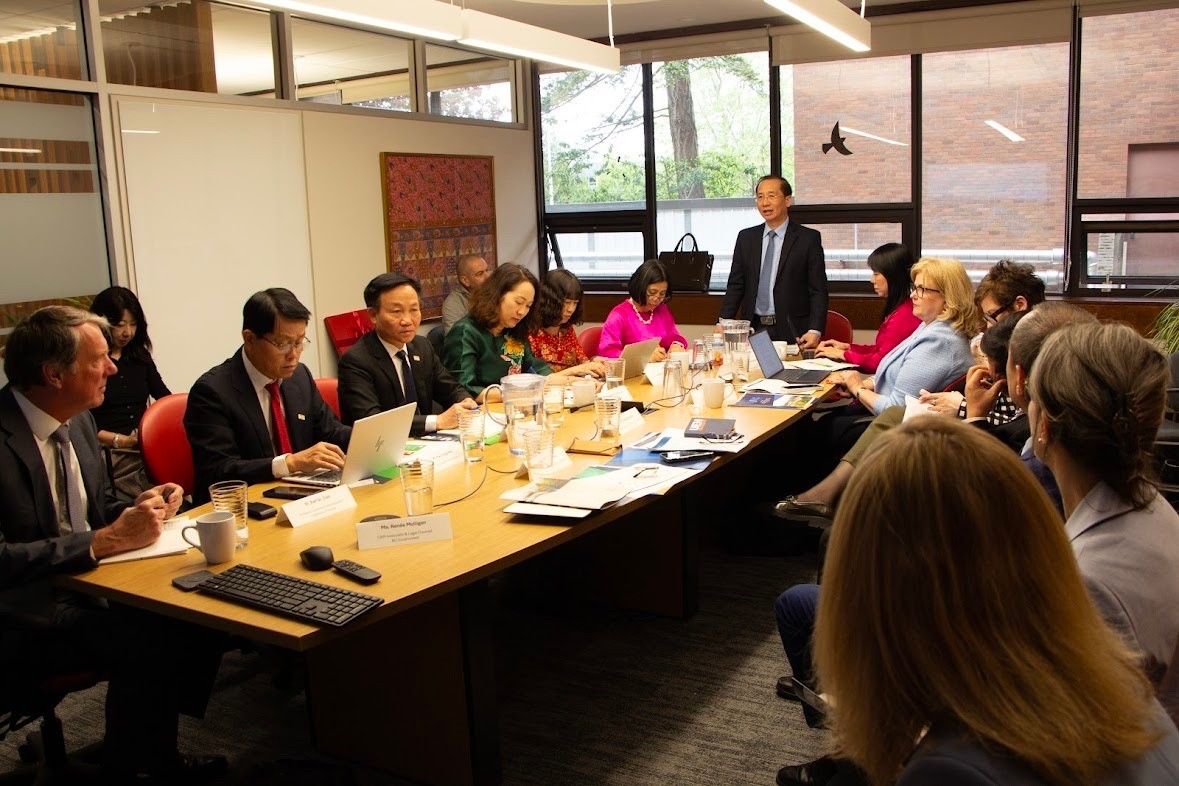 The delegation holds a working session with the Centre for Asia-Pacific Initiatives at the University of Victoria
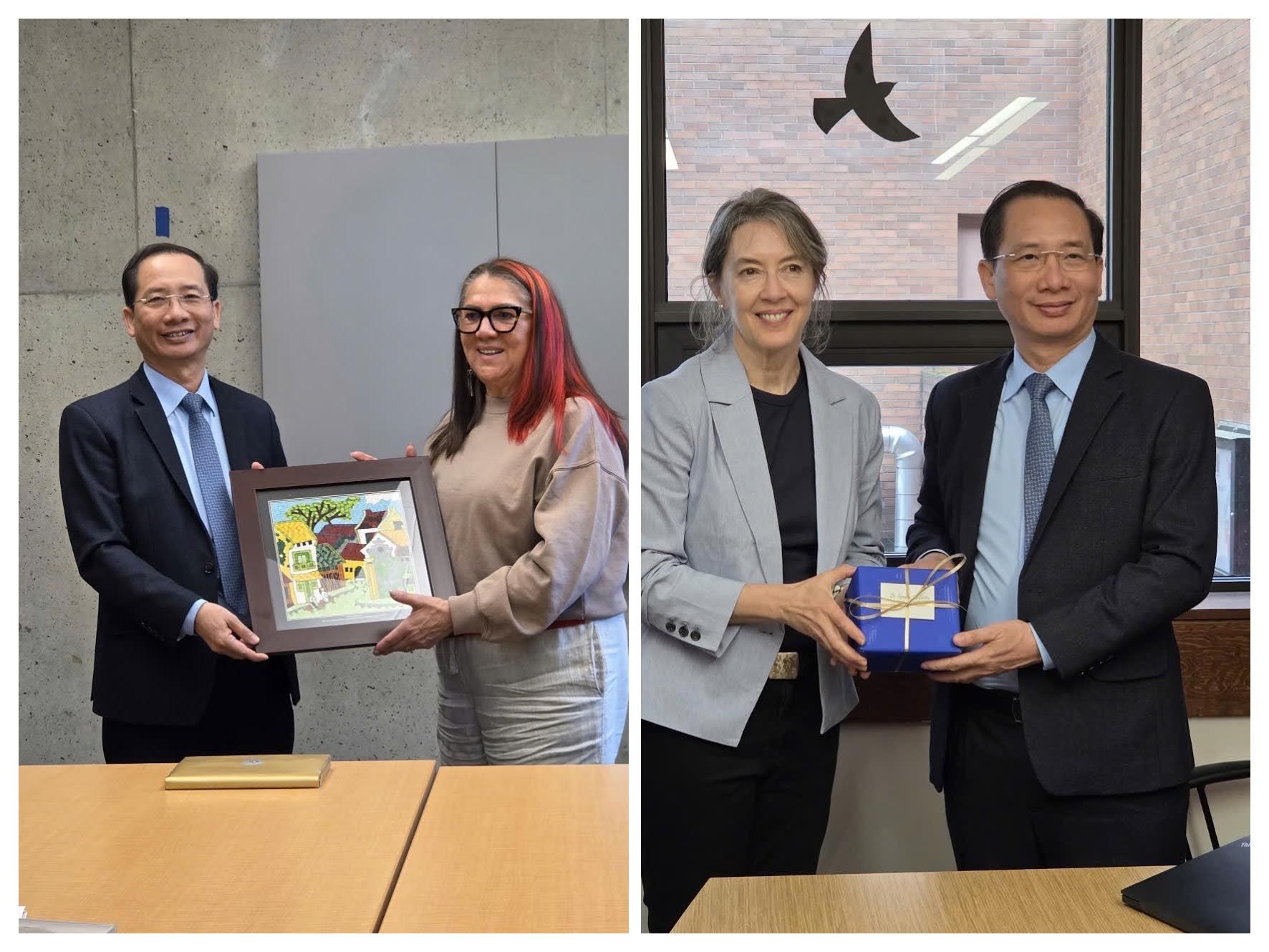 The two sides exchange commemorative gifts
On 14 May 2026, the delegation held a working session with Capilano University. The delegation was received by Dr. Jason Dewling, President and Vice-Chancellor; Dr. Lesley Brown, Vice-President and Acting Provost; Dr. Chris Bottrill, Associate Vice-President for International Partnerships; Dr. Caroline Dépatie, Dean of the Faculty of Global and Community Studies; Ms. Joyce Ip, Associate Vice-President for Strategy, Analytics and Innovation; together with leaders of the Global Engagement Office, faculty members from the School of Public Administration, and representatives of the university’s academic units.
Discussions focused on practical public sector training models, workplace learning, community-based education, and the MATI model for developing local governance capacity at the grassroots level.
 The President of the Academy of Public Administration and Governance delivers remarks at Capilano University
The discussions highlighted an increasingly clear trend in modern public sector training: integrating real-world practice into the learning process itself, whereby public officials and civil servants are expected not only to “learn to know,” but also to “learn to solve problems,” “learn to coordinate,” and “learn to act” within the specific governance contexts of their own localities.
This experience is particularly relevant to Viet Nam’s current need to strengthen capacity at the commune and ward levels in the context of administrative streamlining and increased decentralization and delegation of authority to grassroots governments.
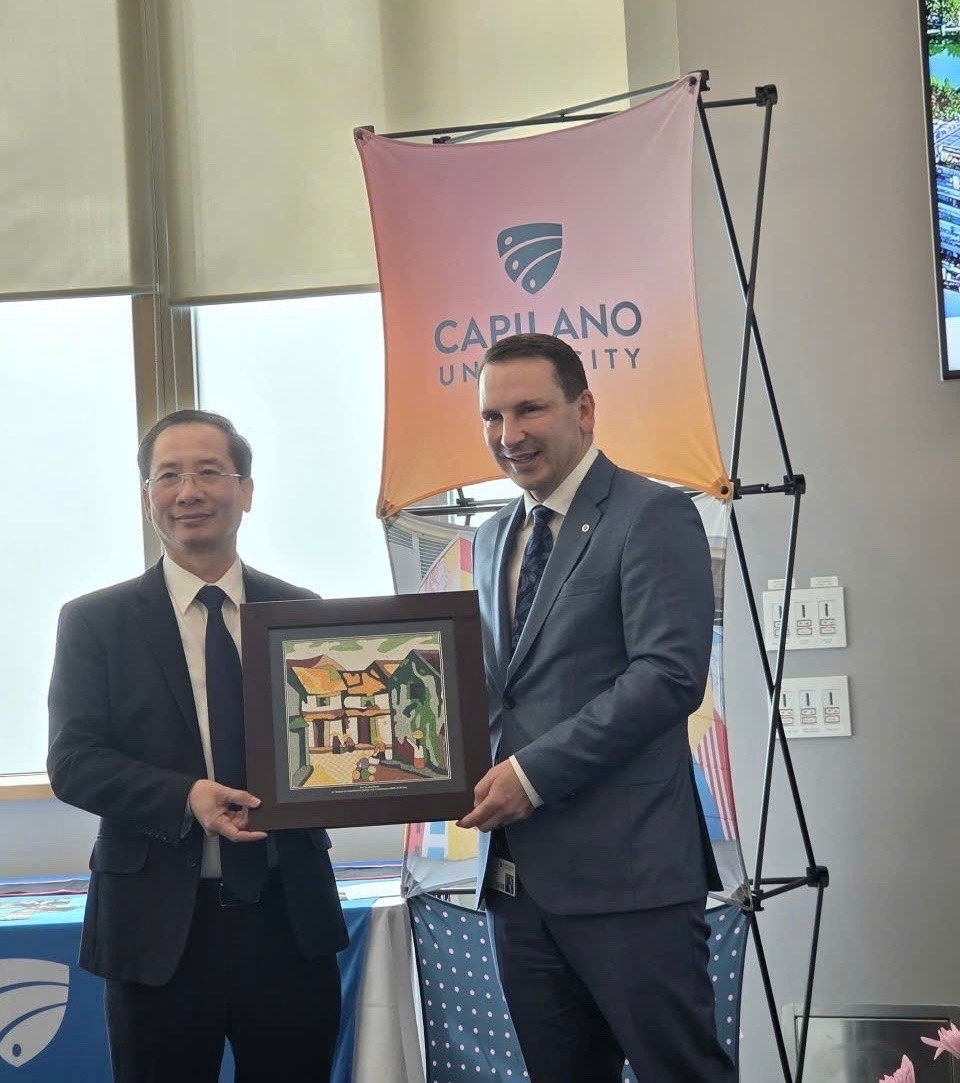 The President of the Academy of Public Administration and Governance presents a commemorative gift to Dr. Jason Dewling, President and Vice-Chancellor of Capilano University
On the same day, the delegation held a working session with the University of British Columbia. Participants in the programme included Professor Dr. Bhushan Gopaluni, Vice-President Academic and Provost; Professor M.V. Ramana, representing the School of Public Policy and Global Affairs; together with leaders and experts from the Institute of Asian Research, the Global Engagement Office, the School of Public Policy and Global Affairs, and units responsible for teaching innovation, experiential learning, and the internationalization of education and training.
 The delegation works with the University of British Columbia
At the University of British Columbia, discussions focused on the development of strategic policy thinking, interdisciplinary learning, curriculum innovation, capstone projects, and the internationalization of education and training.
University experts emphasized that contemporary policymaking capacity requires not only technical expertise, but also the ability to understand issues within the broader interconnections among economic, social, environmental, technological, and global governance dimensions. The integration of research, education, and real-world policymaking practice was regarded as an essential condition for developing public sector leaders with strategic thinking capacities and the ability to lead long-term change.
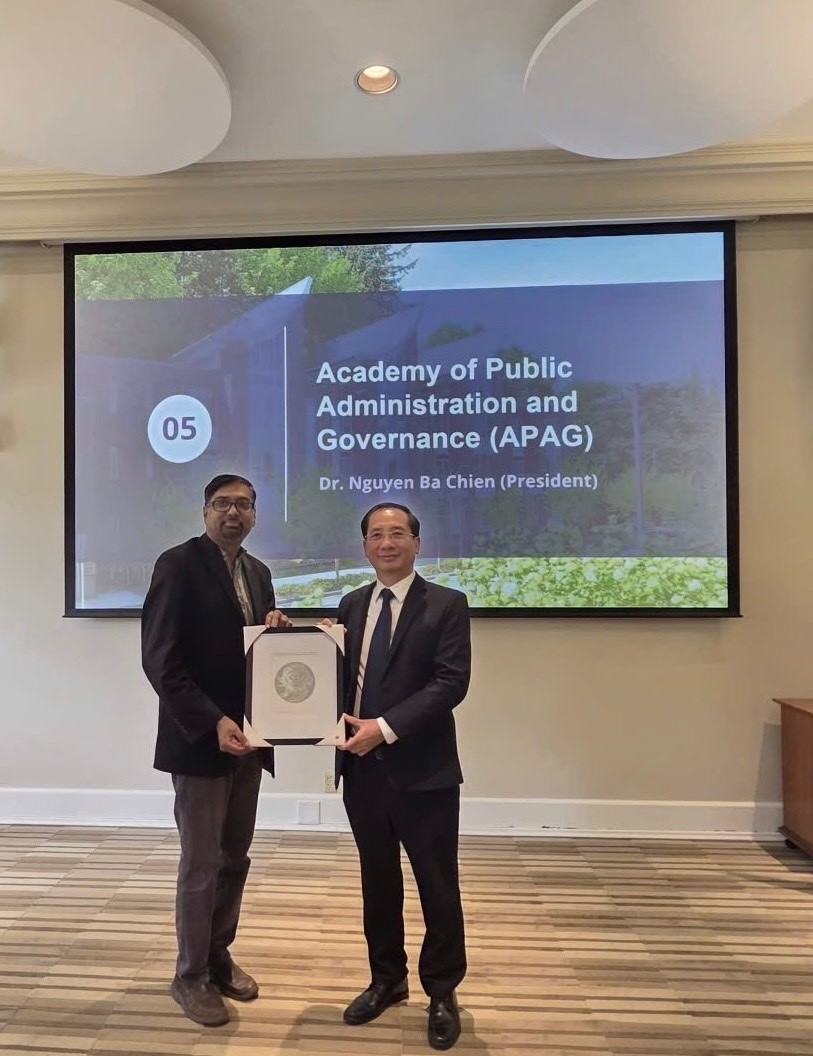 Professor Dr. Bhushan Gopaluni, Vice-President Academic and Provost of the University of British Columbia, presents a commemorative gift to Associate Professor Dr. Nguyen Ba Chien, President of the Academy of Public Administration and Governance
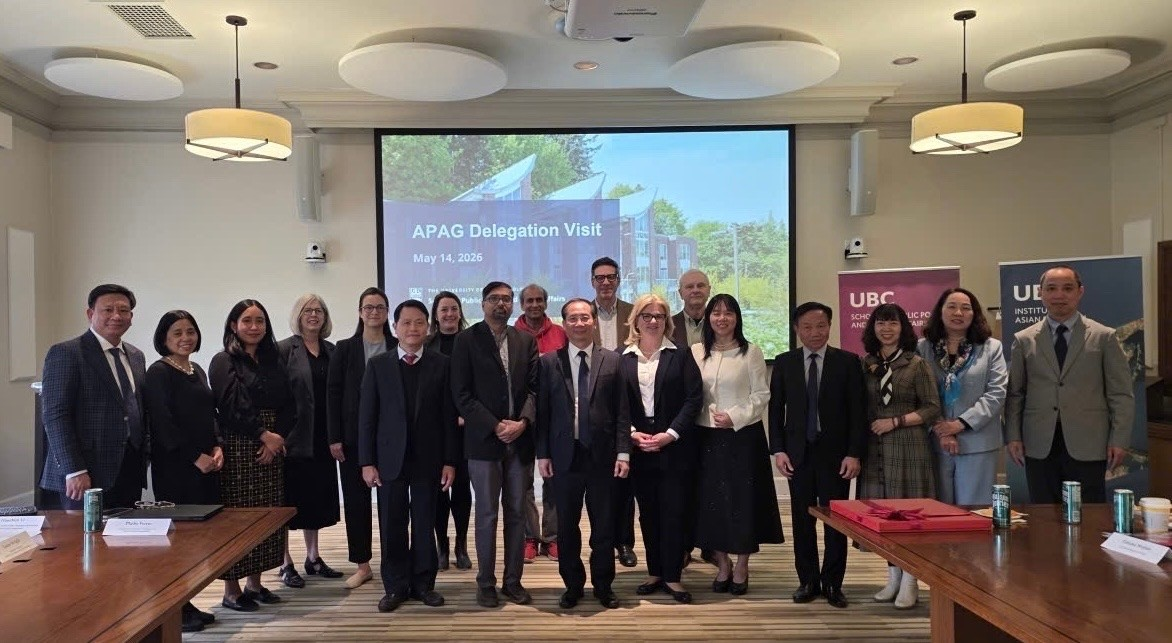 The delegation takes a commemorative photograph at the University of British Columbia
The series of working activities undertaken by the delegation of the Academy of Public Administration and Governance in Canada not only contributed to expanding and deepening the Academy’s international cooperation with Canada’s leading institutions in public sector education, research, and development, but more importantly, helped further clarify strategic directions for reforming the system of training and professional development for local leaders and managers in the context of Viet Nam’s ongoing public sector reforms, administrative streamlining, implementation of the two-tier local government model, and broader efforts to build a modern, effective, efficient, and citizen-centered governance system in line with the country’s development vision toward 2045.
Discussions with Canadian partners highlighted that the requirements for local leadership today have fundamentally changed. Local leaders are no longer expected merely to perform traditional administrative management functions, but must increasingly possess the capacity to foster development, coordinate systems, manage change, address complex public problems, make evidence-based decisions, and create public value and tangible social impacts for citizens. In this context, reforming the training and professional development of public officials and civil servants requires a significant shift away from the traditional mindset of “administrative training” toward the development of leadership capacity and institutional capacity within the local government system.
Based on the exchanges and international experiences gained during the mission, the orientation for implementing the Inclusive Local Governance (ILG) Project — organized by the Academy of Public Administration and Governance under the direction of the Ho Chi Minh National Academy of Politics — has also become progressively clearer. The Project is being shaped around an approach focused on developing a local leadership capacity system grounded in implementation capacity and the creation of public value, rather than relying on the traditional logic of developing isolated training courses. Accordingly, the implementation process is expected to follow the sequence of: competency diagnostics → competency framework development → programme design → implementation → evaluation, while simultaneously integrating institutional capacity development, civil service training reform, and the establishment of a long-term local leadership learning ecosystem.
One particularly important direction emerging from the mission is the proposal to develop local leadership competency frameworks through an integrated approach that combines leadership roles within the local governance value chain with key job-position groups in Viet Nam’s local government system. This approach not only helps align training and professional development with the practical requirements of governance reform, but also provides a foundation for developing competency-based programmes that strengthen experiential learning, workplace learning, policy labs, capstone projects, and closer integration between training and the real public service environment.
The outcomes of the mission also enabled APAG to gain a clearer understanding of the roles, strengths, and potential contributions of each Canadian partner within the cooperation structure for implementing the Inclusive Local Governance Project in Viet Nam. In this regard, École nationale d'administration publique was identified as a partner with outstanding strengths in institutional development, competency framework development, and support for reforming civil service training systems; the University of Victoria demonstrated extensive experience in training innovation, experiential learning, and adaptive leadership; Capilano University showed strong expertise in practical training and grassroots-level capacity development; Carleton University offered valuable experience in policy labs, quality assurance, and programme evaluation; while the University of British Columbia demonstrated strengths in strategic policy thinking, interdisciplinary learning, and the internationalization of education and training. The complementarity among these different approaches creates opportunities for developing a deep and comprehensive cooperation model that can both strengthen the Academy’s institutional capacity and training ecosystem, while also contributing to the development of a modern local leadership capacity system for Viet Nam in the country’s new development phase.
In discussions with Ms. Karen Dalkie, Vice-President of the Canadian Bureau for International Education (CBIE) and Canadian Senior Director of the Inclusive Local Governance Project in Viet Nam, Associate Professor Dr. Nguyen Ba Chien, President of the Academy of Public Administration and Governance and Head of the delegation, emphasized that the mission to Canada not only opened new opportunities for international cooperation for the Academy, but more importantly, enabled the Academy to access new experiences and approaches that contribute to shaping conceptual foundations and strategic orientations for strengthening public leadership, management, and governance capacity among Viet Nam’s local leaders in the context of current governance reforms.
According to Associate Professor Dr. Nguyen Ba Chien, the outcomes achieved through the mission further reaffirm the role of the Academy of Public Administration and Governance in training, professional development, research, and strengthening local governance capacity in Viet Nam. At the same time, the mission also contributes to supporting the APAG’s ongoing efforts to reform training, professional development, and leadership development for the public sector toward greater modernity, practical relevance, and deeper international integration.