On December 23, 2025, the Ho Chi Minh National Academy of Politics (HCMA) held a conference to review scientific research and international cooperation activities in 2025 and to set out orientations and tasks for 2026. The conference was chaired by Assoc. Prof. Dr. Duong Trung Y, Vice President of HCMA, and Assoc. Prof. Dr. Nguyen Manh Hung, Vice President of HCMA and Vice Chairman of the Central Council on Theoretical Studies.
The conference was held in person at HCMA and was connected online to the HCMA campuses in Regions II, III, and IV.
Also chairing the conference were Assoc. Prof. Dr. Hoang Anh, Director General of the Department of Science Management, and Assoc. Prof. Dr. Hoang Van Nghia, Director General of the Department of International Cooperation. Participants included representatives of the Standing Committee of the Central Council on Theoretical Studies, heads of units under HCMA, and all public officials, civil servants, and public employees of the Department of Science Management and the Department of International Cooperation.
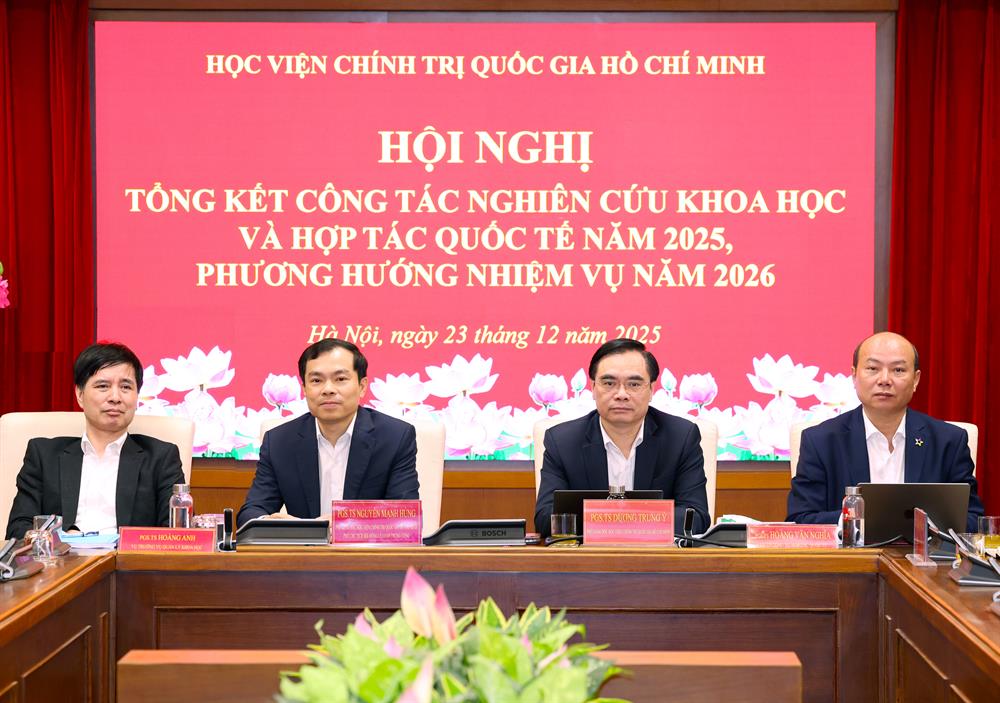 Chairs of the conference.
In his opening remarks, Assoc. Prof. Dr. Duong Trung Y emphasized the special significance of 2025 for HCMA, as it is the year focused on implementing Decision No. 214-QD/TW of the Politburo on the functions, tasks, and organizational structure of HCMA in the new period. At the same time, 2025 also witnessed strong shifts in the strategic orientations of the Party and the State of Viet Nam regarding science and technology and external affairs, notably Resolution No. 57-NQ/TW on breakthroughs in the development of science, technology, and innovation, and Resolution No. 59-NQ/TW of the Politburo on international integration in the new context.
In this context, according to Assoc. Prof. Dr. Duong Trung Y, the HCMA’s scientific research and international cooperation work has increasingly affirmed its role as an important “pillar,” contributing to consolidating the position and stature of HCMA as the national center for training public leaders and managers and the national center for research in political theory and a leading institution for policy advice and consultation for the country, while gradually enhancing its reputation in the region and the world.
With this significance in mind, Assoc. Prof. Dr. Duong Trung Y called on the conference to focus on a realistic and objective assessment of the results achieved in 2025, especially the translation of newly issued Politburo documents into the specific functions and tasks of each unit. Based on a clear analysis of shortcomings, limitations, and difficulties, he urged conference participants to propose strategic breakthrough solutions in scientific research and international cooperation, thereby contributing to affirming the HCMA’s position as a reputable and influential “national center” in the region and globally.
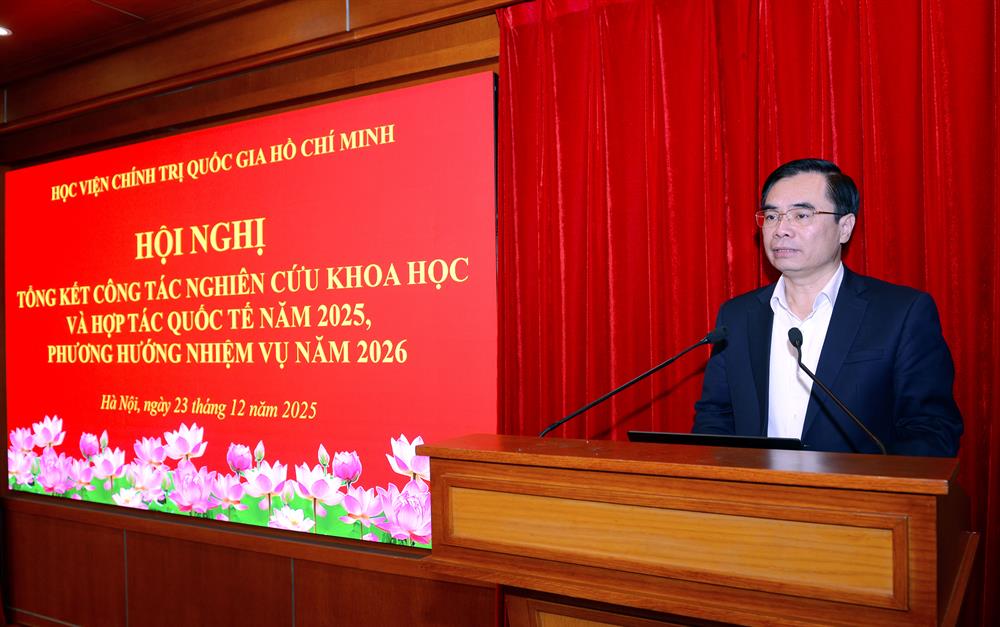 Assoc. Prof. Dr. Duong Trung Y, Vice President of HCMA, delivered opening remarks.
According to the summary report, in 2025, in the context of implementing Decision No. 214-QD/TW on functions, tasks, and organizational structure, and closely adhering to the spirit of Resolution No. 57-NQ/TW and Resolution No. 59-NQ/TW, scientific research and international cooperation activities at HCMA continued to be carried out proactively, systematically, and with clear priorities and focus, closely aligned with the political tasks of the Party and the State and the development requirements of the new period. Activities were organized in a comprehensive and coordinated manner, with enhanced quality and effectiveness, thereby further affirming the HCMA’s role as the national center for research in political theory and the science of leadership, management, and public administration, as well as an important strategic advisory and policy consultancy hub for the Party and the State.
Strongly renewing scientific activities, enhancing management quality and research outputs
In 2025, HCMA’s scientific activities achieved comprehensive and notable results across multiple dimensions. These achievements were reflected in the rapid expansion in the scale of scientific tasks; the increased number and improved quality of research works, conferences, and academic seminars; the closer integration between scientific research and training, as well as between research activities and the task of safeguarding the Party’s ideological foundation; the development of high-quality scientific human resources; the renewal of management mechanisms; and the gradual improvement of a democratic and creative scientific environment. In addition, scientific resources were further mobilized and enhanced, creating the most favorable conditions for the development of scientific activities.
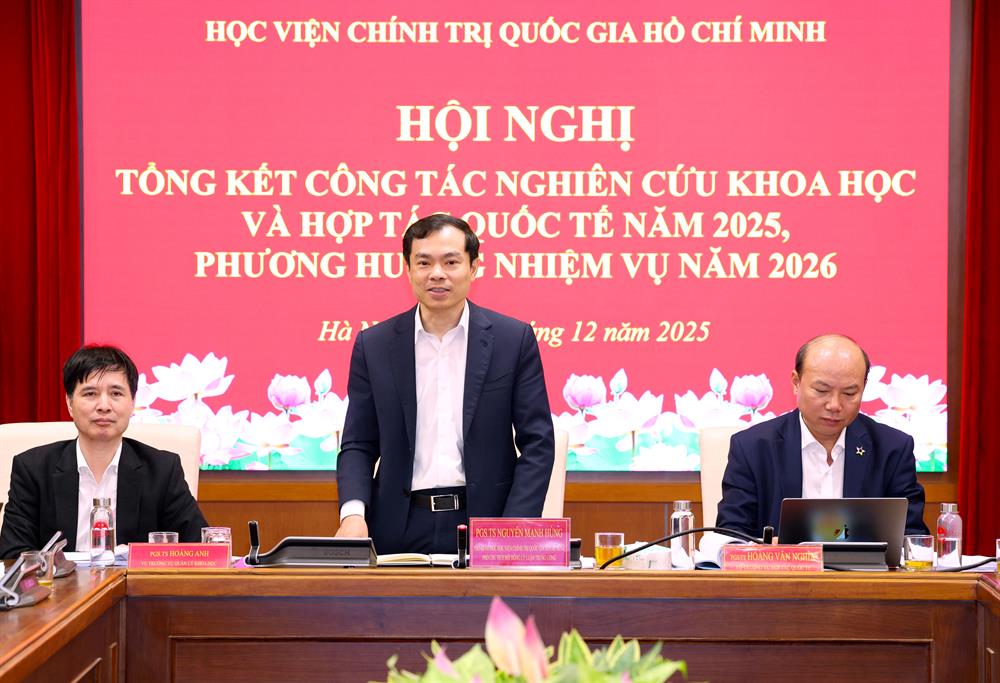 Assoc. Prof. Dr. Nguyen Manh Hung, Vice President of HCMA and Vice Chairman of the Central Council on Theoretical Studies.
The year 2025 also marked an important transition, as HCMA for the first time implemented the development of a Plan for Scientific Activities, Innovation, and Digital Transformation for 2026, covering the entire HCMA system and the Party Central Committees, funded by the state budget for science and technology. At the same time, HCMA proactively developed and defended the 2026 scientific activity plan using funding from economic and environmental protection budget sources, thereby contributing to the diversification of resources and enhancing autonomy in organizing and implementing research tasks.
The management of scientific tasks continued to be renewed in a more transparent, effective, and professional manner. Procedures for appraisal, evaluation, and progress management of scientific tasks were reviewed and adjusted to reduce administrative burden, strengthen accountability, and improve appraisal quality. HCMA emphasized the advisory role of scientific councils, ensuring that approved tasks closely aligned with the requirements of the Party and the State and demonstrated clear scientific and practical value.
During the year, HCMA took the lead in preparing 37 advisory and policy recommendation reports for the Party and the State, directly contributing to the policymaking process and making important contributions to the drafting and refinement of documents to be submitted to the 14th National Congress of the Party.
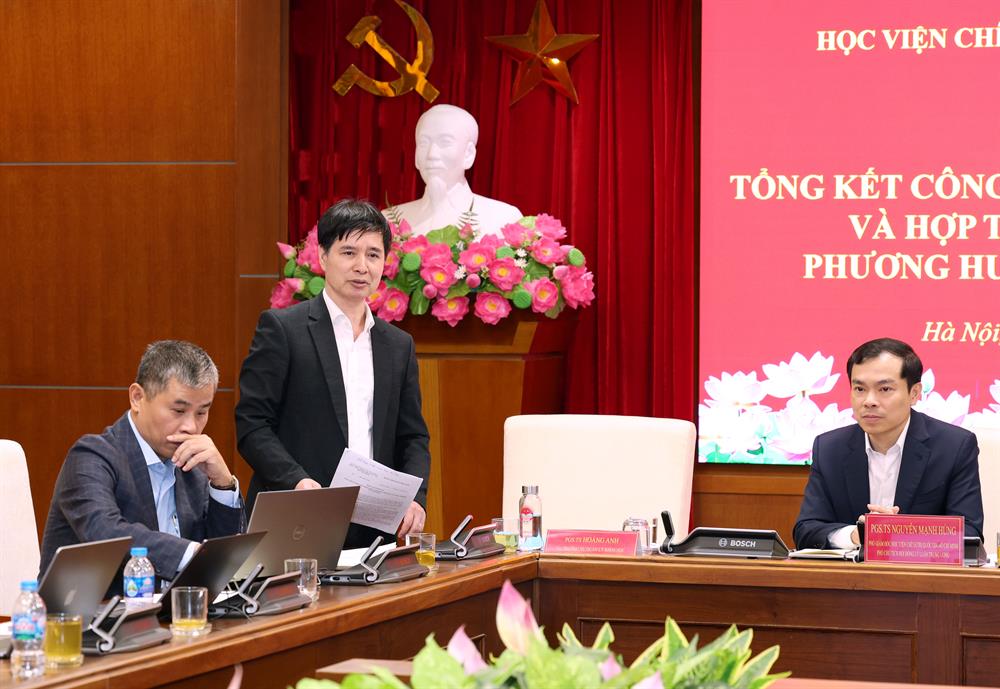 Assoc. Prof. Dr. Hoang Anh, Director General of the Department of Science Management, reported at the conference.
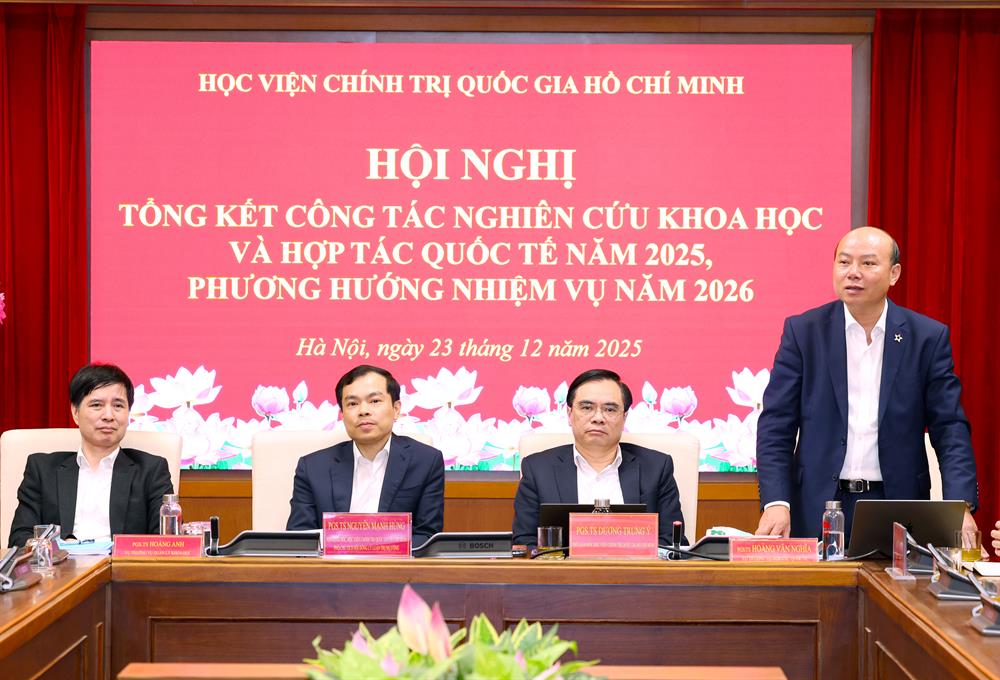 Assoc. Prof. Dr. Hoang Van Nghia, Director General of the Department of International Cooperation, reported at the conference.
Scientific conferences and seminars continued to be a highlight in 2025. Across the entire HCMA system, 72 ministerial-level and national-level scientific conferences and seminars were organized. Many events generated strong resonance and wide spillover effects within the academic community, notably the trilateral international conference between Viet Nam, Laos, and Australia on building an efficient, effective, and capable public administration; the national scientific conference on President Ho Chi Minh; conferences providing input on the draft documents of the 14th National Congress of the Party; consultations on the draft amendments and supplements to a number of articles of the 2013 Constitution; and numerous thematic seminars on the development of science and technology, innovation, digital transformation, and human development in the new era. Organizational formats continued to evolve, with greater emphasis on dialogue, in-depth discussions, roundtable models, and multidimensional exchanges between researchers and practitioners, thereby enhancing both academic quality and practical relevance.
With regard to the work of the Office of the Steering Committee 35, 2025 continued to demonstrate proactiveness, sharpness, and effectiveness in advising on safeguarding the Party’s ideological foundation and countering erroneous and hostile viewpoints. The Office commissioned 70 thematic studies to support communication and theoretical struggle; coordinated the organization of three ministerial-level scientific conferences; and conducted field surveys on the implementation of Resolution No. 35-NQ/TW in several localities, serving the review and development of theory in line with Conclusion No. 89-KL/TW dated July 25, 2025. Many series of articles and thematic contents closely addressed major issues such as streamlining the organizational apparatus, the draft documents of the 14th Party Congress, personnel work, and key political events, generating positive effects across HCMA’s media system.
International cooperation proactively implemented, partner networks expanded, and HCMA’s standing enhanced
In 2025, international cooperation activities continued to be organized in a systematic manner, in line with the Party’s and the State’s external relations guidelines and principles, and consistent with HCMA’s political tasks. Advisory and coordination work was carried out in a timely and effective manner, focusing on the unified management of international cooperation activities across the entire HCMA system; the formulation, guidance, and supervision of the implementation of the 2025 external relations plan; and the preparation of the external relations plan for 2026.
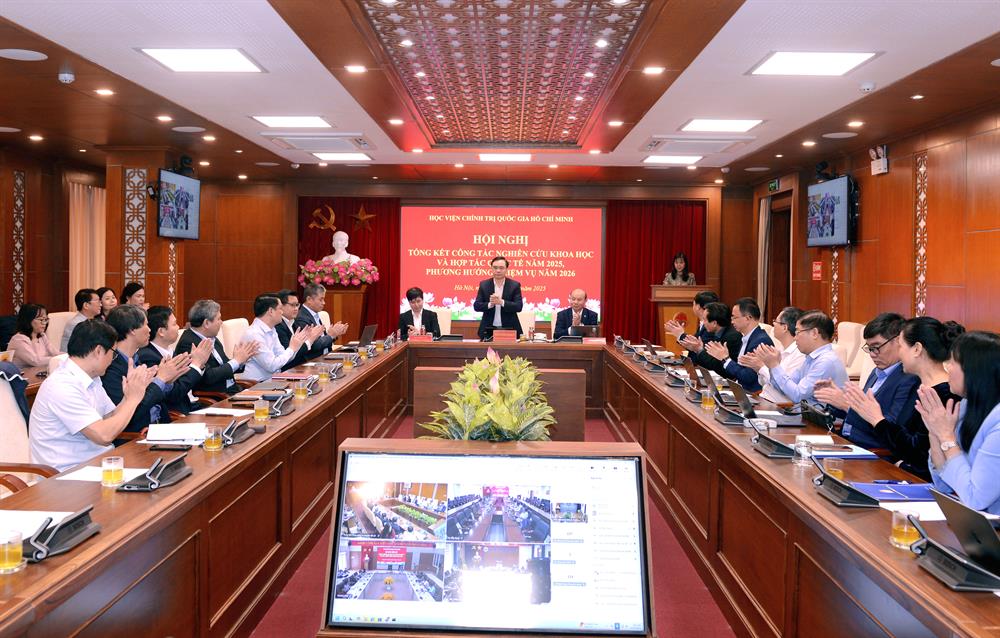 At the conference.
HCMA also proactively advised on and organized international training programs, conferences, seminars, outbound and inbound delegations, and cooperation projects; strengthened the management of ODA-funded programs and aid projects; coordinated the implementation of activities of cooperation centers such as the Viet Nam-Australia Centre, the India Centre, and the International Knowledge-Sharing Centre; and ensured protocol, external relations, and security arrangements for high-level delegations and major international events.
As of December 2025, HCMA had successfully organized 64 outbound working delegations to various countries in Asia, Europe, and the Americas. Notably, these included delegations led by a member of the Politburo, the President of HCMA, and Chairman of the Central Council on Theoretical Studies; as well as four delegations of the training and knowledge-updating program for cadres under strategic-level planning, conducting study tours and field research in Australia, the Republic of Korea, Japan, and Singapore. Reports from many outbound delegations provided valuable data, information, and practical experience directly serving HCMA’s training, capacity building, scientific research, and political tasks.
Regarding inbound delegations, HCMA hosted 161 delegations, including 24 official foreign delegations under planned programs and 137 courtesy and working visits. The partner network continued to be strengthened and diversified, ranging from traditional and friendly partners such as China, Laos, and Cuba to developed countries including Japan, the Republic of Korea, the United States, France, Australia, the United Kingdom, the Nordic countries, and Canada. Notably, HCMA expanded its engagement with international organizations, financial institutions, and major technology corporations such as the World Bank (WB), the Asian Development Bank (ADB), the United Nations Development Programme (UNDP), Aus4Skills, the Friedrich-Ebert-Stiftung (FES), the Rosa-Luxemburg-Stiftung (RLS), the Economic Research Institute for ASEAN and East Asia (ERIA) of Japan, as well as Samsung and Google. Reception work was carried out in a professional, rigorous, and regulation-compliant manner, thereby enhancing HCMA’s image, credibility, and standing in its relations with international partners.
During the year, HCMA signed 15 Memoranda of Understanding (MoUs) with a range of reputable partners, including the Lee Kuan Yew School of Public Policy (Singapore), Tsinghua University (China), the Russian Presidential Academy of National Economy and Public Administration (RANEPA), the Friedrich-Ebert-Stiftung Viet Nam Office, and the Rosa-Luxemburg-Stiftung Viet Nam Office. International cooperation in scientific research was further strengthened in both scale and quality. As of December 2025, HCMA had organized 65 international conferences, seminars, and dialogues.
In the field of training and capacity building with an international dimension, the entire HCMA system successfully organized 19 activities and continued to effectively fulfill tasks assigned by the Party and the State in training and capacity building for leadership and management cadres of partner countries under bilateral agreements or cooperation frameworks. Examples include training and thematic exchange programs for cadres from Cuba, Mozambique, and Angola; short-term training courses for participants from the Russian Federation; and thematic exchange courses as well as long-term programs for cadres of the Lao People’s Revolutionary Party. At the same time, HCMA coordinated with partners from Japan, China, Australia, and Singapore to organize thematic presentations by international experts for strategic-level cadre training courses, advanced political theory programs, and position-based capacity-building programs.
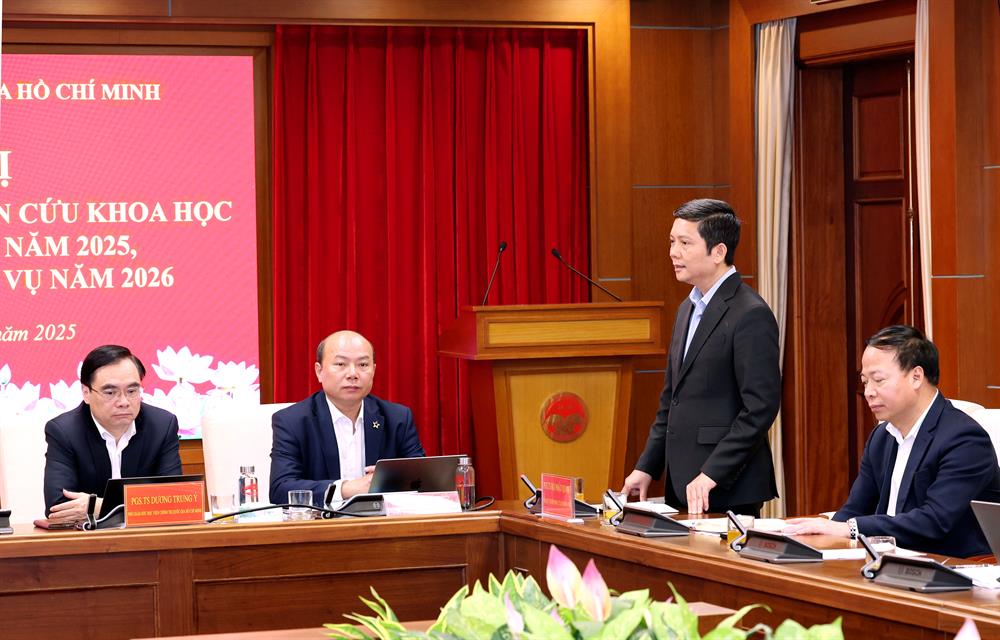 Delegates exchanged ideas at the conference.
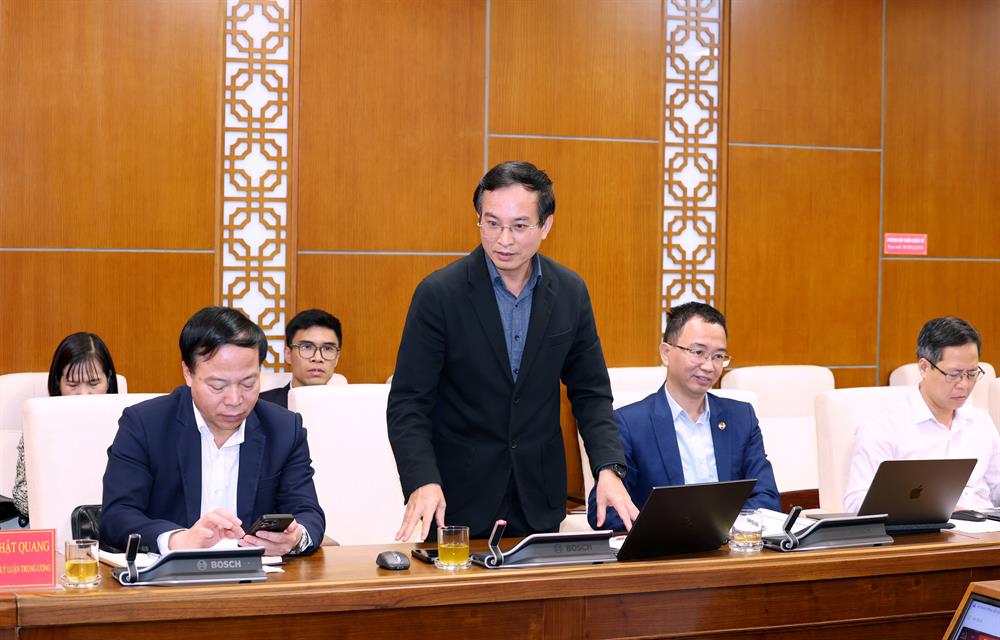 Delegates exchanged ideas at the conference.
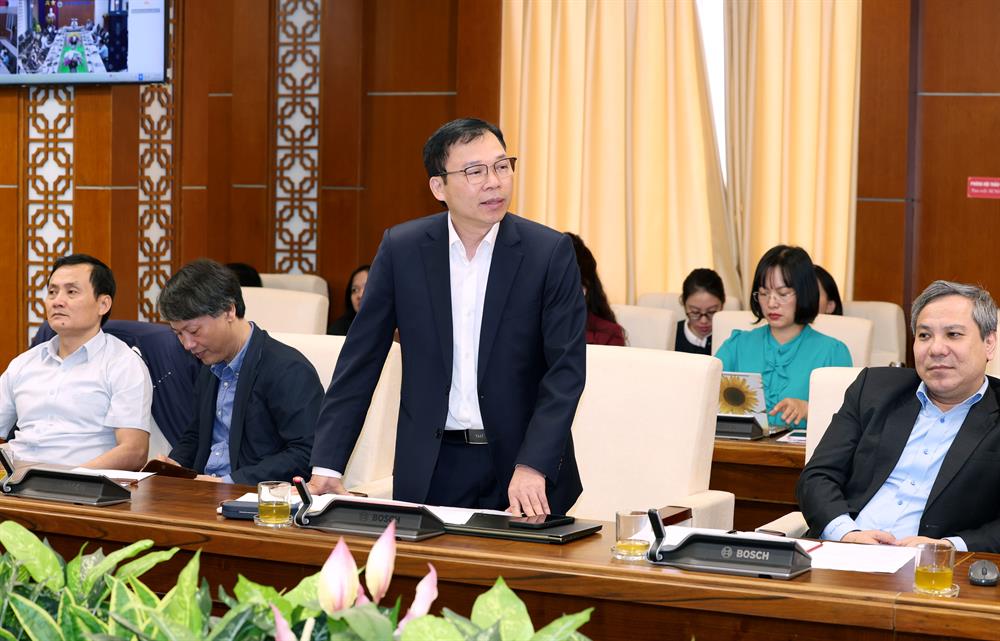 Delegates exchanged ideas at the conference.
At the conference, delegates focused on in-depth discussions and analyses of the achievements attained, clarifying new elements and breakthroughs in scientific research and international cooperation in 2025. Agreeing with the report presented at the conference, the presentations noted that in 2025, under the direct and regular guidance of the Board of Directors, HCMA’s scientific research and international cooperation activities were implemented in a unified manner, ensuring political orientation and effectively serving the requirements of theoretical and practical review for the preparation of the documents of the 14th National Party Congress. HCMA’s position as a national center for political theory, Ho Chi Minh Thought, and leadership and management sciences was reaffirmed.
Through exchanges identifying difficulties and bottlenecks in the process of implementation, participants reached a high level of consensus on the necessity to further renew thinking in scientific management, promote decentralization and delegation of authority associated with institutionalizing accountability, enhance research quality, strengthen linkages among research, training, and policy advisory functions, and expand international cooperation in a more substantive and effective manner, in line with HCMA’s political tasks in the new period.
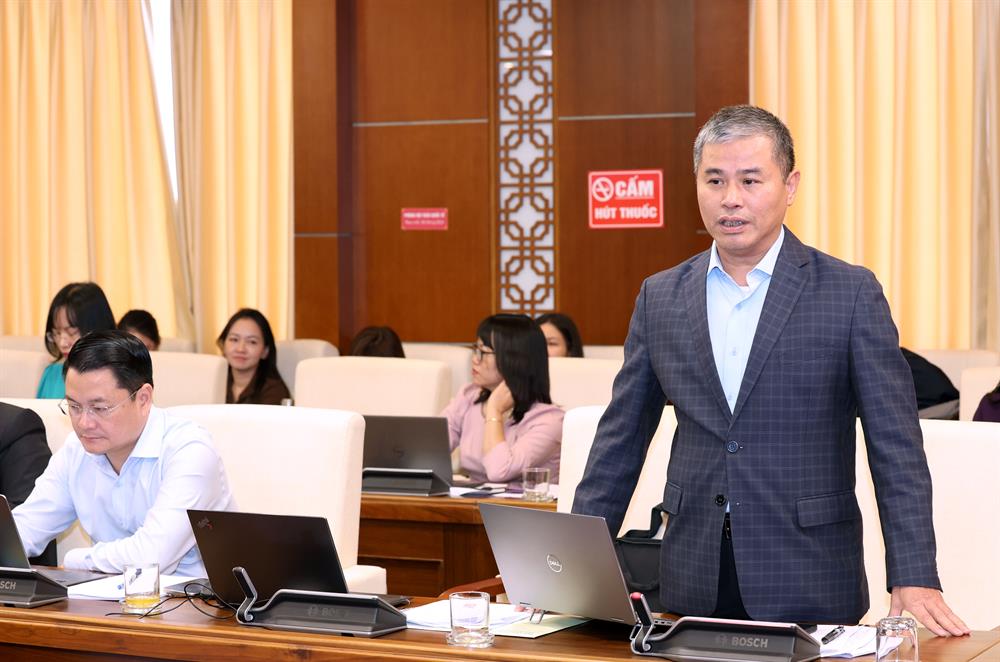 Delegates exchanged ideas at the conference.
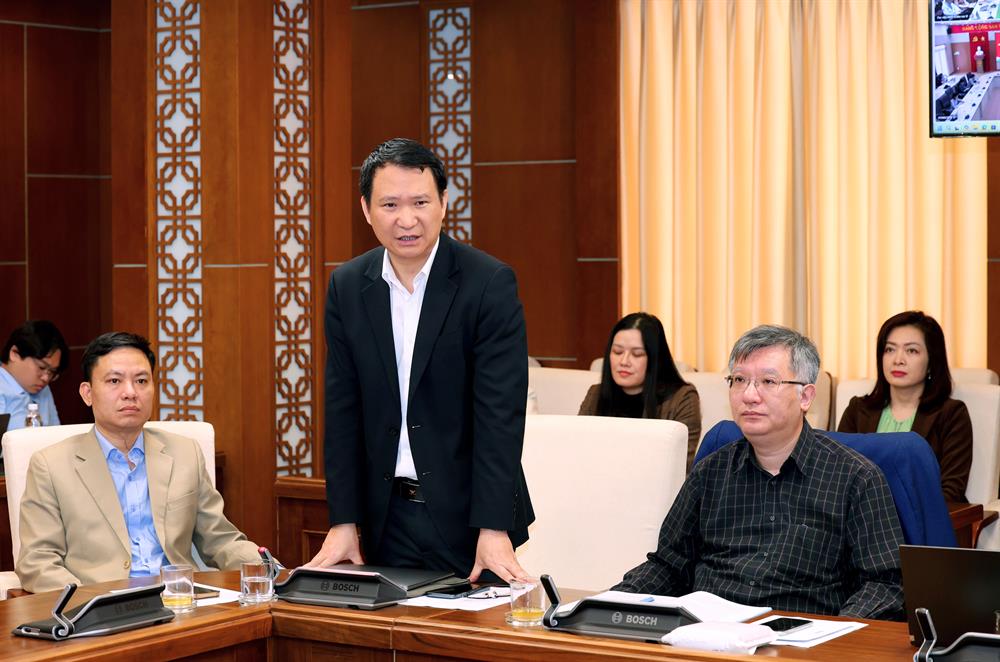 Delegates exchanged ideas at the conference.
Speaking at the conference, Assoc. Prof. Dr. Nguyen Manh Hung acknowledged and congratulated the achievements made in scientific management and international cooperation in 2025. Agreeing with the orientations for task implementation in 2026, he requested that the collective leaders and public officials of the Department of Science Management and the Department of International Cooperation renew their thinking and awareness, and further promote decentralization and transfer of power in association with inspection, supervision, and clearly defined responsibilities in task implementation.
Regarding scientific research, he requested the Department of Science Management to take the lead, in coordination with relevant agencies and units, in reviewing all regulations in order to revise and supplement them in line with current regulations. Particular attention should be paid to the new Regulation on the Management of Scientific Activities, with a view to establishing an internal legal framework and corridor for the implementation of scientific and technological tasks in compliance with prevailing regulations. At the same time, the digitization of scientific management should be accelerated with clear roadmaps, milestones, and deliverables.
It is also necessary to strengthen coordination with central and local agencies to expand domestic strategic partner networks, integrate theoretical research with practical review, and move toward providing strategic policy advice and consultation to localities.
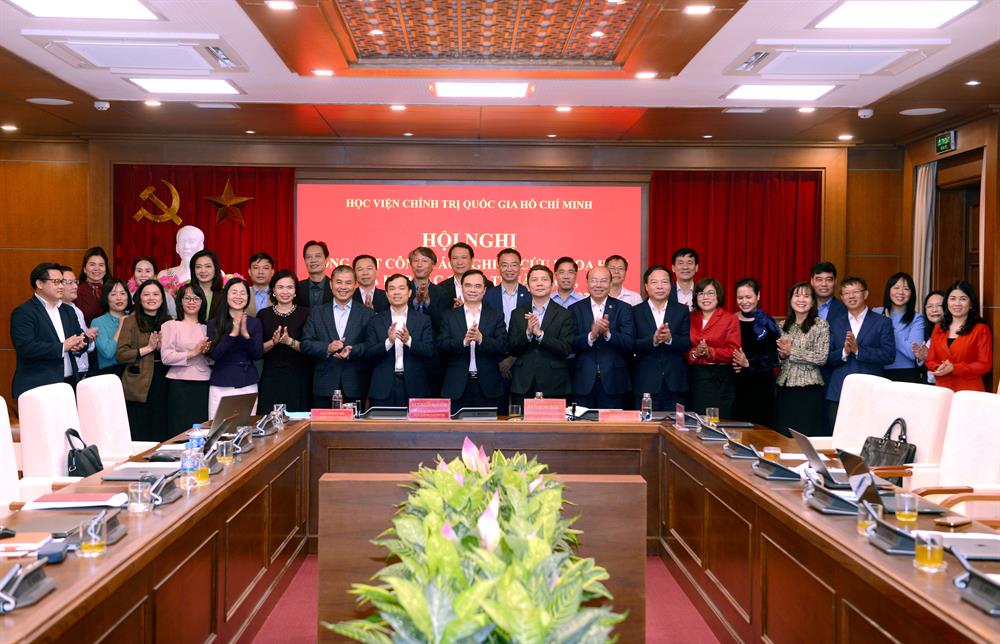 Conference participants.
With regard to international cooperation, the Department of International Cooperation should proactively review and advise the HCMA Board of Directors on finalizing the Regulation on the Management of International Cooperation Activities, ensuring consistency with central regulations and suitability to the requirements of the new context; and develop plans for outbound and inbound delegations with clearly defined timelines, participants, and partners.
For training, capacity-building, and research cooperation programs, Assoc. Prof. Dr. Nguyen Manh Hung emphasized that, based on HCMA’s approved training and capacity-building plans, the Department of International Cooperation should coordinate with agencies and units across the HCMA system to implement international cooperation activities appropriately, following the principle of “leveraging external resources to serve internal activities.” At the same time, it should coordinate with the Department of Training and relevant units to review and appraise the content of international cooperation activities in training and capacity building, and to select appropriate experts for their implementation.