On December 18, 2025, the Academy of Public Administration and Governance (APAG) held the Conference to review the work of 2025 and implement tasks for 2026, comprising three main contents: the Conference to Review Party Work in 2025 and Implement Tasks for 2026; the Conference of Public Officials and Employees in 2025; and the Conference to Review Overall Work in 2025 and Outline Directions and Tasks for 2026. The Conference was held in person at APAG Headquarters, 77 Nguyen Chi Thanh Street, Giang Vo Ward, Ha Noi, and connected online to the APAG campuses.
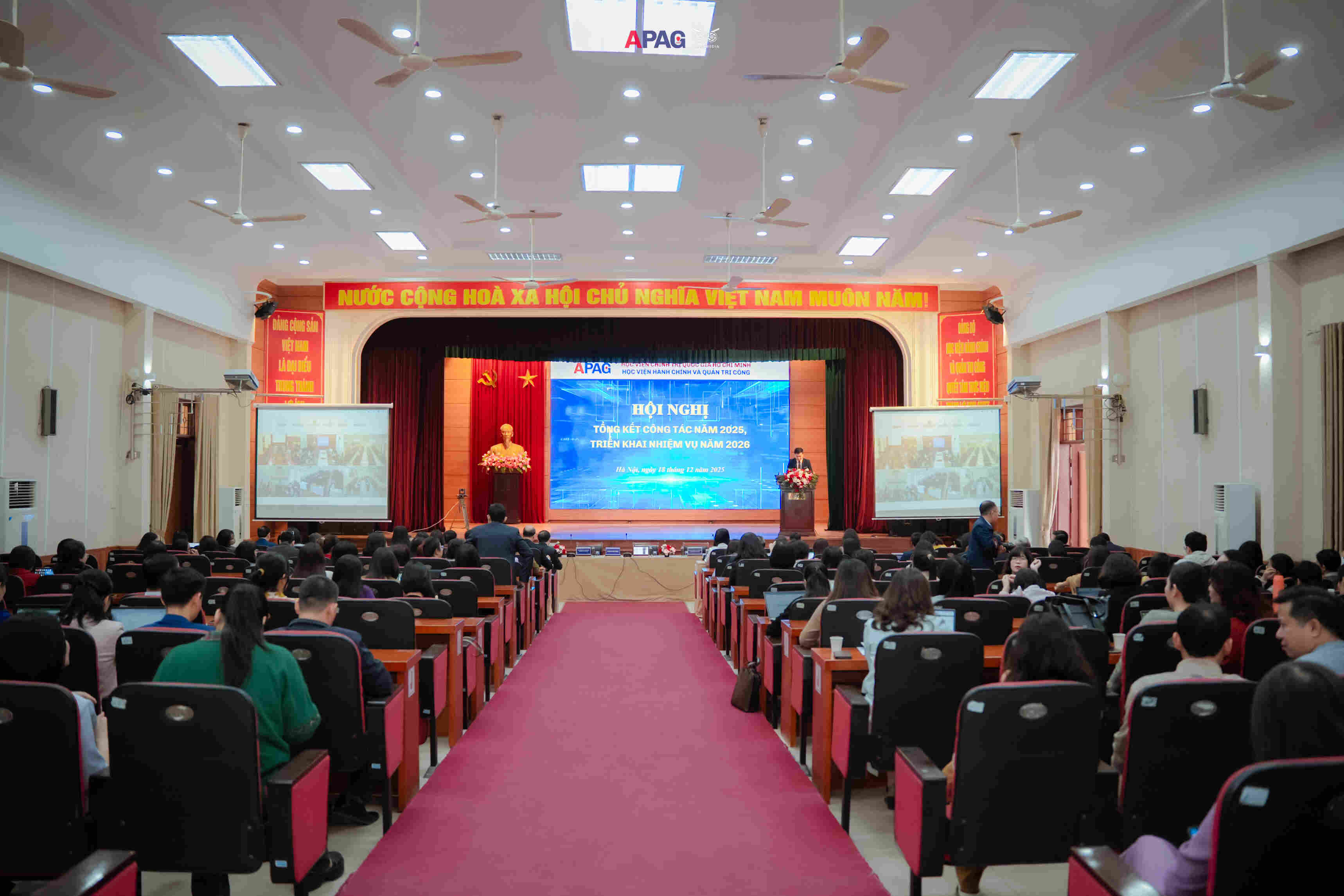 At the Conference.
Attending the Conference on behalf of the Ho Chi Minh National Academy of Politics (HCMA) were Assoc. Prof. Dr. Duong Trung Y, Vice President of HCMA, along with representatives from HCMA departments and affiliated units.
On the side of APAG were Assoc. Prof. Dr. Nguyen Ba Chien, Secretary of the APAG Party Committee and President of APAG; members of the APAG Party Committee and the Board of Directors; members of the Executive Committee of the Party Organization; leaders of departments and affiliated units; and all Party members, lecturers, officials, and employees of APAG.
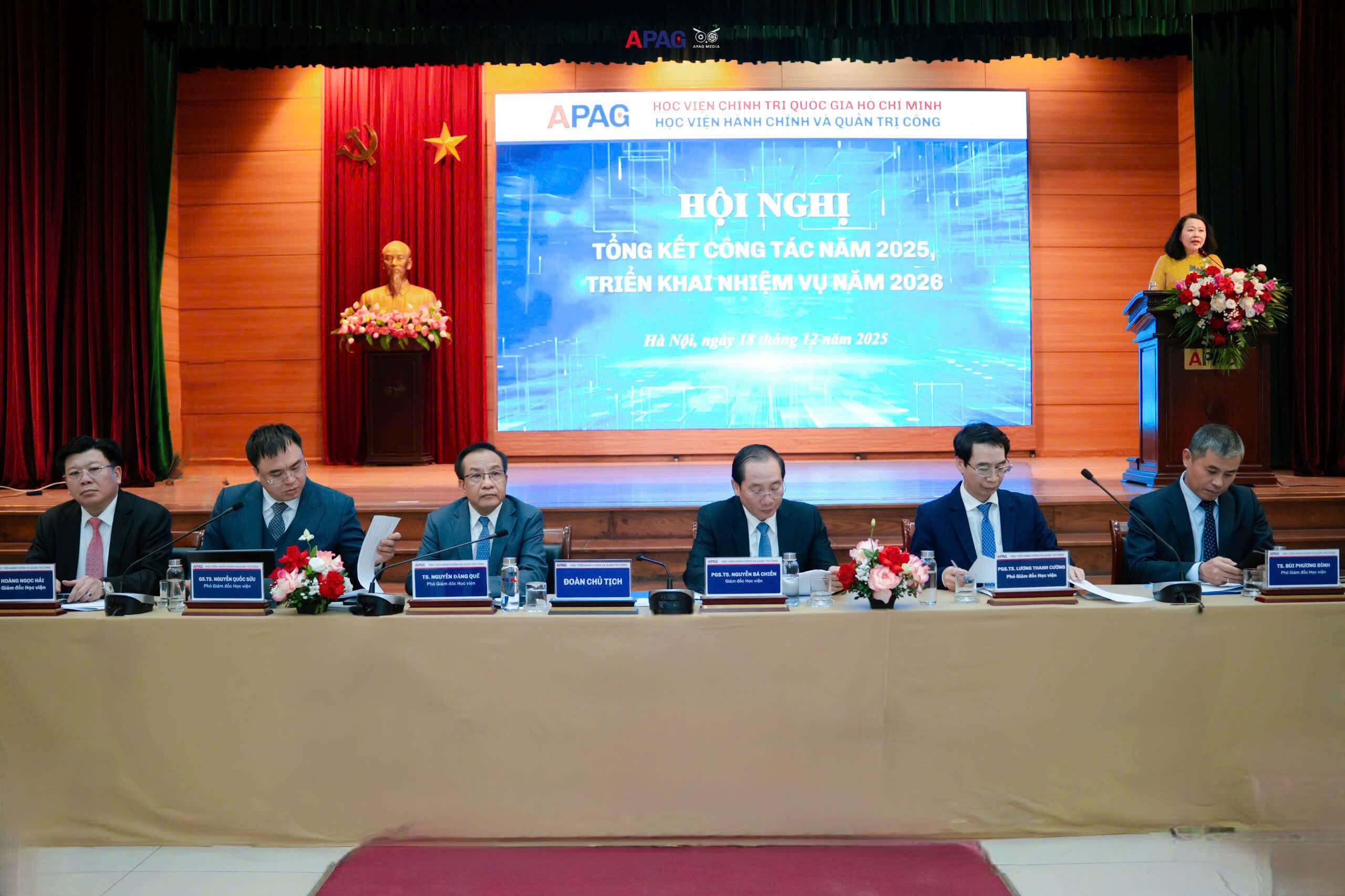 The Presidium chaired the Conference.
Comprehensive assessment of the results of 2025 and identification of development orientations for a new phase:
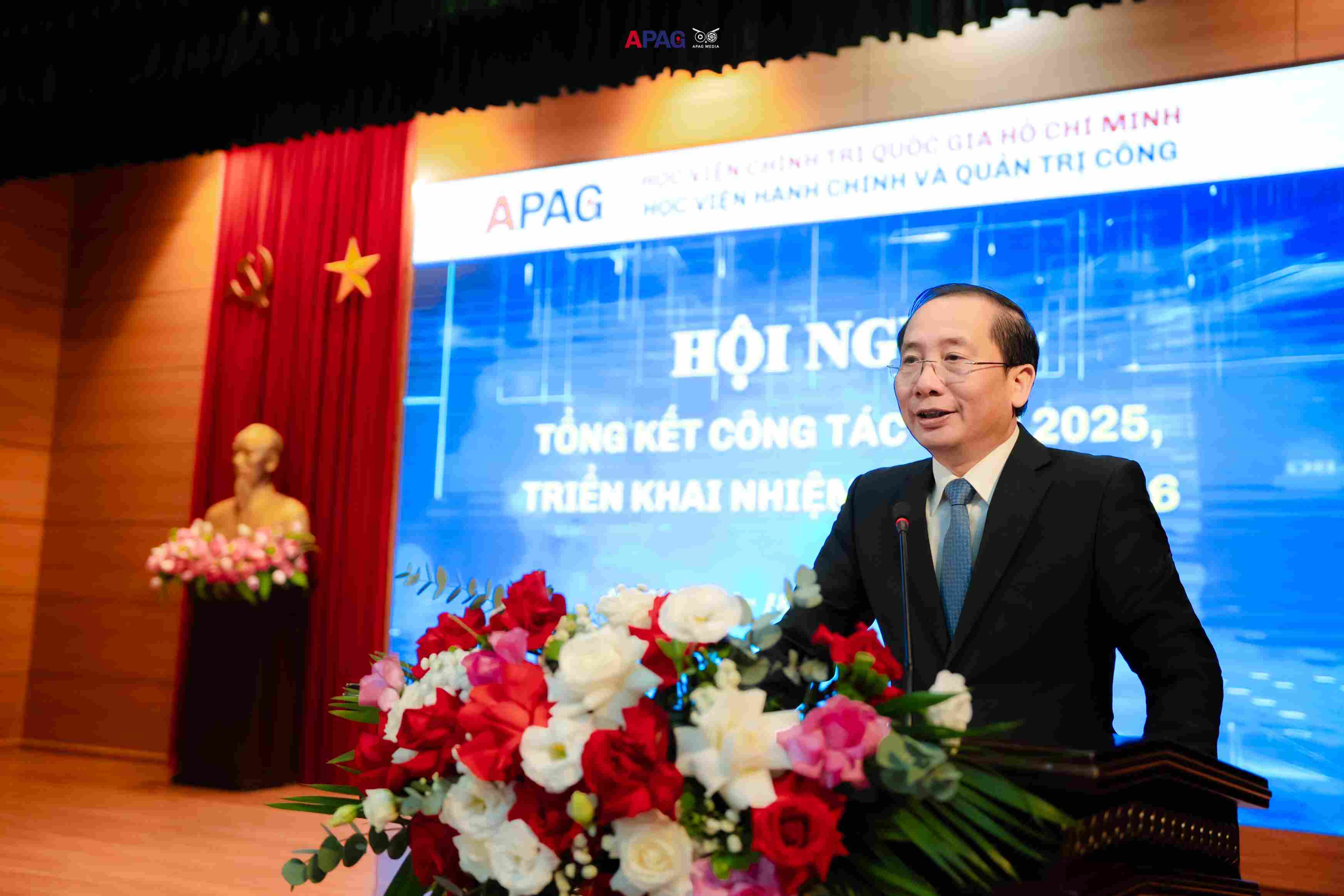 Assoc. Prof. Dr. Nguyen Ba Chien, Secretary of the APAG Party Committee and President of APAG, delivered the opening remarks.
In his opening speech, Assoc. Prof. Dr. Nguyen Ba Chien stated that, in accordance with the HCMA plan, the Conference was organized in a spirit of innovation, integration, conciseness, and practicality, focusing on a substantive assessment of the 2025 work results and identifying directions and tasks for 2026.
He emphasized that 2025 was a year of special significance, marking the APAG’s restructuring of its organizational apparatus and personnel, and its official transformation into a higher education institution directly under HCMA. Inheriting a 66-year tradition of construction and development, and overcoming numerous difficulties and challenges, APAG has achieved important results across various fields of work.
The Conference provided an opportunity to objectively and comprehensively review the achievements attained, clearly identify limitations and shortcomings, and exchange views, discuss, and propose solutions to improve the quality of training and academic research, innovate governance, accelerate digital transformation, build a strong workforce, and enhance the welfare of officials and employees, thereby meeting the APAG’s development requirements in the new phase.
Party building work implemented in a synchronous and well-established manner:
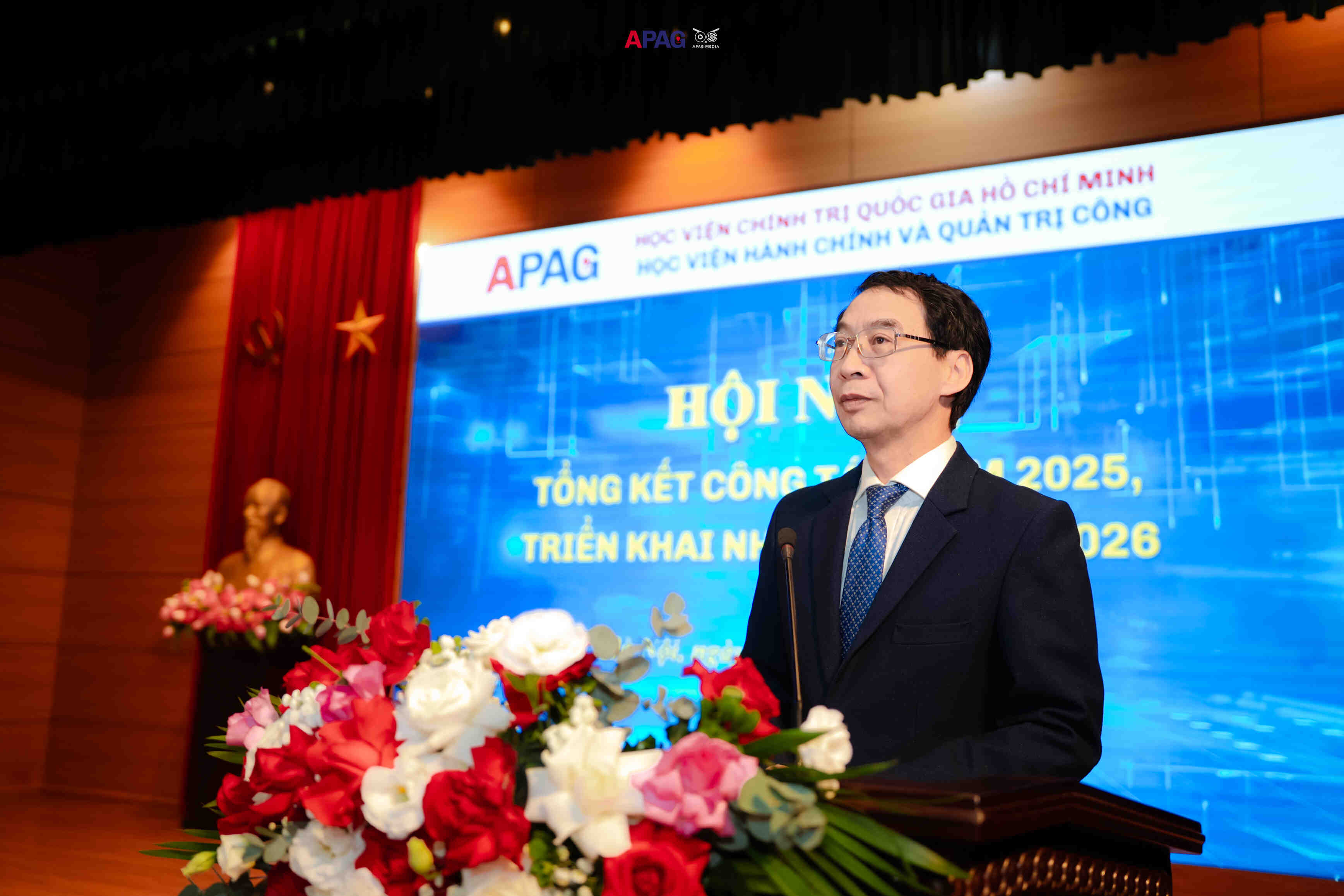 Assoc. Prof. Dr. Luong Thanh Cuong, Deputy Secretary of the APAG Party Committee and Vice President of APAG, presented the Report on the Review of Party Building Work in 2025 and the Implementation of Tasks for 2026.
At the conference, Assoc. Prof. Dr. Luong Thanh Cuong, Deputy Secretary of the APAG Party Committee and Vice President of APAG, presented the Report on the Review of Party Building Work in 2025 and the Implementation of Tasks for 2026.
The report clearly stated that, in the context of organizational merger and restructuring, the APAG Party Committee has consistently received close attention and guidance from the Party Committee of HCMA. The contingent of cadres and Party members has remained politically steadfast, united, and cohesive, forming an important foundation for the successful fulfillment of assigned political tasks.
As of December 2025, the APAG Party Organization had 994 Party members operating within 27 Party cells. Party building in politics, ideology, and ethics continued to be strengthened; the study and practice of Ho Chi Minh’s thought, morality, and style were carried out in a regular and disciplined manner; discipline in public communication and the culture of a Party school were strictly observed. APAG successfully organized the 12th Party Congress of the APAG Party Organization for the 2025–2030 term, laying a foundation for the next stage of development.
In addition, organizational and Party-building work, inspection and supervision, and the prevention and control of corruption and negative practices were rigorously implemented. Training, scientific research, international cooperation, and the protection of the Party’s ideological foundation continued to receive attention and be further promoted.
Implementation of grassroots democracy in conjunction with administrative discipline and order:
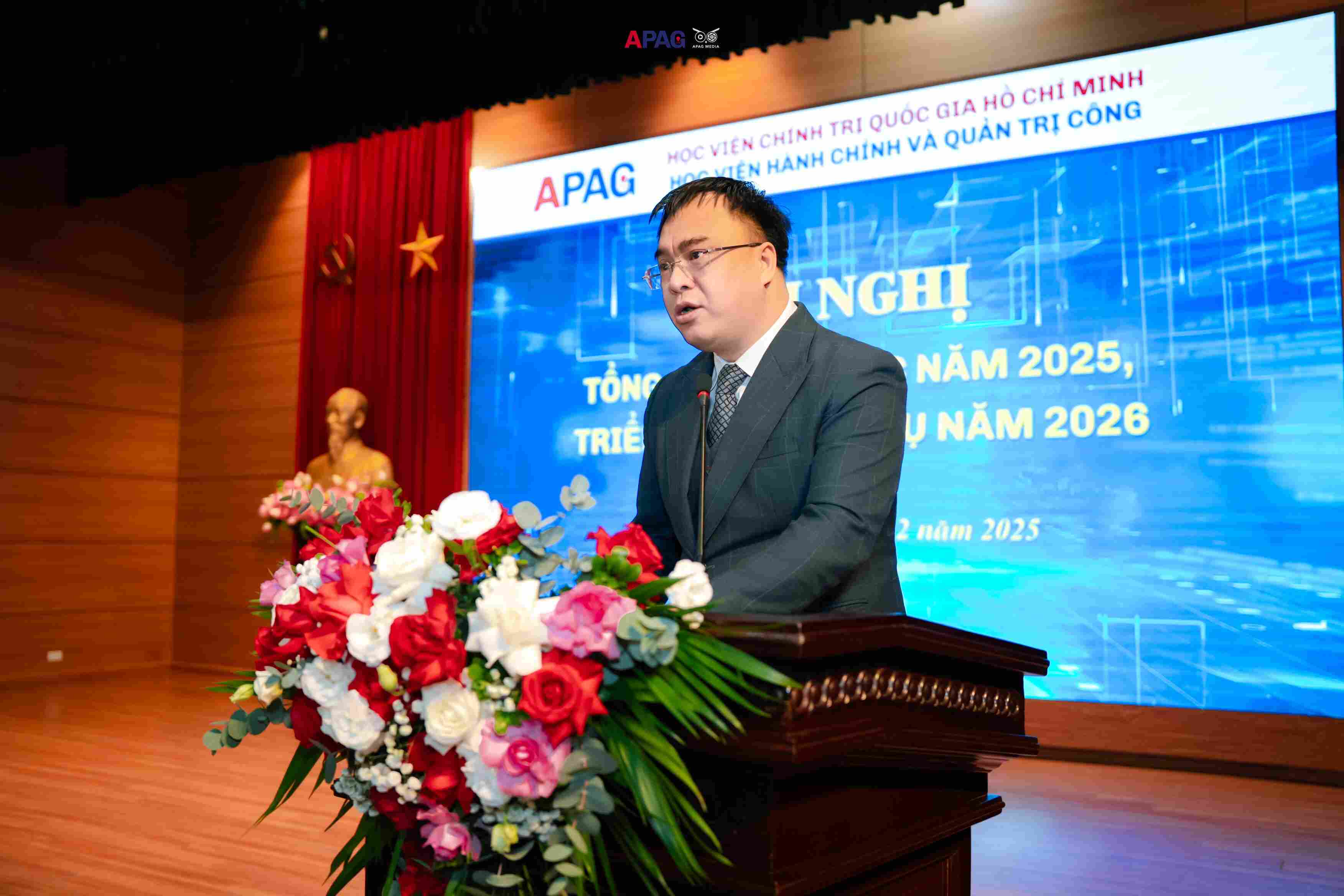 Prof. Dr. Nguyen Quoc Suu, Vice President of APAG, presented the Report on the Results of Implementing Democracy in the APAG’s Operations in 2025 and the Directions and Tasks for 2026.
Prof. Dr. Nguyen Quoc Suu, Vice President of APAG, presented the Report on the Results of Implementing Democracy in the APAG’s Operations in 2025 and the Directions and Tasks for 2026.
The report affirmed that the implementation of the grassroots democracy regulations at APAG was carried out seriously and in a coordinated manner, closely linked with the principle of democratic centralism and key political tasks. Transparency and openness in areas such as organization and personnel, training, finance, and policies and benefits were fully ensured; dialogue activities and the reception of feedback from officials, employees, and learners were maintained on a regular basis.
Alongside the achievements attained, the report also pointed out several limitations that need to be addressed, and identified the direction for 2026 as continuing to improve the effectiveness of practicing grassroots democracy in association with administrative reform, digital transformation, the strengthening of discipline and order, and the building of unity and consensus throughout the entire institution.
Practical and reality-based presentations:
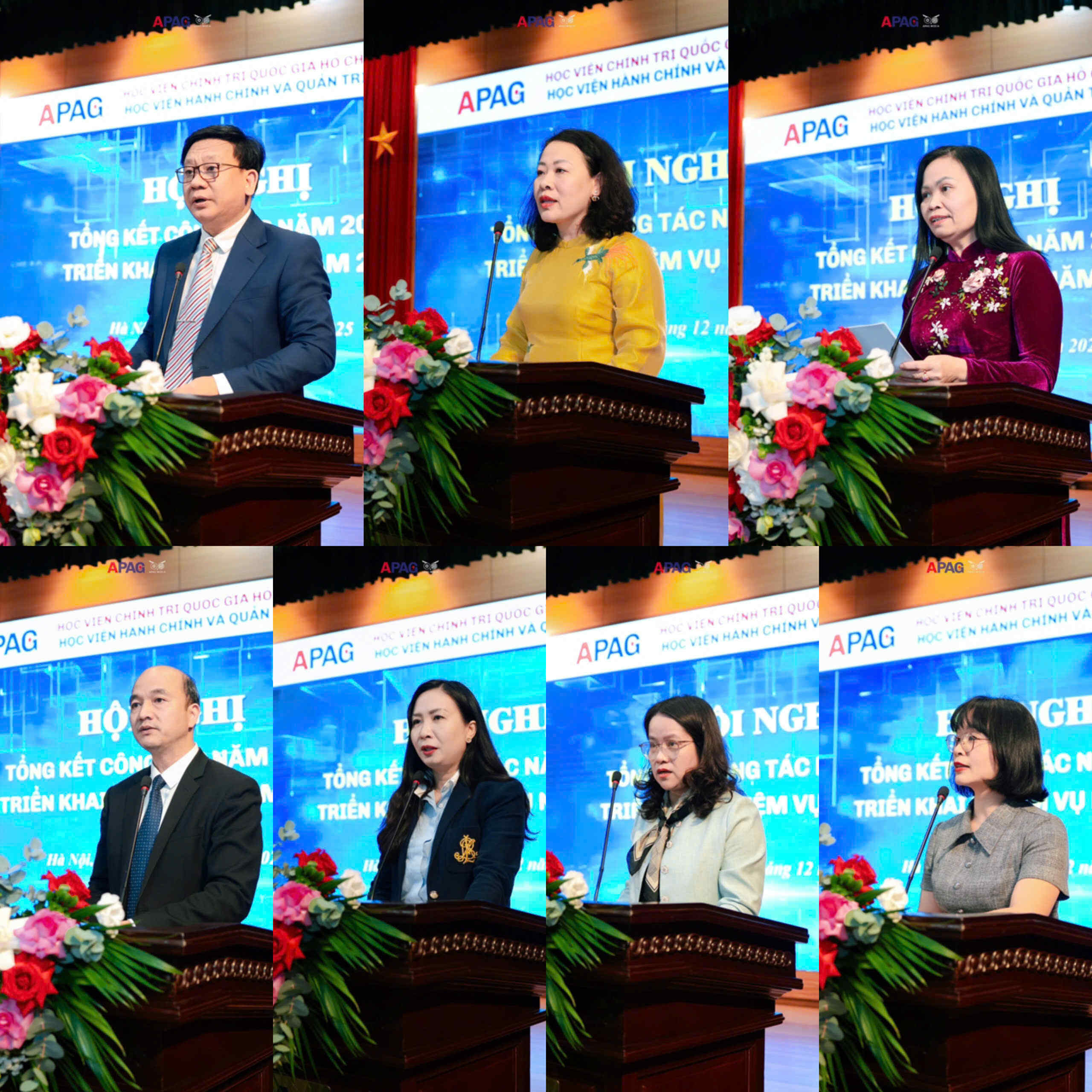 Delegates delivered presentations at the Conference.
The Conference featured presentations and discussion remarks from the following Party cells: Faculty of Law; Faculty of Interdisciplinary Studies – Foreign Languages – Information Technology; the Department of Organization and Personnel; the Department of Higher Education Management; the Department of Planning and Finance; the Department of Science Management and International Cooperation; and APAG Campus in Ho Chi Minh City. These contributions focused on clarifying the results achieved, difficulties and obstacles encountered, and proposing solutions for the period ahead.
Concluding remarks at the Conference:
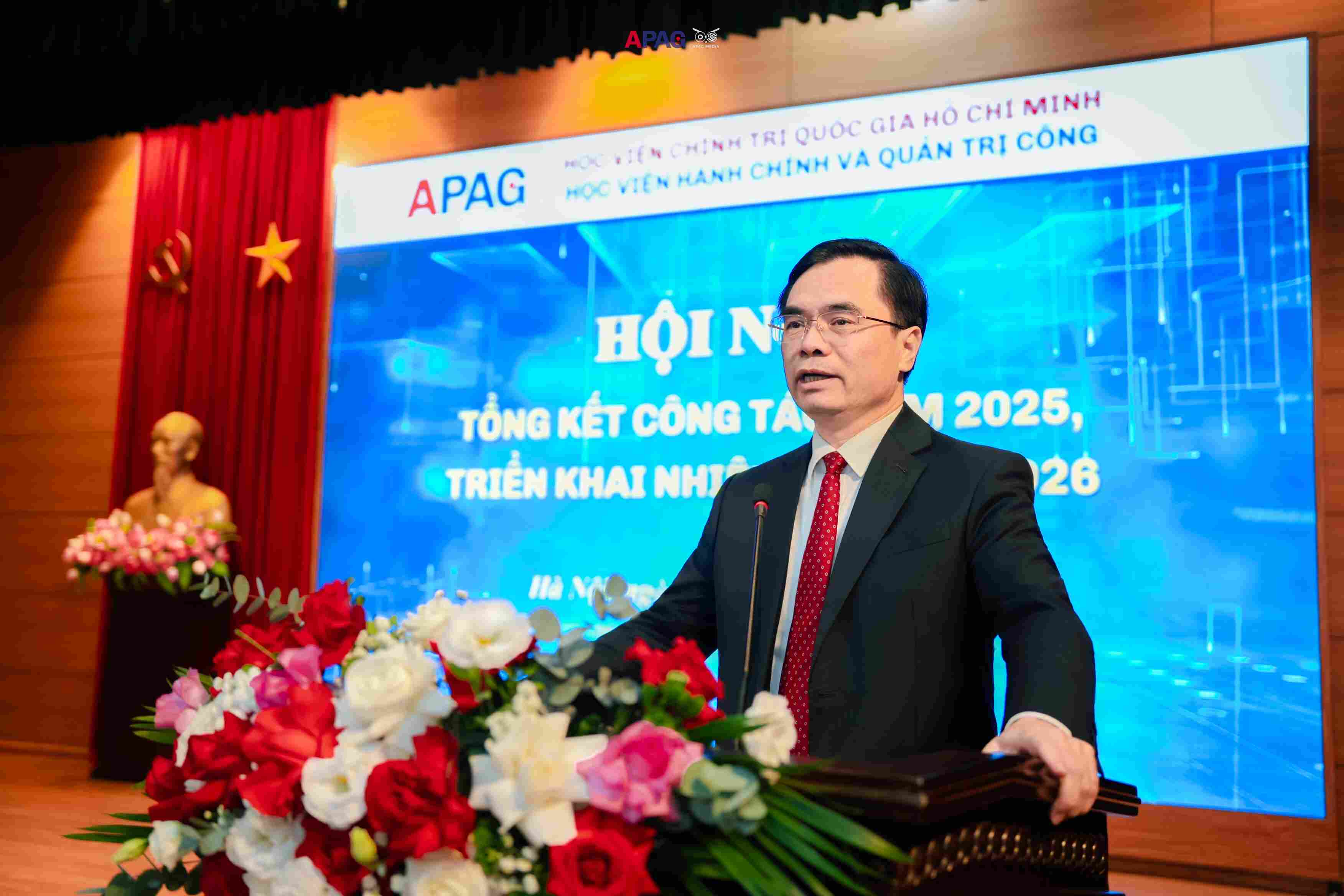 Assoc. Prof. Dr. Duong Trung Y, Vice President of HCMA, delivered concluding remarks at the Conference.
In his concluding remarks, Assoc. Prof. Dr. Duong Trung Y expressed his pleasure at attending the Conference to review the 2025 work and implement directions and tasks for 2026 of APAG, and acknowledged APAG’s clear and positive transformations in recent times.
Assoc. Prof. Dr. Duong Trung Y emphasized that 2025 marked a historic turning point for APAG, as it implemented a transformation of its model, functions, and tasks in accordance with a Politburo decision, officially becoming a higher education institution directly under HCMA. This was not merely an organizational change, but a profound transformation in mindset—from administrative management to modern, facilitative, and service-oriented governance.
Highly appreciating APAG’s efforts amid a large workload and significant pressure from restructuring, he noted that APAG had successfully completed the reorganization of its organizational apparatus, ensured stability, maintained internal consensus, and effectively carried out the assigned political tasks. In particular, Party building work and the protection of the Party’s ideological foundation were implemented in a methodical manner; and the system of internal regulations and rules was gradually improved, creating a solid foundation for the smooth operation of APAG.
He commended APAG’s outstanding achievements in training, scientific research, and international cooperation. The scale and quality of training have continued to improve, with many training programs undergoing quality accreditation; scientific research, policy consultancy, and international cooperation activities have been increasingly expanded, contributing to affirming the APAG’s prestige and position within the national education, training, and scientific research system.
Entering 2026—the first year of implementing the Resolution of the 14th National Party Congress and a pivotal year for APAG to make breakthroughs following restructuring—Assoc. Prof. Dr. Duong Trung Y called on APAG to focus on six key groups of tasks: finalizing the APAG’s Development Strategy to 2030 with a vision to 2045; creating breakthroughs in the quality of training closely linked to practical needs; elevating scientific research and international cooperation toward the role of a policy advisory center and a “think tank” on public governance; continuing to refine the organizational apparatus, develop the workforce, and accelerate digital transformation in university governance; strengthening Party building work, protecting the Party’s ideological foundation, and improving the welfare of officials and employees; and effectively exploiting and utilizing facilities and new buildings at 77 Nguyen Chi Thanh and 371 Nguyen Hoang Ton.
He expressed his confidence that, with the solid foundation already established, a spirit of unity, and strong determination for renewal, APAG would not only achieve stability but also make strong breakthroughs in 2026, gradually affirming its position as a national center and moving toward regional standards in training and scientific research in the fields of administration, state management, and public governance.
In his remarks, acknowledging and responding to the directive opinions, and in concluding the Conference, Assoc. Prof. Dr. Nguyen Ba Chien respectfully expressed his sincere thanks and seriously took on board the directive opinions of Assoc. Prof. Dr. Duong Trung Y, as well as the dedicated and responsible contributions of the delegates attending the Conference.
He affirmed that the directive opinions constitute an important basis for APAG to continue reviewing and refining its leadership methods, governance, and the organization of task implementation in the context of its operational model transformation. With a spirit of frank recognition of the limitations and shortcomings noted, APAG will translate the Conference’s conclusions into specific action programs, linking the responsibility of unit heads to the results of task performance in each unit.
In the time ahead, APAG will focus on improving the effectiveness of training and scientific research and on protecting the Party’s ideological foundation; promoting innovation in governance, administrative reform, and digital transformation; and at the same time paying attention to workforce development, strengthening discipline and order, and practicing grassroots democracy, thereby creating a stable, professional, and humane working environment.
Assoc. Prof. Dr. Nguyen Ba Chien emphasized that the spirit of unity and consensus is the foundation for APAG to successfully accomplish its goals and tasks for 2026, contributing to the sustainable development of APAG in the new phase.
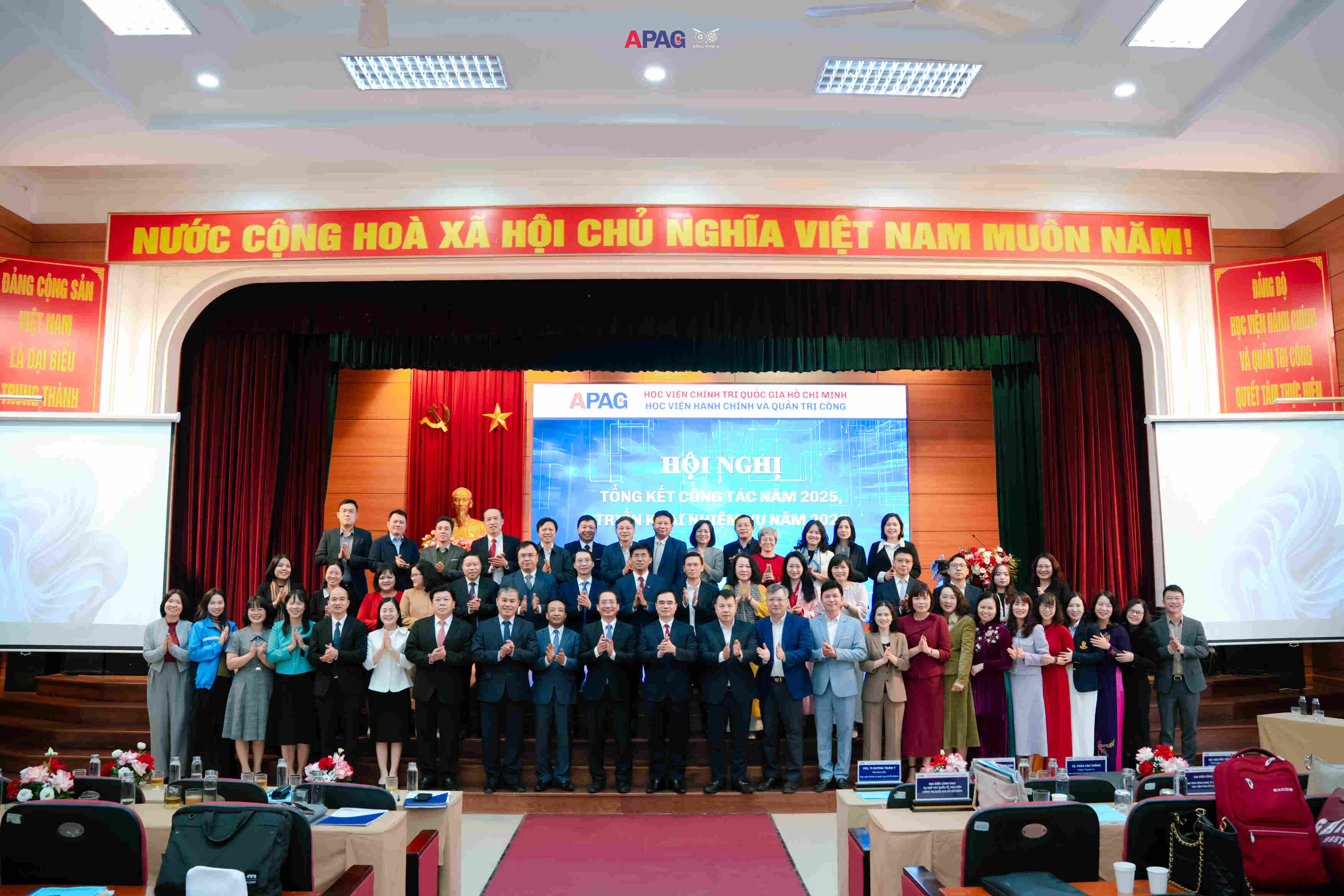 Delegates of the Conference.