On October 8 and 9, 2026, in Thimphu, Kingdom of Bhutan, representatives of the Academy of Public Administration and Governance participated in the Regional Dialogue "Governing through Change: Future-Ready Governance in Asia and the Pacific." At the dialogue, the Academy's representatives participated in exchanges and contributed insights regarding methodologies for evaluating national governance capacity and the application of research findings to institutional reform and local governance capacity development.
The dialogue was organized by the Royal Government of Bhutan in collaboration with the United Nations Development Program (UNDP) and the Chandler Governance Group (CGG), featuring over 100 delegates including leaders, retaining, governance experts, and representatives of international organizations across the Asia-Pacific region.
Future-ready governance: Requirements for state capacity development in the new context
The dialogue took place against the backdrop of nations responding to profound economic, technological, demographic, and environmental shifts, along with increasingly complex development challenges. Rapid advancements in artificial intelligence, climate change, labor market volatility, and changing public expectations mandate elevating government capabilities in problem identification, policy formulation, and execution organization.
Delivering opening remarks at the dialogue, Prime Minister of Bhutan Dasho Tshering Tobgay emphasized the importance of institutionalizing leaders' long-term vision into sustainable state governance capacity, helping governments proactively forecast, prepare for, and effectively respond to future shifts and challenges.
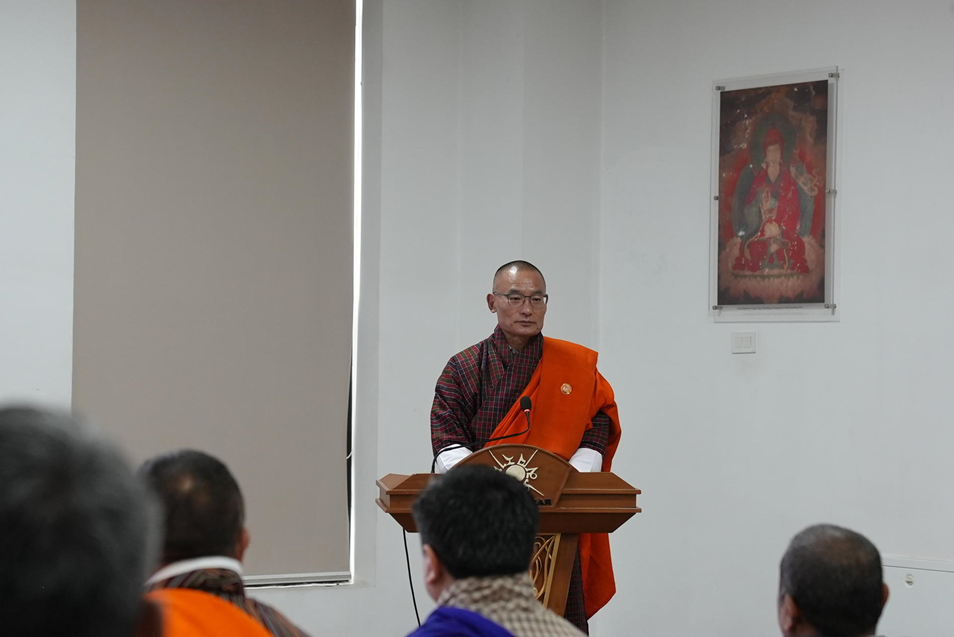 Prime Minister of Bhutan Dasho Tshering Tobgay delivers opening remarks at the dialogue
The focal point of the dialogue was the future-ready governance approach, developed by UNDP based on three closely interrelated competency clusters: anticipation, adaptability, and agility. Anticipatory capacity enables governments to identify emerging trends, risks, and development opportunities early; adaptive capacity allows for policy and operational adjustments based on evidence and practical experience; while agility is reflected in the ability to mobilize resources, coordinate, and organize execution in a timely manner aligned with new requirements. A notable feature of this approach is placing governance evaluation emphasizing on operational capability and outcome delivery. A nation may possess a relatively complete system of strategies, regulations, and organizational structures, yet governance effectiveness ultimately hinges on the ability to translate those baseline conditions into wise decisions, effective coordination, and concrete real-world outcomes for citizens.
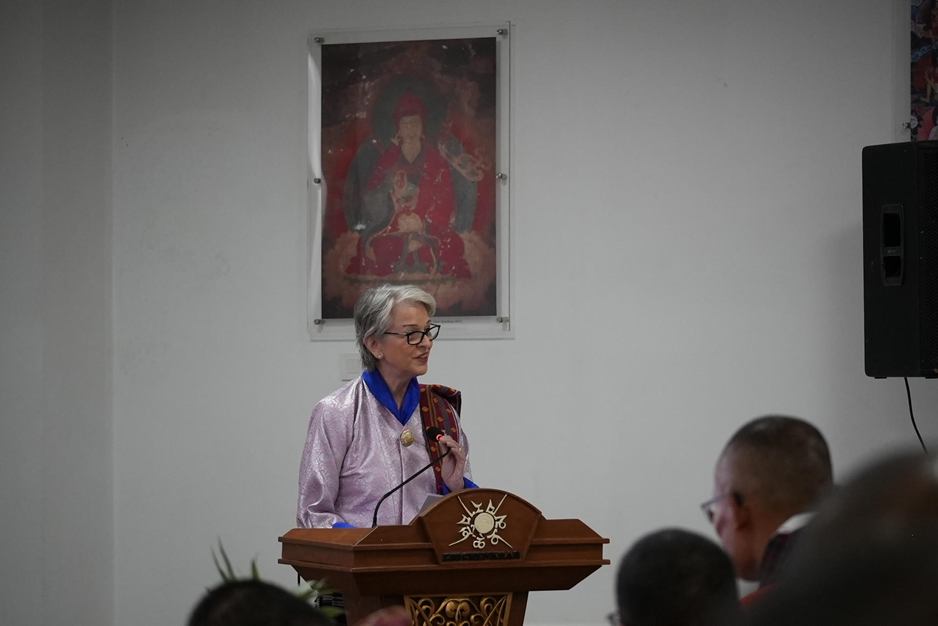 Ms. Caitlin Wiesen, Acting Resident Representative of the United Nations Development Program (UNDP) in Bhutan, spoke at the opening ceremony of the dialogue
Discussion sessions shared extensive experience in governance innovation and policy execution organization. Bhutan presented initiatives linking research and policy innovation with execution driver mechanisms; Singapore shared experience in developing shared digital platforms, data governance, and citizen-centric public service delivery; Sri Lanka exchanges insights on modernizing administrative services; while Thailand introduced methods for enhancing civic participation in policy design. These experiences highlight the increasingly vital roles of inter-sectoral coordination, data sharing, practical learning, and mobilizing social stakeholders participation in resolving complex public challenges.
A major component of the dialogue was the introduction and discussion of the methodology for building the Future-Ready Governance Index (FRGI), jointly developed by UNDP and CGG. The evaluation framework is constructed across three governance capacity pillars, operationalized into 12 indicators, employing methods that examine evidence of institutionalization, operational viability, and empirical outcomes. Vietnam is among the nations participating in the pilot testing of this evaluation methodology.
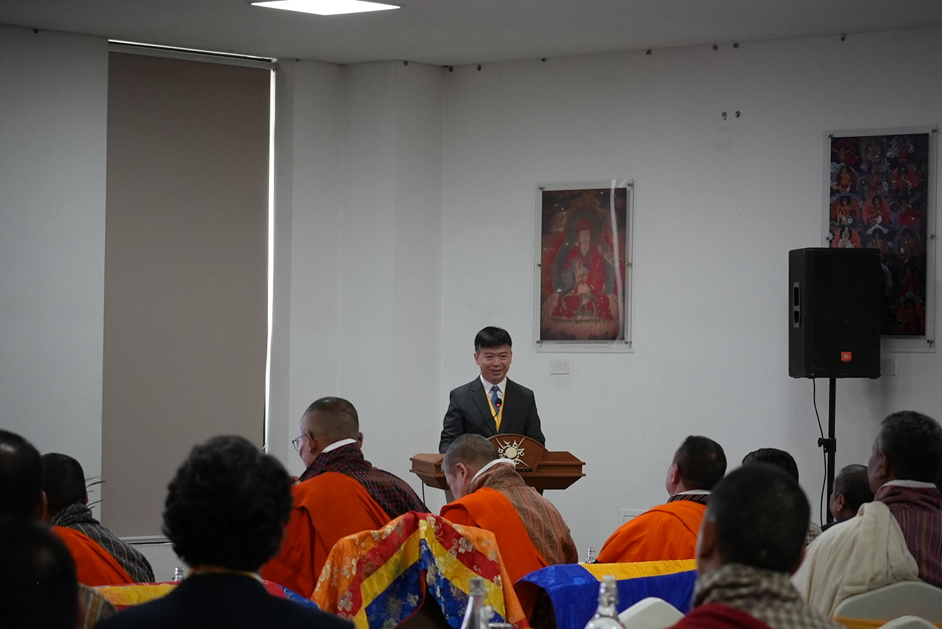 Mr. Wu Wei Neng, Executive Director of the Chandler Governance Group, spoke at the opening ceremony of the dialogue
Speaking at the discussion session, Ms. Pham Thi Quynh Hoa, representative of the Academy of Public Administration and Governance, highly appreciated FRGI's evidence-based governance evaluation approach, which assists nations in identifying bottlenecks and prioritizing reforms. She emphasized that evaluation methodologies must respect institutional and governance model differences, grounding assessment in operational capability and practical results rather than imposing a standardized organizational blueprint. For Vietnam, the framework must accurately reflect the characteristics of the political system, policy formulation mechanisms, execution organization, and citizen participation and oversight.
The Academy's representative particularly cautioned against bias risks when employing artificial intelligence to collect and analyze evidence, especially the potential omission of native-language sources. She proposed strengthening information verification against official sources, ensuring national participation in reviewing and supplementing evidence, while clearly distinguishing among enacting policies, operationalized mechanisms, and actual achieved results. For example, delegating authority does not automatically mean local governments possess adequate resources and execution capacity. This represents a gap that evaluation tools must clarify to provide substantive support for reform.
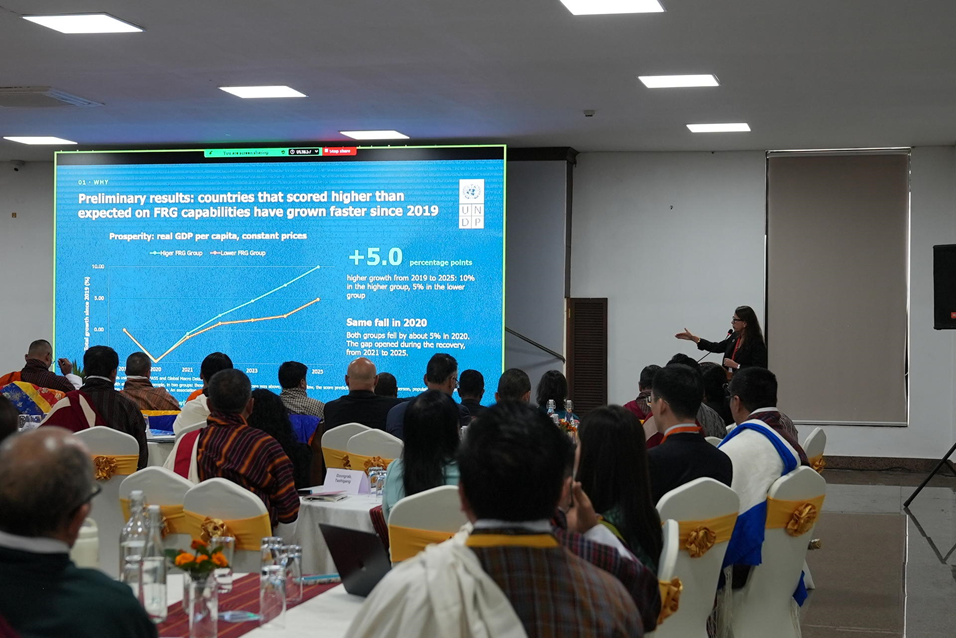 Overview of the dialogue
Grounded in Vietnam's reform practice, Ms. Pham Thi Quynh Hoa proposed researching and integrating a future-ready governance component featuring the three competencies of anticipation, adaptability, and agility into the governance competency framework for two-tier local governments. At the provincial level, emphasis should be placed on development forecasting, inter-sectoral coordination, resource allocation, and support for the commune level; At the commune level, focus should center on early problem identification, policy execution organization, and timely response to citizen demands. Competency evaluation must be linked with specific bottlenecks in authority, resources, data, and coordination, serving as a basis for identifying training needs and improving local government operational efficiency.
Exchanges at the dialogue also raised issues of direct significance for Vietnam: decentralization and delegation of power must go hand in hand with ensuring execution capacity. Under two-tier local government operations and accelerated digital transformation, reform effectiveness hinges on compatibility among authority, resources, cadre capacity, data, and coordination mechanisms, as well as the ability to adapt management approaches to emerging requirements.
For the Academy of Public Administration and Governance, this provides a foundation to continue researching and refining local governance competency frameworks, incorporating future-ready governance content into training programs, and developing teaching case studies from Vietnam's reform realities; while simultaneously advancing research cooperation with UNDP, CGG, and international partners on development governance capacity, policy execution, and inclusive local governance.
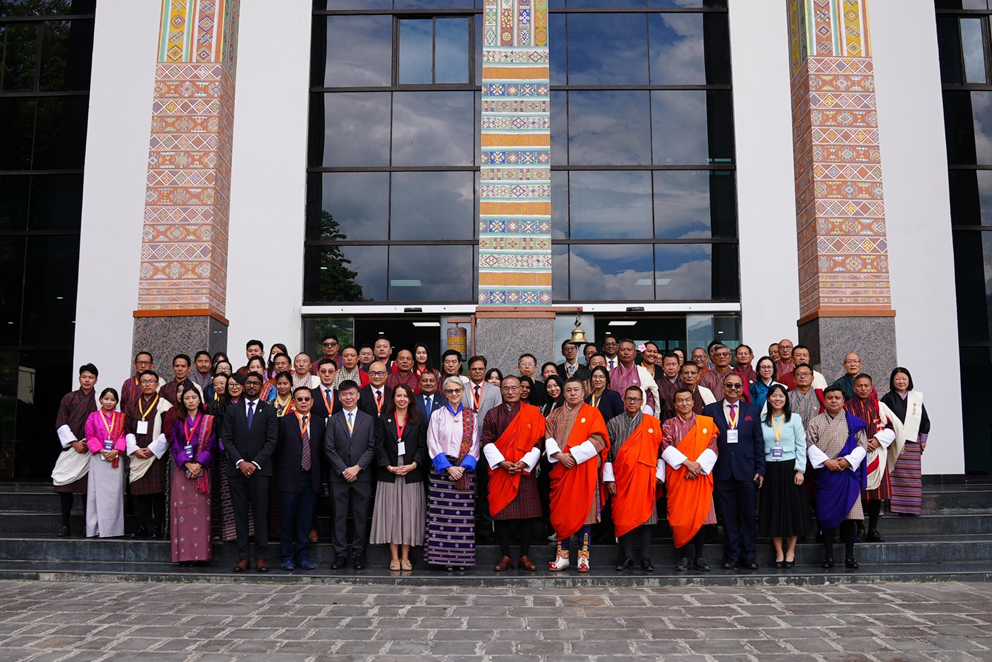 Delegates attending the dialogue take a commemorative photo with Prime Minister of Bhutan Dasho Tshering Tobgay.
Within the framework of the research initiative to create the Future-Ready Governance Index (FRGI) jointly implemented by UNDP and CGG, Assoc. Prof. Dr. Nguyen Ba Chien, President of the Academy of Public Administration and Governance, was invited to join the Expert Consultative Group, contributing insights on theoretical foundations, methodologies, and indicator systems for evaluating national governance capacity. The Academy's participation and expert contributions at the regional dialogue open up opportunities to strengthen international cooperation in scientific research, engage in developing governance evaluation tools and methods, and exchange reform experiences and policy research. Through this, the Academy is positioned to leverage its research capabilities in public administration and governance, contributing Vietnamese knowledge and reform practices to international initiatives, while applying research findings to serve institutional reform, governance capacity development, and elevating training quality in the new phase.
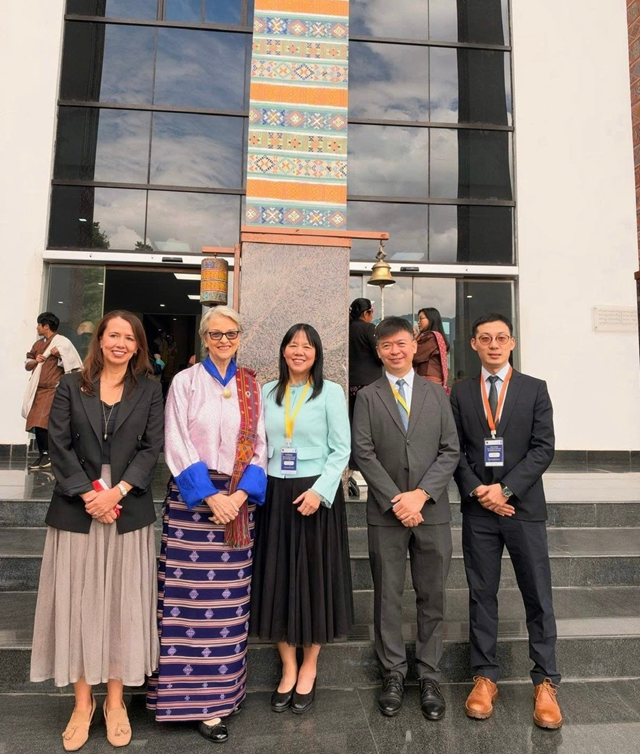 The Academy's representative takes a commemorative photo with representatives from UNDP and CGG, co-hosts of the Future-Ready Governance Index development initiative.