On the morning of February 4, 2026, in Hanoi, the State Management Review coordinated with the Department of Scientific Management and International Cooperation to hold an academic exchange and sharing session on research and practical experience in the fields of Public governance, Party building, and State management with a delegation from the Gansu Academy of Governance, China. Dr. Nguyen Quang Vinh, Editor-in-Chief of the State Management Review, chaired the working session
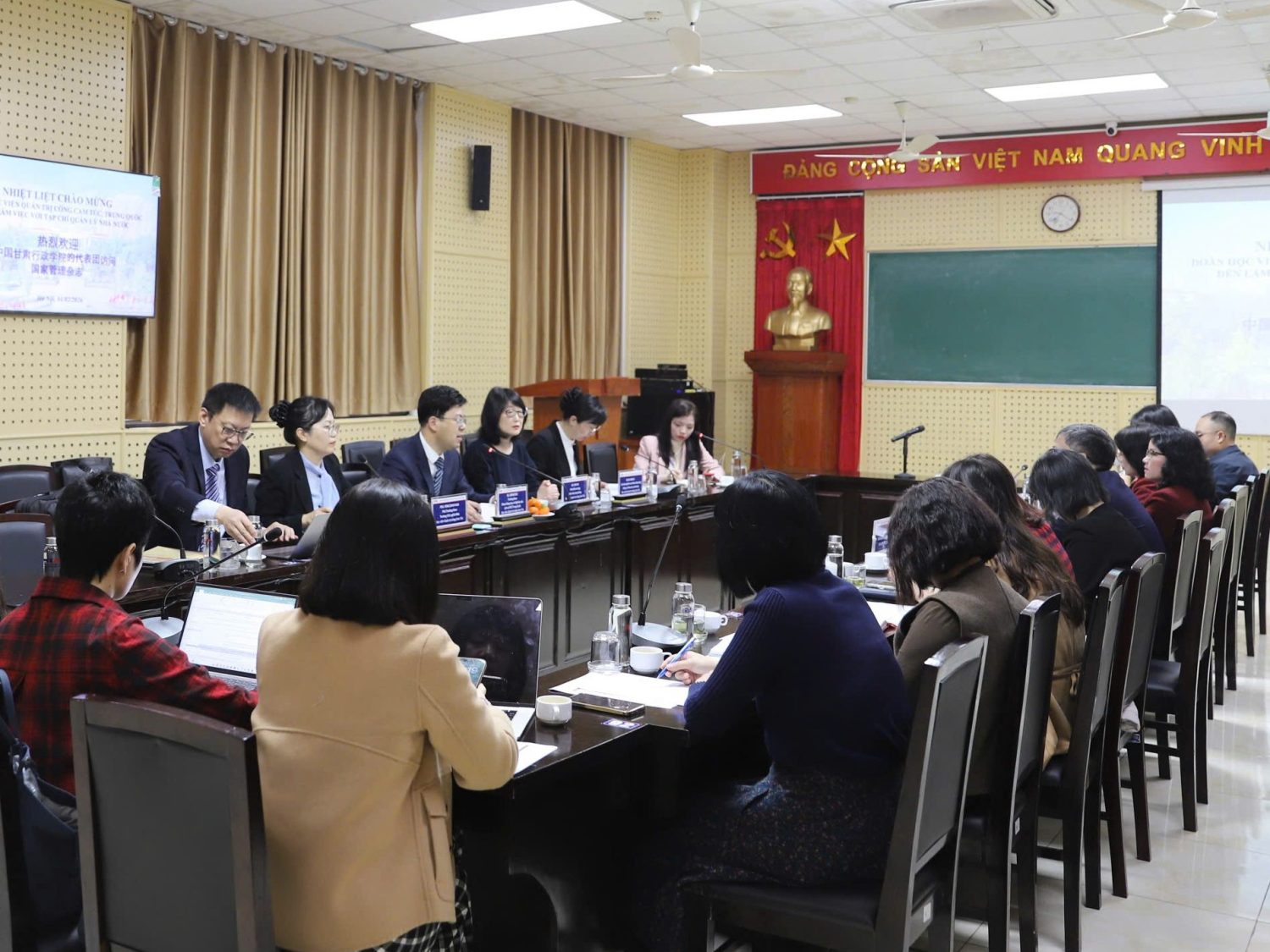 Overview of the working session
Attending the session, from the Gansu Academy of Governance (China), were Prof. Wang Rui, Dean of the Department of Communist Party of China History Teaching and Research, Head of the Delegation; Prof. Wei Xia, Vice President of the Party Building Institute; Prof. Ding Yuefeng, Deputy Dean of the Department of Scientific Socialism and Teaching; Assoc. Prof. Peng Zhaohua, Deputy Dean of the Department of Scientific Socialism Teaching and Research; and Ms. Liu Xiao Li, researcher at the Department of Party Building and Leadership Science.
Welcoming and working with the delegation, from the Academy of Public Administration and Governance (APAG) were Dr. Le Thi Hoa, Deputy Editor-in-Chief of the State Management Review; Dr. Bui Thi Thanh Thuy, Deputy Head of the Department of Scientific Management and International Cooperation; and M.A. Le Thi Tuyet, Deputy Head of the Department of Scientific Management and International Cooperation, along with reporters and editors of the State Management Review and officials from the Scientific Management and International Cooperation Department.
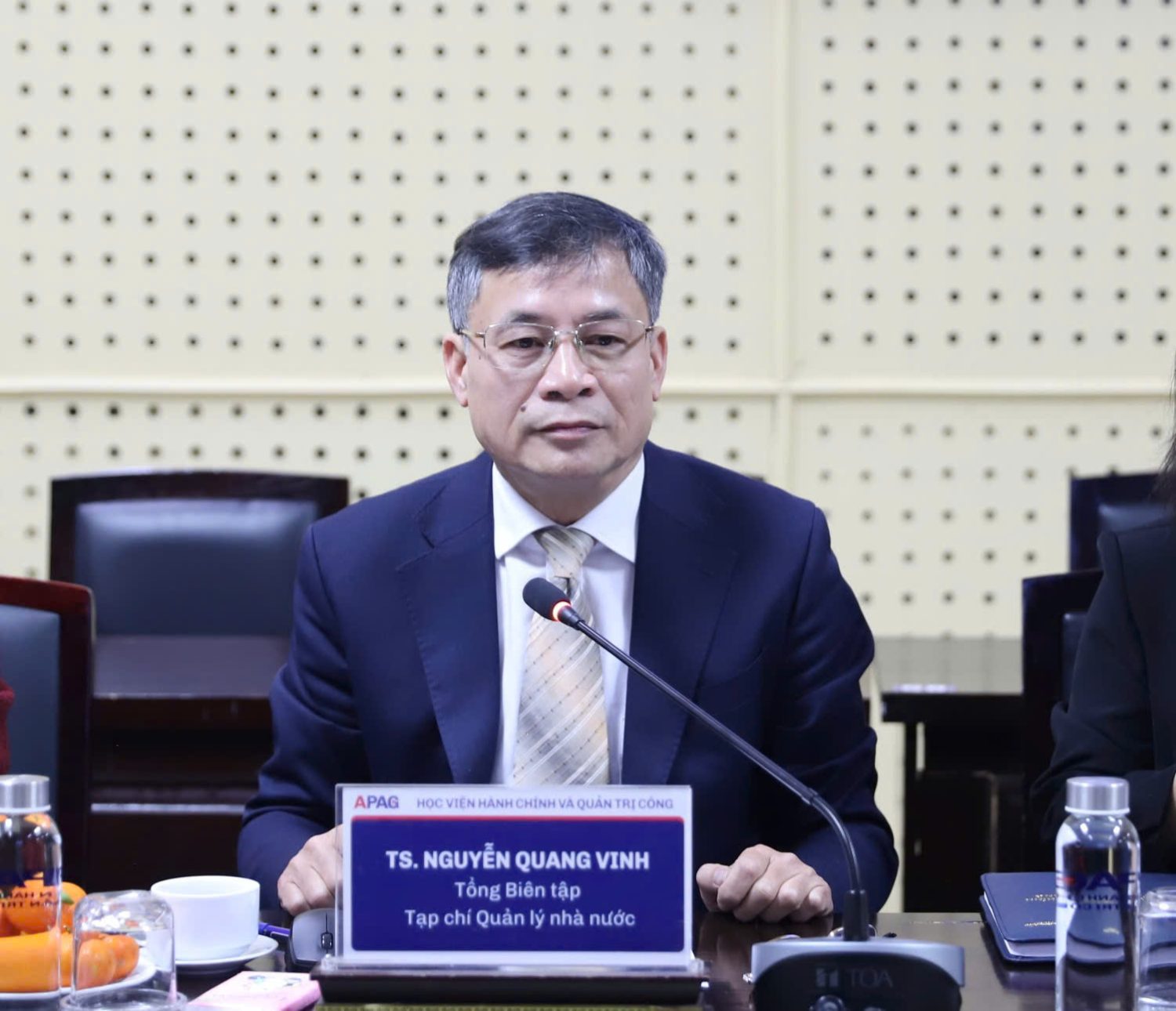 Dr. Nguyen Quang Vinh speaking at the working session
Speaking at the meeting, Dr. Nguyen Quang Vinh expressed his delight in welcoming the delegation from the Gansu Academy of Public Administration (China). At the same time, he emphasized the significance of this meeting in strengthening exchanges, academic dialogue, and the sharing of research and practical experience in the fields of public governance, party building, and state management. The Editor-in-Chief of the State Management Review provided an overview of the functions, tasks, and mission of the Review—as the scientific research and mouthpiece organ of the Academy of Public Administration and Governance. The Review features three editions: Print, Electronic, and English. All three editions have ISSN identifiers, are assigned DOI (Digital Object Identifier) codes, and are granted a scientific score of 0.75 by seven interdisciplinary Professorial Councils. The Review is progressively approaching international scientific journal standards in both content and form, striving to be listed in the Scopus database.
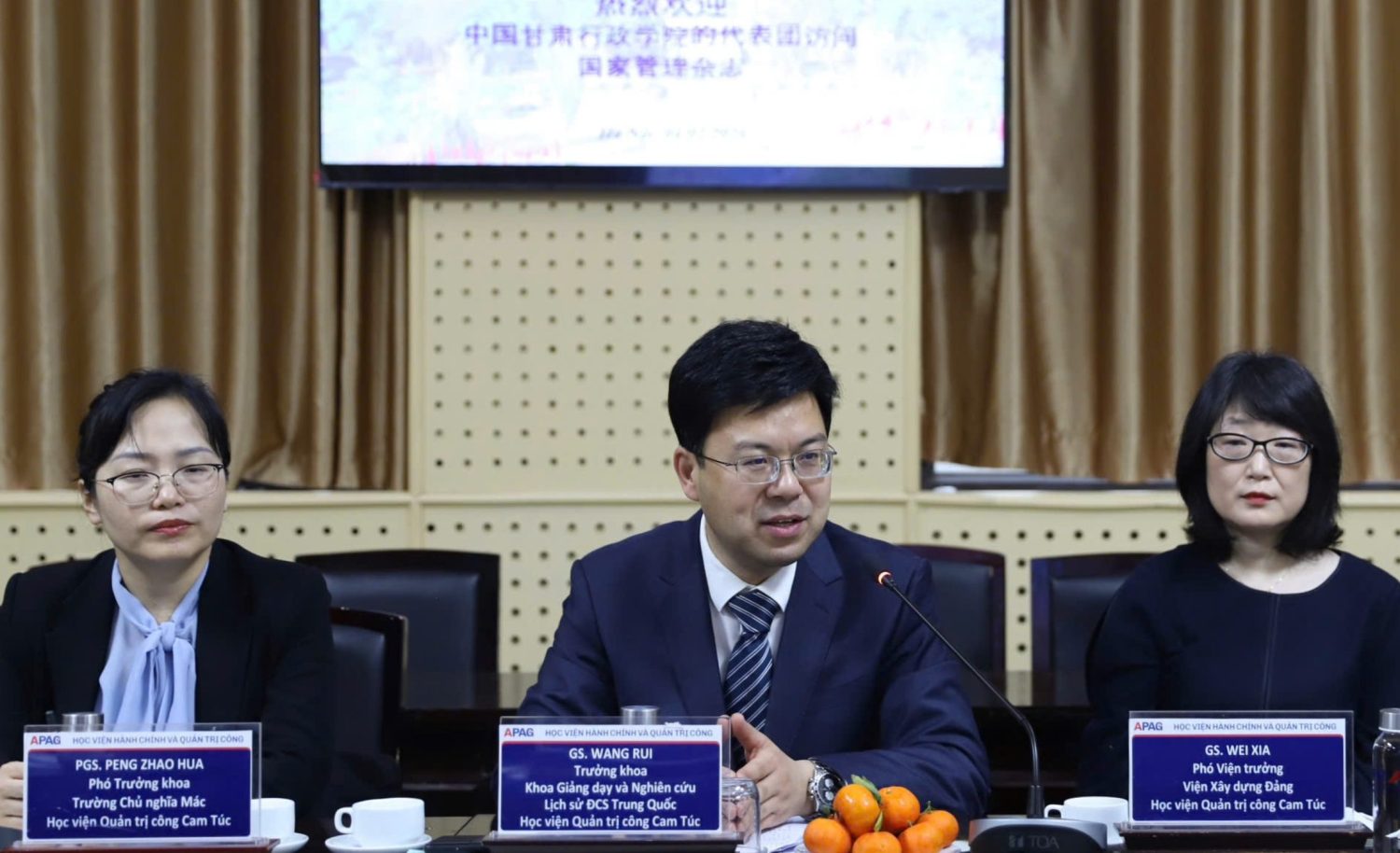 Prof. Wang Rui speaking at the working session
Prof. Wang Rui sincerely thanked the State Management Review for the warm reception. He provided a brief introduction to the Gansu Academy of Governance and its key research strengths, while also highlighting the academy’s Administrative Review. The journal publishes research works by scientists and PhD candidates and is currently striving to meet international standards. Prof. Wang Rui expressed his desire for both sides to continue strengthening academic exchange, research cooperation, and the sharing of scientific articles.
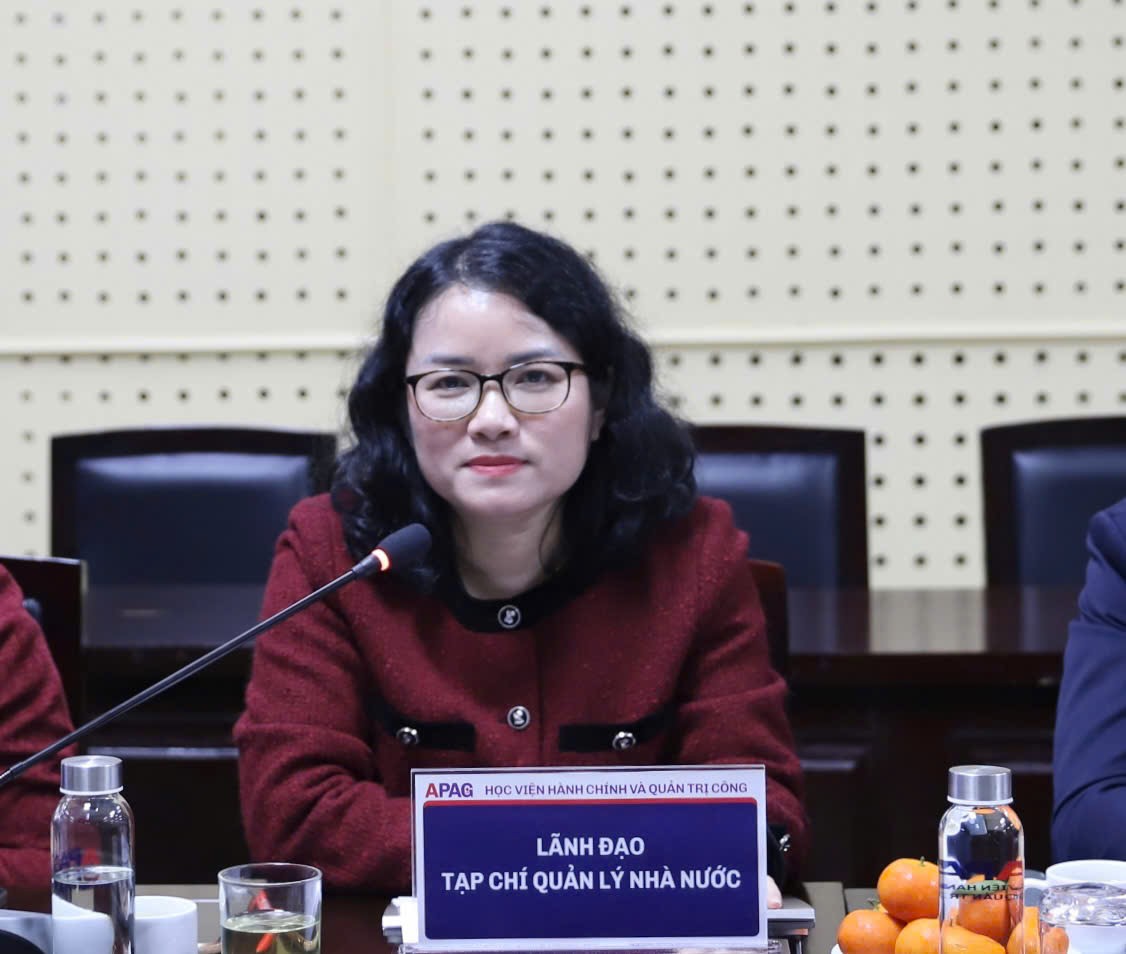 Dr. Le Thi Hoa sharing and discussing the topic of Grassroots Democracy in Vietnam
During the session, while discussing the topic of “Grassroots Democracy in Vietnam” Dr. Le Thi Hoa, Deputy Editor-in-Chief of the Review, affirmed that grassroots democracy is a vital political-legal foundation in building the Socialist Rule-of-Law State in Vietnam, serving as both a goal and a driving force for development. The implementation of grassroots democracy aims to ensure and promote the People’s right to mastery, viewing the People as the center, the subject, the goal, and the resource for all policy decisions. This consistently reflects the principle of “the People as the roots” with the motto: “The People know, the People discuss, the People decide, the People inspect, the People supervise, and the People enjoy” Furthermore, she specified the role of the legal framework, particularly the 2013 Constitution and the 2022 Law on the Implementation of Grassroots Democracy, in comprehensively codifying grassroots democracy, establishing principles of implementation, and assigning specific responsibilities to local governments, heads of agencies, and representative organizations of the People. She affirmed that grassroots democracy is closely linked to openness, transparency, substantive public participation, and inspection and supervision mechanisms, viewing democracy not only as a right but as a vital resource contributing to the enhancement of state governance efficiency.
From the discussion initiated by Dr. Le Thi Hoa, Prof. Wang Rui also shared insights on grassroots democracy in China. He noted that grassroots democracy in China has achieved certain successes and is developed toward expanding substantive public participation within the framework of political stability under the unified leadership of the Communist Party of China. The core goal of developing grassroots democracy is to realize the “People-centered” spirit, bringing happiness and safety to the People. This is regarded as a central task of the political system, helping to enhance the effectiveness of local governance and consolidate the social foundation for long-term development.
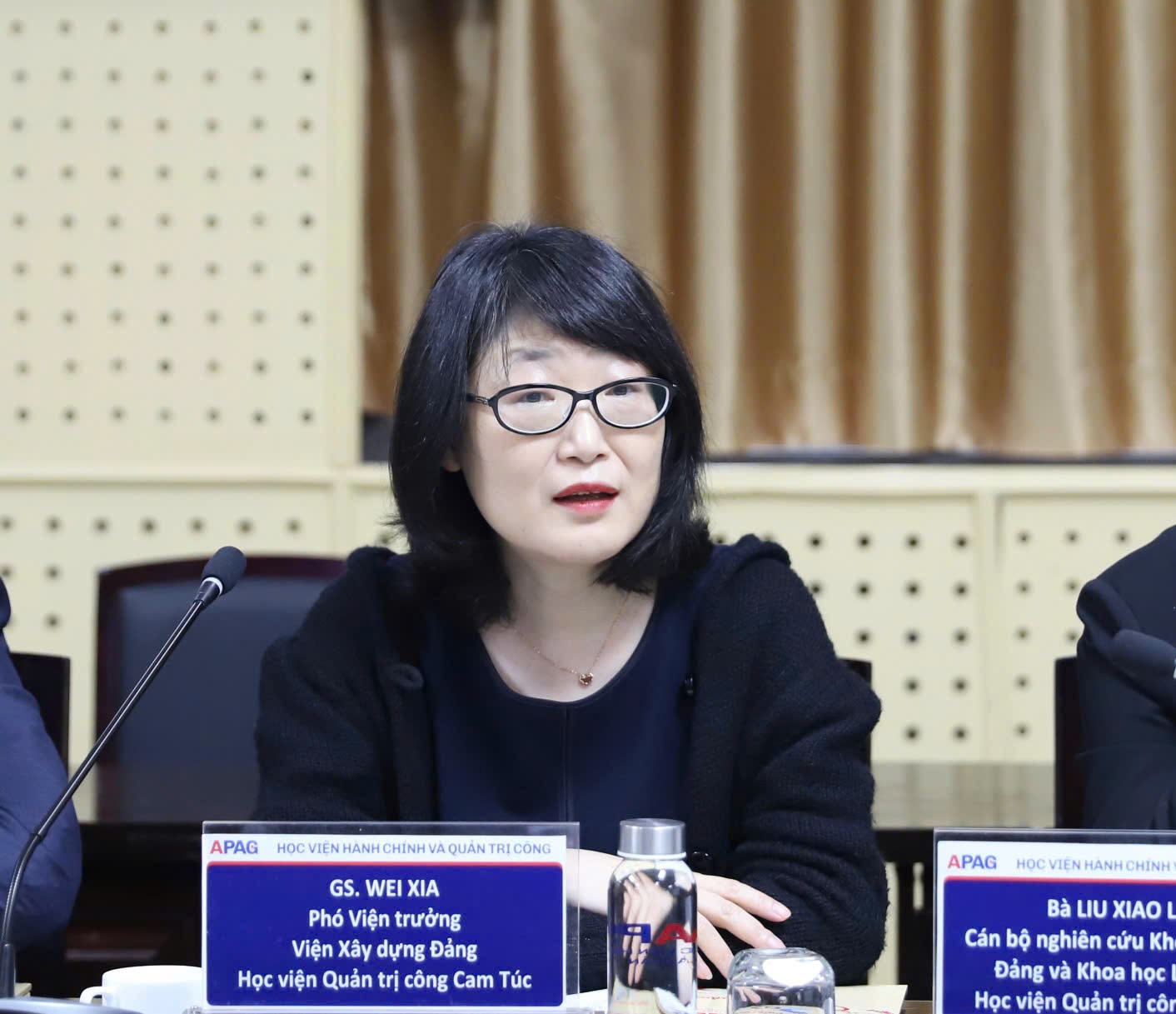 Prof. Wei Xia speaking at the working session
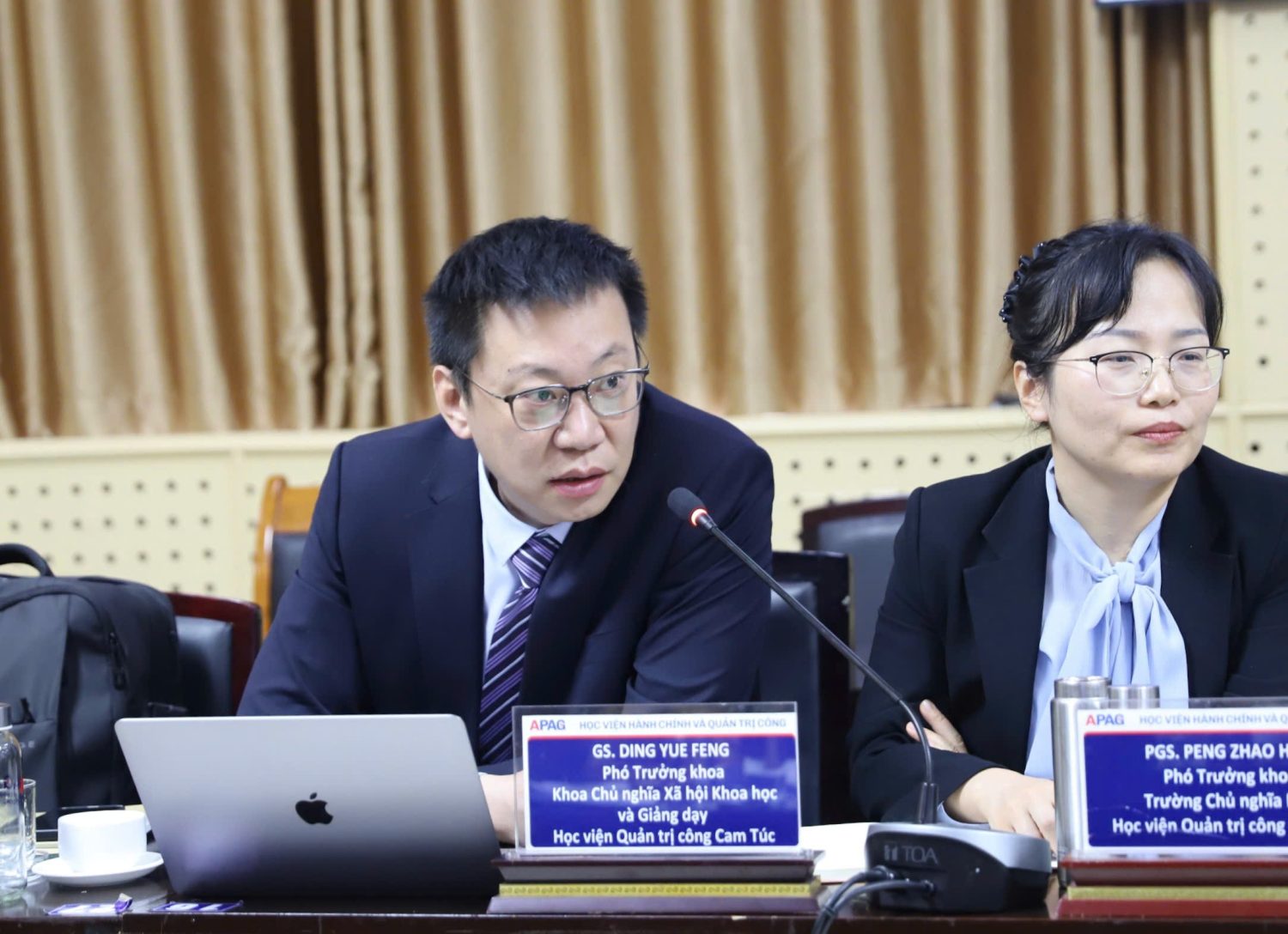 Prof. Ding Yuefeng speaking at the working session
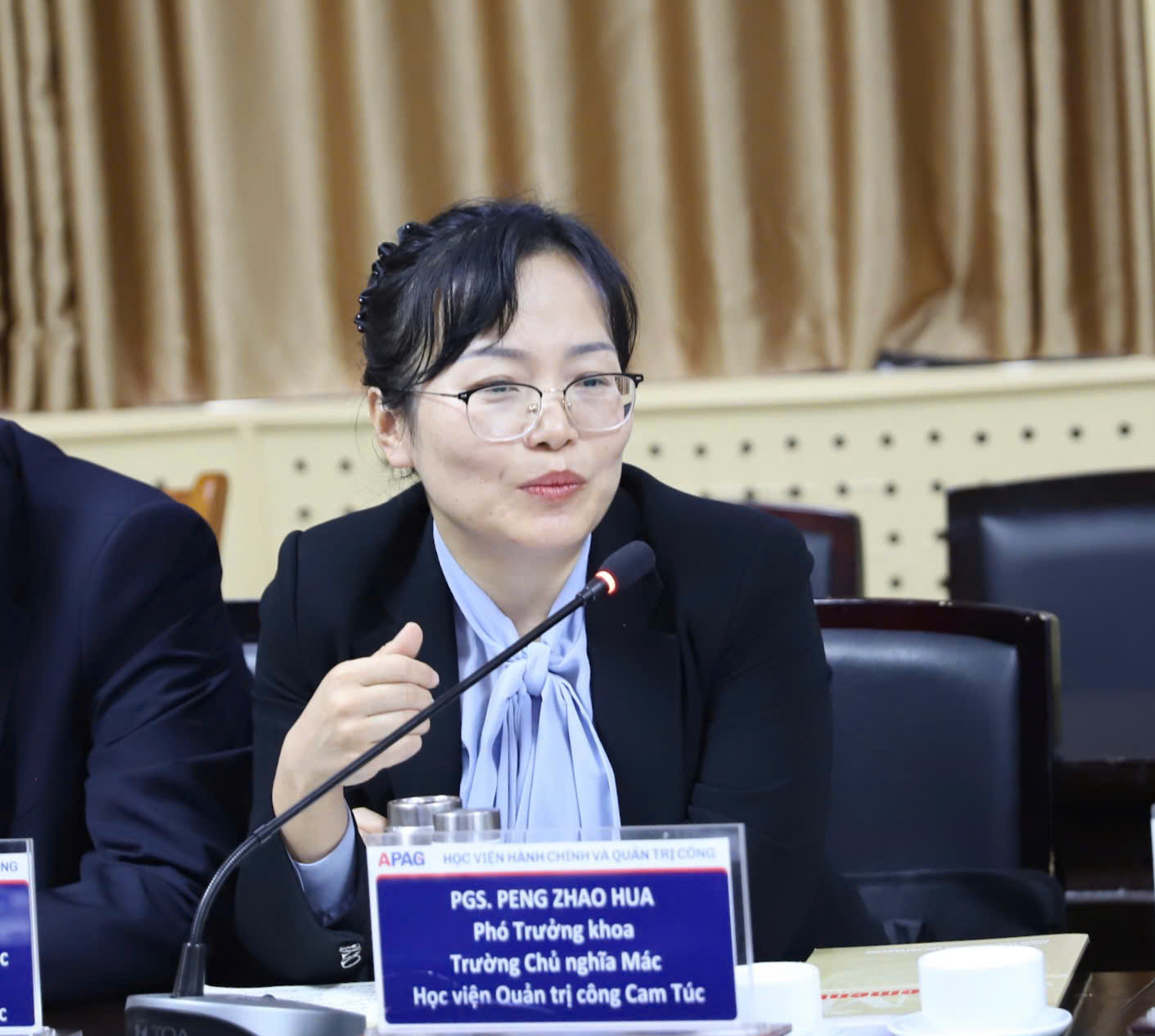 Assoc. Prof. Peng Zhaohua speaking at the working session
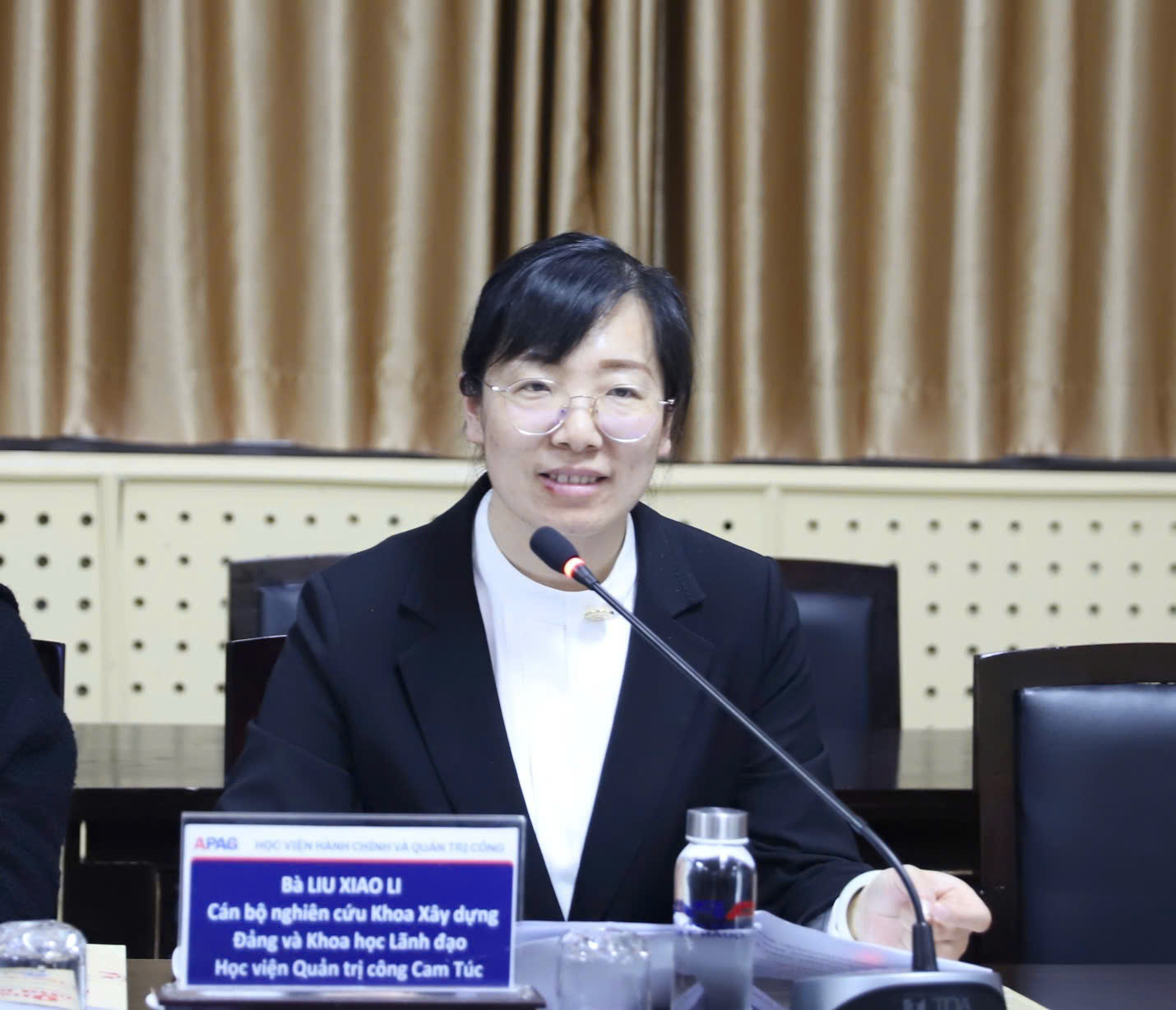 Ms. Liu Xiao Li speaking at the working session
During the working program, Dr. Nguyen Quang Vinh provided information regarding the 14th National Congress of the Communist Party of Vietnam. The Congress took place from January 19 to January 23, 2026. After five days of urgent, serious, and scientific work under the motto “Solidarity - Democracy - Discipline - Breakthrough - Development” and with a high sense of responsibility toward the Party, the People, and the nation, the 14th Congress concluded with resounding success, marking a new milestone in the history of the Communist Party of Vietnam and the heroic history of the Vietnamese nation.
Dr. Nguyen Quang Vinh introduced the Closing Speech of the Congress by General Secretary To Lam, which clearly stated the General Secretary's determination to achieve the noble goals set out in the Political Report: “Maintaining a peaceful and stable environment; advancing rapid and sustainable national development and firmly defending the Fatherland; comprehensively improving the People’s living standards; exercising strategic autonomy, self-reliance, and confidence to move strongly forward into the nation’s new era; successfully fulfilling the goal of becoming a developing country with modern industry and upper-middle-income status by 2030; and realizing the vision to become a developed, high-income country by 2045, for a peaceful, independent, democratic, wealthy, strong, prosperous, civilized, and happy Vietnam, stepping firmly toward socialism.” General Secretary To Lam affirmed: “The consistent spirit of the 14th Congress term is strategic autonomy, seizing opportunities, uniting as one to overcome all challenges, and strongly arousing the aspiration for development; turning will into action and policy decisions into concrete results; words matched by deeds-acting immediately, correctly, decisively, following through to the end, and effectively.”
Following the agenda, Dr. Nguyen Quang Vinh summarized the core contents of the 9 Pillar Resolutions of the Politburo of the Communist Party of Vietnam, including:
·Resolution No. 57-NQ/TW (Dec 22, 2024) on breakthrough development in science, technology, innovation, and national digital transformation;
·Resolution No. 59-NQ/TW (Jan 24, 2025) on international integration in the new situation;
·Resolution No. 66-NQ/TW (Apr 30, 2025) on innovating law-making and enforcement to meet development requirements in the new era;
·Resolution No. 68-NQ/TW (May 4, 2025) on private economic development;
·Resolution No. 70-NQ/TW (Aug 20, 2025) on ensuring national energy security through 2030, with a vision to 2045;
·Resolution No. 71-NQ/TW (Aug 22, 2025) on breakthrough development in education and training;
·Resolution No. 72-NQ/TW (Sep 9, 2025) on breakthrough solutions to strengthen People's health protection, care, and improvement;
·Resolution No. 79-NQ/TW (Jan 6, 2026) on state economic development;
·Resolution No. 80-NQ/TW (Jan 7, 2026) on Vietnamese cultural development.
The working session took place in an open, friendly, and effective atmosphere. Delegates from both sides shared meaningful insights on grassroots democracy, public governance, and Party building, thereby contributing to increased mutual understanding and trust. On the occasion of the New Year and the traditional Lunar New Year of both countries, the leaders and delegates exchanged best wishes, expressing a shared desire for the cooperation and coordination in scientific research and academic journals to continue developing in a practical and sustainable manner in the coming time.
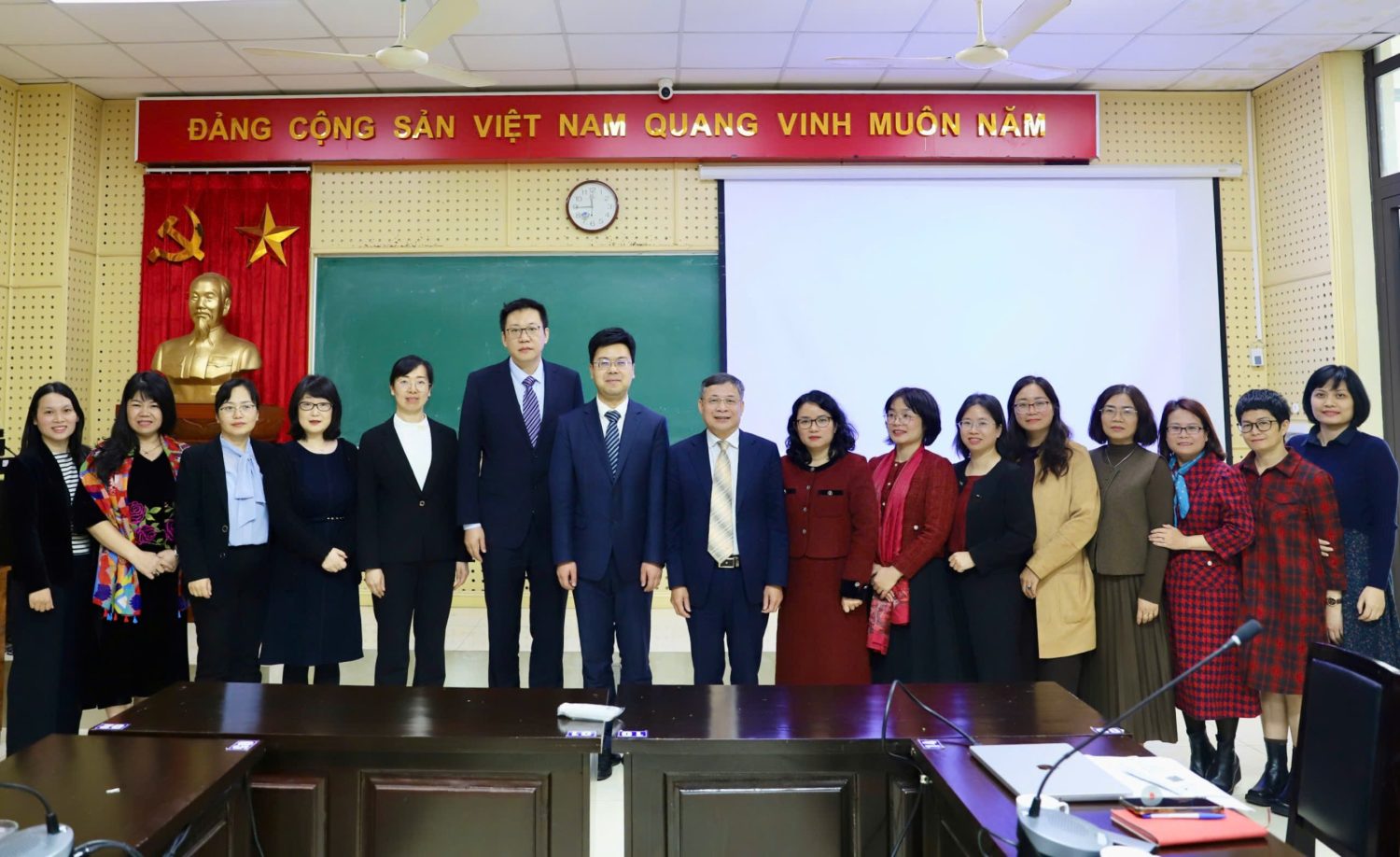 Delegates taking a commemorative photo
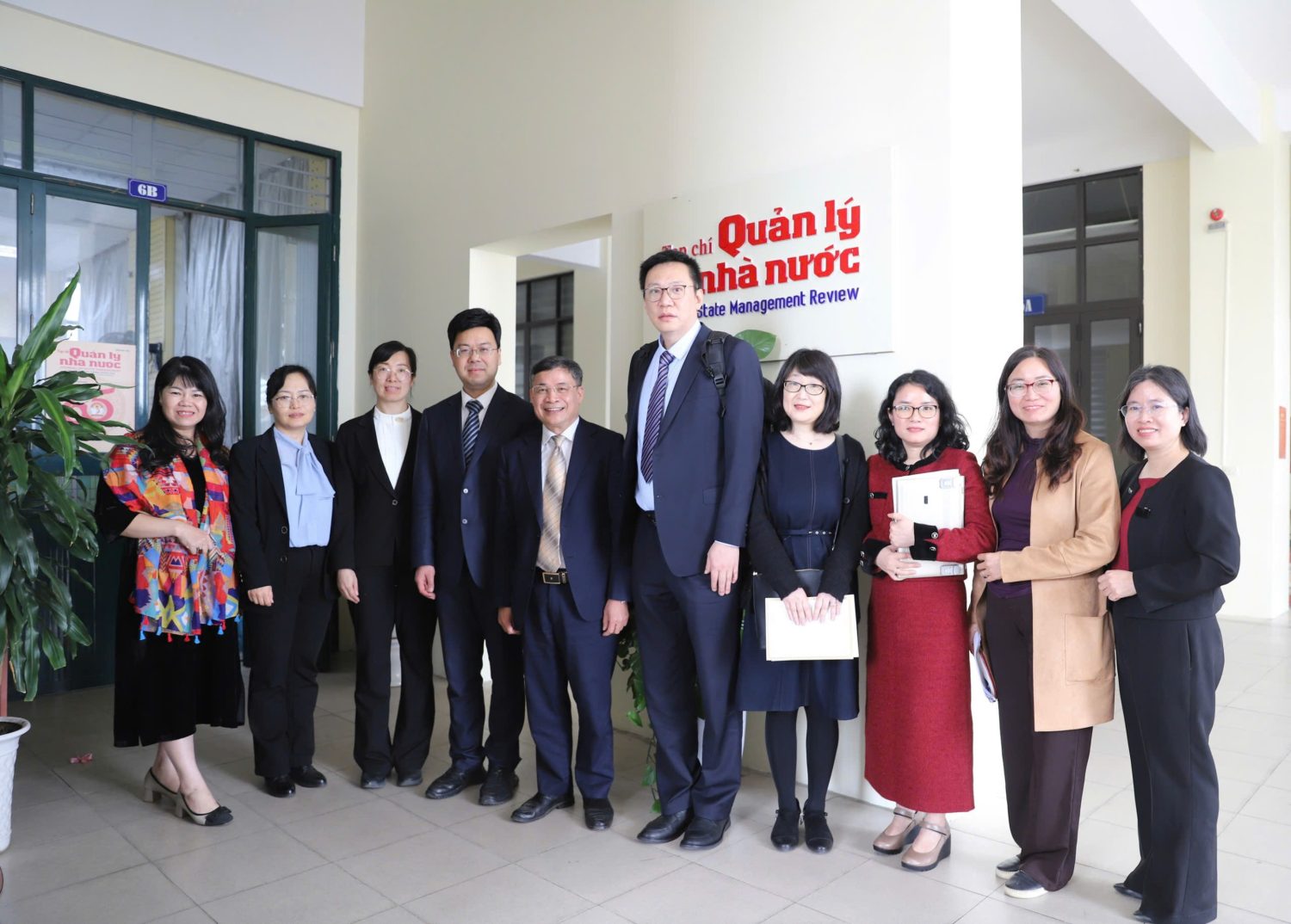 The delegation from the Gansu Academy of Governance, China visits and takes commemorative photos with the State Management Review at the editorial office