As the country enters a new developmental phase with increasing demands for high-quality human resources, the issues of attracting, utilizing, and developing talent have become pillars of modern national governance. The monograph “Talent Management – From Theory to Practice,” co-edited by Assoc. Prof. Dr. Nguyen Ba Chien and Dr. Doan Van Tinh (published by the People's Public Security Publishing House), was released in this context, offering a valuable research work for both theory and practice
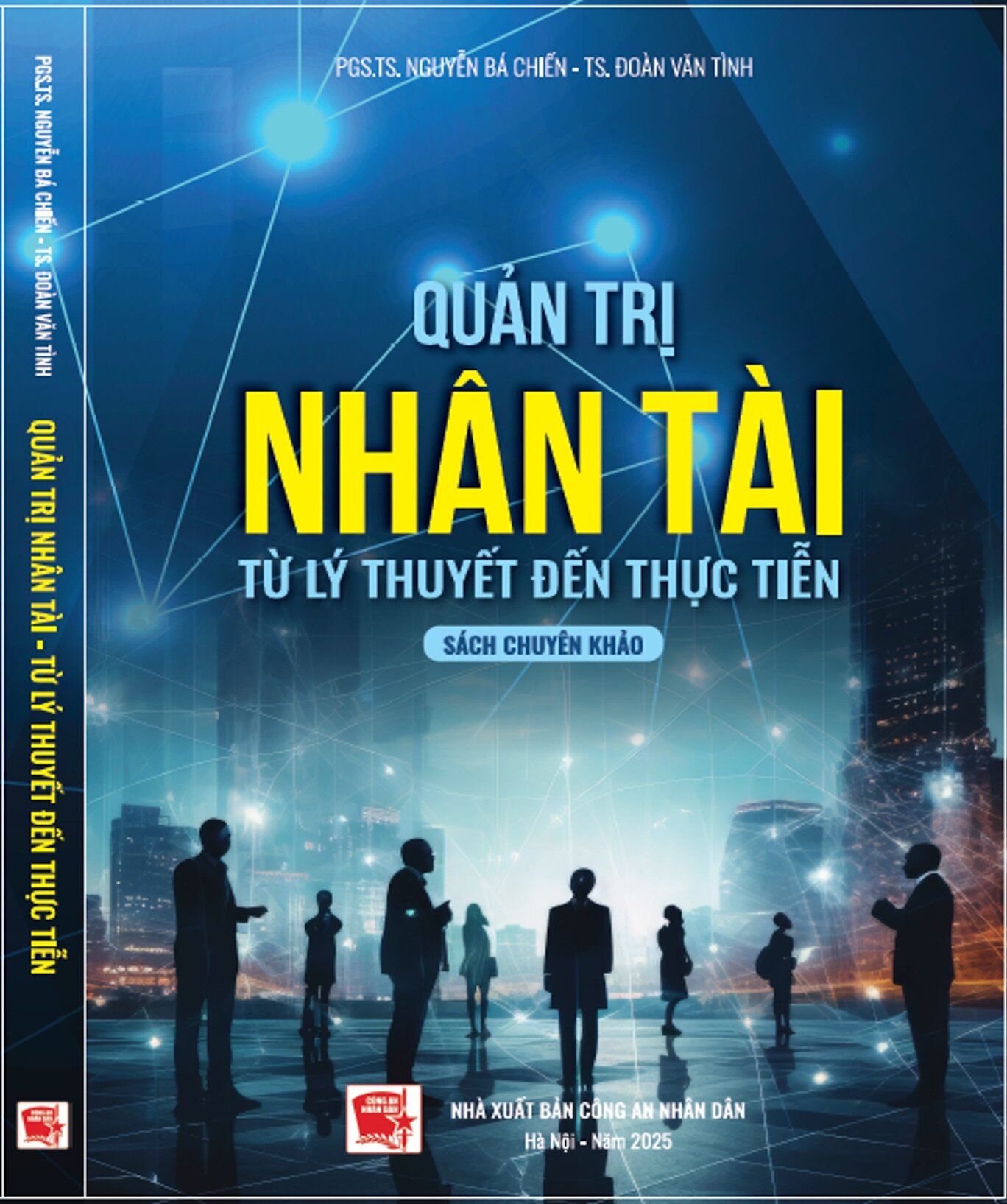
The work establishes a comprehensive theoretical framework for talent management, clarifying the concepts, characteristics, and roles of talent in modern governance.
A standout feature of the book is its approach to the concept of "talent" in an open, flexible way that is tied to the developmental context. Talent is viewed not only through superior capacity but also through the ability to create unique value and make practical contributions to organizations and society. Based on this, the authors developed a classification model consisting of four groups: leadership and management talent; key expert talent; high-performance talent; and potential talent. This approach is significant not only academically but also in helping policymakers place the right people in the right jobs, maximizing the value of human resources.
In terms of content, the book is strictly structured into six chapters, leading readers from theoretical foundations to international lessons and practical solutions for Vietnam. In particular, the authors comprehensively analyze the talent management process as a closed cycle: from attraction and selection to utilization and development. Many modern methods are discussed, such as employer branding, the application of technology in personnel screening, designing creative work environments, and competitive compensation policies.
The work delves deep into modern talent management tools and methods, helping readers clearly visualize how to operate an effective talent management system in practice.
The book places talent management in close connection with major contemporary trends such as Artificial Intelligence, the digital economy, and smart governance. Accordingly, talent is not just a resource but also an "endogenous motivation" driving innovation and enhancing national governance efficiency. It affirms the central role of talent in promoting sustainable development, especially in the context of digital transformation and the knowledge economy.
By referencing international experiences, the book suggests many valuable lessons for Vietnam in perfecting institutions and talent policies.
In Chapter V, the authors provide a comparative international picture with valuable lessons from the United States, France, Switzerland, China, Japan, South Korea, and Singapore. Experiences in attracting private-sector talent to the public sector or the global "headhunting" strategies of developed nations serve as precious references for Vietnam.
Particularly, breakthrough suggestions in Chapter VI, "Talent Management in the Context of Modern and Effective National Governance in Vietnam," such as building a national talent database, developing a "talent experience" ecosystem, or designing specific policy mechanisms, are seen as vital hints for attracting and retaining high-quality resources.
As a significant scientific work, the book contributes to affirming the role and position of the Academy of Public Administration and Governance in training, research, and policy consulting for high-quality human resource development.
Beyond being a research project, “Talent Management – From Theory to Practice” is a vivid testament to the research, training, and policy consulting capacity of the Academy, the country's leading institution for fostering cadres, civil servants, and public employees. Through in-depth scientific works linked to national governance practices, the Academy continues to affirm its pioneering role in providing scientific evidence for policy-making while contributing to training high-quality personnel for the new era.
It can be affirmed that the book is a useful reference for researchers, lecturers, and students, as well as leaders and managers in both the public and private sectors. More importantly, it is a practical contribution to the collective effort to awaken and promote the "national vital spirit," aiming to build a modern, effective, and efficient administration and a sustainably developed nation.
The Portal of the Academy of Public Administration and Governance is honored to introduce this book to our readers.