The Academy of Public Administration and Governance (APAG), in collaboration with the Chandler Academy of Governance (CAG), Singapore, held the closing ceremony of Component 1 of the Strong Nations for Asia 2026 Programme. The programme provided an opportunity for public-sector leaders and managers from across Asia to examine Vietnam’s development experience and exchange perspectives on the foundations of national strength and the conditions for sustainable development
The ceremony was co-chaired by Associate Professor Dr. Nguyen Ba Chien, President of APAG, and Mr. Ho Wei Jiang, Dean of CAG. Other CAG representatives included Mr. Hor Chor Kiat, Deputy Dean, and programme management and coordination staff. APAG was represented by Ms. Pham Thi Quynh Hoa, Acting Director of the Department of Science Management and International Cooperation; Ms. Le Thi Tuyet, Deputy Director of the Department; experts, lecturers and members of the Organising Committee. International programme participants also attended.
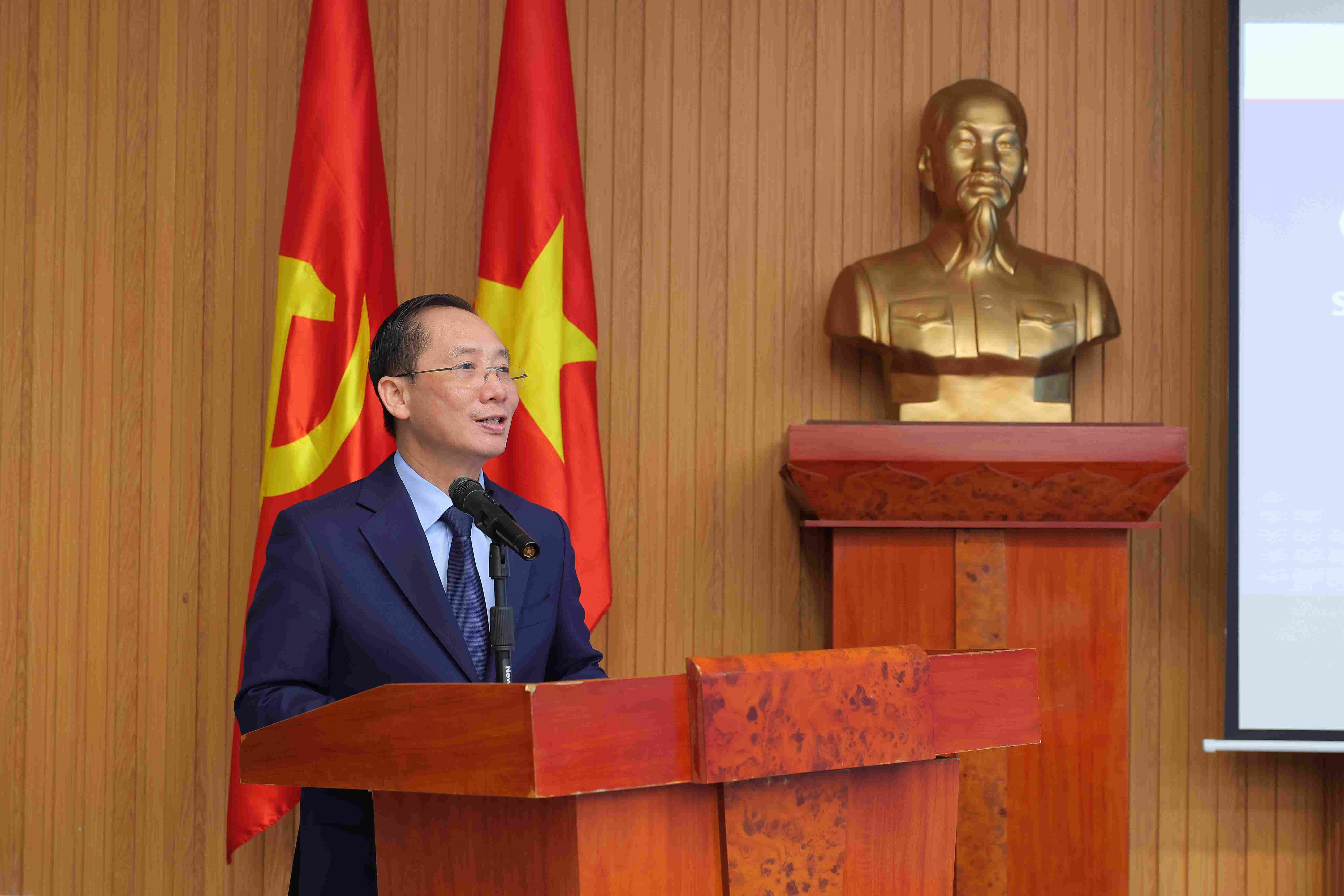 Associate Professor Dr. Nguyen Ba Chien, President of APAG, delivers his concluding remarks and formally closes Component 1
The Strong Nations for Asia Programme examines a fundamental question in national development: what makes a country strong and prosperous, and how can the foundations of that strength and prosperity be sustained and further developed across generations? In exploring this question, the programme considers the role of institutions, leadership quality, state governance capacity, the ability to mobilise resources, and the effective implementation of development objectives.
Component 1 was held in Vietnam from 19 to 23 October 2026, bringing together public-sector leaders and managers from eight countries: Bhutan, Maldives, Mongolia, Myanmar, Nepal, the Philippines, Uzbekistan and Vietnam. Under the theme ‘Public Governance Capacity in Government: Vision, Structure and Planning’, the component focused on strategic thinking, institutional quality and implementation capacity, including how governments identify priorities, make policy choices, allocate resources and prepare for future governance challenges. The sessions also examined the connections between governance effectiveness, productivity, science and technology, innovation and national competitiveness.
Selecting Vietnam as the host of the first component enabled participants to study first-hand the experience of a country that has undergone 40 years of Đổi Mới (Renovation), achieving significant progress in economic development, poverty reduction, living standards and international integration. Vietnam’s development trajectory illustrates the importance of policy choices, institutional reform and the mobilisation and effective use of resources at successive stages of development. At the same time, ongoing reforms of the state apparatus, the local government model, economic institutions, science, technology and innovation present new challenges for governance and implementation. The combination of accumulated development experience and current reform challenges provided a practical basis for participants to compare perspectives and identify lessons relevant to their respective national contexts.
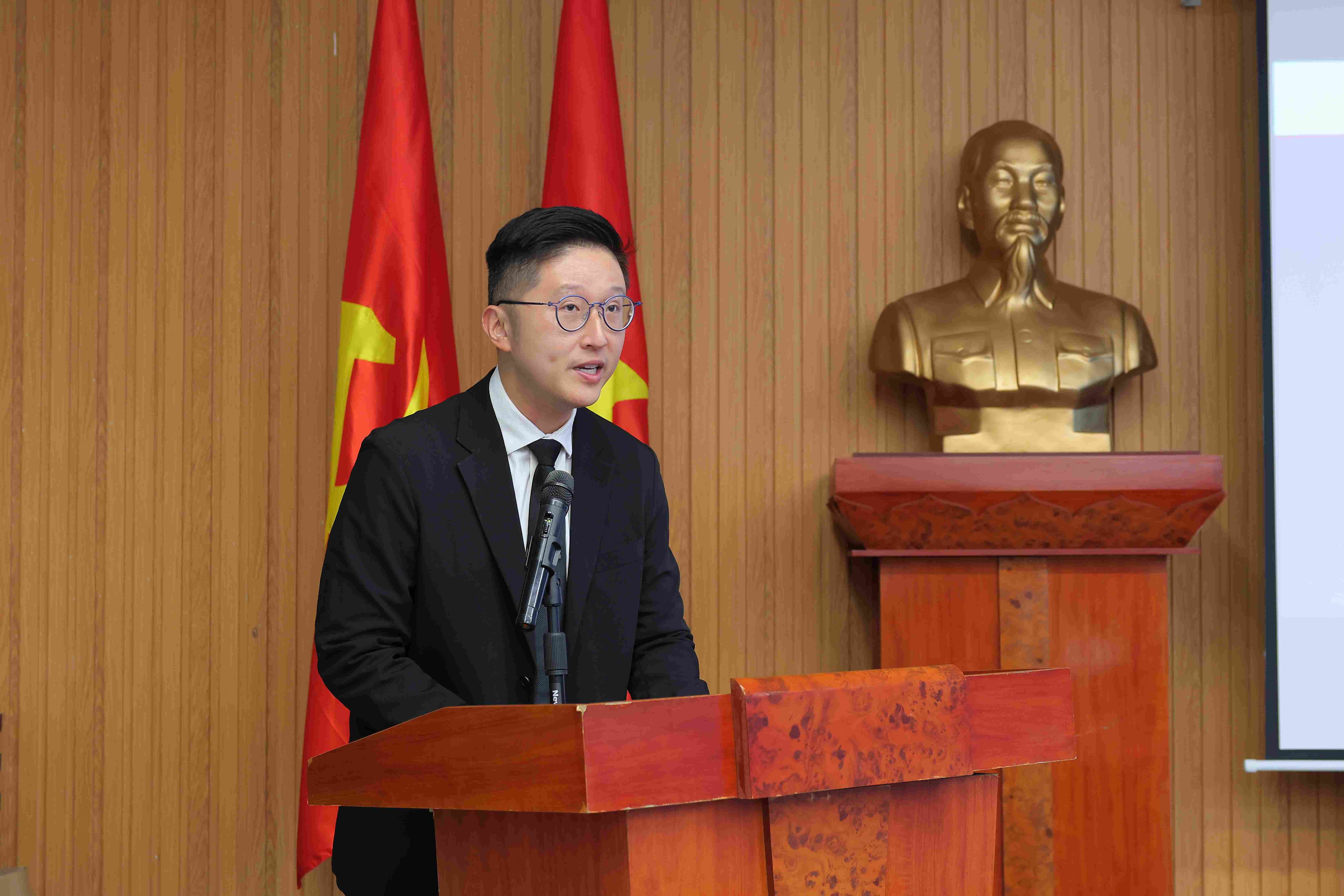 Mr. Ho Wei Jiang, Dean of CAG, addresses the closing ceremony
During their stay in Vietnam, participants engaged systematically with core questions concerning national strength and prosperity through sessions delivered by leading Vietnamese and international experts and scholars. The curriculum addressed the role of institutions and the quality of national governance; long-term vision and development strategy; drivers of economic growth, productivity and competitiveness; human capital development, science, technology and innovation; and the demands placed on leadership, policymaking and implementation in a rapidly changing world. Vietnam’s experience was considered through the interrelationships among policy decisions, institutional reform, implementation capacity and development outcomes, and compared with the governance challenges participants face in their own countries.
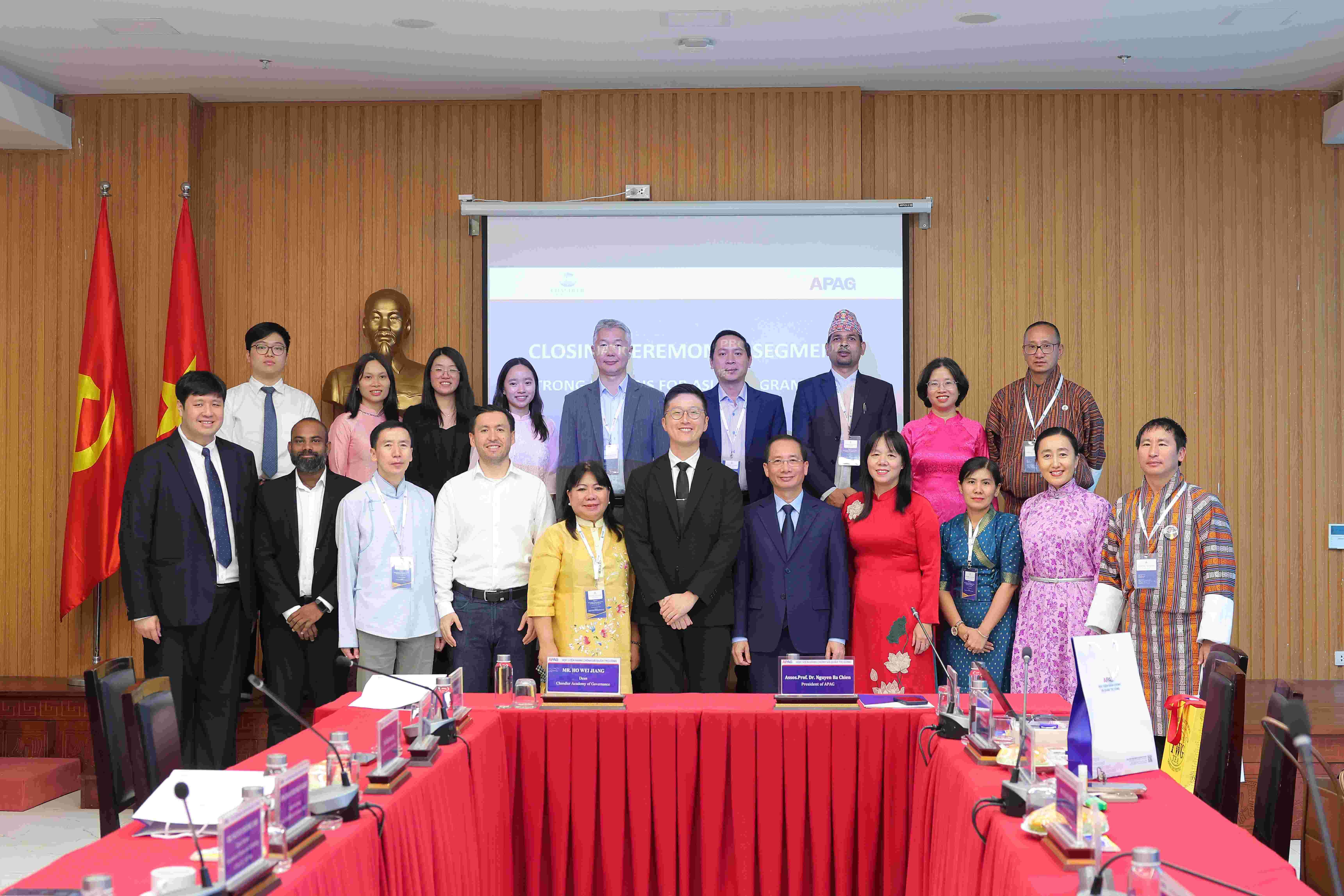 Associate Professor Dr. Nguyen Ba Chien, CAG leaders, organisers and participants of Strong Nations for Asia 2026 at the closing ceremony
Alongside classroom sessions and discussions, participants undertook field studies in Bac Ninh City, at the National Innovation Center (NIC), and at the Viettel Military Industry and Telecoms Group. In Bac Ninh, they examined the organisation and operation of the two-tier local government model, including changes in authority, responsibilities and approaches to serving citizens. Discussions at the NIC and Viettel focused on building an innovation ecosystem, strengthening technological capabilities and digital infrastructure, developing technological self-reliance, and the role of enterprises in enhancing national competitiveness. Combining academic sessions, policy dialogue and field-based learning enabled participants to better understand the links among development vision, institutional quality, implementation capacity and tangible national development outcomes.
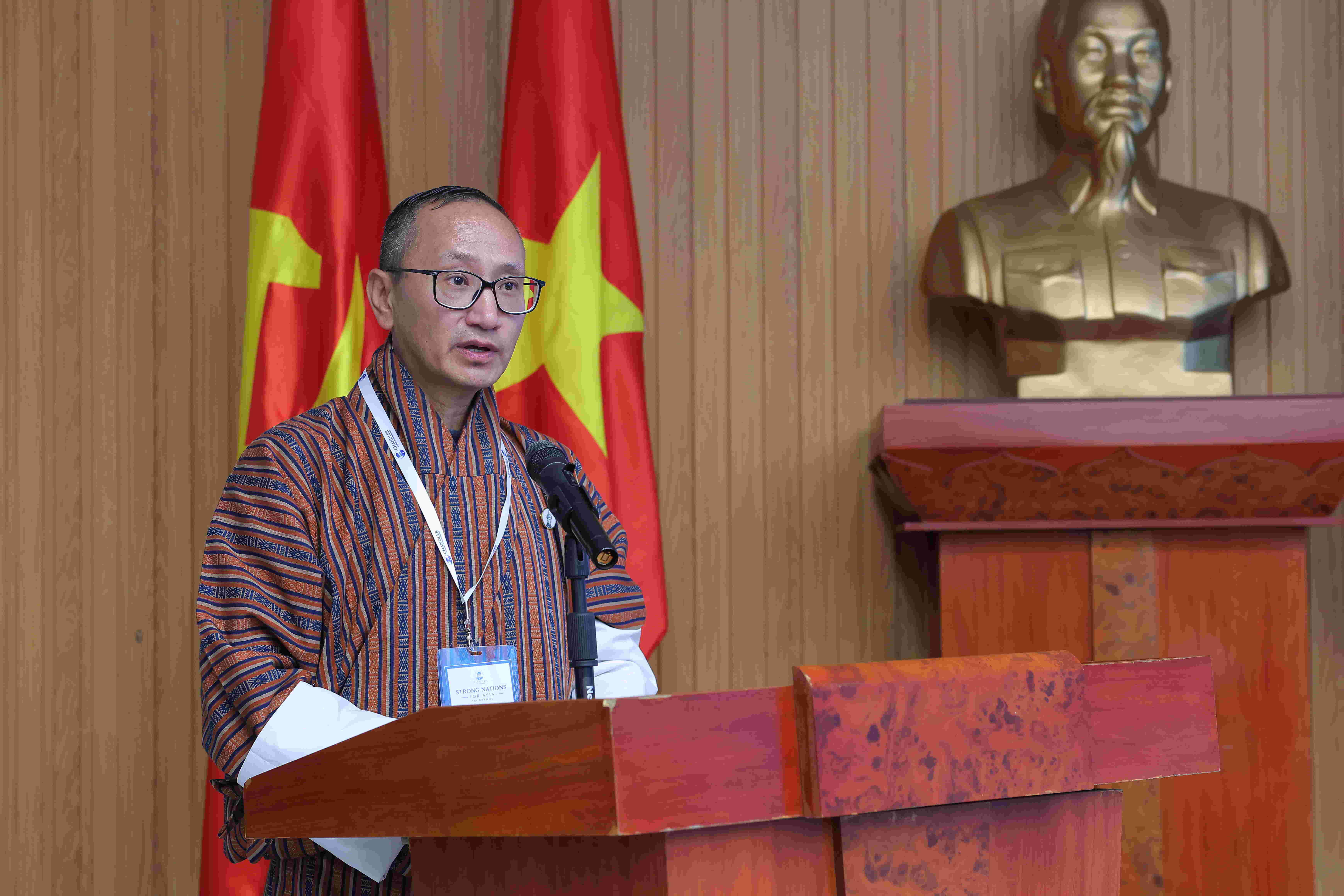 Mr. Wangay Dorji of Bhutan’s Anti-Corruption Commission speaks on behalf of the participants
Speaking on behalf of the participants at the closing ceremony, Mr. Wangay Dorji, a Department Director at the Anti-Corruption Commission of the Kingdom of Bhutan, expressed his appreciation for the knowledge and experience gained during the week in Vietnam. He particularly valued the opportunity to engage directly with leaders and managers and to learn how Vietnamese public institutions and enterprises address development challenges. In his view, the value of the week lay not only in learning about Vietnam’s 40 years of Đổi Mới but also in observing how policies and reform priorities are put into practice.
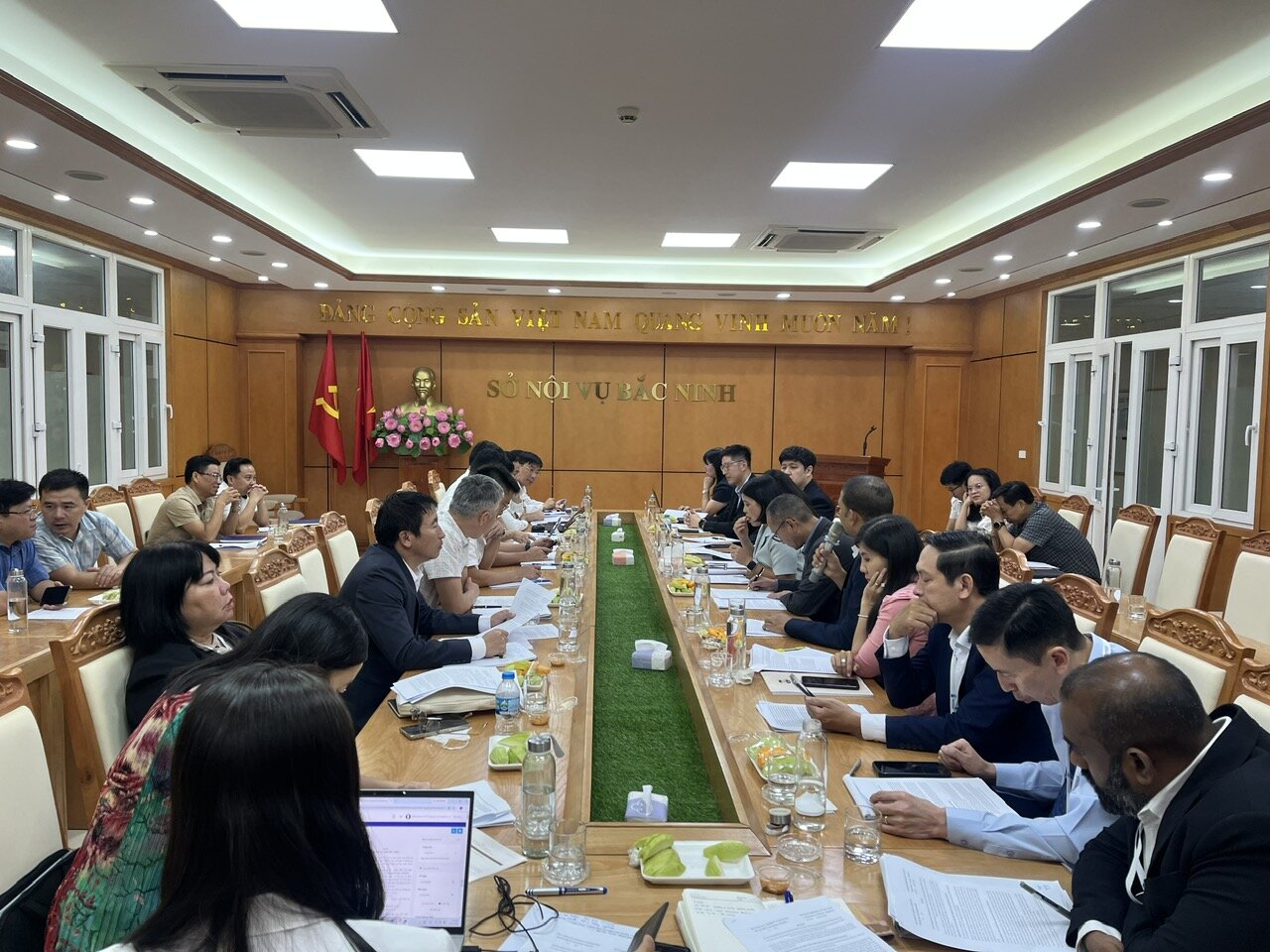 The delegation meets with the Department of Home Affairs of Bac Ninh City
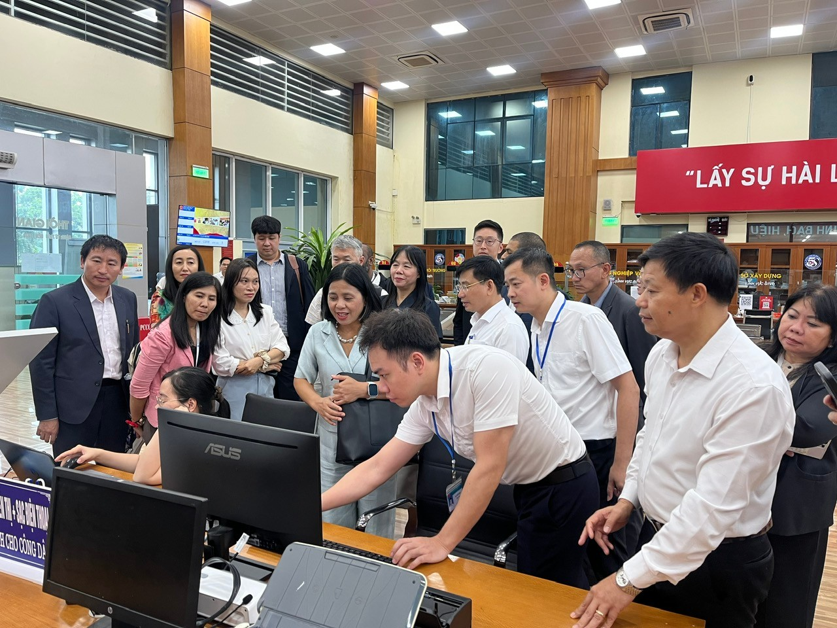 The delegation undertakes a study visit to the Public Administrative Service Centre in Bac Ninh City
What left a particularly strong impression on Mr. Wangay Dorji was the way local authorities in Vietnam listened to citizens and sought to understand what people genuinely needed, what they hoped for and which difficulties required attention. He explained that, before joining the programme, he had tended to view governance primarily in terms of the effectiveness and efficiency of the state apparatus. His discussions and first-hand experiences in Vietnam deepened his understanding that governance quality also depends on the ability to understand citizens’ needs and respond through practical solutions and public services. In his view, public trust in government is built through the way authorities listen, resolve problems and fulfil their responsibility to serve the people. His observations in Bac Ninh City, particularly in Bac Giang Ward, brought the meaning of people-centred governance into sharper focus—not simply as a principle discussed in lectures, but as something demonstrated in the day-to-day work of local government.
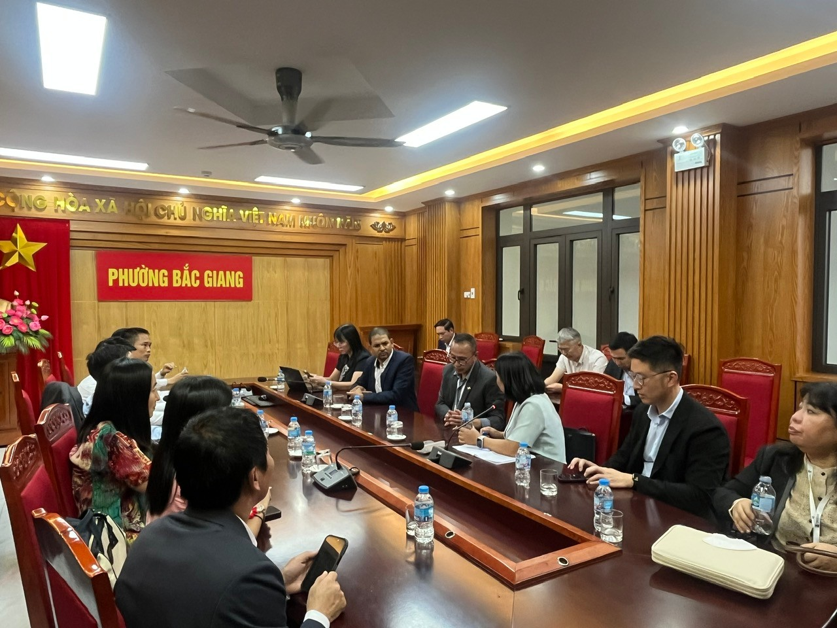 The delegation meets with the authorities of Bac Giang Ward, Bac Ninh City
Study visits to the National Innovation Center and Viettel further broadened participants’ understanding of the conditions underpinning a country’s development capacity. At the NIC, they explored how Vietnam promotes innovation by connecting the state, enterprises, research institutions and international partners. These exchanges highlighted that the state’s role extends beyond issuing policies and providing funding to creating an enabling environment, facilitating collaboration and supporting development initiatives.
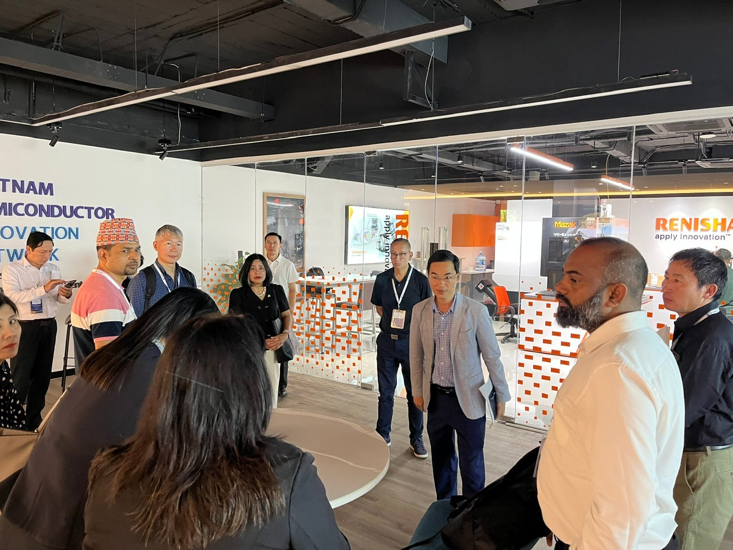
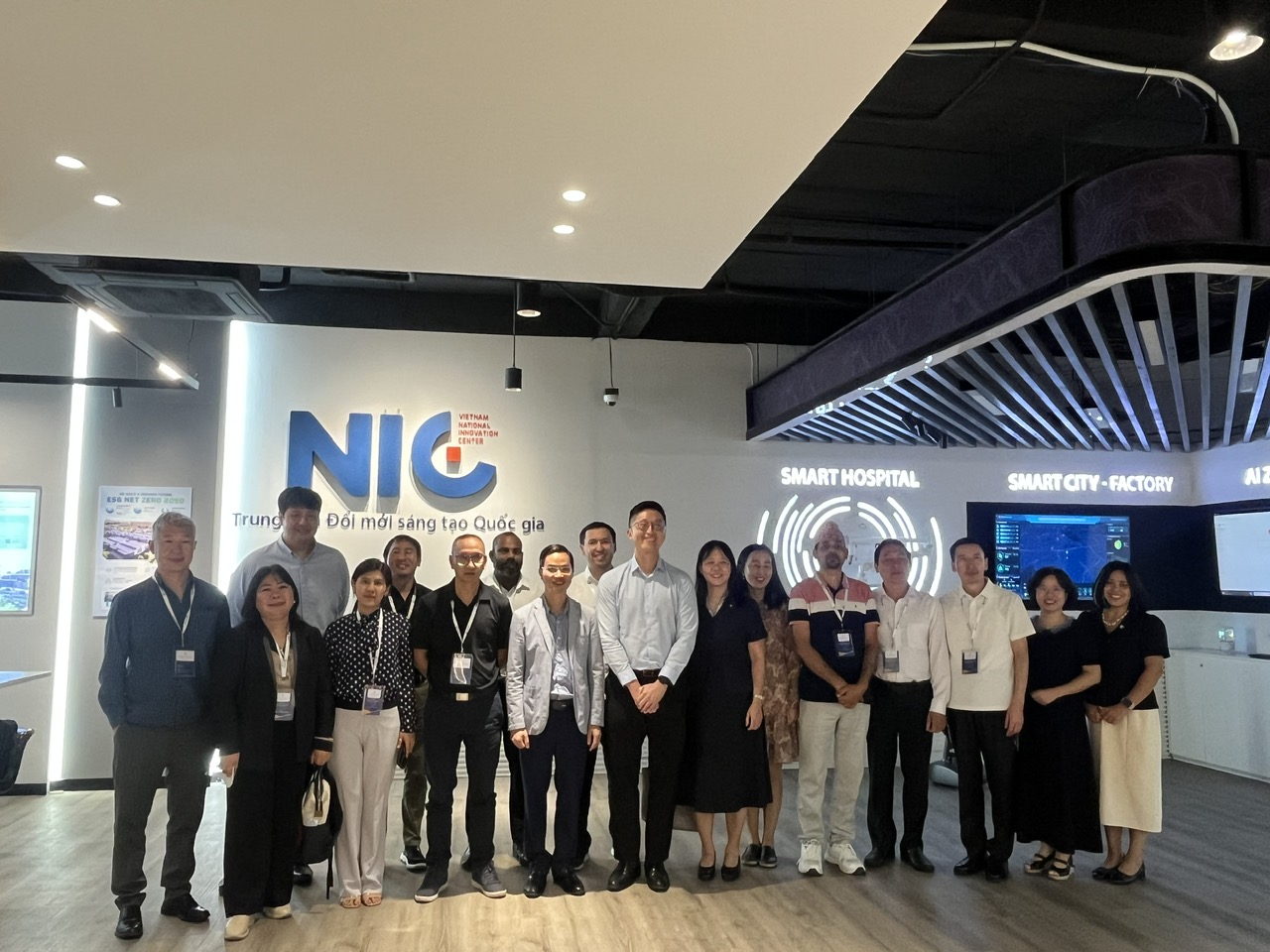 Participants visit the National Innovation Center to learn about its innovation ecosystem
At Viettel, the company’s experience of learning, sustained investment, technological mastery and international expansion illustrated the contribution enterprises can make to national competitiveness, access to services and community development. Beyond its business and technological capabilities, discussions about its responsibilities to the country, efforts to extend service access and engagement with communities in overseas markets offered a broader perspective on the role of business in development. For countries working with limited resources, Viettel’s experience of gradually accumulating capabilities and reducing dependence on external technologies provided particularly relevant lessons.
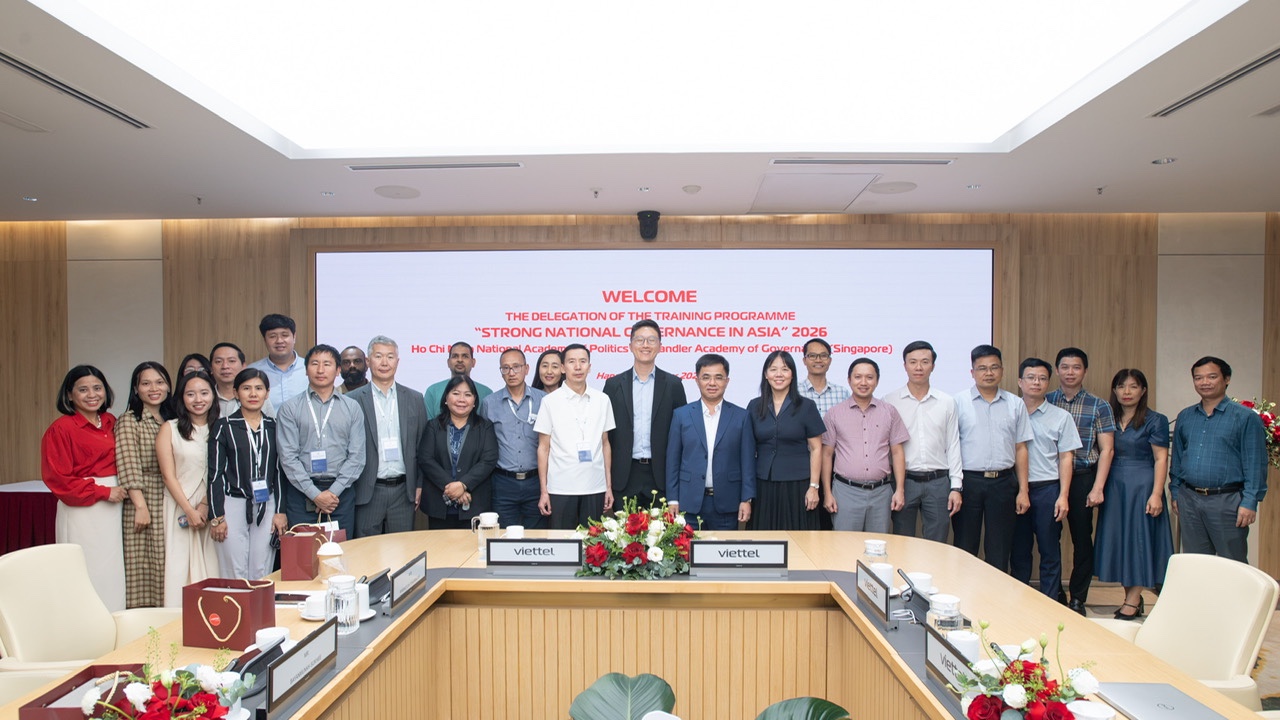 The delegation visits and meets with representatives of the Viettel Military Industry and Telecoms Group
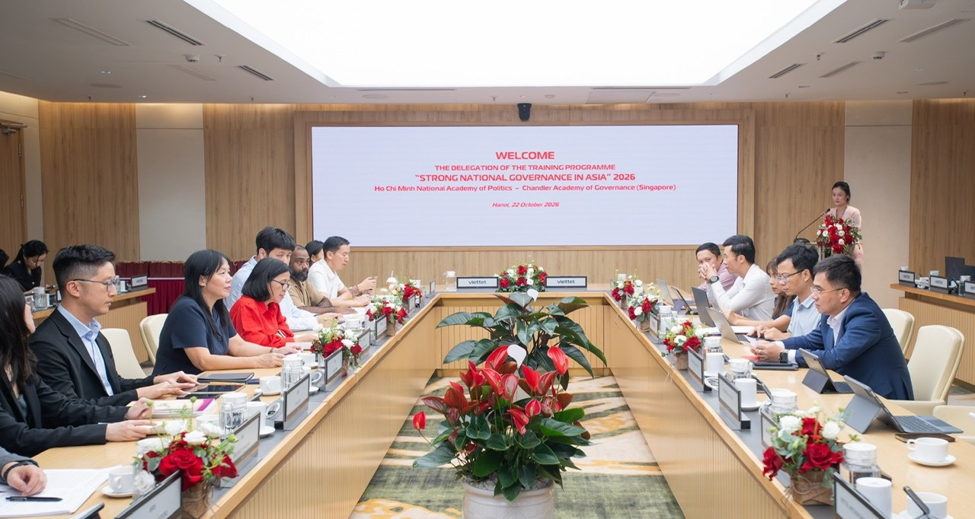 The delegation visits and meets with representatives of the Viettel Military Industry and Telecoms Group
From local government institutions to the NIC and Viettel, participants encountered distinct yet closely connected dimensions of Vietnam’s development: a state continuing to reform in order to serve citizens better; policies and institutions that encourage innovation; and enterprises working to strengthen technological capabilities, competitiveness and social contributions. A particular strength of the programme was the opportunity to see these relationships through concrete cases rather than study each element in isolation.
The participants’ representative also commended the programme’s combination of academic sessions, dialogue with institutions and organisations, and field-based learning, as well as opportunities for open exchanges with peers from different countries. He noted that Vietnam’s experience is most useful when considered in light of each country’s distinct historical, institutional and practical circumstances. Significantly, he suggested that subsequent components devote more attention to cases in which governance initiatives have not succeeded. Examining the causes of failure alongside successful experiences, he argued, would help participants better understand the conditions that determine policy effectiveness and the outcomes of reform.
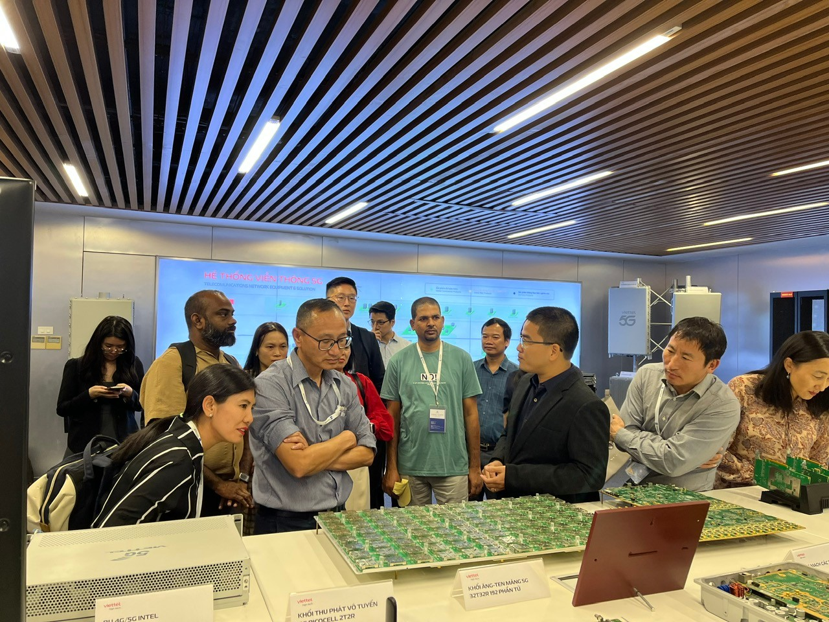 The delegation visits Hoa Lac Hi-Tech Park
These reflections and proposals demonstrated that the programme’s value lies not only in presenting Vietnam’s development experience, but also in encouraging substantive questions about leadership responsibility, the responsiveness of policy to social needs, and the conditions required for reform to deliver results.
Learning from Differences and Building Cooperation among Asian Countries
Mr. Ho Wei Jiang, Dean of CAG, highly commended the outcomes of Component 1 and APAG’s effective collaboration in organising the programme. He explained that Strong Nations for Asia was conceived as a space for public-sector leaders and managers from different countries to learn from one another, exchange diverse experiences and approaches in a spirit of openness and equality, and establish lasting professional relationships across Asia.
He expressed sincere appreciation to the leadership of the Ho Chi Minh National Academy of Politics, Associate Professor Dr. Nguyen Ba Chien and APAG for facilitating participants’ direct engagement with Vietnamese leaders, public institutions, organisations and enterprises. These engagements provided a deeper understanding of Vietnam’s transformation, its achievements and development aspirations, as well as the challenges the country continues to address.
According to Mr. Ho Wei Jiang, despite differences in history, institutions and development conditions, participating countries face many similar governance challenges and have much to learn from one another. He particularly valued participants’ active contributions, thoughtful questions and willingness to share experiences, which made the discussions substantive and allowed governance issues to be considered from multiple perspectives. He hoped that participants would leave Hanoi not only with new knowledge and ideas, but also with professional relationships and networks capable of providing mutual support over the longer term. He also acknowledged the careful preparation, coordination and support provided by APAG’s units and staff throughout the programme.
Governance Capacity Determines the Ability to Realise National Development Goals
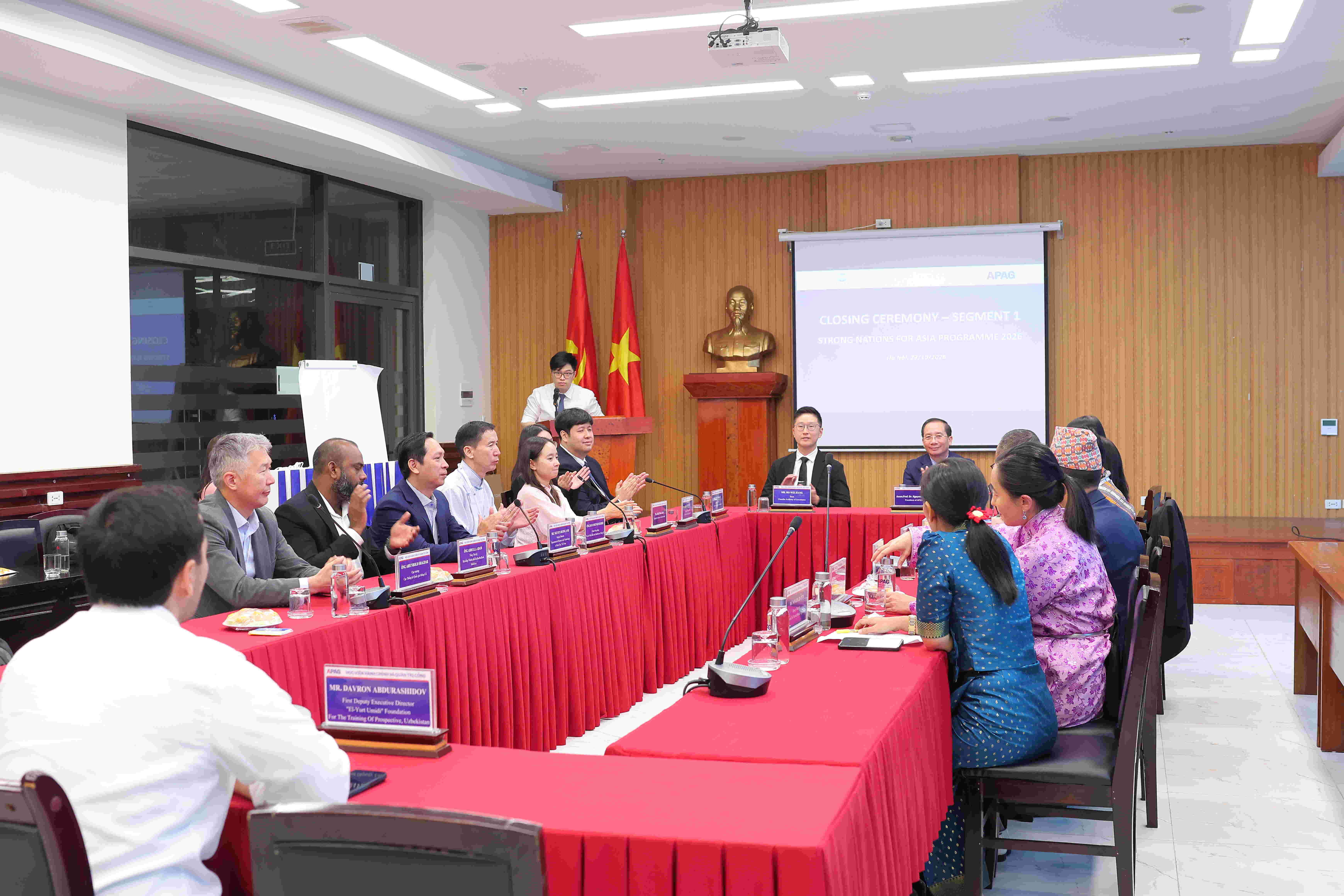 Overview of the closing ceremony of Component 1 of Strong Nations for Asia 2026
In his concluding remarks and formal declaration closing Component 1, Associate Professor Dr. Nguyen Ba Chien, President of APAG, congratulated participants on completing the component and thanked CAG, the experts, lecturers and partner institutions and organisations involved in its delivery.
The APAG President emphasised that, while Asian countries have different histories, institutions and development paths, they share the aspiration to build strong and prosperous nations and improve the well-being and happiness of their people. Natural resources, geography and initial advantages do not, in themselves, determine a country’s future. Long-term development depends on the capacity to build institutions, develop people, improve productivity, accumulate capabilities and continually renew approaches to governance. Even past achievements can become constraints if thinking and management practices fail to evolve in response to changing circumstances.
Turning to Vietnam, Associate Professor Dr. Nguyen Ba Chien observed that 40 years of Đổi Mới had brought profound economic and social changes and expanded the country’s international integration. Nevertheless, achieving the goal of becoming a developed, high-income country by 2045 requires further improvements in the quality of growth, productivity, science and technology capabilities, innovation and national governance effectiveness. The decisive challenge is not simply to choose the right strategy, but to translate strategic choices into feasible policies, mobilise resources, assign clear responsibilities and sustain implementation through to results. The success of reform must be assessed through the actual performance of institutions and organisations and through improvements in development opportunities and people’s quality of life.
Drawing on the visits to Bac Ninh, the NIC and Viettel, the APAG President highlighted the relationship among the effectiveness of the state apparatus, the institutional environment and economic and technological capabilities. A well-functioning public administration enables resources to be used more effectively; supportive institutions encourage investment and innovation; and stronger technological and productive capabilities expand a country’s capacity to pursue new development goals.
Associate Professor Dr. Nguyen Ba Chien commended participants for their candid questions and contributions. He affirmed Vietnam’s willingness to share its accumulated experience, achievements and unresolved challenges, while also learning from the practices of other participating countries. On that basis, APAG looked forward to continuing its collaboration with CAG in subsequent components and developing further cooperation in leadership and management training, research on national governance, institutional reform and policy implementation capacity.
Concluding his address, the APAG President stated: ‘The aspiration to build a strong and prosperous nation must be nurtured across generations and translated into the decisions and concrete actions we take today. Our responsibility is to lay the foundations that will enable future generations to take the country further.’
Continuing Learning and Applying Lessons to Governance Practice
Following Component 1 in Vietnam, participants will undertake Component 2 online from 9 to 13 November 2026 and Component 3 in Singapore from 30 November to 4 December 2026. Subsequent learning will focus on leadership development, strategic thinking, policy implementation, performance management, building a culture of integrity and fostering innovation. A central element throughout the programme is the Governance Challenge Project: each participant selects a real issue from their professional environment, analyses its underlying causes, develops possible responses and assesses the conditions for implementation, with individual coaching between components. In this way, learning extends beyond exposure to international experience and is connected directly to the decisions and responsibilities participants face in their own work.
Component 1 of Strong Nations for Asia in Vietnam also holds significance in the context of the country’s efforts to advance its foreign policy and international integration, consistent with the guidance of General Secretary and State President To Lam on strengthening diplomacy’s pioneering role in building national development capacity, enhancing domestic strengths and consolidating strategic autonomy. By sharing its 40 years of Đổi Mới experience, development achievements and far-reaching reforms now under way, Vietnam demonstrates that it is not only a recipient of international knowledge and experience, but also an increasingly active contributor to regional exchanges on governance. Through direct dialogue, field studies and engagement among public-sector leaders and managers, the programme enables Vietnam’s experience to be examined from different perspectives while also drawing on the lessons and approaches of other countries, in a spirit of equality, respect for differences and shared development.
For APAG, co-organising the programme represents a further development in its approach to international cooperation: proactively sharing knowledge, presenting valuable lessons from Vietnam’s reform experience and connecting public-sector leaders and managers across the region. In doing so, the Academy helps bring Vietnam’s governance and development experience into learning programmes and international exchanges for public-sector leaders, expands its network of partners, strengthens research, education and professional training, and reinforces the contribution of international cooperation to national development priorities.
Commemorative Gift Exchange at the Ceremony
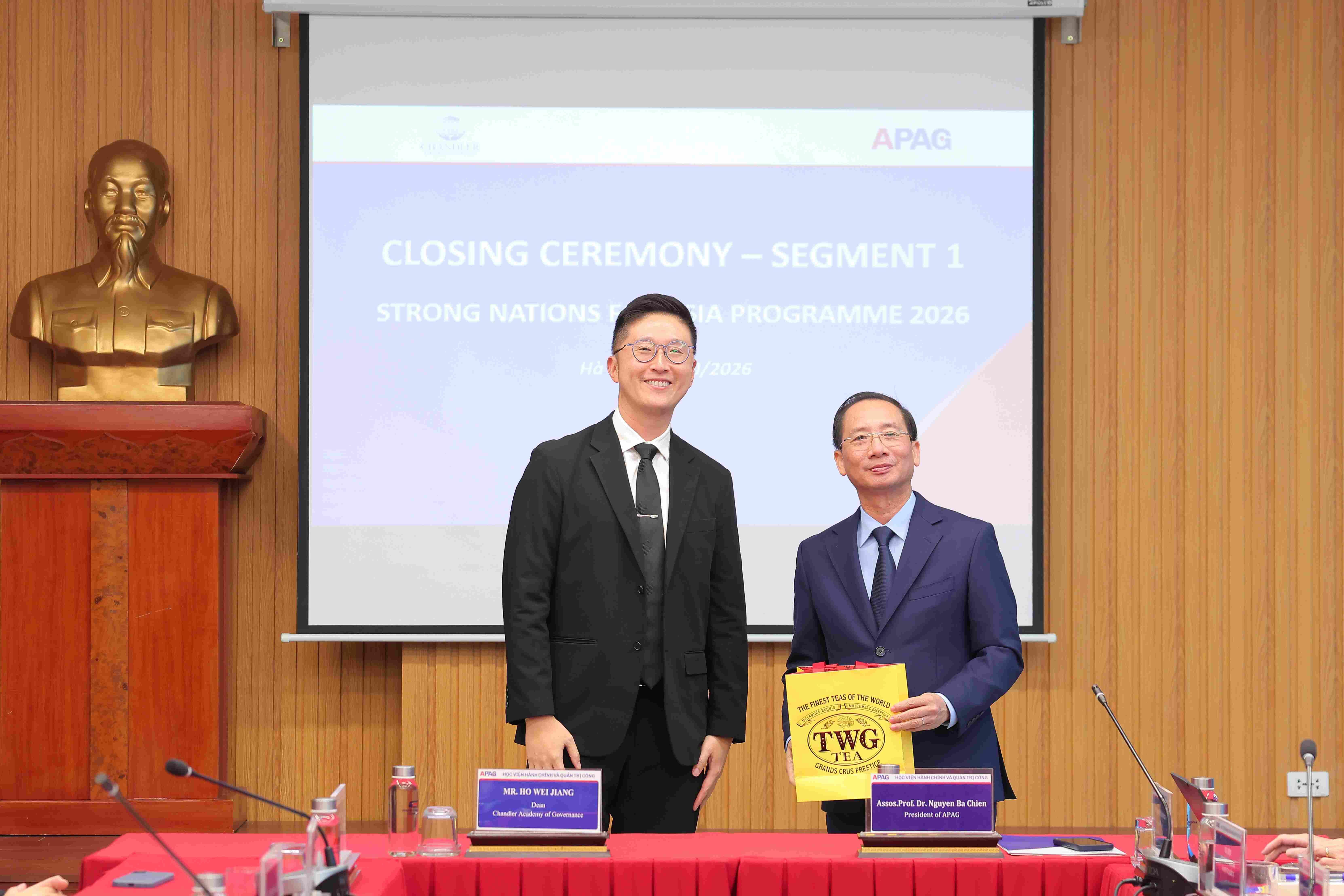 Mr. Ho Wei Jiang presents a commemorative gift to Associate Professor Dr. Nguyen Ba Chien
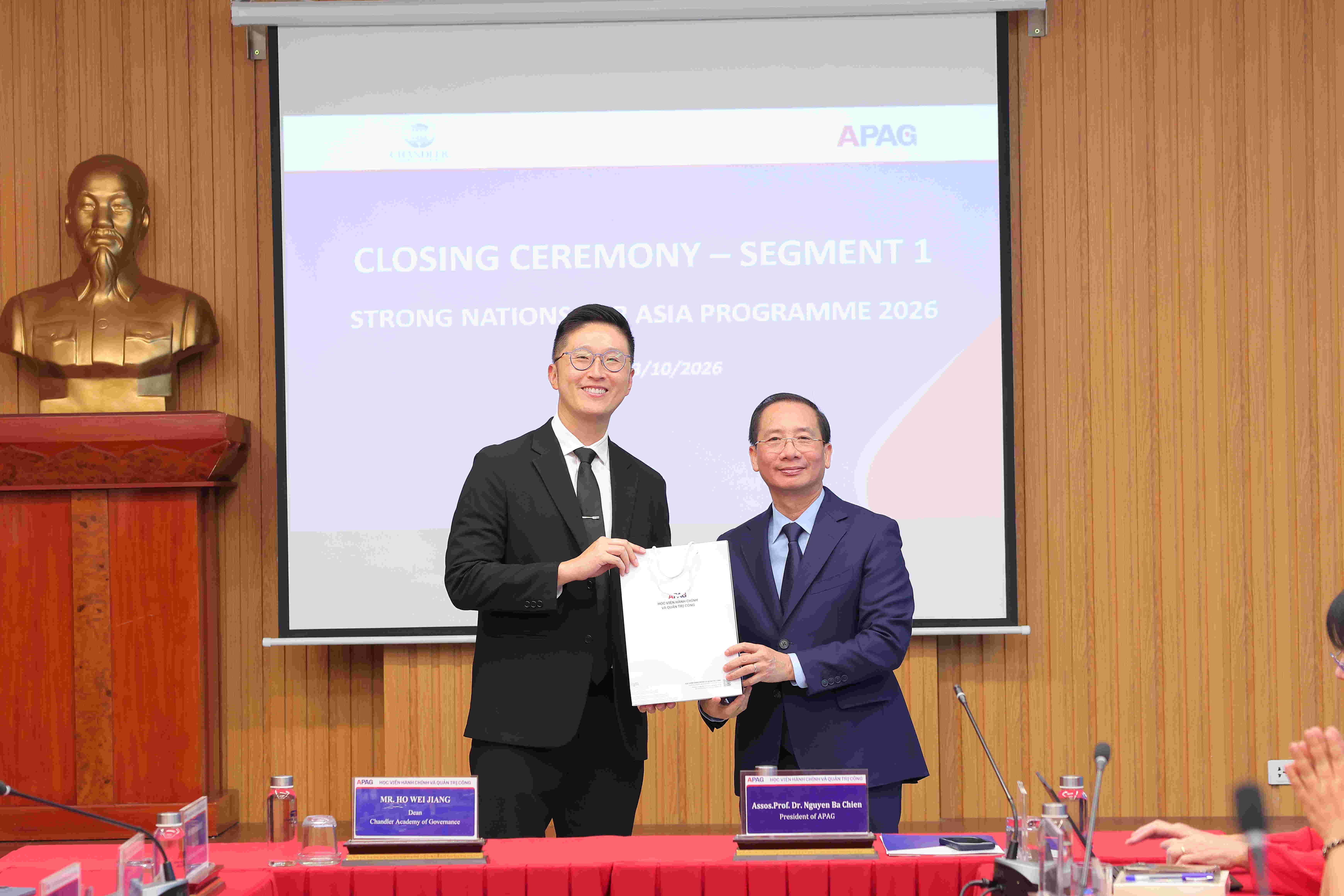 Associate Professor Dr. Nguyen Ba Chien presents a commemorative gift to Mr. Ho Wei Jiang
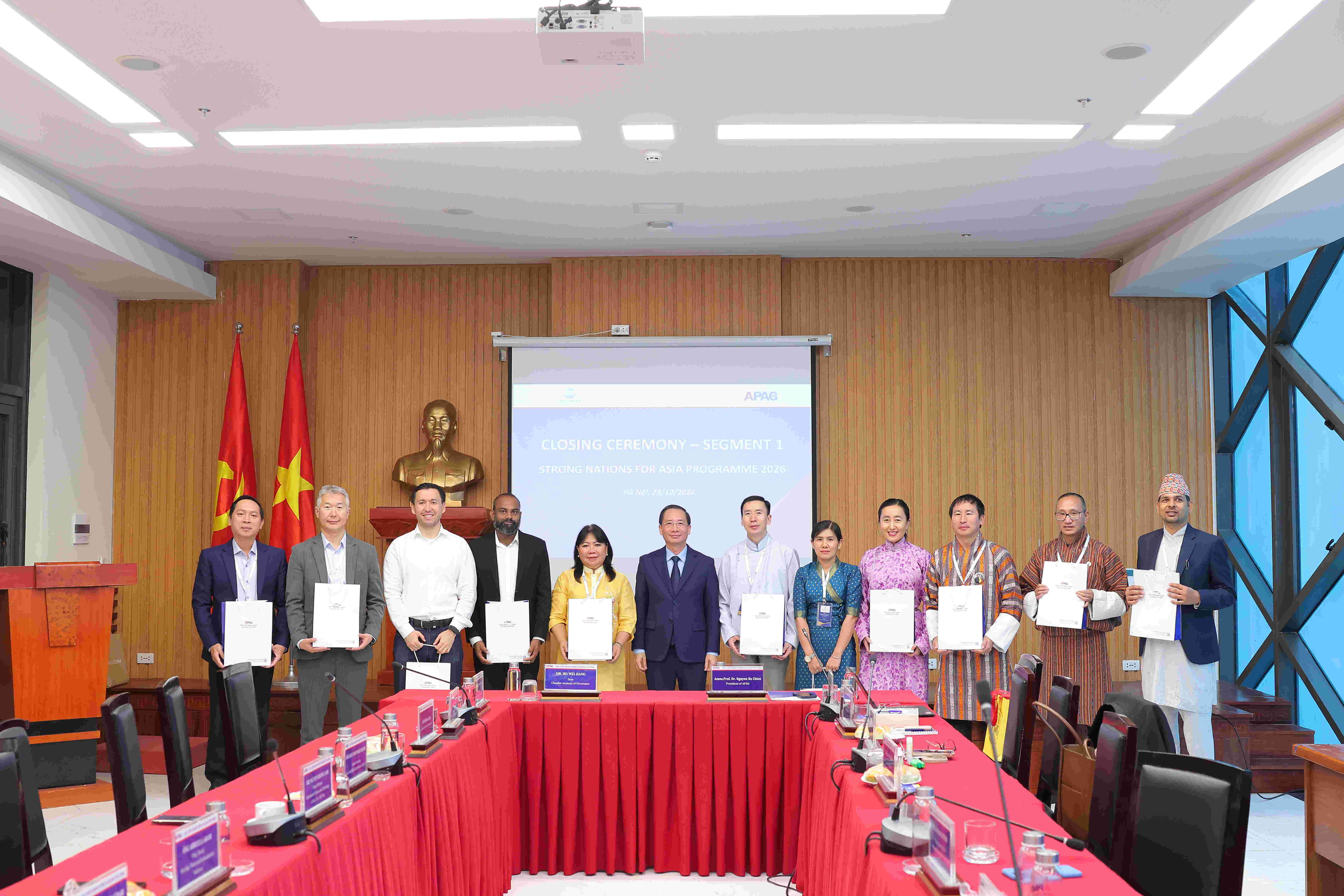 Associate Professor Dr. Nguyen Ba Chien presents commemorative gifts to programme participants
APAG English web portal respectfully present the full text of the closing remarks delivered by Associate Professor Dr. Nguyen Ba Chien, President of the Academy, at the closing ceremony of Component 1 of Strong Nations for Asia 2026.
Mr. Ho Wei Jiang, Dean of the Chandler Academy of Governance,
Distinguished delegates, experts and faculty members,
Dear participants,
Ladies and gentlemen,
After a week of intensive learning, meaningful exchanges and field visits, we gather today to reflect on our experiences and formally conclude Component 1 of the Strong Nations for Asia Program in Viet Nam. On behalf of the Academy of Public Administration and Governance, I congratulate all participants on successfully completing this first component. I would also like to express my sincere appreciation to the Chandler Academy of Governance, our experts and faculty members, and all the institutions and organizations whose close cooperation has contributed to the success of the program.
We come from countries with different histories, institutions and development trajectories. Yet we share a common aspiration: to build strong and prosperous nations, shape our own development futures and improve the lives of our people.
Throughout Asia's history, many nations have overcome war, poverty and severe resource constraints to achieve remarkable progress. Their achievements demonstrate the power of national determination, sound strategic choices and the ability to translate decisions into results. At a time of profound global transformation, the challenge facing our countries is how to build new capabilities, seize emerging opportunities and preserve our ability to chart our own course amid growing uncertainty. This is also a central question at the heart of the Strong Nations for Asia Program.
Ladies and gentlemen,
Our learning sessions and discussions have explored fundamental questions about national strength, from strategic thinking and development choices to governance capabilities and the capacity to translate policies into effective action.
Viet Nam's experience of four decades of Doi Moi demonstrates that major development breakthroughs begin with decisive changes in thinking and institutions. Unleashing productive potential, recognising the role of the private sector and proactively pursuing international integration have enabled Viet Nam to overcome economic crises, open up new opportunities for development and progressively strengthen its international standing.
Yet the drivers of success in one stage of development cannot, by themselves, guarantee success in the next. As traditional growth drivers increasingly reach their limits, Viet Nam must raise productivity, strengthen domestic enterprises, master technology and increase domestic value added in global value chains. With the goal of becoming a developed, high-income country by 2045, Viet Nam is accelerating institutional reform, restructuring the state apparatus, and advancing science, technology and innovation. At the heart of these reforms is the need to ensure that resources are used more productively and efficiently, that domestic enterprises become stronger, and that the economy's endogenous capabilities are continuously strengthened.
A key lesson from Viet Nam's experience is that national development aspirations must be grounded in the country's actual capabilities. Strategic vision must be matched by institutions that unlock resources, a state apparatus capable of effective action, and enterprises with the capacity to compete and innovate. The true value of reform is measured by gains in productivity, improvements in economic competitiveness and a better quality of life for the people. Leaders and public managers must be able to recognize the limitations of existing development models, have the resolve to make necessary changes, and possess the capacity to translate policy decisions into tangible results.
Our field visits have provided an opportunity to examine these issues firsthand.
In Bac Ninh City, you explored how Viet Nam's two-tier local government system operates, including the allocation of powers and responsibilities, the organisation of administrative functions, and efforts to strengthen implementation capacity and improve public services for citizens and businesses. This experience illustrates that administrative restructuring can deliver meaningful results only when accompanied by changes in management practices, adequate conditions for implementation, and the delegation of authority with clear accountability. Ultimately, success is measured by the government's ability to address practical needs and by tangible improvements in the lives of citizens and the operations of businesses.
At the National Innovation Center and Viettel Group, we examined Viet Nam's efforts to build an innovation ecosystem, develop digital infrastructure and master strategic technologies. These experiences highlight the importance of the State setting clear priorities, creating an enabling environment, and connecting enterprises, research institutions, investors and international partners to translate knowledge into productive capabilities and greater national competitiveness. At the same time, digital technologies, data and artificial intelligence are opening up new possibilities for improving policymaking, strengthening public administration and enhancing the delivery of public services.
Taken together, these field visits have highlighted three closely interconnected dimensions of national capability: the capacity to govern effectively and implement policies; the capacity to foster innovation; and the capacity to master technology and organize and expand productive activities. The ability to bring these capabilities together is critical to achieving a country's long-term development goals.
I greatly appreciate the seriousness with which you have engaged in the program, the insightful questions you have raised and the openness of our discussions. The diversity of experiences and perspectives represented by our participating countries has enriched these exchanges and deepened our understanding of the conditions and choices that shape development.
Viet Nam is keen to share both the lessons of its reforms and the challenges it continues to address, while learning from the experiences of other participating countries. I hope that the knowledge and insights gained through this program will offer you fresh perspectives, help inform sound policy choices and strengthen your determination to take action that contributes meaningfully to governance reform and national development in your respective countries.
Dear friends,
The Academy of Public Administration and Governance has worked closely with the Chandler Academy of Governance, with great commitment and dedication, to develop a programme that combines academic depth with direct engagement in Viet Nam's ongoing reform and development efforts. Our aim has been to offer you more than an understanding of Viet Nam through lectures alone. We wanted you to engage directly with those involved in policymaking, implementing reforms, managing government institutions and developing new technologies, so that you could gain a deeper appreciation of the choices, challenges and sustained efforts behind the country's progress.
I would like to express my sincere gratitude to the Chandler Academy of Governance, particularly Mr. Ho Wei Jiang and his colleagues, for their trust, close collaboration and invaluable contributions to this programme. I also thank our experts and faculty members, the leaders and relevant authorities of Bac Ninh Province, the National Innovation Center and Viettel Group for generously sharing their time, experiences and insights. I would also like to acknowledge the dedication and strong sense of responsibility demonstrated by the Academy's departments, faculty members and staff in organizing the program and supporting its participants.
I am confident that the knowledge, experience and relationships developed during our time together in Viet Nam will continue to prove valuable throughout the subsequent components of the program and in each participant’s leadership and management responsibilities. The Academy of Public Administration and Governance deeply values its close and trusted partnership with the Chandler Academy of Governance and is committed to further strengthening this partnership, not only through the Strong Nations for Asia Program, but also through continued collaboration in education, research and the exchange of national governance experience, in support of the development of Viet Nam and other countries across the region.
Dear friends,
Asia stands before immense opportunities for development, while also facing increasingly complex economic, technological, environmental and security challenges. The development prospects of individual countries are becoming ever more closely intertwined with the peace, stability and shared prosperity of the region. In this context, cooperation and the exchange of knowledge and governance experience are increasingly important, both for strengthening national capabilities and for addressing our common challenges.
Building a strong nation is the work of generations. The choices we make and the actions we take today will not only shape our immediate development prospects but also determine the opportunities available to future generations. I believe that this shared sense of responsibility and aspiration is what has brought us together through the Strong Nations for Asia Program.
With this conviction, I hope that our cooperation will continue to deepen, contributing to stronger, more prosperous nations and to a peaceful, stable and thriving Asia.
Once again, I warmly congratulate all participants on completing Segment 1. I wish you every success in the subsequent components of the program and continued achievements in your professional endeavors.
On behalf of the Academy of Public Administration and Governance, I hereby declare Component 1 of the Strong Nations for Asia Program 2026 officially closed.
I wish all delegates, experts, faculty members and participants good health, happiness and continued success.
Thank you very much.