On the morning of October 7, 2026, in Hanoi, after 3 days of intensive, serious, and responsible work, the closing session of the 2026 Annual International Forum on Public Governance under the theme "Inclusive Governance in the New Era of Development: Systemic Transformation, Innovation, and Future-Ready Government" took place, concluding a series of academic exchanges, policy dialogues, and international experience sharing on public governance.
Attending the closing session were Assoc. Prof. Dr Nguyen Duy Bac, vice president of the Ho Chi Minh National Academy of Politics; Assoc. Prof. Dr Nguyen Van Hau, head of the party and mass organization work board and chief of office of the party committee of the Ho Chi Minh National Academy of Politics; Assoc. Prof. Dr Hoang Anh, director general of the Department of Science Management at the Ho Chi Minh National Academy of Politics; Mr. Nguyen Quang Vinh, vice president of the Vietnam Chamber of Commerce and Industry (VCCI); Dr. Le Anh Tuan, director of the Institute of State Organizational Sciences and Labor, Ministry of Home Affairs; Mr. Nguyen Hai Minh, deputy director general of the general economics department, Central Policy and Strategy Board; and Mr. Nguyen Duong Anh, deputy director of the Department of Science and Technology of Hue City.
On the side of the Eastern Regional Organization for Public Administration (EROPA), participants included Prof. Dr Alex Brillantes, secretary-general of EROPA, along with over 300 international delegates attending the forum.
On the side of the Academy of Public Administration and Governance, attendees included Assoc. Prof. Dr Nguyen Ba Chien, president of the academy; vice presidents of the academy; leaders of faculties, departments, and units; lecturers, trainees, and students of the academy; along with domestic experts and scientists.
Opening the closing session, the organizing committee of the 2026 annual international forum announced the messages of the forum.
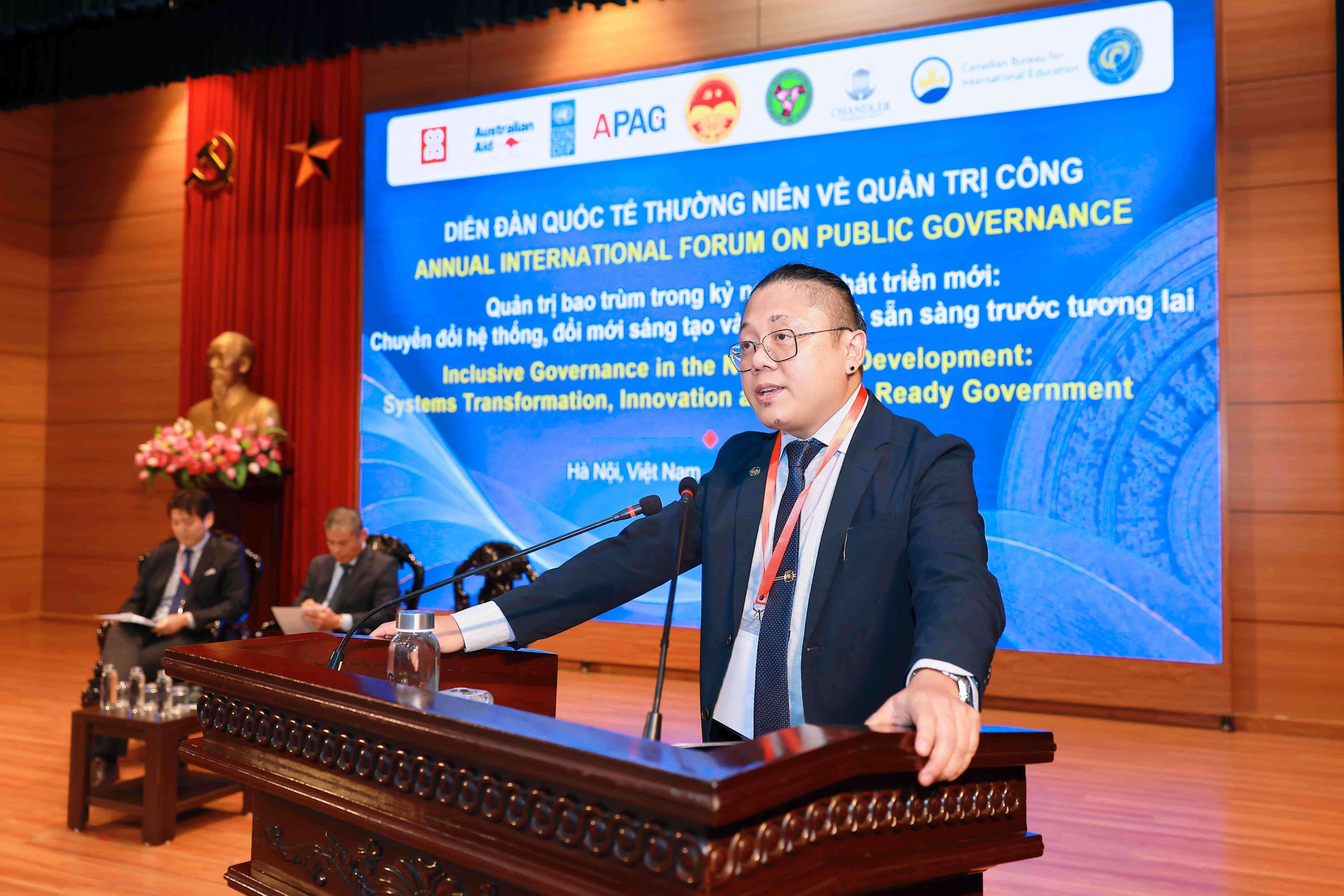
Dr. Kristoffer Berse, dean of the National College of Public Administration and Governance, University of the Philippines, announced the message "Placing people, execution, and communities at the center of reform":
(1) Placing people and inclusiveness at the center of governance. People's needs must serve as the guiding compass for institutional reform, policy design, public service delivery, and development evaluation. Inclusiveness requires considering from the outset who can participate, who benefits, and who risks being left behind, especially when introducing new technologies or service models. Meaningful participation of citizens, communities, and enterprises will help governments identify barriers that purely administrative data might easily overlook.
(2) Translating institutional reform into execution capacity. Institutional reform, organizational restructuring, decentralization, delegation of power, and digital transformation fulfill their purpose only when the system operates effectively in practice. Clear responsibilities must be paired with competent officials, financial resources, appropriate tools, and feasible procedures. Authority must be compatible with execution capacity. For Vietnam, as it operates a two-tier local government model and continues streamlining the administrative apparatus, the focus in the coming phase must be ensuring new arrangements operate smoothly, strengthening inter-sectoral coordination, and generating new capabilities directly within the system.
(3) Making decentralization and delegation of power effective for communities. Effective decentralization and delegation of power require a clear distinction between purely administrative task transfer and substantive decision-making empowerment. In implementing the two-tier local government model in Vietnam, focus should be placed on enhancing local institutional capacity, ensuring primary-level governments possess sufficient human resources, finance, data, and tools commensurate with their responsibilities. Simultaneously, equal access for citizens to essential public services across communities must be ensured.
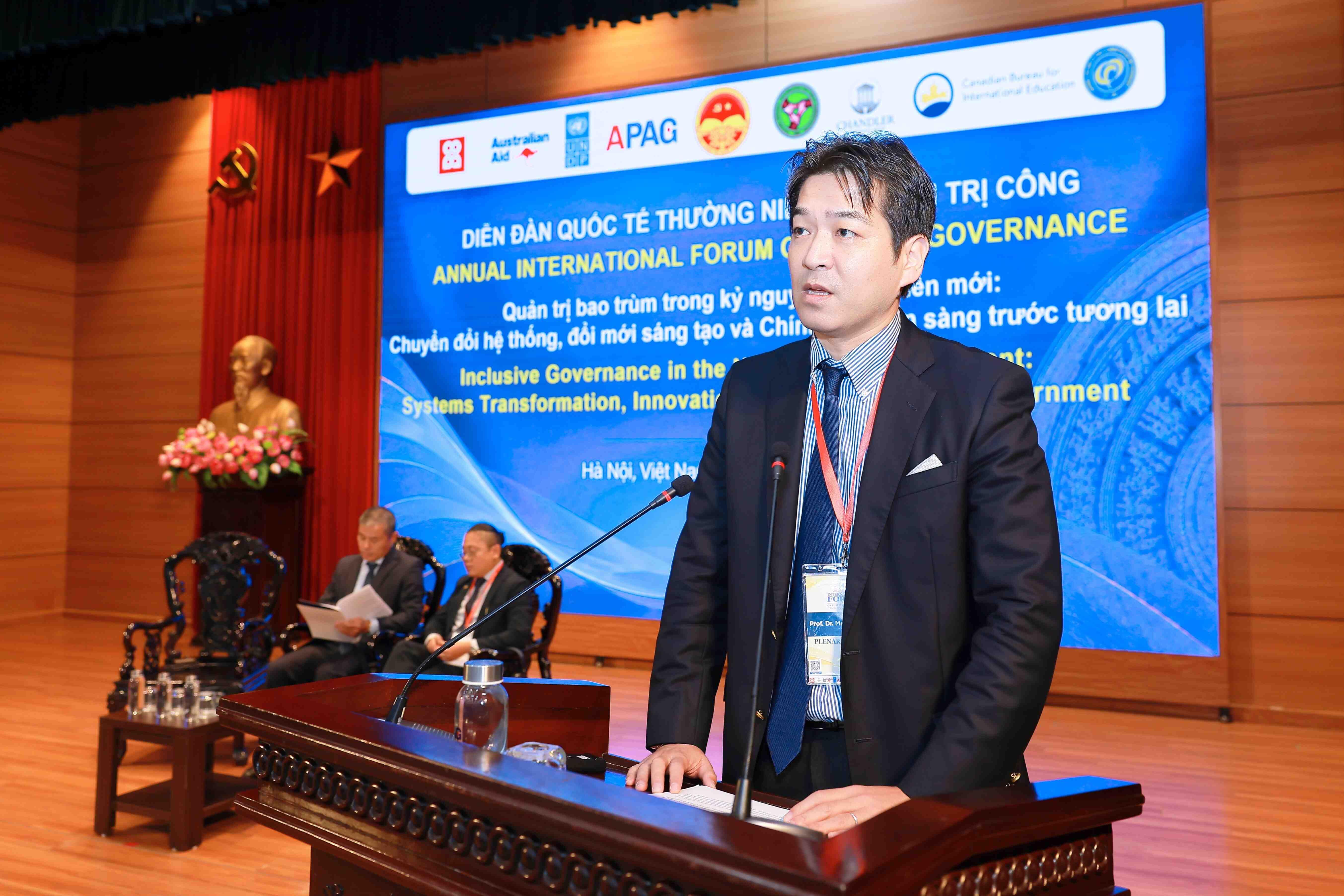
Dr. Masao Kikuchi, Meiji University, Japan, announced the message "Creating development capacity, digital transformation, and anticipatory thinking":
(4) Translating development resources into sustainable capabilities. Resources including capital, human resources, science, technology, data, natural resources, enterprises, and international partners realize their maximum value only when connected with clear development priorities. Development decisions need to be evaluated both on immediate results and on strategic capabilities accumulated for the future (such as technology mastery, high-quality human resources, competitive enterprises, and strong institutions). Development governance must deliver results today while expanding capabilities for the 2030 and 2045 visions.
(5) Utilizing digital transformation to improve public services. Digital transformation requires redesigning processes and service organization around the journey of citizens and enterprises. Technology investment must follow real service demands and user feedback, using time, effort, and cost savings for citizens as the measure of success. Direct support channels for vulnerable groups facing barriers to the digital environment must be maintained, alongside ensuring data security, privacy, and analytical quality in decision-making.
(6) Embedding strategic foresight and cyclical learning into policy and execution processes. Strategic foresight helps government identify emerging signals, analyze future scenarios, and test policy assumptions to proactively prepare early for fluctuations. This proactivity must be paired with institutional learning capacity: execution outcomes and real-world feedback must feed back into policy adjustments. A safe space for policy experimentation, testing, and adaptation within controlled risk levels must be established.
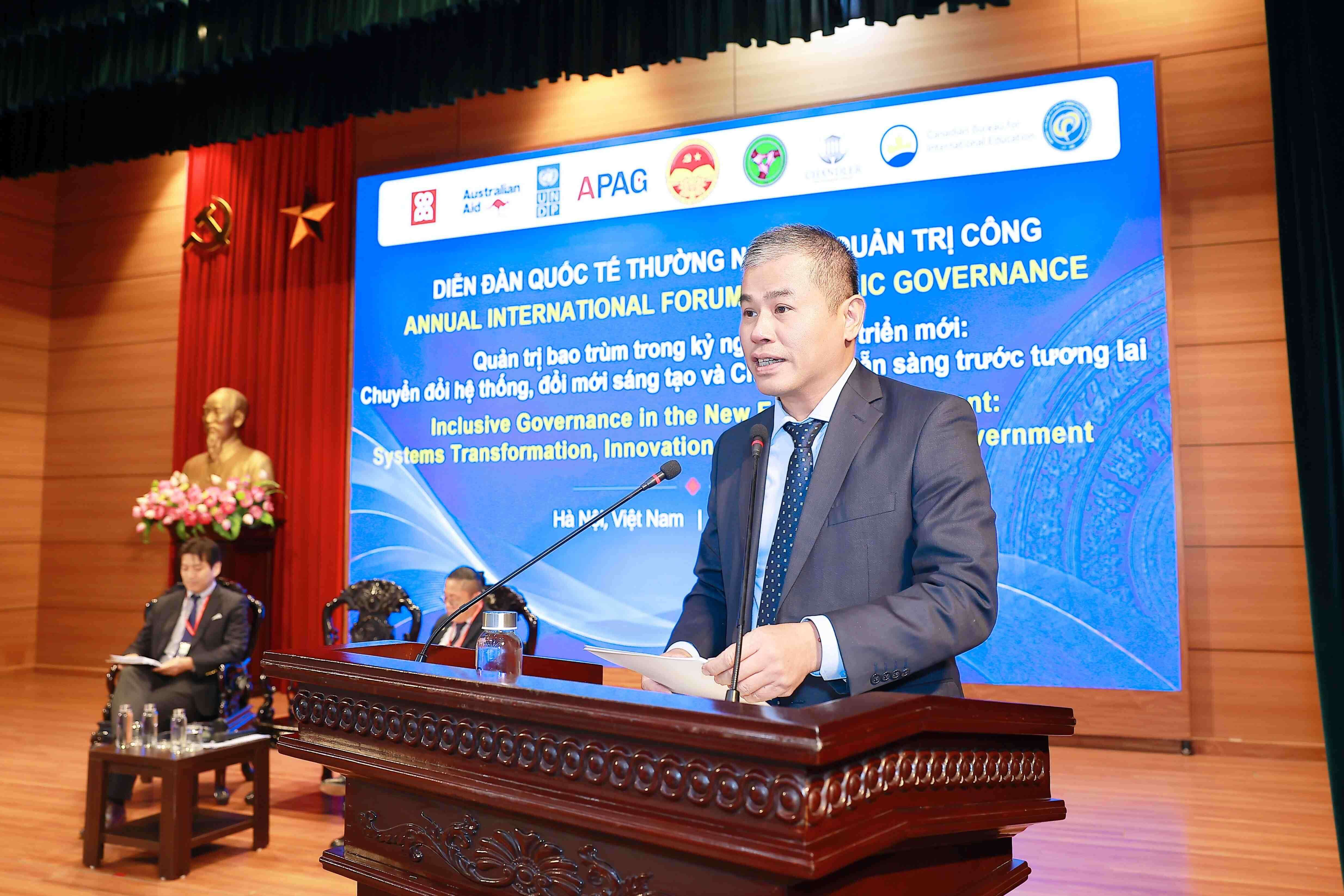
Dr. Bui Phuong Dinh, vice president of the Academy of Public Administration and Governance, announced the message "Technology governance, elevating human resources, and connecting partners":
(7) Strengthening the use and governance of artificial intelligence (AI). AI opens up numerous opportunities to enhance administrative efficiency, analysis, forecasting, and decision support. To realize these benefits, public authorities need to develop responsible AI utilization capacity, tied to data quality control, transparency, fairness, and auditability. Expert judgment and substantive human oversight remain decisive factors; AI plays only a supporting role and must not diminish public accountability.
(8) Investing in human skills throughout the transformation process. Institutional capacity depends on the capability of civil servants and the workforce. The transformation process demands continuous investment in education, vocational training, and lifelong learning. Cadres and civil servants need to upgrade data analysis skills, work across institutional boundaries, and exercise professional judgment in digital and AI environments. Collaboration between the government, training institutions, and the private sector should be promoted to align training with practical demands.
(9) Organizing domestic and international partnerships around shared challenges and common outcomes. Modern development challenges are often inter-sectoral and inter-regional and extend beyond the boundaries of a single agency. State capacity is reflected in the ability to attract and organize stakeholder participation (enterprises, institutes, universities, international organizations) around common problems. In international cooperation, Vietnam needs to proactively transition from "participating" to "contributing," sharing practical knowledge and experience gained from 40 years of Doi Moi, institutional reform, and local governance with the international community.
Also at the closing session, Prof. Dr. Alex Brillantes, secretary-general of EROPA, announced the Carlos P. Ramos Award for best paper and the Marie Rosenberg Award for best paper by a female author to recognize the contributions of experts, scientists, and delegates to the overall success of the forum.
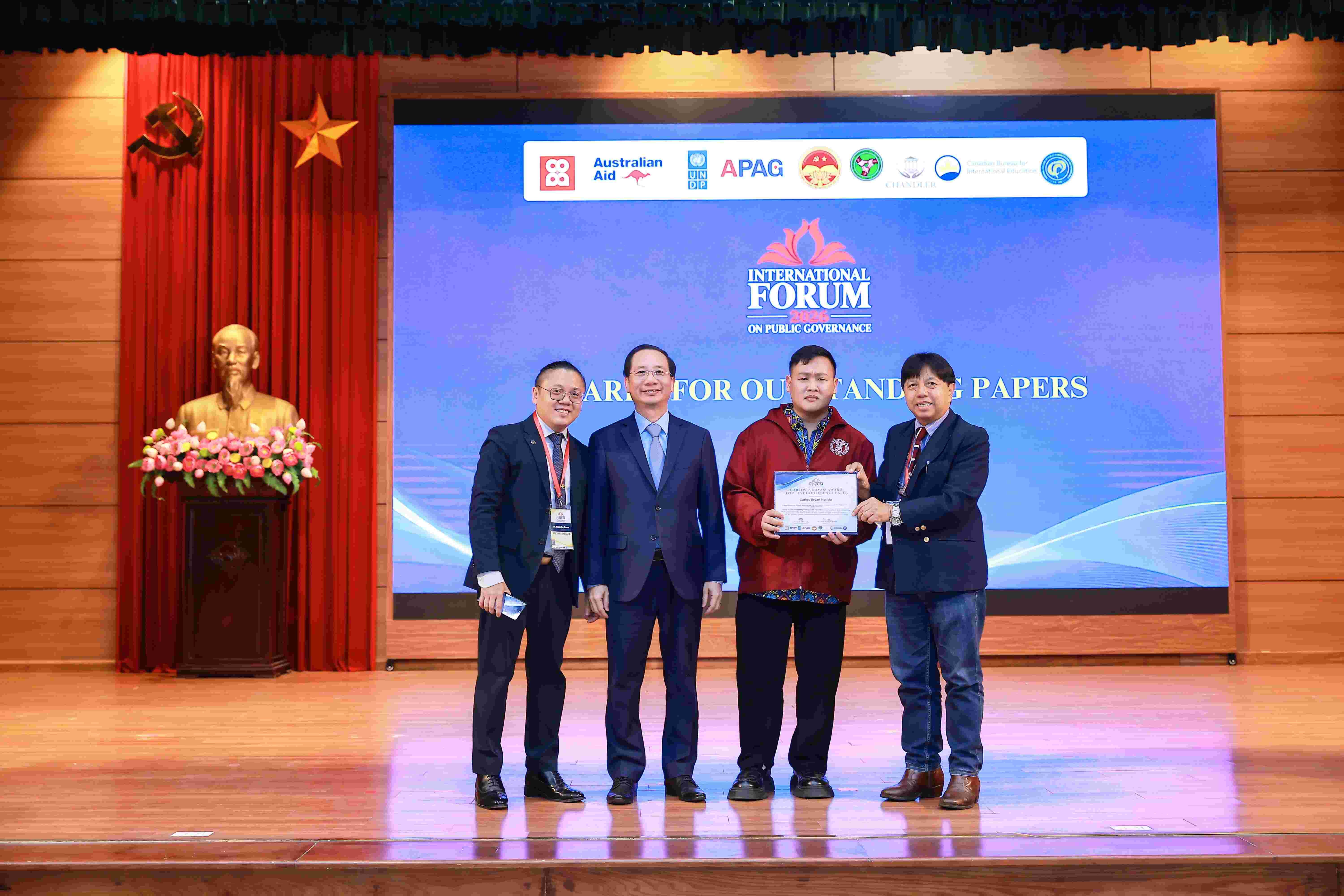 Author Carlos Bryan Nolido received the Carlos P. Ramos Award for the paper "Future-Ready for Whom? Interrogating the Governance Assumptions of the Philippines' Pax Silica Initiative"
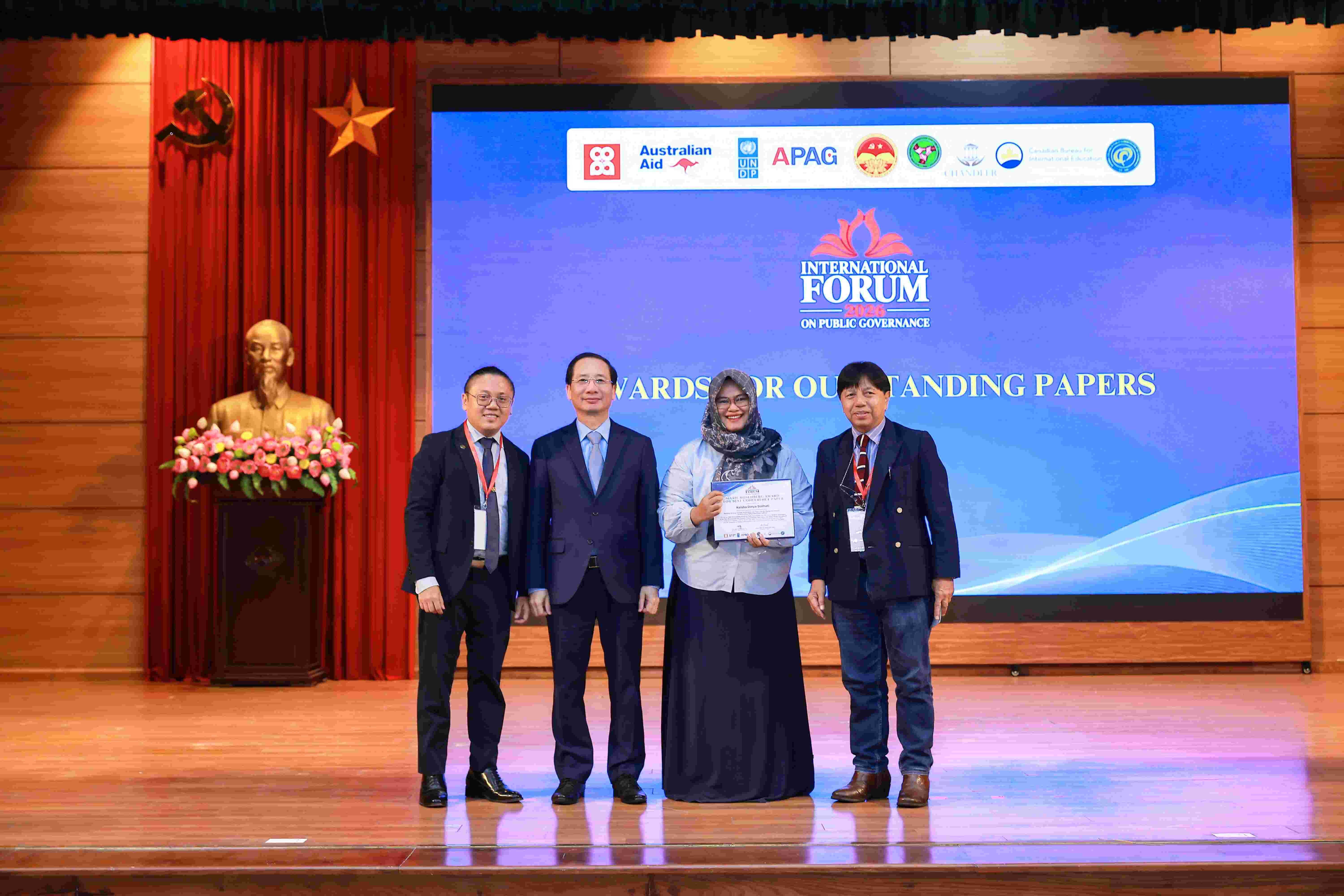 Author Keisha Dinya Solihati received the Marie Rosenberg Award for the paper "Building Strategy towards an Inclusive and Future-Ready Digital Government: Evidence from Indonesian Public Official"
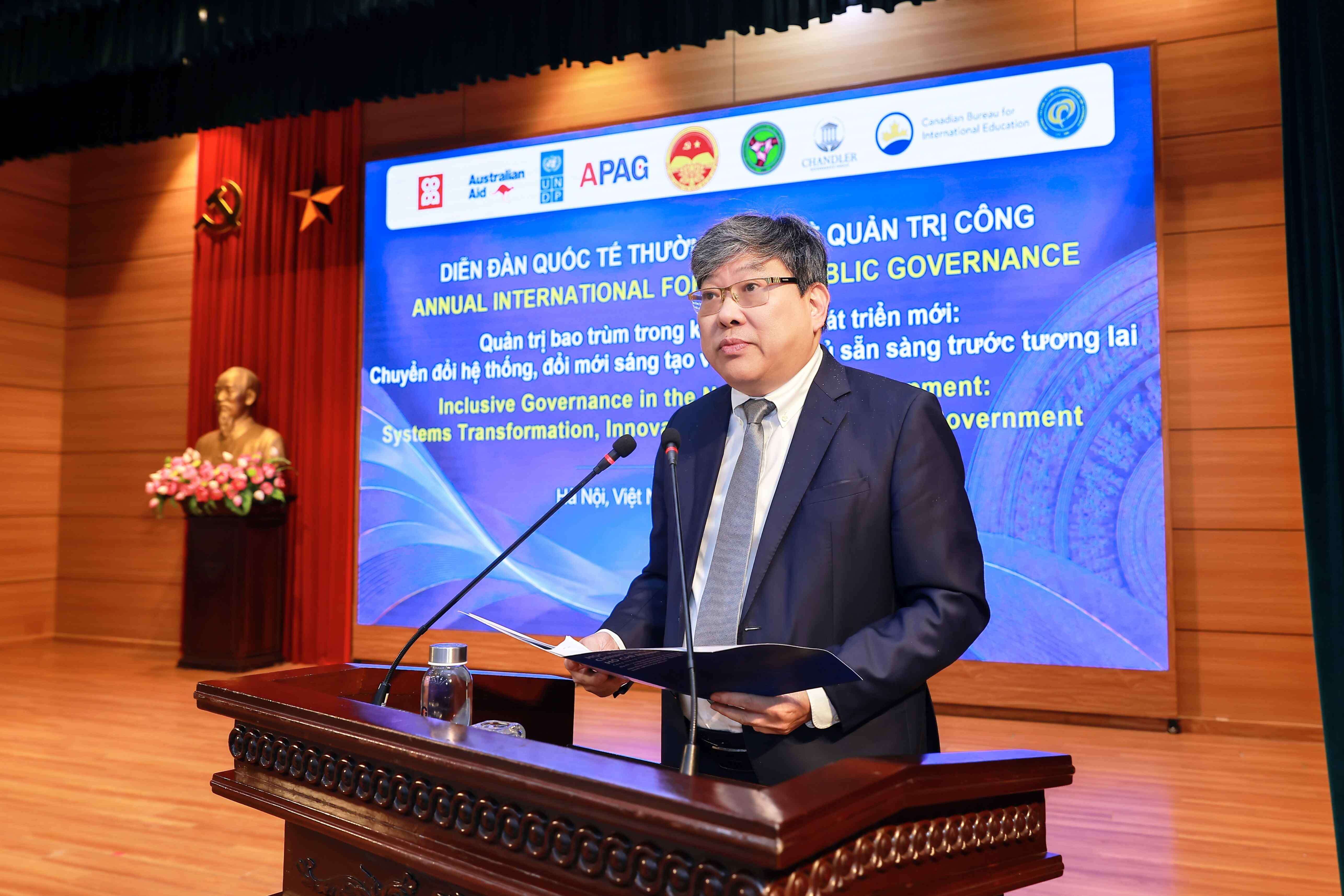 Assoc. Prof. Dr Nguyen Duy Bac, vice president of the Ho Chi Minh National Academy of Politics, delivers the closing address
Delivering the closing address, Assoc. Prof. Dr Nguyen Duy Bac, vice president of the Ho Chi Minh National Academy of Politics, affirmed that after 3 days of intensive work featuring plenary sessions, policy dialogues, roundtable discussions, and expert exchanges, the 2026 Annual International Forum on Public Governance completed its full agenda. The forum focused on discussing issues of vital significance to national governance in the new era, including state capacity, institutional reform, local governance, innovation, data, artificial intelligence, and inclusive governance. These areas are increasingly interconnected and directly impact every nation's adaptive and development capacities.
Drawing from the forum's exchanges, Assoc. Prof. Dr. Nguyen Duy Bac emphasized 5 key issues facing national governance:
First, nations need to accurately identify the shifts of the era, thereby defining their position, advantages, and room for development within emerging economic, technological, and value chain structures.
Second, building strategic autonomy on the foundation of internal strength combined with deep and effective international integration. Accordingly, autonomy does not mean isolation but rather the ability to maintain choices, action capacity, and resilience against external shocks.
Third, reforms must generate development governance capacity and changes that citizens and enterprises can tangibly experience. Governance effectiveness is measured not merely by organizational restructuring but more importantly by the ability to turn authority into responsibility, data into decisions, and guidelines into concrete results in daily life.
Fourth, building a learning state that self-adjusts and values time as a development resource.
Fifth, amidst the rapid advancement of artificial intelligence, stronger technology demands even greater intellectual depth, fortitude, and human responsibility.
In particular, Assoc. Prof. Dr Nguyen Duy Bac emphasized that inclusive governance must be built on three foundations: people, trust, and connectivity. Technology must contribute to expanding development opportunities, improving quality of life, and safeguarding human dignity; trust is forged when policies translate into daily life, commitments are fulfilled, and citizens are heard and served; while dialogue, sharing, and cooperation form the basis for strengthening connections among nations, peoples, and development actors. Assoc. Prof. Dr Nguyen Duy Bac also affirmed that there is no single governance model for all countries; the value of international experience lies in helping each country identify choices, conditions, and limits to apply them appropriately to its reality. Vietnam is ready to absorb international experience while sharing lessons from nearly 40 years of Doi Moi, thereby promoting joint research, policy dialogue, training, capacity building, and international cooperation.
Assoc. Prof. Dr Nguyen Duy Bac expressed sincere gratitude to agencies, organizations, experts, scientists, and domestic and international delegates for participating and contributing to the success of the forum, declared the closing of the 2026 Annual International Forum on Public Governance, and looked forward to welcoming delegates back at the 2027 Forum in Hanoi.
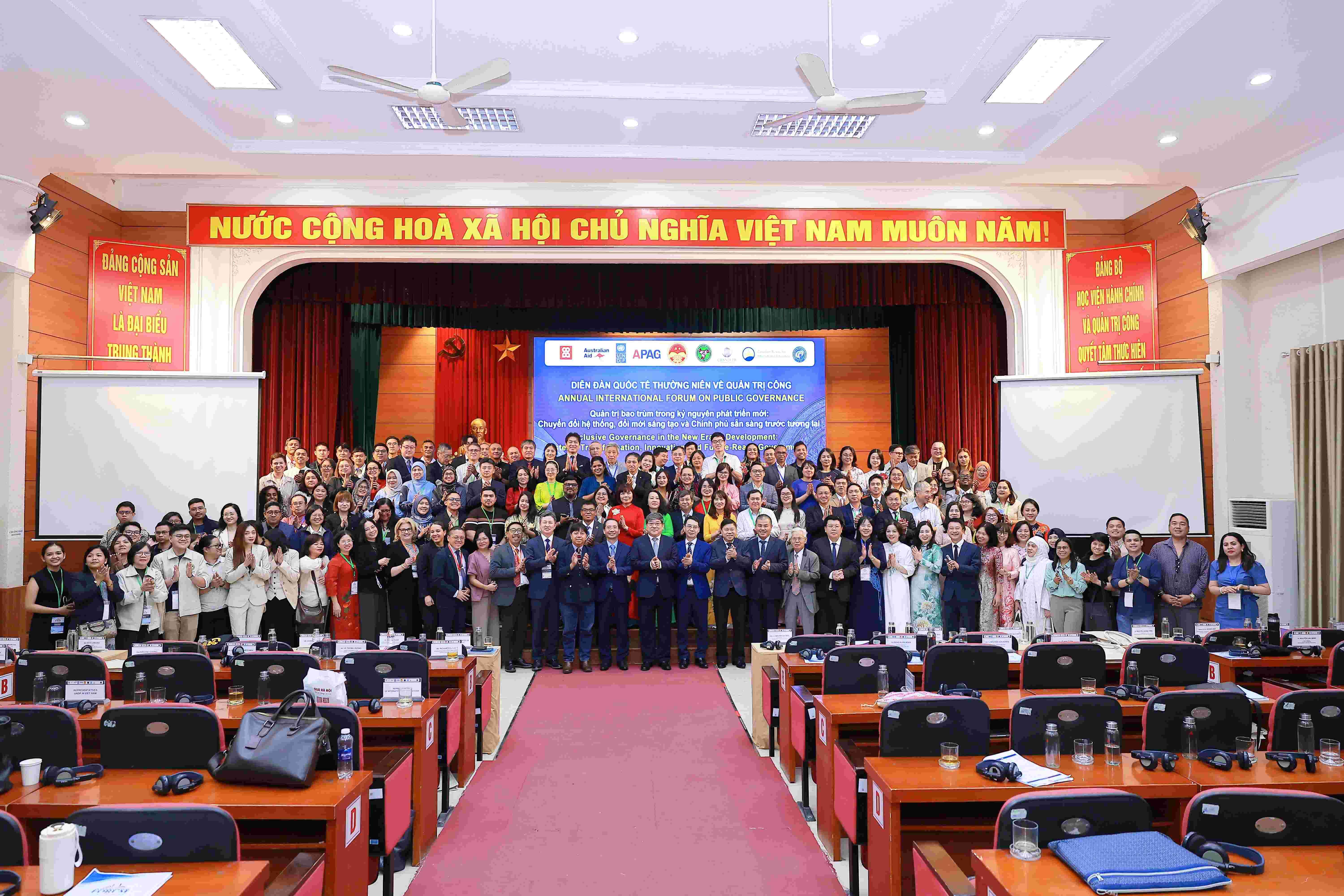 Delegates take a commemorative photo