On the morning of October 7, 2026, at the Academy of Public Administration and Governance, within the framework of the 2026 Annual International Forum on Public Governance, a roundtable discussion session titled "Partnerships for Future-Ready Government and Sustainable Development" took place. Mr. Kieu Viet Cuong, Acting Head of UN-Habitat in Vietnam, moderated the roundtable.
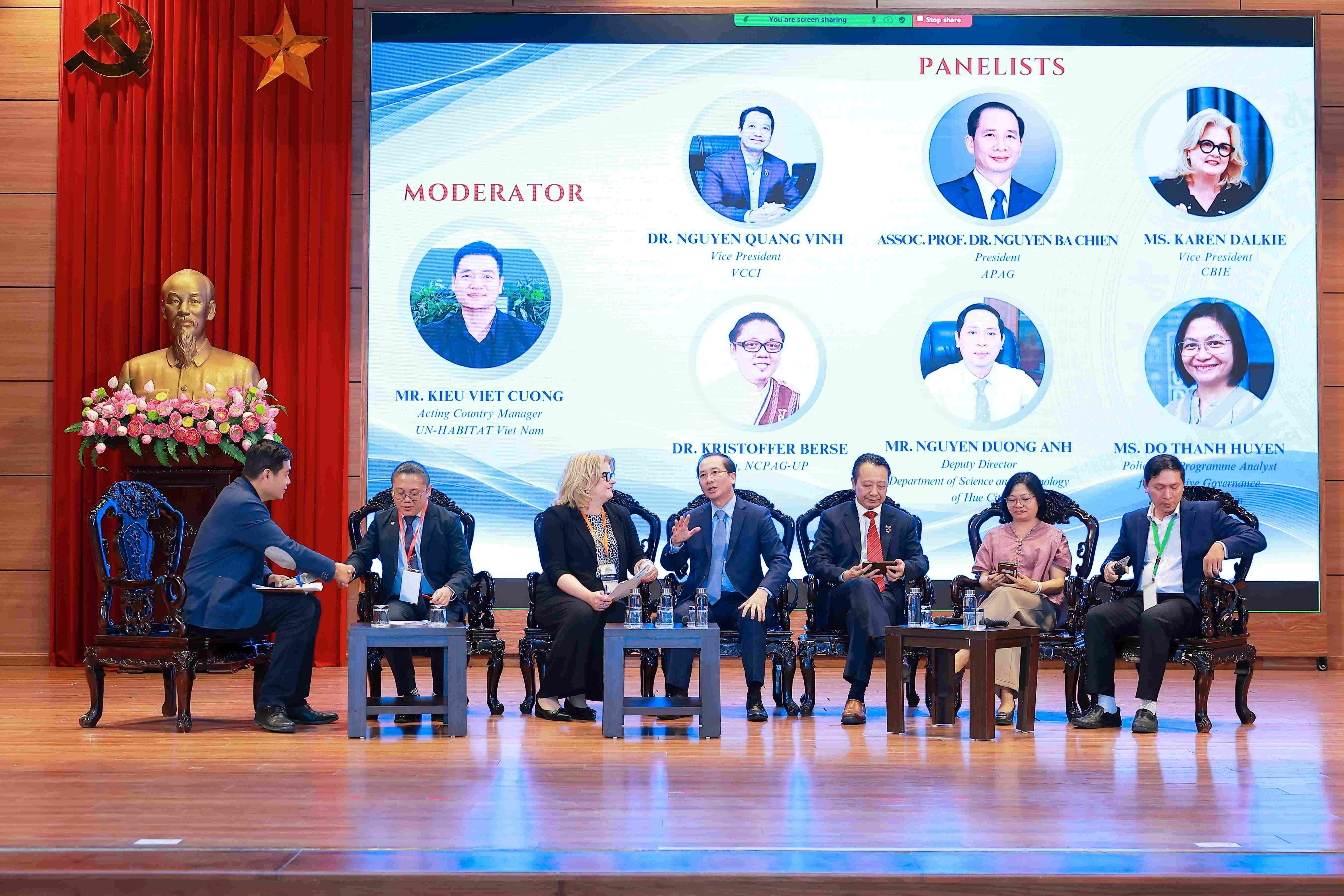 Speakers participating in the roundtable discussion.
The roundtable discussion was attended by Assoc. Prof. Dr. Nguyen Ba Chien, President of the Academy of Public Administration and Governance; Dr. Nguyen Quang Vinh, Vice President of VCCI; Assoc. Prof. Dr. Kristoffer Berse, Dean of NCPAG, University of the Philippines Diliman; Ms. Karen Dalkie, Vice President of the Canadian Bureau for International Education (CBIE); Mr. Nguyen Duong Anh, Deputy Director of the Department of Science and Technology of Hue City; and Ms. Do Thanh Huyen, Inclusive Governance Policy and Programme Analyst, UNDP in Vietnam.
Delivering opening remarks at the roundtable, Mr. Kieu Viet Cuong, Acting Head of UN-Habitat in Vietnam, noted that from UN-Habitat's perspective, governance quality is reflected clearly in how decisions enter daily life and communities. Tasks such as ensuring adequate housing, providing basic services, and enhancing climate change response and resilience require coordination across multiple sectors, levels, and stakeholders. Each partner brings a portion of knowledge, resources, and experience. How those contributions are connected determines the ability to generate long-term real-world outcomes.
In its role supporting sustainable urban development, UN-Habitat pays particular attention to connecting policy with local practice, promoting cooperation between governments and partners, while consistently integrating community voices and needs into solution search processes. With perspectives from the State, enterprises, training and research institutions, international partners, and localities, Mr. Kieu Viet Cuong expressed a desire to hear experiences and suggestions on how to act together, learn together, and sustain partnership results. Through this, the concept of a "future-ready government" will be materialized through proactive adaptability to changes and better responsiveness to citizens' needs.
The State fostering development and companionship from the business sector
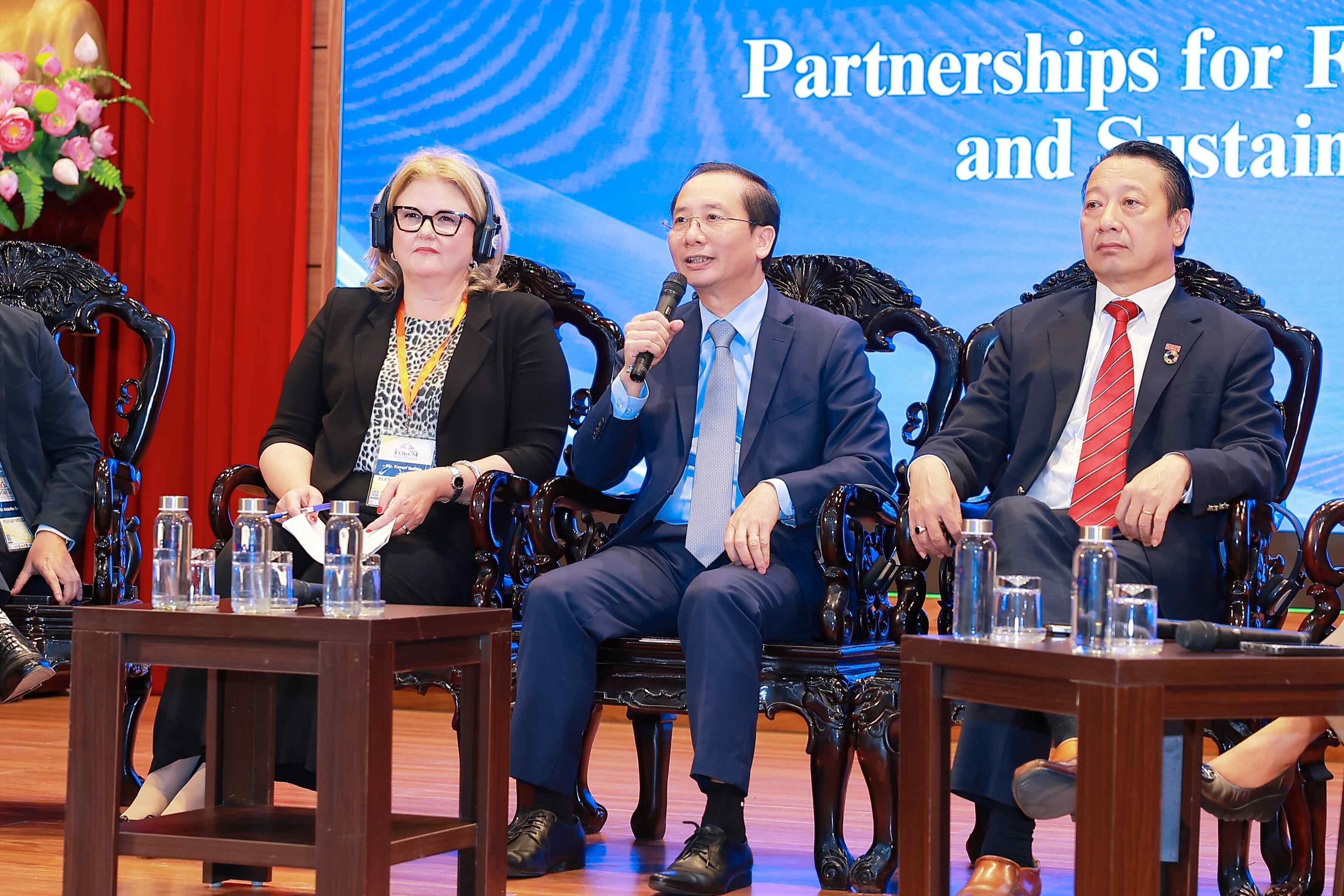 Assoc. Prof. Dr. Nguyen Ba Chien, President of the Academy of Public Administration and Governance
Delivering the introductory presentation, Assoc. Prof. Dr. Nguyen Ba Chien, President of the Academy of Public Administration and Governance, clarified the State's developmental creation and coordination roles in connecting whole-of-system capacity. According to Assoc. Prof. Dr. Nguyen Ba Chien, executing development tasks today requires an accompanying execution capacity package, which is no longer the sole responsibility of state agencies. Facing complex challenges such as social housing development, climate change, or social security, the State's endogenous capacity is vital but insufficient. Therefore, connecting the State with enterprises, research institutes, universities, and international partners to form a partnership ecosystem is an urgent requirement.
For this ecosystem to operate effectively, focus should be placed on 4 key priorities: (1) accurately identifying the nature of the development problem to determine the precise capacity package needed; (2) building a clear regulatory framework at both central and local levels to operate regular connectivity rather than short-term project-based coordination; (3) selecting well-qualified entities aligned with ecosystem requirements; (4) establishing a reasonable benefit-sharing mechanism to create long-term alignment among parties. The core of this model must operate through "co-creation." The State maintains its developmental creation, coordination, and public value orientation roles; enterprises contribute technology, resources, and market reach; research institutes and universities provide knowledge, policy critique, and training; international partners share global networks and experience. Jointly defining problems and co-creating solutions will maximize execution capacity and generate sustainable public value for society.
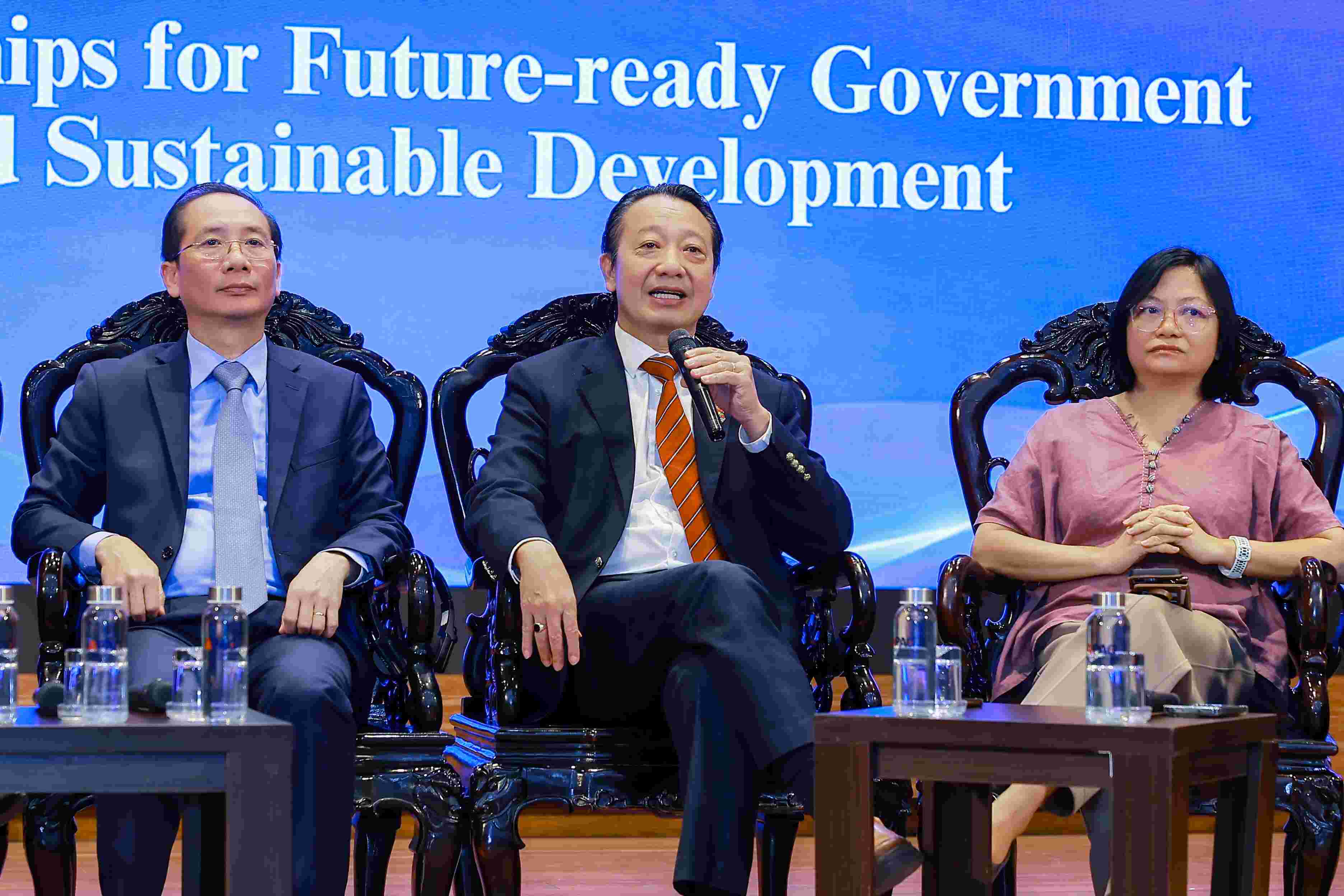 Dr. Nguyen Quang Vinh, Vice President of the Vietnam Chamber of Commerce and Industry (VCCI)
From a business perspective, Dr. Nguyen Quang Vinh, Vice President of the Vietnam Chamber of Commerce and Industry (VCCI), pointed out that the private sector possesses rich market experience and abundant innovation capacity, elements that help governments identify early risks and emerging development needs. Promoting regular policy dialogue mechanisms and cooperation in green transition and innovation will harmonize corporate economic interests with community sustainable development goals. This companionship becomes truly enduring only when parties establish clear goals, risk-sharing mechanisms, and interest alignment.
From the perspective of VCCI and the business community, to make private sector companionship contribute most effectively to local sustainable development goals, efforts focus on 3 core cooperation pillars: building sustainable development measurement tools (the Corporate Sustainability Index, CSI), an effective tool helping enterprises of all sizes self-measure, adopt green governance, and meet stringent emission and environmental standards to engage deeply in global value chains; promoting policy dialogue and consultation; and maintaining regular cooperation forums.
Companionship between the State and enterprises becomes truly effective only when institutionalized through concrete measurement tools, multi-dimensional dialogue channels, and regular cooperation mechanisms. VCCI commits to continuing as a solid bridge for the business community to accompany the Government and localities toward sustainable development.
Integrating research knowledge and international cooperation into endogenous capacity
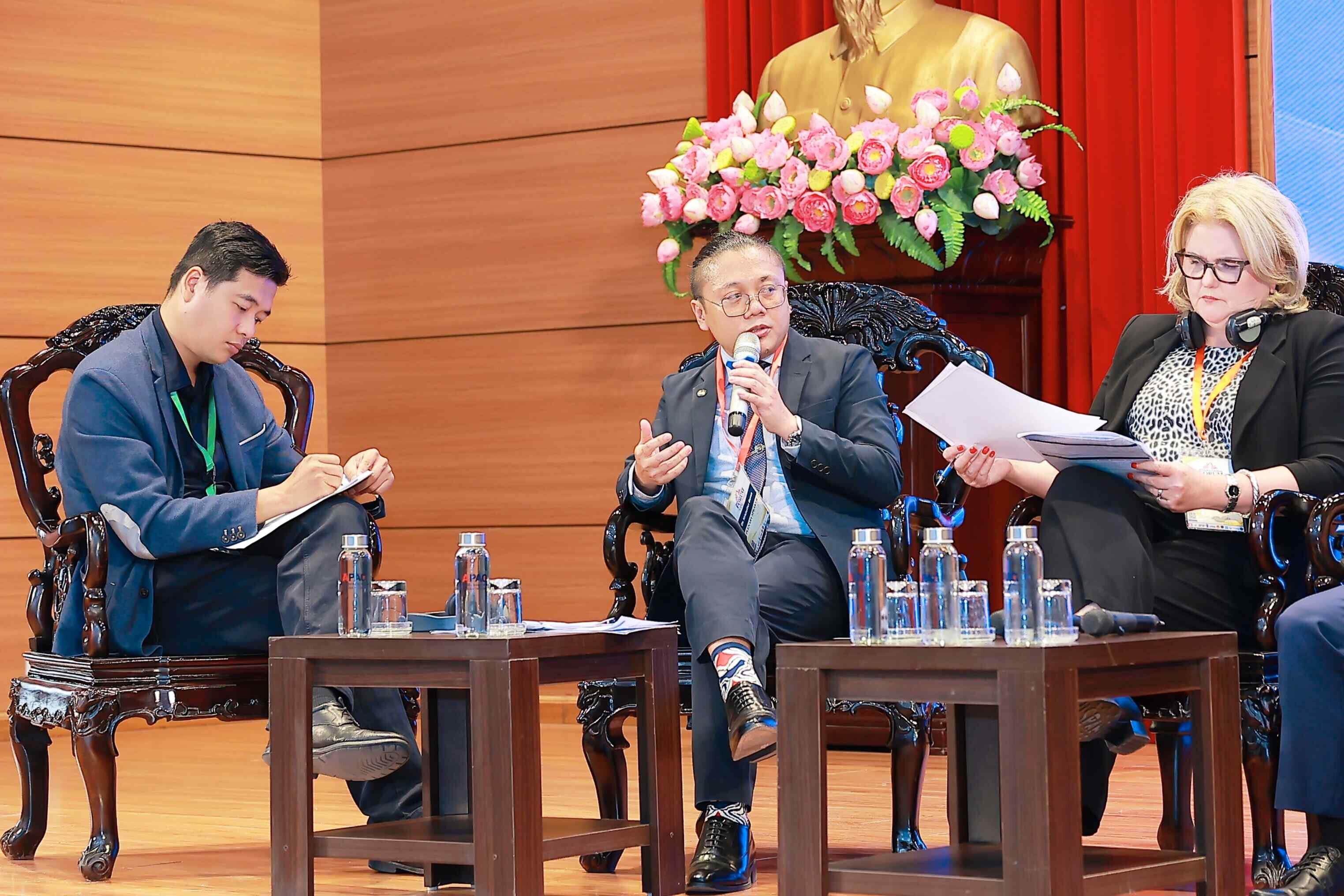 Dr. Kristoffer B. Berse, Dean of the National College of Public Administration and Governance, University of the Philippines (UP-NCPAG)
, shared experiences in risk governance and scientific advice in public policy. Facing major disruptions such as climate change or natural disasters, universities need to rethink their entire role: moving beyond theoretical training or simple knowledge production to become strategic "Knowledge Partners" of the Government.
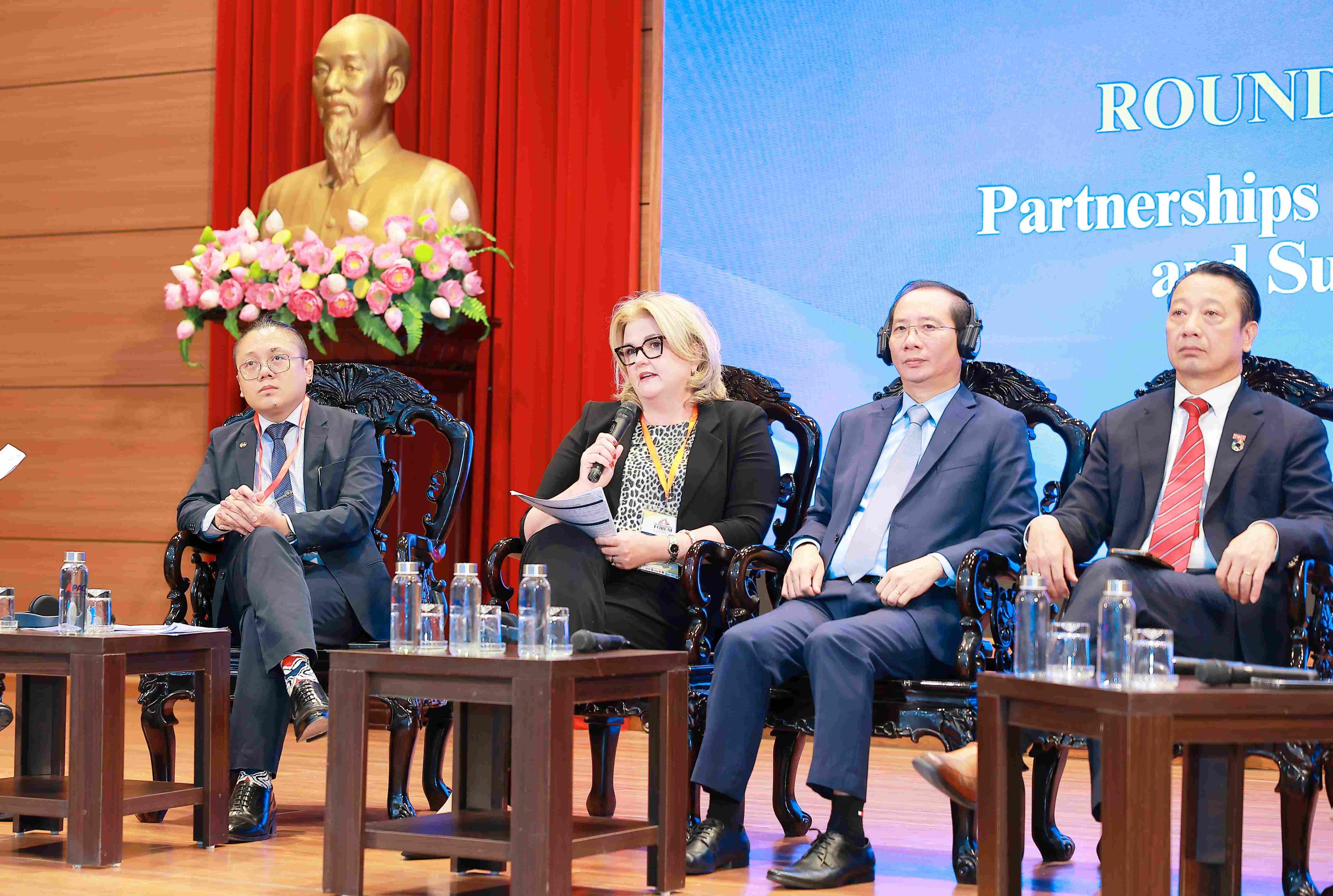 Ms. Karen Dalkie, Vice President for Development and Partnerships, Canadian Bureau for International Education (CBIE)
To connect research knowledge with governance and future readiness, Dr. Kristoffer B. Berse highlighted 3 innovation pillars: innovating training curricula and equipping new skills rather than teaching traditional disciplines alone; rapid research and policy sandboxes; and promoting interdisciplinary collaboration and community connectivity. As Albert Einstein noted: "We cannot expect new results if we keep doing things the same way." Transforming training and research methods is key to building an agile and future-ready government.
Evaluating the importance of international resources, Ms. Karen Dalkie, Vice President for Development and Partnerships at the Canadian Bureau for International Education (CBIE), an entity collaborating directly with APAG on an inclusive local governance project, affirmed that international cooperation generates sustainable value only when international knowledge and experience are transformed into the endogenous capacity of partner agencies.
Ms. Karen Dalkie shared 4 core principles for building sustainable international partnerships: (1) starting from companionship rather than projects, effective international cooperation must be built on trust, shared values, and long-term vision rather than short-term projects or simple outputs; (2) avoiding power asymmetries and fostering shared ownership, proactively eliminating power imbalances commonly found in development assistance programs, as CBIE and APAG jointly shaped visions, designed initiatives, and made strategic decisions; (3) two-way learning and leveraging local expertise, knowledge cooperation is not a one-way transfer from international actors to Vietnam; (4) maintaining agility to adapt continuously.
Local implementation in practice and metrics from citizen satisfaction
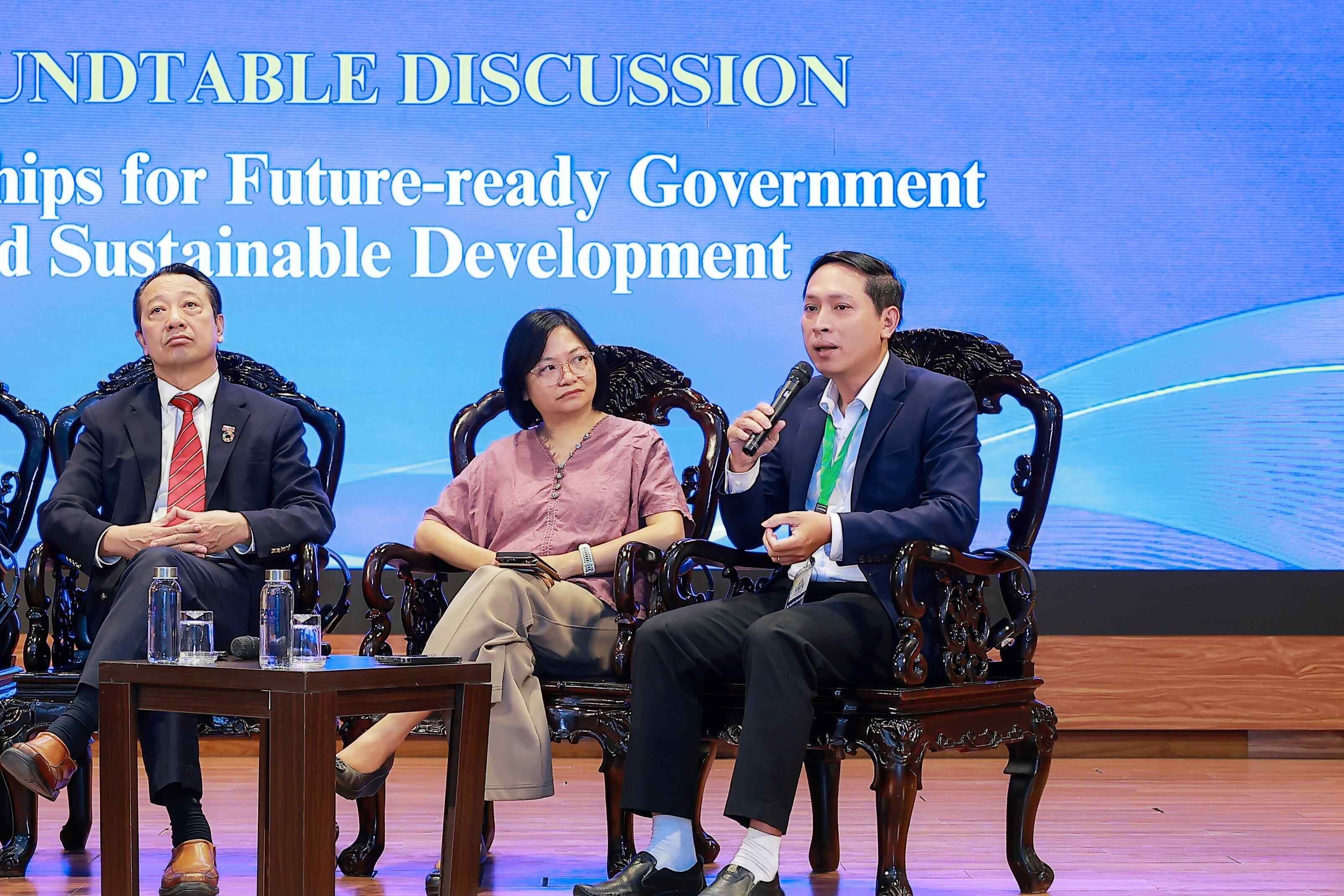 Mr. Nguyen Duong Anh, Deputy Director of the Department of Science and Technology of Hue City
Demonstrating partnership model effectiveness in practice, Mr. Nguyen Duong Anh, Deputy Director of the Department of Science and Technology of Hue City, shared practical lessons from digital transformation and smart city development. With the Hue-S application as a highlight, practice showed that technology realizes true value only when creating an open digital space for government, enterprises, and citizens to co-create. Facing the challenge of preserving traditional heritage values alongside modern urbanization demands, Hue chose not isolated case handling but comprehensive digital space shaping, spreading knowledge and connecting the community. The success of Hue-S extends beyond technical metrics or coverage to the core shift in interactive relationships: citizens no longer passively "listen and comply" but can directly submit feedback, interact, and receive responses from authorities within 24 to 48 hours. Transparent feedback, treating citizen opinions as a metric of managerial accountability, built deep digital trust between citizens and local government.
Experience from Hue City shows that for cooperative initiatives to operate smoothly and sustainably, localities must focus on preparing human resource infrastructure, transparent operational funding mechanisms, and inter-level data-sharing capabilities.
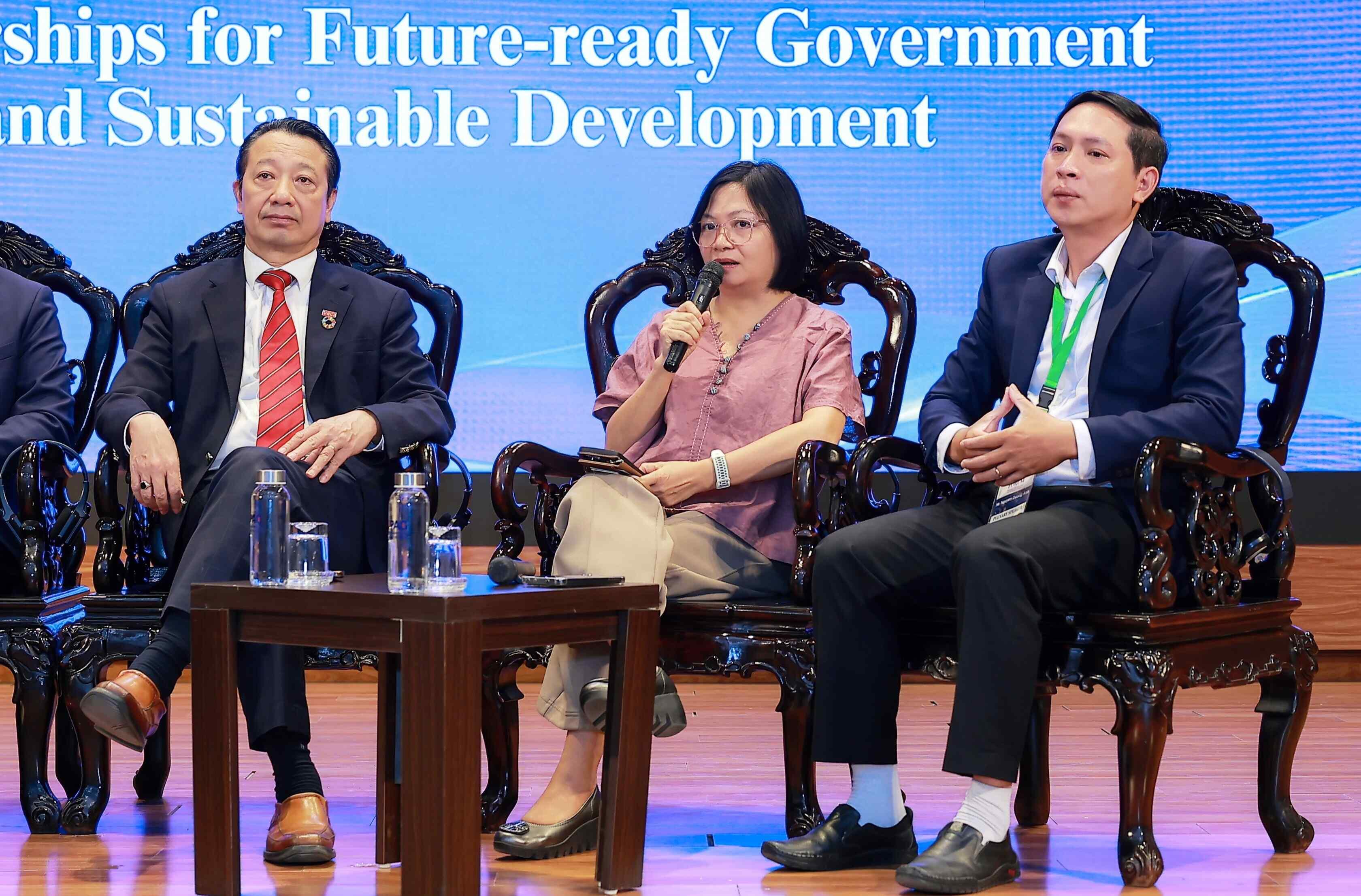 Ms. Do Thanh Huyen, Inclusive Governance Policy and Programme Analyst, UNDP in Vietnam
Closing the panel discussion, Ms. Do Thanh Huyen, Inclusive Governance Policy and Programme Analyst at UNDP in Vietnam, affirmed that citizens are the direct beneficiaries of governance outcomes. Drawing on insights from the Provincial Governance and Public Administration Performance Index (PAPI) and in-depth research on vulnerable groups, Ms. Huyen affirmed that evidence from citizen feedback is the most crucial foundation for adjusting and refining policy. To build a future-ready government, public service must focus on developing a civil service workforce based on 5 core competency attributes: agile governance (daring to test sandbox models); policy forecasting and adaptive capacity amidst rapid digital transformation; governance capacity based on clean and accurate data to anticipate risks; proactivity across central, local, and partner entities; and especially authenticity and practicality in every public action to deliver real societal value. For instance, in online public services, government should promote mobile digital public service models bringing equipment directly to remote areas to support citizens. Focusing on these 5 attributes will help Vietnam build a developmental, inclusive, and sustainably developed government.
According to Ms. Do Thanh Huyen, a future-ready government must listen to the diverse experiences of citizens, from women and the elderly to persons with disabilities. Connecting empirical evidence with policy dialogue will help cooperative initiatives move beyond pilot scales to replicate and generate sustainable impact nationwide.
In summary remarks, Mr. Kieu Viet Cuong praised the strategic and practical contributions of the speakers, summarizing the roundtable through 3 core messages: first, partnerships must begin from specific development tasks to connect the right knowledge, technology, and resources; second, cooperation outcomes must be transformed into long-term execution capacity for local specialized agencies through research, experimentation, and sustainable operational funding; third, the value metric of any partnership is genuine citizen satisfaction and tangible benefits from improved service access, being heard, and receiving timely responses. Agility, proactive multi-stakeholder knowledge connectivity, and continuous learning to better serve communities form the core of a "future-ready government."
The messages, experiences, and recommendations from the roundtable will be synthesized by the organizing committee into key policy recommendations submitted to the 2026 Annual International Forum on Public Governance. This will serve as a valuable practical foundation, actively contributing to efforts to build a modern, agile, inclusive, and sustainably developed civil service in Vietnam in the new phase.